

Tradition Wrapped In Modernity: Terracotta Tales
In the fast-moving pace of Dhaka city, do we not all feel the need to slow down, away from the chaos, experience the presence of the surroundings, and stay in the moment? Inside the premises of the Tejgaon branch of Aarong, Terracotta Tales pays homage to the local craftsmanship. It is a place dedicated to the warm and sentimental dishes and the comforting and heartfelt ambiance that make us long for home. Rafia Mariam Ahmed, principal architect of Hive Architects, designed this beautiful restaurant having intimate dialects with details. When an individual experiences space, what does make one recall it? What works there is the phrase: “design is in the details.” The goal of embracing details is to get you to think critically and present the best possible solution —right from the beginning. That is why details are important. They can keep us coming back, or they can keep us from coming back. And definitely, that comes from a good number of researches. Terracotta Tales is one such location where traditional village home details are infused into a minimal modern portrayal. Terracotta Tales and the adjacent bakery, Dough Diaries, are in a joint venture with Aarong. They are one of the restaurants under the Emerald Restaurants, with other operational restaurants being: Thai Emerald, The Red Chamber, Grove, Trouvaille, Gusto, and Emerald Bakery. The structure the restaurant belongs to was initially designed by Vitti Sthapati Brindo Ltd. alongside the Aarong outlet. The outlook of the structure, starting from the large openings, landscape, and interior to the detailed texture on the outer surface – all were later added as the journey of designing this tale began. The theme and menu of the tale were to be Bengali cuisine, from where conceptualisation of the space began. “I started going back to our roots of being a Bengali. I wanted to pick the elements so rich with history, which had been used daily in our culture, for so many years, and blend these elements with modernity. I wanted to design a space that would take us back to where we belong, a place more oriented towards slow living,” Ms Rafia shared. The space is an abstract representation of a mud house, the softness of which is found in the details of rounded corners of walls, doors, and windows. The unevenly matte polished surfaces with raw, warm earthy colours take you to the affection of the rural aura. Even at night, the lighting is as such to create the ambiance of a warm-toned hue of “prodeep” (dimmed fire lamp). The centre light pieces are delicately handwoven cane shades. Terracotta has been used in many details of this space. In the shade of the walkway, with that of the semi-outdoor space on the rooftop, and the centre of attraction is the wall of the stairway that leads to the rooftop dining. The wall is composed of thin slates of terracotta tiles arranged in triangular patterns, which creates dialects with the light from the sky at different hours of the day. The lanterns used in the rooftop space are also custom-made of burnt clay. As clay is a vital component of humans, country, and roots, the concept and name were associated with terracotta to represent its power of affection. Tales of local artists and craftsmen were incorporated into the design by the use of cane lanterns and clay lamp shades and the famous “Tepa Putul” (a local handmade clay doll of a specific style). Potters and artists made larger sizes of these usual small-scale dolls that are placed on niches as commonly seen in the mud houses. Framed rustic metal jewelry and decorative mirror are added to the wall to represent the daily used materials in a rural mud house. The landscape is designed to wrap an individual with nature. The restaurant is pedestrian-only, with no vehicular connectivity directly, focusing on the practice of being close to nature. The walkway has a beautiful line of bamboo trees on one side and specifically selected floral trees on the other. There is also an outdoor sitting area where the hard surface meets the green in an undulating line. A small body of water curves along the structure is an abstract form of “pukur” (a pond) as commonly seen in the rural context. Ms Rafia said, “The mere attempt was to get out of the edged effect of modern city life to a more mellow and soulful experience – Where one can only indulge in the presence of themselves, the company, and, of course, the food. The trees shed flowers and leaves, creating an inviting bed of nature for the people exploring the outdoors. The curved walkways toward Dough Dairies also give you a feel of the rural memories.” The subconscious nostalgia with the cane-woven furniture details makes one reminisce childhood memories from the ancestral homes. The utility area has been partitioned with cane-weaved partitions to camouflage it in the interior. The wooden curtain rails and the door handles add value to the theme, complementing the colour palette. A few subtle colours are added by using a floral print material on the back of the seats, preventing the guests from feeling monotonous. Old ceramic plates are decorated on the wall, making a spectacular composition of colours, history, and belongingness. On a bright sunny afternoon, when the sun kisses the shallow water next to the large window with curtains of translucent softness, the sheening glitter of the rippling water reflecting on the ceiling catches one’s attention while being indulged in the nostalgic local cuisine. The soul runs through the handcrafted details and the softness of the ambiance makes one feel warm, cozy, and at home. The modern city crowd is so much more over-oriented towards a captivated lifestyle that even a natural splash of water becomes a form of irritation. Terracotta Tales is a space to celebrate that naturally unnatural necessity of life that people are slowly getting carried away from. Authored by Rehnuma Tasnim Sheefa
The Story Behind Decathlon Dhaka’s Stunning New Office
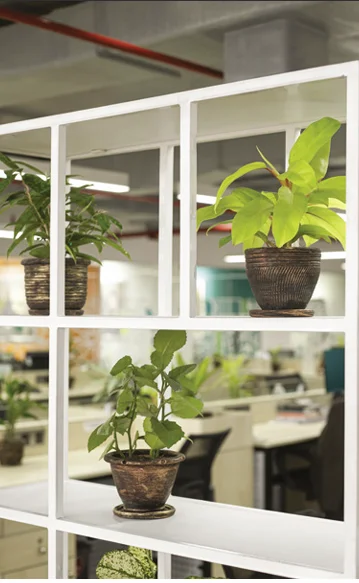
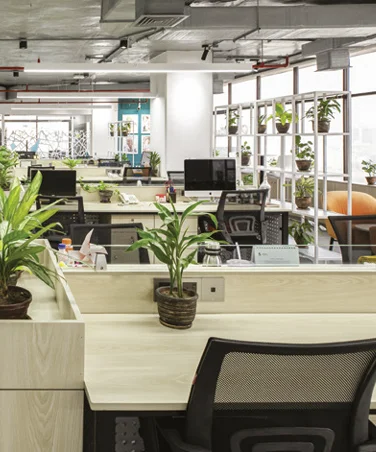
In the center of Dhaka’s relentless urban sprawl, Decathlon’s new liaison office has carved out an unexpected oasis. Designed by Studio one zero, the two-floor, 20,000-square-foot workspace is a lively yet calming blend of nature, sport, and smart design — a triumph achieved under the intense pressure of a compressed timeline. One floor of the office is devoted to a sprawling seminar and multi-purpose event space, while the other flourishes as a vibrant open-plan workspace. Together, they embody Decathlon’s global brand ethos: movement, accessibility, and connection to the environment. From the first step inside, the design immediately surprises. Natural light pours in from every angle, with open workstations, informal seating zones, and collaborative spaces stretching toward the glass walls. But what truly distinguishes the space is its deliberate, sensitive incorporation of natural elements into an otherwise urban setting — a concept that chief architect Jafor Hoq and Partner Architect Humaira Binte Hannan at Studio One Zero were determined to bring alive. Challenge Against Time “The biggest challenge for us,” says Jafor Hoq, “was the design decision against time. From the initial concept to execution, we had a very short period. And it wasn’t just about filling a space — Decathlon wanted something meaningful, experiential, and true to their brand spirit.” Working under intense deadlines and changes meant that decisions on materials, layouts, and designs had to be made rapidly but thoughtfully. “We had no time for second-guessing. Every material, every design move had to be purposeful and achievable within the timeframe,” Hoq recalls. Instead of battling the constraint, Studio one zero leaned into it, focusing on a few strong ideas and executing them meticulously. Bringing Nature Indoors — A Different Way While biophilic design is no longer a novelty, Studio one zero’s approach for Decathlon’s office is refreshingly nuanced. Instead of merely placing potted plants in corners, nature was embedded into the structure itself. The most striking feature — the tree-inspired columns — originated from a need to solve a technical problem with artistic flair. Existing structural columns, often seen as obstacles in open-plan offices, were transformed into vertical wooden sculptures. “These columns are not just cladded structures,” Hoq explains. “We intentionally gave them the form of large tree trunks, expanding outward at the top, creating a canopy-like feeling. Under these ‘trees,’ we placed high seating zones, making them natural gathering points where people can sit, stand, and connect. It’s about reinterpreting indoor nature — not just bringing in greenery but evoking the experience of being under a tree.” Materiality: Warmth in an Industrial Frame The material palette reflects a thoughtful balance between modernity and warmth. Light oak wood cladding runs through the flooring of common pathways and wraps around key architectural elements, providing a sense of warmth and continuity. “The idea was to humanize the space,” says Hoq. “We were working with an exposed ceiling — which gives that industrial look — but we didn’t want it to feel cold or impersonal. Using wood, texture and incorporating green , was the answer.” Meanwhile, the furniture choices favored light-colored wood and clean lines to complement the architecture without overwhelming it. Lush green walls filled with planters further softened the industrial base, offering breathing spaces that look and feel alive. Even the lighting played into the natural narrative. Angular, dynamic geometric light fixtures, seemingly random yet deliberate, mimic dappled sunlight filtering through tree canopies, casting a playful rhythm of light and shadow across the workspace. Functionality at the Core Of course, Decathlon’s office needed to be more than beautiful; it needed to work. Beyond the seminar space and open workstations, Studio One Zero integrated a variety of amenities including a gym, prayer rooms, a sick room, and a restaurant-style café. The café, with its relaxed seating and natural materials, encourages casual interaction — a deliberate attempt to break down formalities and foster an easy, collaborative culture. Flooring materials shift subtly from wood to textured carpet tiles to indicate different zones without physical barriers, preserving the openness. Every design choice speaks to movement, flexibility, openness and wellness — values at the heart of both Decathlon and Studio one zero’s architectural philosophy. A Space That Moves People In the end, Decathlon’s Dhaka office is more than a workplace. It’s a living, breathing environment, where the boundaries between indoor and outdoor, formal and informal, structured and free-flowing, are beautifully blurred. Studio One Zero’s bold vision — executed under a limited timeframe — has resulted in a space that isn’t just seen; it’s felt. A place where employees can experience the spirit of sport, the calm of nature, and the excitement of innovation, every single day. “We didn’t just design an office,” Jafor Hoq smiles. “We designed an experience.” Written By Fatima Nujhat Quaderi Photo: Truphoto Studio
A Fresh Look of WE SPACE with Inclusivity at its Core
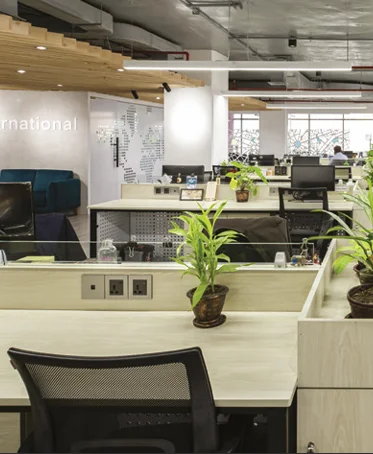
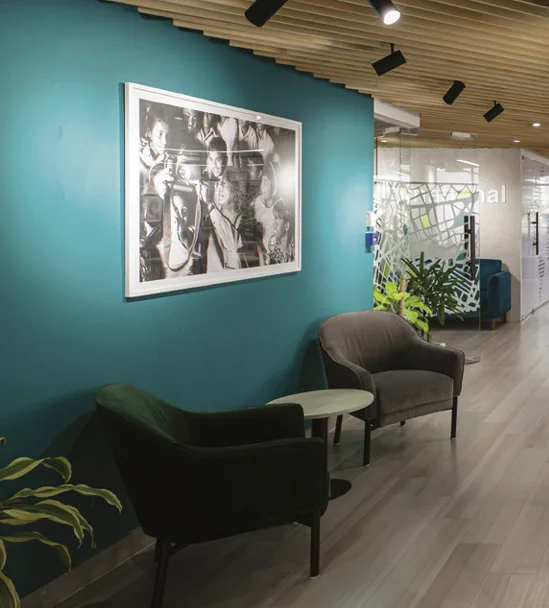
In the bustling Gulshan North Avenue of Dhaka, a unique office concept in Bangladesh replaces traditional departmental segregation and hierarchy with freedom of workspace and teamwork. Located in a prime location of Dhaka’s business hub, WE SPACE is Woolworth’s Group’s Bangladesh office, co mprising an area of 6,300 square feet. The entire project was completed in 90 days, which was a challenge in itself. The spaces in this project have been designed with Woolworth’s inclusive concept of “WE” and togetherness in mind. This concept is reflected in the layout, flexible workspaces for users, and an interesting colour palette that complements the brand identity. As per the question, Sudeshna Shireen Chowdhury, the founder and principal architect of Studio.O, explained, “All functions are arranged together in a loop. If you enter the office from one side, you can come back and end up in the same space.” Inspired by the concept of “We Space,” the layout has been developed with a central collaborative social hub and town hall space as the heart of the office. Upon entering, a clean, central circulation spine welcomes the user into the space. This loop leads them towards designated zones, which are specifically marked to enable easy navigation. The design ensures universal access for both circulation and entry into all spaces, promoting proper orientation and mobility. Overall, the office space has been designed to be exceptionally user-friendly, showcasing unique details and features while upholding the brand identity of Woolworth’s Group. Architect Sudeshna explains that there are no designated seats or fixed workstations. The concept is for all functions to be connected in a loop, allowing users to enter from one side and return to the same space upon exiting the loop. The design team did not introduce a traditional reception area, as the other Woolworth’s offices do not have one either. The zoning prioritises common areas, meeting rooms, and a multifunctional room near the entrance for guests. The kitchen, designed more like a coffee pantry, is also placed near the entrance for easy access by guests. Public spaces are readily accessible upon entering the office. “As you move further inside, you’ll find the workspaces located near the terrace space,” as explained by Architect Sudeshna. All the furniture for this project has been locally sourced and designed, making it exclusive to the users and the office. Hatil provides modern, space-saving compactor storage that allows for a significant amount of storage within smaller areas. Height-adjustable tables and workstations were made locally using handmade techniques. The vibrant colour palette within the workstations incorporates orange and green shades. A unique feature is the collaborative table they designed. It can function as a whole table for four people or unfold into individual workspaces. One of the most striking features of the space is the ceiling. The Woolworth’s logo is cleverly incorporated as a ceiling light fixture, adding a unique and memorable touch to the ambiance. The clients loved this detail and are considering replicating it in our other branches to create a consistent and memorable brand experience. Vinyl flooring is used throughout the space, with a colour scheme that complements the blue ceiling light to further highlight the blue colour in the ceiling and the brand association as well. No partitions were used in open spaces; the variation in the texture of the floor materials separates the zones. Biophilic principles were considered throughout the design process. Planters were strategically placed to integrate nature into the workspace. The architect adds, “We always consider biophilic principles. So, we planned where the planters would go and designed accordingly.” The meeting room features a TV panel that doubles as a whiteboard, demonstrating a smart design element. Acoustics were also a priority. To minimise echo, a false ceiling with sound-absorbing panels was installed. Carpets were also used for the same purpose. In the main workspaces with exposed ceilings where talks and town hall meetings are held, sound-absorbing carpet flooring was used. Another unique addition to the project was the soundproof office pods for four people. “These pods are fully furnished, offer 85% sound absorption, and have their own ventilation systems,” explains Architect Sudeshna. She further adds, “Every space has its own identity. There is a focus zone, a collaborative zone, and a social zone, all with different kinds of identities and characters.” Completed in January 2023, WE SPACE is a collaborative project by the eminent architecture firms Studio.O and Binyash, located in Dhaka. The team of architects brainstormed together to come up with a concept that ensures efficiency, comfort, and a positive ambiance for office users. Architect Sudeshna Shireen Chowdhury concludes, “Working with the Woolworths team was an exceptional experience. We appreciate the unparalleled support from our partners.”