

Disaster Preparedness
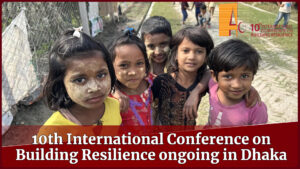
10th International Conference on Building Resilience ongoing in Dhaka
The 10th International Conference on Building Resilience (ICBR) started in Dhaka on December 4, bringing global experts together to address cascading and compound risks posed by climate change, humanitarian crises and disasters. The three-day event is hosted by BRAC University’s Cell for Adaptation, Resilience, Security, and Humanitarian Assistance (CARSHA) alongside its Department of Architecture under the School of Architecture and Design. Established in 2008, the ICBR series has become a globally recognised platform for disaster resilience and risk reduction, attracting academics, practitioners and policymakers from diverse disciplines. Previous editions have been held in Australia, Indonesia, New Zealand, Portugal, Sri Lanka, Thailand, the UK and the USA, underscoring the conference’s international reach and reputation. The Dhaka conference will focus on the theme “Addressing Cascading and Compound Risks of Climate Change, Humanitarian Crises and Disasters.” Organisers say the theme reflects the growing complexity of global hazards, where climatic shifts, natural disasters, conflicts, technological failures and environmental degradation increasingly overlap. They warn that societies must now prepare for multiple disasters occurring simultaneously, as well as the chain reactions triggered by single events. The conference aims to provide a platform for experts, researchers, academics, practitioners and decision-makers to share knowledge and strategies for reducing these risks in a global context. Key areas of discussion included anticipatory approaches to disaster risk reduction, climate financing and loss-damage calculation, forced displacement and its impacts, and challenges in rehabilitation, relocation and emergency accommodation. Sessions also explored innovation in climate change adaptation, building financial resilience, humanitarian operations, peace and development, and community participation in addressing complex risks. Other topics included ecosystem-based adaptation, the nexus of humanitarian crises and climate change impacts, the future of global humanitarian operations, and resilient built environment design. The organisers have set out a detailed timeline for participation. Abstract and poster submissions opened on June 1 of 2024, with the final deadline on August 1 of 2025. Notifications of acceptance was issued on August 22 of 2025, followed by revised submissions due on September 26 of 2025. Final selections were confirmed on October 24 of 2025, while early bird registration closed on October 31 the same year. The conference itself will run from December 4–6 at BRAC University’s campus on Bir Uttam Rafiqul Islam Avenue in Dhaka. Organisers emphasised that the event is designed to encourage cross-sectoral collaboration, bringing together voices from academia, government, industry and humanitarian organisations. They argue that such collaboration is essential to tackle the escalating risks posed by climate change and disasters, which in creasingly cut across national boundaries and sectors. The Dhaka edition is expected to highlight Bangladesh’s role as a frontline nation in climate resilience, given its vulnerability to rising sea levels, cyclones and flooding. By hosting the 10th ICBR, BRAC University aims to position itself as a hub for global dialogue on resilience and adaptation. The conference also showcased the work of CARSHA, which focuses on adaptation, resilience, security and humanitarian assistance in the context of climate change and disasters. Organisers say the event will not only disseminate research but also foster practical solutions that can be applied in vulnerable regions worldwide. With participation from international partners and knowledge networks, the Dhaka conference is expected to strengthen global cooperation on disaster resilience. As the countdown begins, the 10th ICBR is being framed as a milestone event in the global effort to confront cascading and compound risks. At a time when climate change and humanitarian crises are converging, the Dhaka conference seeks to chart a path towards resilience and preparedness. Written by Nibir Ayaan
Read More