

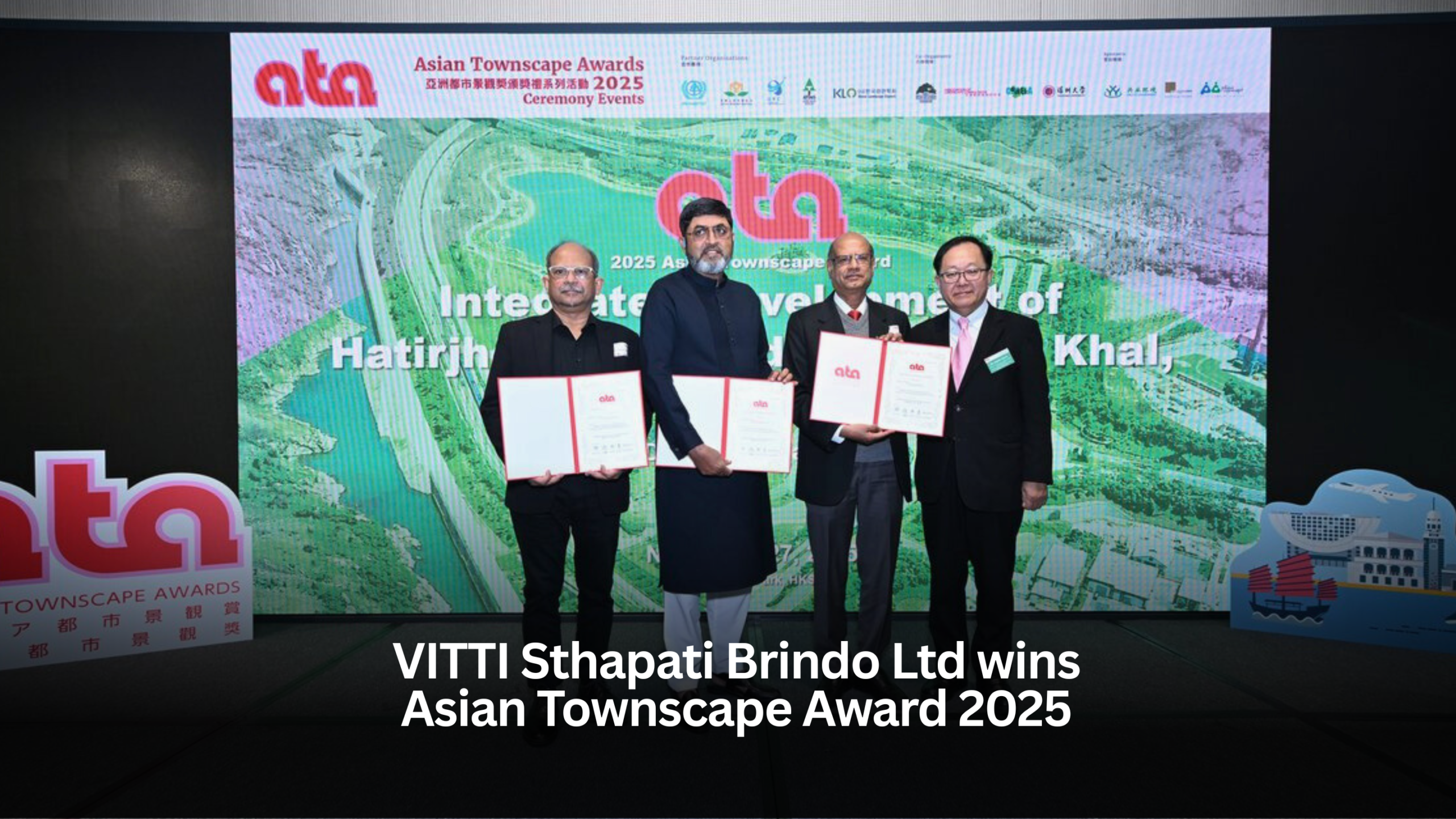

Bangladesh’s architectural journey reached a new height this year as VITTI Sthapati Brindo Ltd won the Asian Townscape Award 2025 for the Hatirjheel Integrated Development Project.

The recognition not only honours the firm’s vision but also highlights Dhaka’s growing commitment to sustainable urban transformation.
The award was presented on November 27 this year at the CIC-Zero Carbon Park in Hong Kong, where VITTI’s Directors, Architect Iqbal Habib and Architect Ishtiaque Zahir, received the accolade alongside the project’s client and RAJUK Chairman Engr. Md. Rezaul Islam.
Their joint presence reflected the collaborative spirit behind Hatirjheel’s success, a project that has become emblematic of how shared effort can reshape a city’s identity.
The Asian Townscape Awards (ATA) themselves carry a rich legacy. First launched in 2010, they were created through a collaboration between UN-HABITAT’s Regional Office for Asia and the Pacific (ROAP), the Asian Habitat Society (AHS), the Fukuoka Asian Urban Research Center (URC), and the Asia Townscape Design Society (ATDeS).
From the beginning, the awards sought to honour cities, regions, and projects that enhance the living environment while respecting both human and natural contributions to the built landscape.
This year’s competition was particularly competitive, with 72 submissions from across Asia. Out of these, 11 projects from 7 countries were selected, reflecting the diversity of urban innovation across the continent.
Both Bangladesh and India secured notable achievements, demonstrating South Asia’s growing influence in sustainable townscape design.
Dhaka’s Hatirjheel project stood out in the lake and water body development category, a recognition that speaks to the city’s ability to transform neglected waterways into thriving public destinations.

The project’s success was not the result of a single vision but rather the combined efforts of architects, planners, engineers, and policymakers who worked together to create a model lakeside urban environment.
By reclaiming overlooked water bodies and integrating them into the city’s fabric, Hatirjheel has become a symbol of how sustainable urban design can reshape dense cityscapes.
Its recognition marks Bangladesh’s first city-level award in this category, a significant step forward for a nation that had previously received three Jurors’ Awards but never a full city-level honour.
The philosophy behind the ATA has always been simple yet profound: to celebrate projects that improve urban life while embracing both tangible structures and intangible cultural practices.
This holistic approach ensures that the awards are not just about architecture but about the lived experience of urban spaces, where parks, waterways, and buildings coexist with traditions, communities, and everyday life.
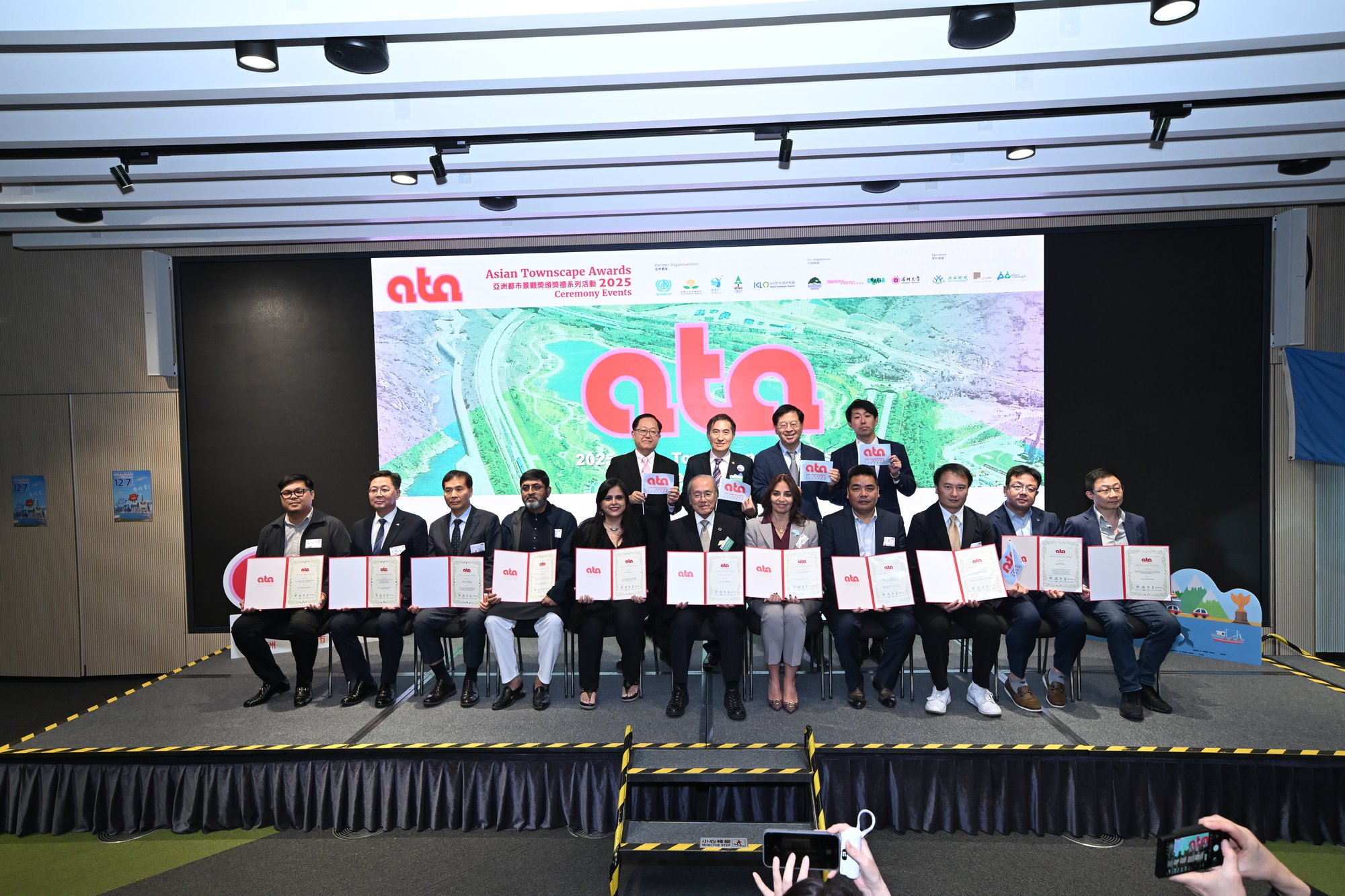
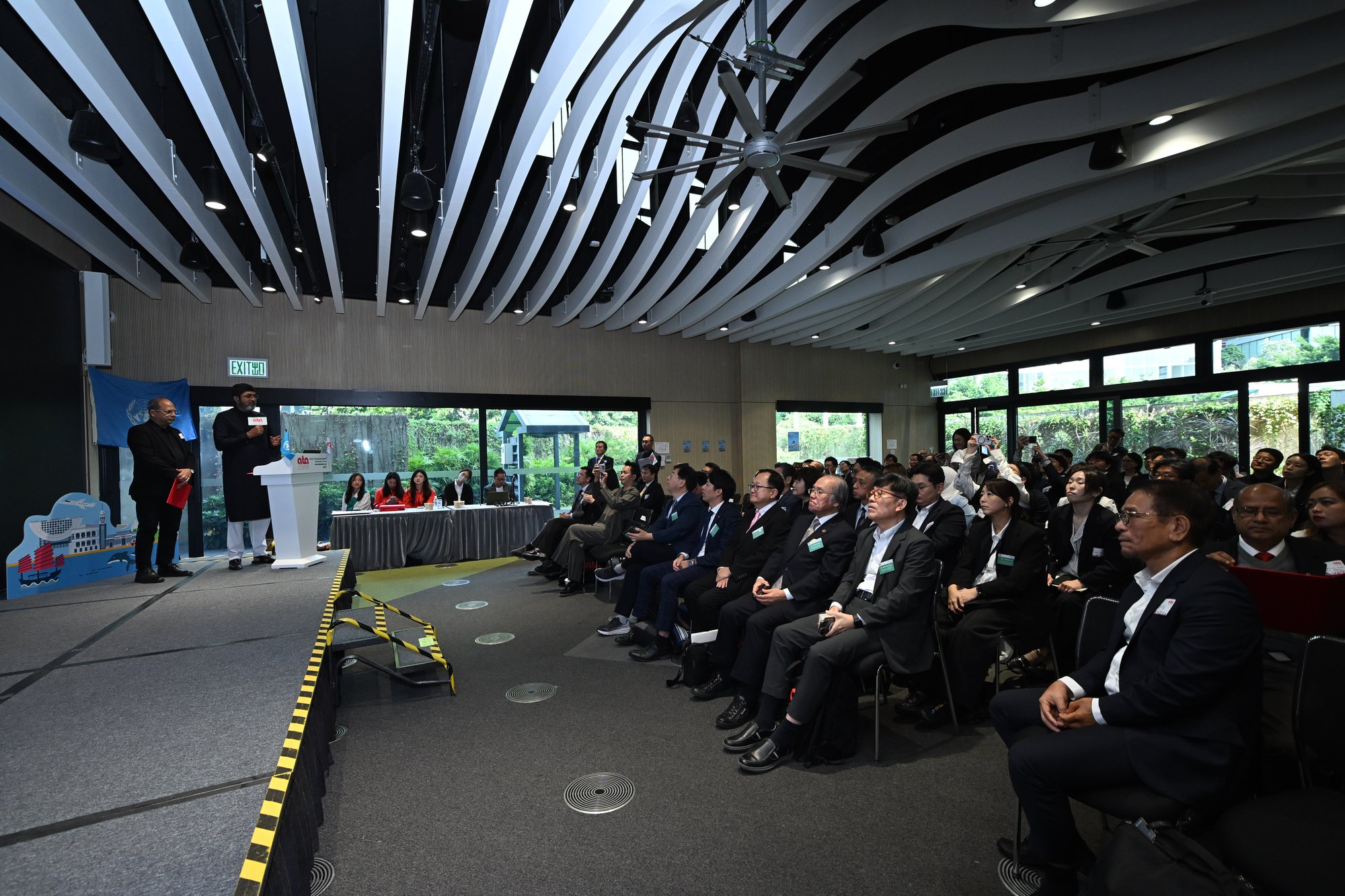
Over the past 15 years, the ATA has grown into a truly pan-Asian platform. Projects from more than 90 cities across Japan, South Korea, China, Singapore, Myanmar, Vietnam, Thailand, Nepal, Bangladesh, Sri Lanka, Pakistan, India, and Indonesia have been recognised.
Each award tells a story of transformation—whether through the protection of nature, the cultivation of sub-nature, or the creation of buildings that drive regional development.
In 2025, the awards continue to evolve, co-hosted by UN-HABITAT ROAP, URC, AHS, ATDeS, and the Architecture & Urban Research Institute.
This latest cycle promised to spotlight projects that embody the Sustainable Development Goals (SDGs) while offering practical lessons for cities across the region.
Ultimately, the Asian Townscape Awards are more than an annual ceremony. They are a call to action, urging cities to rethink how urban spaces can serve both people and the planet.
For Bangladesh, Hatirjheel’s recognition is not just a triumph of design but a reminder that sustainable urban transformation is possible when vision, collaboration, and community converge.
Written By Nibir Ayaan