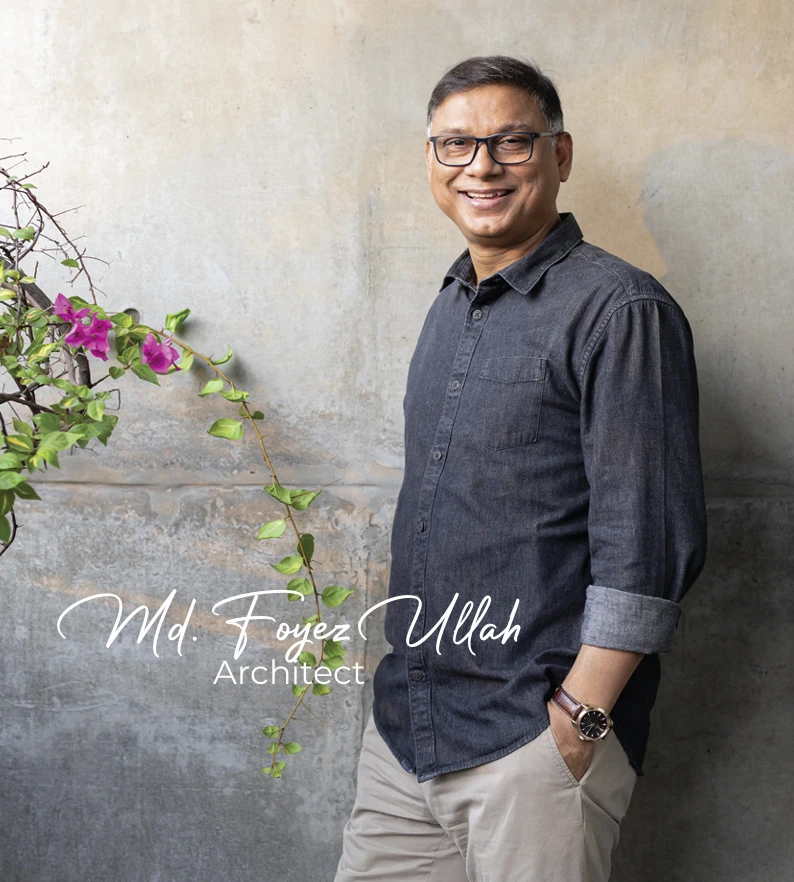
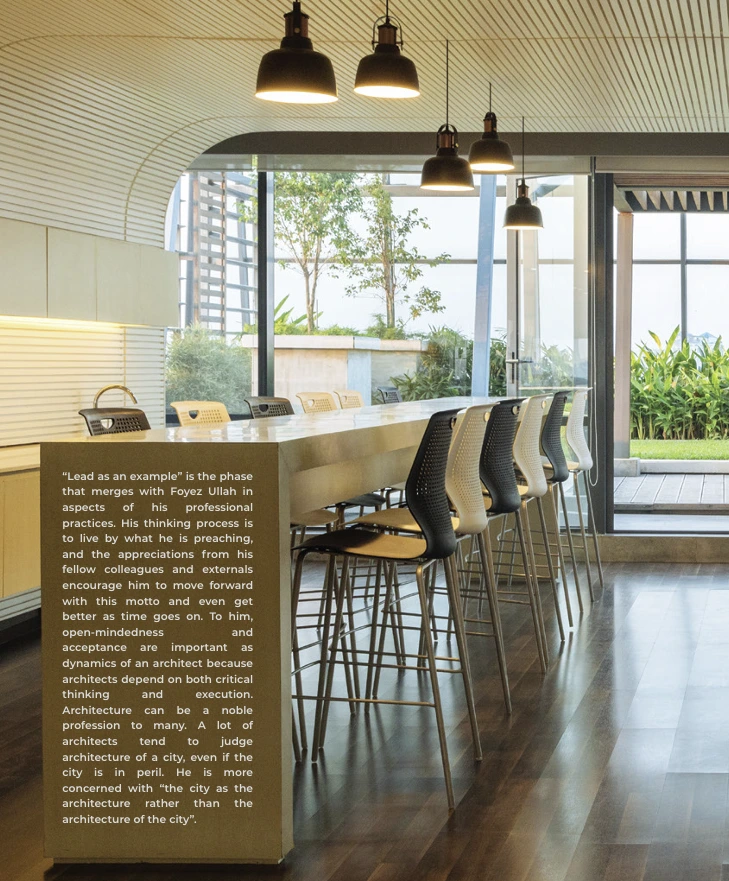
Transforming Time Embracing The Journey of designing a mother’s courtyard to a community courtyard
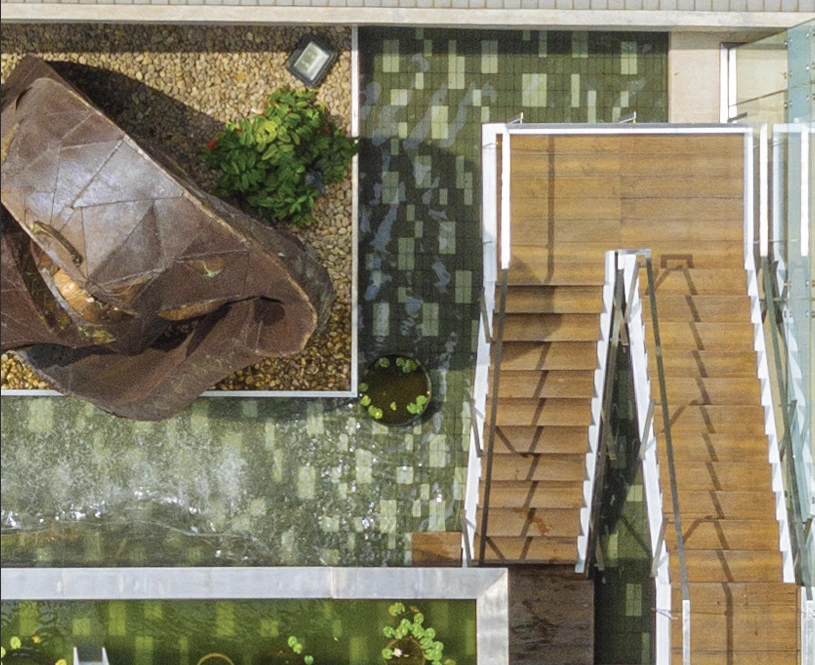
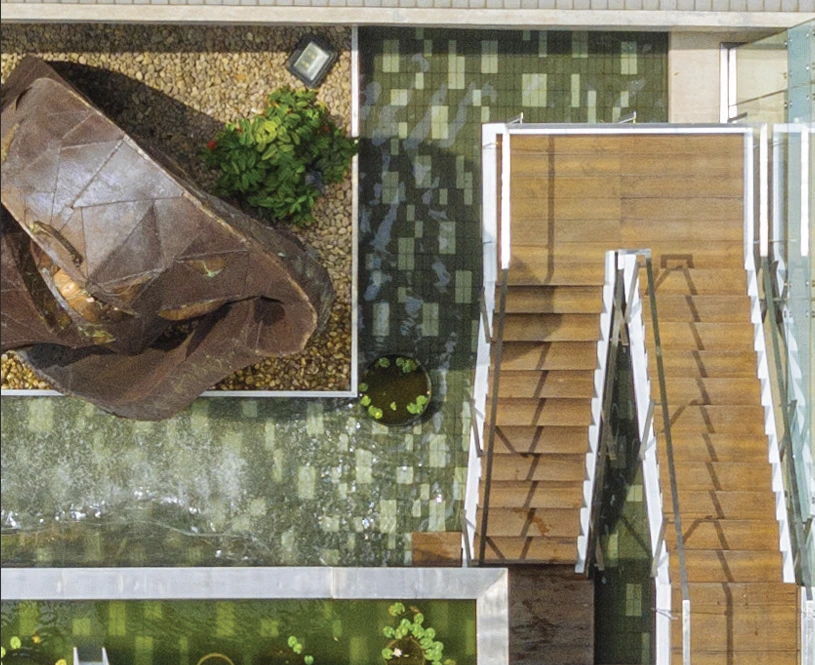
Architecture as a profession starts with untold responsibilities, especially from the day an architect realizes their observation about the surrounding necessities. The story of Architect Rafiq Azam starts somewhere there when the young and enthusiastic artist started his architectural school at the Bangladesh University of Engineering and Technology (BUET). Uncertain about coping with architecture, his subconscious mind always wandered towards art school. Being born and brought up in the old town and surrounded by its culture, the young Rafiq developed a lateral mindset. The results of his learning reflect on his work even after 30 years of practice as a Principal Architect with his team, Shatotto architecture for green living. From the fond memories of childhood and presently looking back to the missing pieces built the urge to refurbish the old Dhaka with a better story. But it all started with a sudden step on the realization of responsibility that he felt to hold the memories of his family, his mother, and their childhood ambiance, back when he was a third-year student struggling to survive architecture school. After the demise of his father, they wanted to rebuild their house. His mother and her affectional emptiness of giving away her memories with her husband and adapting to a new built environment made him courageous enough to start his first design project, their residence in Lalbagh, Dhaka. The only requirement from his mother was a garden and an “uthan” (courtyard), like the one they had in their old house, where she could walk around and re-live her nostalgia. The first of its kind, he designed a courtyard on the second floor of a building, gifting his mother the patch of green to cherish. Almost after 30 years, he did similar for the people of Rasulbagh, a small community in Lalbagh, Old Dhaka. He designed a communal park collaborating with the Dhaka South City Corporation, that is more like a courtyard gifted to the built community. According to Rafiq Azam, architecture is not just drawing and construction but more about a merging point of nostalgia and new memories. His inspiration for sticking to architecture, lastly, was to create for the mother, the soil, and the country. As he says, “I learned architecture from my mother.” But this journey was not easy and short. The dedicated practice and research over the last 30 years, the showcase of persistence in public domains, developed trust in people. This reliance helped him influence a struggling community like Rasulbagh to revive and celebrate life. His vast experience allowed him to execute his ideas in a way that was widely accepted and even celebrated by society. ‘Architecture’s main focus should be to improve human life, working with the environment and its habitat. It should not only be limited to accommodating the luxury of elites but that of the public as well. That is how a kinship develops. ‘Urban spaces need to improve in the name of development, not just mega infrastructures; otherwise, the quality of human life will not be enhanced. And I have always been on a mission to bring a positive change,’ expressed Rafiq Azam. Rafiq Azam’s practice has always somewhat had its roots in Old Dhaka. Earlier in his career, the wandering mind wondered about the high-thorny boundary walls of the city. He questioned the level of mistrust and hatred that people built over time. From the culture of the old town, the houses had “mer” (plinth) for people to sit and mingle, at times with mud coolers filled with water to offer the passers-by. Dhaka was a city of love and respect; it was about bonding and mingling. The answer to this subconscious dystopia was to break the boundary walls down and oppose the convention. The practice of using glass boundaries to dissolve the visual barriers between the dwellers started. “The words ‘Kancher Deyal’ from the name of Zahir Raihan drama have inspired me to think about how a boundary can be made fragile and transparent. Hence, I started implementing them in the apartment buildings by adding plantations and benches for the passers-by. I took it as an experimental process to observe the interaction of the society,” he explained. In 1998, Rafiq did his first solo art and architecture exhibition in New York. “People and critics appreciated my arts- a few even bought. However, for architecture, I mainly received praise for my ability to draw to international standards. The architecture was not something extraordinary, but rather the approach was very American. While I was coming back, I wrote in my diary, ‘I am coming back with hope and frustration. I realized the need to learn about my own country and how to incorporate that into modern architecture. Much of my foreign learning had to be unlearnt, which was tough. I felt myself to be intellectually corrupted,” recalled Rafiq Azam. With this thoughtful shift of learning and unlearning, his urban and modern architecture went through an evolution. The gathered knowledge about Bangladesh, its geographical and climatic contexts, history, and culture started influencing his architecture. He showed his clients how to reminisce their childhood, just as he did with himself while designing his residence. His western drawings started getting a layer of Bengaliness, influences of poetry and literature. The rooms were no more spaces with four walls but rather got a concept. ‘Goshsha Ghor’ (a space to release anger), ‘Bristy Ghor’ (a space to enjoy rain), ‘Swimming Pond’ with ‘Ghatla’ (rural ponds with shorelines), Jongla’ (sprawl of shrubs and bushes), all these conceptually structured his architecture in better ways. A lot of pivotal points shaped his journey. Rafiq had learned a great deal from Glen Murcutt, who spoke more about nature, history, heritage, and its association with human life. “His advice was to touch the earth lightly. Architecture is a part of nature, and the alliance between two should always be maintained,” he added. Reflections of his learnings are observed in his translation of imagination into spaces. He connected the dots without the interference of foreign

Sculpting Skyline: Unwilling contribution to the concrete jungle
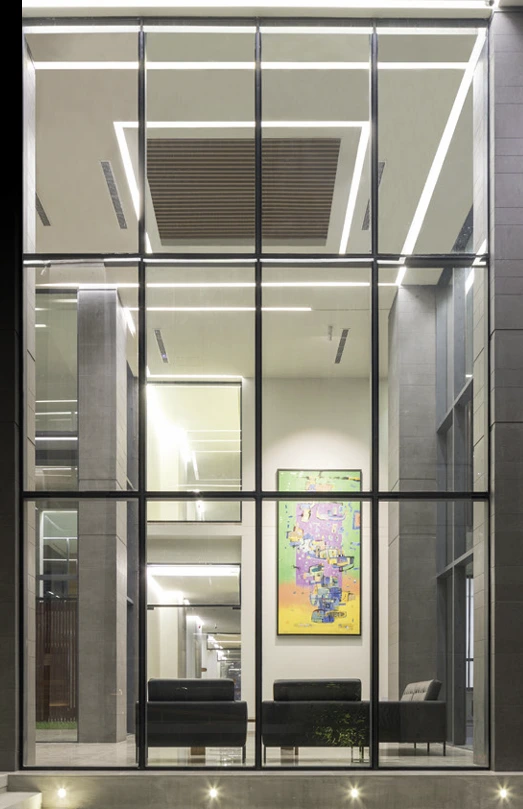
Going down one of the most elite avenues of Dhaka city, the count of ones and twos will be less when it comes to the display of architecture by Mustapha Khalid Palash. Mr Palash, principal architect, and his team Vistaara Architects (Pvt.) Limited, have contributed to the new city skyline with significantly designed commercial buildings that are money-making machines for the economy. While passing by, young architects admire those works – this is quite an accomplishment for an architect, right? However, architect Mustapha Khalid Palash does not have a similar feeling. He is dissatisfied with the replacement of Dhaka’s natural landscape with man-made infrastructure, himself being a part of the contribution to the concrete ‘slum’ with added aesthetics. The nostalgic mind of this multi-talented person wanders around the city he was born in. He misses the vista of green and the landscape of Dhaka. All that visual relief has been lost in the name of fast-paced city development. The young Palash, born in the early 1960s on Baily Road, Dhaka, and later shifted to Gulshan in the mid-1990s, has a vivid scenario of life then: the environment, the lush and green of the city, and its cooling effect on the temperature in the good old days. The boom in population with unresolved planning about migration for a better lifestyle in the city is one of the main reasons for the overloaded condition in terms of size and expansion. Yet the lack of road networks and the commute system does not help much with stretching the city further north and south. Mr Palash believes decentralisation can be a solution to making these struggles better. The idea of scaling down architecture while maintaining its grandness is an old practice in this city. From the Mughal period to modern works by Louis I. Kahn and Muzharul Islam, but later it was lost somewhere in the city lines. A breathing space for the building and a gazing distance for the people are needed to observe large-scale architecture. Examples in Dhaka, as such, are the Mughal forts and palaces, the Sangshad Bhaban (parliament house), and a few others. As lifestyle developed, affordability increased. An unorganised building development started as people wanted to buy apartments over land due to a hike in prices. Hence in the last 20 years, the city became a concrete jungle from a greener jungle. Architect Palash brought back this practice in his design again. One can subconsciously understand the difference between standing in front of the Bashundhara Shopping Complex in the Panthapath area of the city, and Rangs Babylonia in Bir Uttam Mir Shawkat Sarak, on the Tejgaon-Gulshan link road. The inviting space in front of these buildings, on the street level, is the visual relief one needs while perceiving. Commercial building owners are keener towards using their well-known reputation in terms of selling spaces, and with reputation comes along building functionality and safety measures. “The architecture we design is not only for visual aesthetics that happens by default. We focus on delivery and timeline because a building is not just a space, it has a significant relation to the economy. Architecture is not just art. The basic system involves proper functional planning and the utmost safety measures for fire and structural factors. To me, architecture is like a tailored ‘coat’, where the inner lining of clothes has to be the most comfortable for the user, and the outer material has to be visually pleasing to the observer. The outer sight can differ from tastes, but the internal functionality has to be accurate,” explained Mr Palash. Architecture is a partial contributor to the destruction of this city, glorifying architecture is a cliché. He does not just design commercial buildings, but apartment buildings as well. His most well-known architecture though being on the prefaces of avenues like Gulshan is mentioned often. In all these years, he never designed a single-unit family residence, deliberately. He has done notable work in Chattogram and is currently working on a mass development project in Rajshahi. “The neo-modernism that our culture and society have gotten into has changed the social morphology to a different extent. The presence of a mobile phone is a distraction in relationships that has a social impact and even a lifestyle impact. Nowadays, apartment projects have ‘his and hers’ separate rooms, and the family living space culture is almost abandoned,” added the architect. Gulshan is already a heat island because of the excessive use of concrete, air conditioning and generator systems to support them. In addition to that the buildings are east or west facing on the avenue. Mr Palash and his team designed screening to reduce the internal effect of temperature. A few buildings even use photovoltaic glasses on the façade to produce renewable energy. “I have a hidden geometry while designing my buildings. I believe in signature, a handwritten signature, not rubber stamping.” “I have a hidden geometry while designing my buildings. I believe in signature, a handwritten signature, not rubber stamping. When I follow my geometric style, the buildings look like they are from the same house, but they are different in variation with visual expression” he mentioned. “The areas like Gulshan, Banani, Baridhara, Bashundhara R/A, Dhanmondi, and Uttara cannot be an example. The population density is much less there, and the distribution of basic commodities is also sufficient. The rest of the areas which are more organic, unsupervised, and ‘unorganised-ly’ growing are more in threat and should be taken care of” he added. Born to an artist couple, Mr Palash had exposure to art and culture since childhood. His confidence was developed in a very nurturing way by his parents, which eventually made his path of journey easy. “When I was 6, I used to assist my father with his commissioned works. If he had any works with letters, he used to draw the outline and ask me to fill it up in
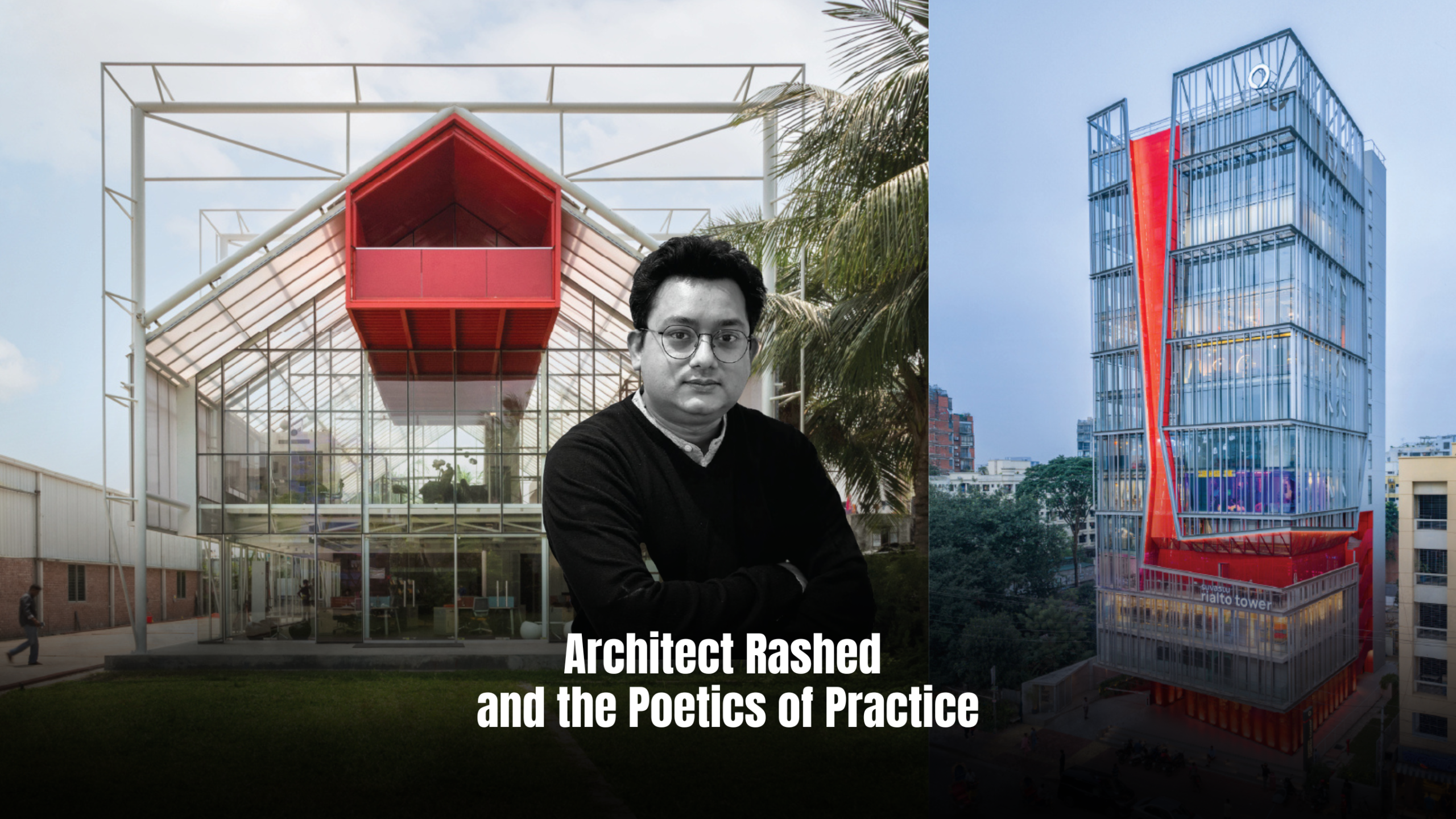
Architect Rashed and the Poetics of Practice
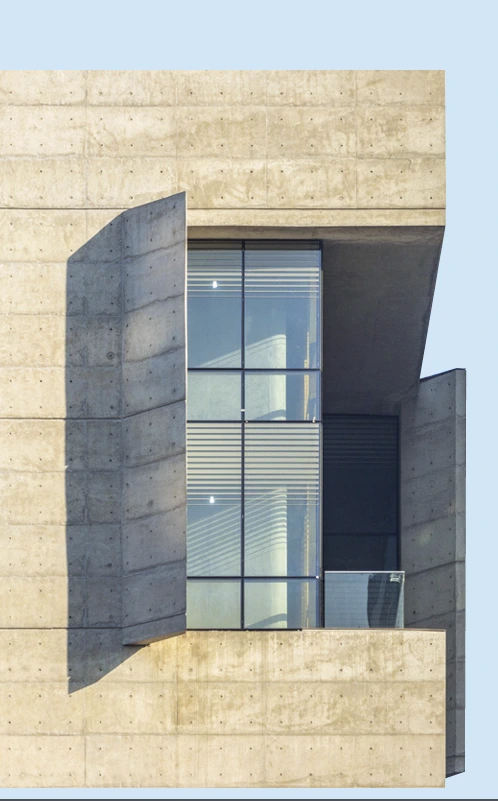
In the crowded clusters of Dhaka’s architectural offices—where every firm spoke in bold, predetermined tones—finding an original voice was never easy. For Architect Rashed Hassan Chowdhury, the journey began not with buildings, but with books and design experiments of all kinds. Encouraged by his elder brother to pursue architecture, he entered BUET carrying curiosity and a restless desire to make and learn. Even as a student, Rashed was never confined to one discipline. He moved fluidly between book design, graphic work, product design—anything that allowed imagination to unfold in tangible form. But the multiplicity of voices, the weight of tradition and pressure of trends, left him with a fundamental question: How does one discover one’s own architecture? Rashed’s answer, at least in the early years, was to do everything. His first role was as a researcher at BUET’s Green Architecture Cell, followed by a post as lecturer at the University of Asia Pacific. After office hours, he joined architects like Nahas Khalil, Marina Tabassum, and Mahmudul Anwar Riyaad on project-based work—each collaboration sharpening instincts and broadening vocabulary. And at night, in the chilekotha/attic of his brother’s office—with only a computer and printer—he began sketching the contours of his own practice. Sleep was rare, but happiness abundant. Eventually came the realization: energy without direction cannot sustain itself. “I was doing too much, but none of it was really going anywhere,” Rashed recalls. That reckoning pushed him to leave the safety of multiple jobs and commit to a singular vision. Out of that decision was born Dehsar Works—a multidisciplinary practice whose very name is simply the last-to-first spelling of “Rashed,” a gesture as honest and direct as the work it produces. Learning by Doing Dehsar Works is not merely an architecture office—it is a laboratory. For Rashed, design is not about formula but about process, about finding concept and clarity. “The design process excites me most. It still does, every single time,” he says. This philosophy is reflected in the kinds of projects he chooses and the way they evolve: adaptive reuse, experimentation with materials, finding beauty in imperfection, and above all, engaging with the everyday lives of users. The Blues Communications Office, a transformation of a warehouse into a bold new workspace, tested both his patience and creativity. The design called for a complex metal structure—one that contractors hesitated to take on. Instead of abandoning the idea, Rashed and his team decided to build it themselves. They formed a sister concern, aptly named Workshop, to execute the construction. Through trial, error, and persistence, they not only completed the project but also gained a wealth of knowledge about materials and making. Ajo Idea Space is perhaps the purest example of his ethos. Conceived as a café and gathering space, it was never meant to be a conventional air-conditioned box. Instead, it embraced openness, natural ventilation, and a certain looseness that invited people to linger. The pavilion-like structure, with its vaulted steel forms and porous screens, blurred the boundary between inside and outside. It embodied sustainability not as a checklist but as a lived experience: a place where people ate, conversed, and created in ways that felt organic. Another notable work is the Beximco Learning and Development Center, a lightweight, semi-circular hall framed with steel and clad in polycarbonate sheets. Here, the emphasis was on creating an affordable, sustainable, and flexible learning environment that could anticipate future uses. By designing with recyclability and climate responsiveness in mind, Rashed sought to redefine what corporate infrastructure could mean in Bangladesh. Similarly, the Artistry Marble & Granite Experience Center transformed an old warehouse into a gallery-like environment for natural stones. Rather than demolish and rebuild, the design preserved and reinterpreted the existing shell, reusing nearly half the materials. The result was a spatial narrative where light and texture interacted with surfaces, allowing visitors to experience stone not as a static product but as a dynamic material. Another iconic project of Rashed is Suvastu Rialto Tower, a contemporary commercial landmark in Dhanmondi. Developed by Suvastu Properties Ltd., the project embodies functionality, visibility, and refined contemporary design. Suvastu Rialto Tower is a 3-basement, ground plus 13-storey commercial building, developed on approximately 10 kathas of land. The vertical organization of the building efficiently accommodates parking, retail, and office functions, addressing both spatial optimization and urban density challenges. The architectural language of Suvastu Rialto Tower is distinctly modern, characterized by clean lines, transparency, and material contrast. The façade features a glass curtain wall system, combined with aluminium elements and contemporary detailing. The glass facades not only enhance the building’s aesthetic appeal but also maximizes daylight penetration, contributing to a pleasant and productive interior environment. A Philosophy of Effort Rashed is not shy about offering advice to the younger generation of architects. His words are sharp but encouraging: “Stop complaining and start enhancing your skills.” For him, the profession is not merely about constructing buildings but about learning by doing—whether in furniture, graphic design, or urban experiments. Bangladesh, in his eyes, is a land of vast opportunity, waiting for those willing to work with patience and integrity. “There is so much to do, but very few skilled people willing to put in the effort,” he says. The formal degree, while important, is not enough. Real growth, he believes, happens through curiosity, through the courage to try, to fail, and to learn. Toward a Different Future The story of Dehsar Works is, in many ways, the story of one architect’s relentless pursuit of authenticity. From a chilekotha room with a single computer to award-winning projects recognized internationally, the journey has been marked not just by structures built but by lessons learned. As Rashed continues to shape spaces that are adaptive, playful, and deeply contextual, he reminds us that architecture is less about monuments and more about moments: the