
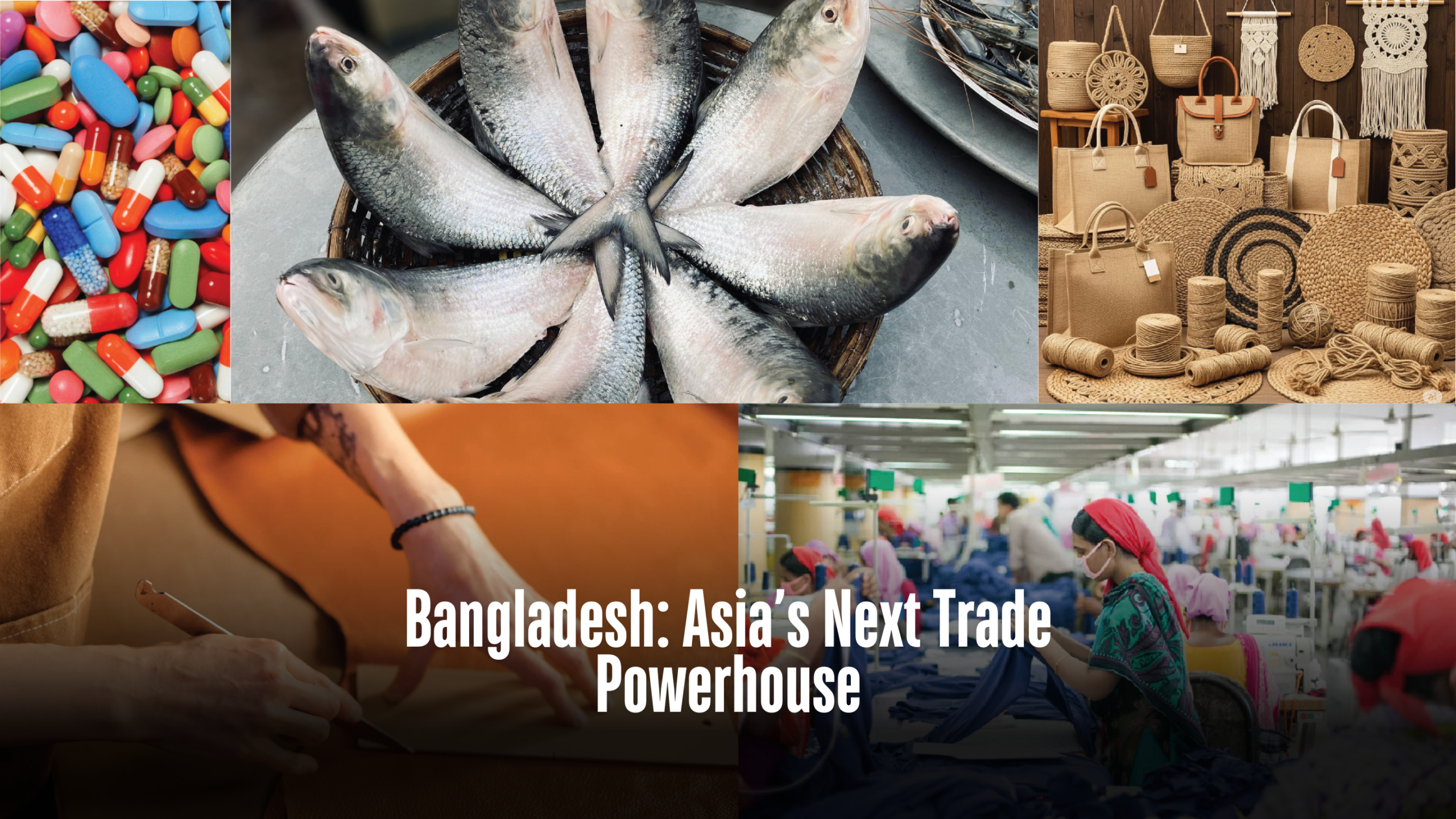

Bangladesh is quietly rewriting its economic story. Once known primarily for its ready-made garments, the country is now emerging as a diversified trade hub in Asia. Its export basket is expanding—and so is its global relevance.

Earnings from exports have always been the nation’s driving force, and the last fiscal year was no different. Apparels played a dominant role, earning $48 billion, while other sectors also expanded their global reach.
“Bangladesh’s export basket did not widen overnight—it was hard-won,” said Moynul Islam, president of the Bangladesh Ceramic Manufacturers and Exporters Association (BCMEA).
“And now Bangladesh is home to a vibrant young population—more active and intelligent than their predecessors,” said Islam, who also serves as vice chairman of Monno Group.
“From ceramics to garments, pharmaceuticals to electronics, this generational shift is redefining the business landscape and accelerating new export frontiers, positioning Bangladesh as one of Asia’s most promising investment and trade destinations,” he added.
RMG : The Backbone of Bangladesh’s Trade
Garments remain Bangladesh’s strongest export pillar, contributing over $39 billion in FY2024-25 knitwear and woven categories combined. Knitwear alone earned $21.1 billion, while woven garments brought in $18.1 billion, according to data from the Export Promotion Bureau (EPB).

The sector’s strength lies in its scale and adaptability. Bangladesh retained its position as the world’s second-largest apparel exporter in 2024, as confirmed by the Bangladesh Garment Manufacturers and Exporters Association (BGMEA). Exports to non-traditional markets are rising, and shipments to the USA grew by 29 percent between January and April 2025.
Yet, the industry faces headwinds. Rising production costs, energy inefficiencies, and compliance pressures are squeezing margins. Extortion in industrial belts and loan defaults among top exporters have also raised concerns, as noted by Bangladesh Bank.
To stay competitive, the sector is embracing green manufacturing and automation. Over 260 factories are now LEED-certified, and green factories enjoy tax incentives and higher buyer preference. With continued investment in sustainability and worker welfare, RMG is poised to remain Bangladesh’s trade anchor.
Home Textile: The Quiet Climber
Once a niche category, home textiles have become Bangladesh’s second-largest textile export segment. The sector continued growing despite global challenges, earning $871 million in the last fiscal year.
The rise of wellness living and interior-focused consumption has boosted demand for bed linens, curtains, and towels. Bangladesh’s manufacturers are responding with eco-friendly fabrics and design-led collections.
However, the sector remains vulnerable to tariff uncertainties, especially in the US market. To mitigate this, the Bangladesh Knitwear Manufacturers and Exporters Association (BKMEA) recommends diversifying export destinations and investing in design innovation.
With stable growth and rising global demand for sustainable home goods, Bangladesh’s home textile sector is quietly climbing the ranks.
Leather and Leathergoods: A Legacy in Transition
Bangladesh’s leather sector has shown resilient performance, earning over $1 billion annually since FY2018-19. Once hailed as the country’s second-largest export earner, the sector has struggled with environmental compliance and infrastructure bottlenecks.
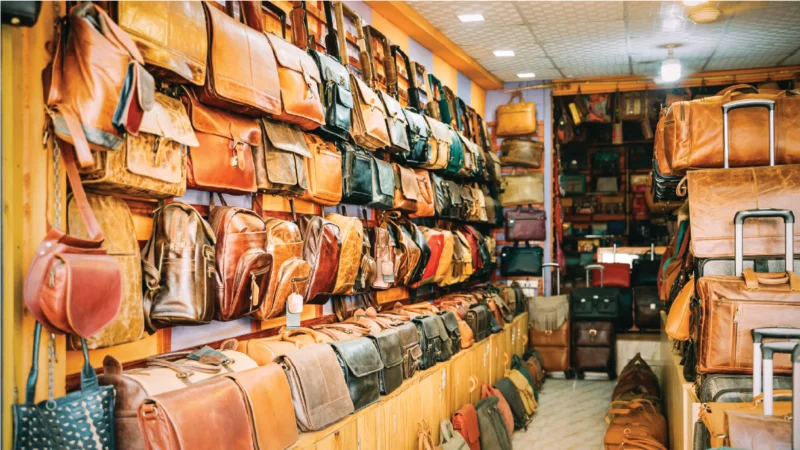

Shipments of leather and leathergoods have slowed due to delays in setting up the Central Effluent Treatment Plant (CETP) in Savar, said Arifur Rahman Chowdhury, general manager of ABC Footwear Industries Ltd, a concern of Abedin Group.
“Without the CETP, many tanneries fail to meet global environmental standards, particularly the Leather Working Group (LWG) certification required by most European buyers,” he noted.
Chowdhury added that the CETP’s completion would resolve nearly 80% of the sector’s challenges.
Still, there is hope. According to the Leather Goods and Footwear Manufacturers & Exporters Association of Bangladesh (LFMEAB), 80 percent of exports go to just 10 countries—highlighting the potential for market expansion. With renewed focus on compliance and branding, leather could reclaim its place as a premium export.
Frozen and Live Fish: The Blue Economy Awakens
Bangladesh’s quiet revolution in aquaculture has made it a regional leader in sustainable fish farming. The country’s fisheries sector earned around half a billion US dollars in the last fiscal year, reflecting steady demand for shrimp, pangasius, and tilapia.

Bangladesh Bank and the Ministry of Fisheries are working on improving traceability and certification standards. Yet, export volumes remain modest due to quality inconsistencies and limited cold-chain infrastructure.
With rising global interest in clean protein and sustainable seafood, Bangladesh’s fish exports could scale rapidly—if supported by investment in logistics and branding.
Empowering smallholder farmers with training, digital tools, and access to finance could unlock further growth. Strengthening community-based hatcheries and eco-friendly practices would ensure sustainability, while coordinated branding could position Bangladesh as a trusted global seafood supplier.
Agricultural Commodities: A Sleeping Giant
Agricultural exports brought in just over $1 billion in FY2024-25, led by fruits, vegetables, and processed foods. Mangoes, in particular, saw a rebound thanks to improved quality and packaging.
However, the sector suffers from fragmented supply chains and slow policy support. Export growth has been inconsistent, and agricultural products face steep competition from regional players.

The Ministry of Agriculture and EPB are now focusing on diaspora-driven demand and organic certification. Digital platforms for farm-to-market linkages, real-time price data, and quality monitoring could reduce inefficiencies and empower growers.
Strategic partnerships with private investors and international buyers would further enhance competitiveness, ensuring that Bangladesh’s produce earns recognition in premium global markets and that agri-exports become a major growth engine.
Pharmaceuticals: The Next Frontier
Bangladesh now exports medicines to more than 160 countries after meeting 98 percent of its domestic demand, including shipments to highly regulated markets in Europe and North America.
Pharmaceutical exports have nearly doubled in recent years to about $215 million, driven by WHO-compliant manufacturing facilities and competitively priced generic formulations.

According to Md Zakir Hossain, secretary general of the Bangladesh Association of Pharmaceutical Industries (BAPI), exports could have easily surpassed the one-billion-dollar mark if not for a series of global setbacks, including the Covid-19 pandemic, the Ukraine–Russia war, and the ongoing devaluation of the Taka against the US dollar.
“We were on track to reach five to six billion US dollars by 2030,” said Hossain, who also serves as managing director of Delta Pharma Ltd.
“But these global disruptions, along with Bangladesh’s recent political changeover, increased bank interest rates, and the ongoing crisis in the banking and financial sector, have slowed our momentum.”
Manufacturing and exporting medicines remain highly regulated processes, requiring more than 40 licences, he noted.
Since 2024, manufacturers have also implemented a 46 percent salary increase to quell worker unrest, putting further strain on investment capacity amid a global recession and weak buyer demand.
Still, local companies such as Incepta, Healthcare, Renata, Beacon, and Beximco have made significant advances in the global biologics market with innovative products. Hossain believes these molecules could help Bangladesh regain the strong growth trajectory it was poised for in 2020.
Plastic and Plastic Products: A Rising Star
From household items to industrial packaging, Bangladesh’s plastic goods are gaining global traction. Exports have tripled over the past 13 years, reaching $284 million in FY2024-25, according to the data of the Export Promotion Bureau (EPB).

“The EPB data presents a partial picture,” said Shamim Ahmed, president of the Bangladesh Plastic Goods Manufacturers and Exporters Association (BPGMEA).
“The quantity of plastic deemed as export was $1.5 billion in the 2022–23 fiscal year,” he said.
This deemed export figure is directly related to garment exports because plastic accessories used during RMG shipments are also considered part of plastic exports, said Ahmed. A portion of garments exported every year consists of plastic accessories, he said.
“The plastic sector has high potential, as we hope in the next three years EPB’s official data on plastic exports will reach $1 billion and deemed exports $3 billion.”
Rising demand and anti-dumping measures against competitors offer Bangladesh a rare opportunity to grow.
Ahmed’s association is calling for bonded warehouse access and recycling incentives. With improved infrastructure and supportive policies, plastics could become a key tool for export diversification, he said.
Jute and Jute Goods: Tradition Meets Innovation
Jute has always been an iconic product for Bangladesh. The golden fibre earned $820 million in the last fiscal year, slightly down from the previous year, as raw jute exports faced restrictions—sparking debate among stakeholders.
The Bangladesh Jute Mills Corporation (BJMC) and EPB are promoting value-added jute goods—such as bags, rugs, and composites—to revive the sector. With global interest in biodegradable materials rising, jute has a unique chance to lead the sustainability narrative.

Industry insiders believe that Bangladesh must position jute not just as a traditional fibre but as a modern, versatile material. Countries in Europe and North America are increasingly demanding eco-friendly packaging solutions, offering Bangladesh a chance to capture new markets if it can meet international quality standards.
At the same time, policymakers stress the importance of research and development to diversify jute’s applications. Innovations such as geo-textiles, paper pulp substitutes, and automotive interiors are already being tested, signalling a future where jute could replace plastics in multiple industries.
 `
`
Collaboration between farmers, manufacturers, and exporters will be key to ensuring that the golden fibre continues to shine in the global marketplace.
Light Engineering: The Underdog of Export
Bangladesh’s light engineering sector is quietly carving out a place in the country’s export portfolio, showing steady growth and untapped promise.
In FY2024-25, the sector earned $535 million in export revenue, driven by a diverse range of products—from bicycle parts and agricultural tools to electrical components and small-scale machinery.
This diversification signals a shift in Bangladesh’s industrial landscape, as engineering goods begin to complement the country’s traditionally dominant apparel exports.
Yet, the sector’s global footprint remains modest. “Bangladesh’s light engineering exports are minimal compared to the global market of around $8 trillion,” said Abdur Razzak, president of the Bangladesh Engineering Industry Owners Association (BEIOA).
According to him, local manufacturers possess the technical skill to produce many of the machines the country currently imports. However, they are constrained by a lack of access to advanced technology.

To unlock the sector’s full potential, Razzak emphasised the need for five critical enablers: capital, modern technology, policy support, skilled workforce training, and eco-friendly industrial parks.
He also noted that light engineering is unlike other formal sectors—it is deeply rooted in technical know-how and innovation. As such, a comprehensive, integrated approach is essential to transform this promising industry into a globally competitive export pillar.
Bangladesh’s Trade Horizon: A Story of Promise
Bangladesh’s export story is no longer one-dimensional. The top three sectors—knitwear, woven garments, and home textiles—contribute over 83 percent of total exports.
While garments remain dominant, the rise of home textiles, leather, pharmaceuticals, and engineering goods signals a maturing economy.
However, there are many other sectors with the potential to become the next big earners for the country. Ceramics is one of them, and it needs policy support and a steady energy supply to grow further.
Shipbuilding has been a breakthrough sector for Bangladesh. Manufacturing semiconductors and assembling cars are emerging industries that, with proper government support, can make their mark globally.
Bangladesh’s story will not be complete without mentioning cement and steel, where industrial revolutions are also taking place.
With strategic reforms, infrastructure upgrades, and strong branding, Bangladesh is well-positioned to become Asia’s next trade powerhouse. The journey ahead may be complex, but the destination is clear: a future where “Made in Bangladesh” stands for quality, sustainability, and innovation.