

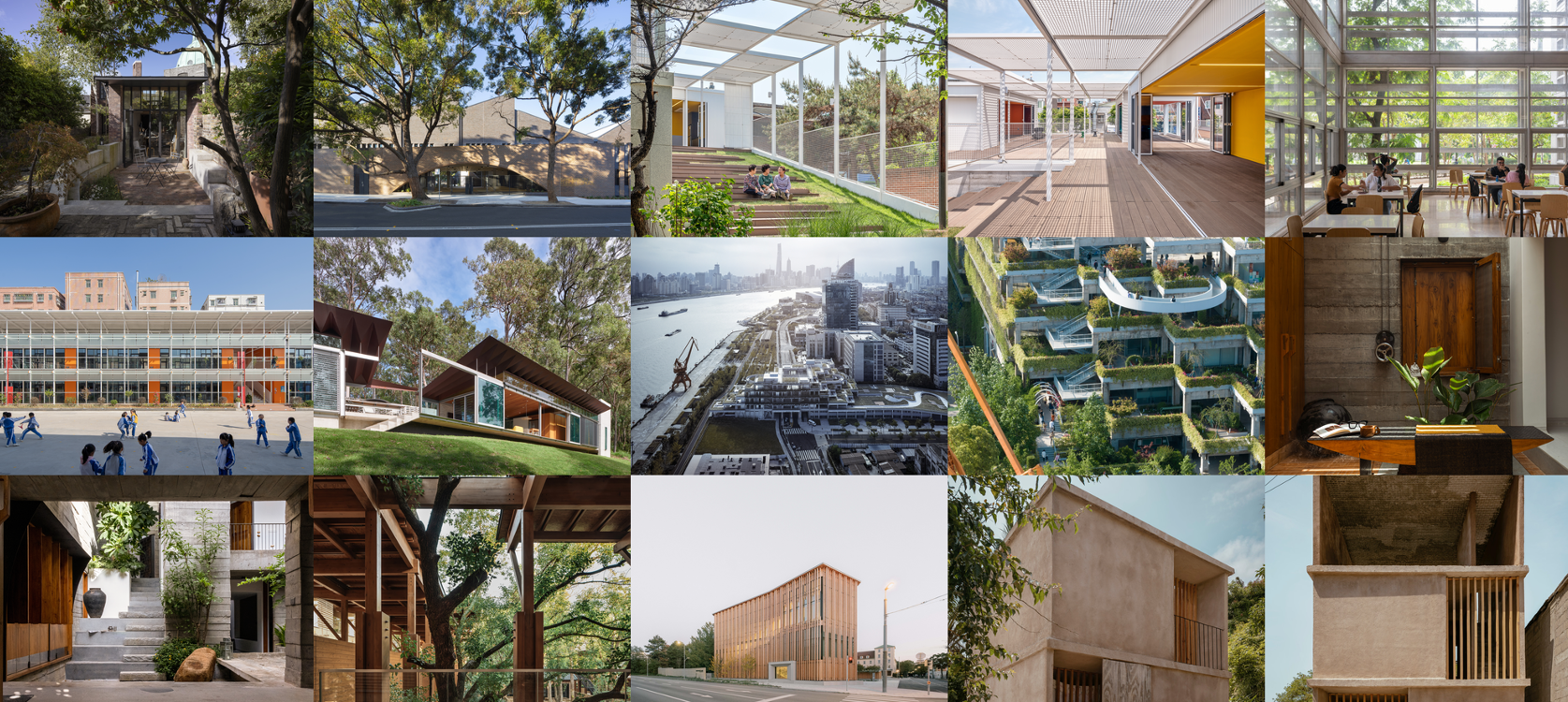

Two projects from Bangladesh — BRAC University and the Zebun Nessa Mosque — have been shortlisted among 52 projects worldwide for the Royal Institute of British Architects (RIBA) International Awards for Excellence 2026.
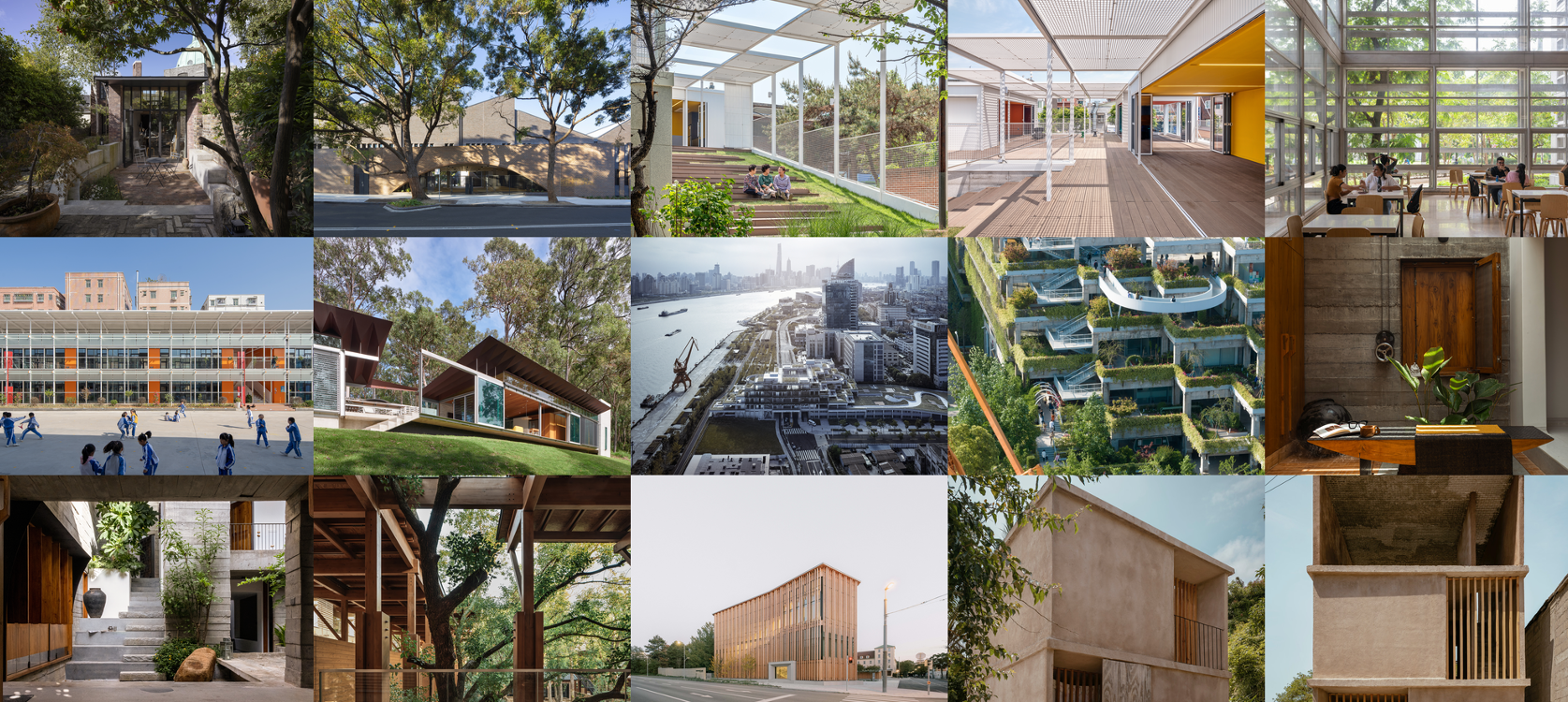
Celebrating outstanding architecture from 18 countries, the biennial awards highlight design that addresses global challenges, including climate change, limited resources, social equity, and rapid urban growth.
The shortlist features projects from five continents, ranging from net-zero industrial hubs to refugee art centres. The list includes projects from global practices such as David Chipperfield Architects (UK/Germany), Foster + Partners (UK), Snøhetta (Norway/USA), Hassell (Australia), and WOHA (Singapore), alongside noteworthy boutique firms including MAKER architecten (Belgium) and Studio Mumbai (India).
Neil Gillespie, Awards Group Chair, said: “The RIBA International Awards for Excellence celebrate incredible diversity and creativity across the world. These projects show how architects can respond to complex social, cultural, and environmental challenges — from revitalising communities and preserving heritage to pioneering sustainable and technologically innovative solutions. They demonstrate the power of architecture to connect people, strengthen identity, and create inclusive, resilient places for future generations.”
The winners of the RIBA International Awards for Excellence will be announced on June 11, 2026.
Culture and Public Spaces
Across the shortlist, architects reimagine cultural and civic buildings as places of openness, renewal, and shared identity. In China, the Beijing Library and Shanghai Library East redefine the library as a civic landmark for the digital age, while in Norway, Kunstsilo transforms a former grain silo into a landmark art museum that retains its industrial past.
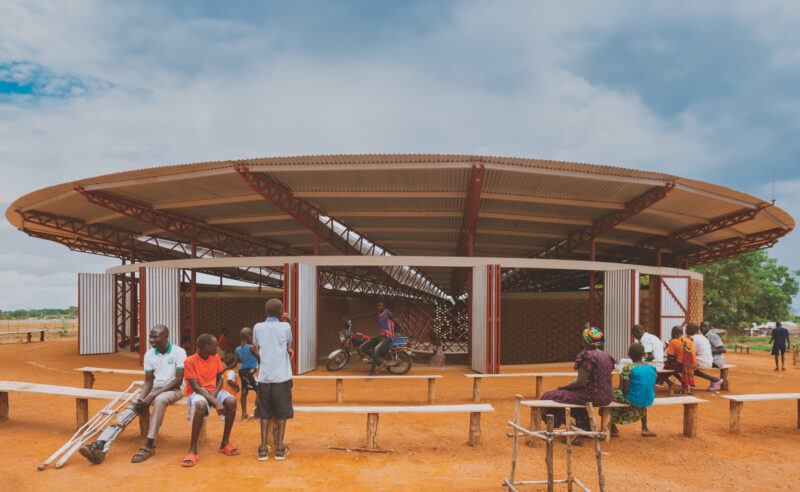
In Uganda, the Bidi Bidi Performing Arts Centre acts as a vital cultural anchor within one of the world’s largest refugee settlements, supporting creative expression and local identity.
Adaptive reuse features strongly, from Rockbund Shanghai’s revitalisation of historic concession-era buildings into a mixed-use cultural district, to Belgium’s Royale Belge, which reimagines a 1960s corporate landmark as a flexible civic and commercial hub, extending the life of a modernist icon.
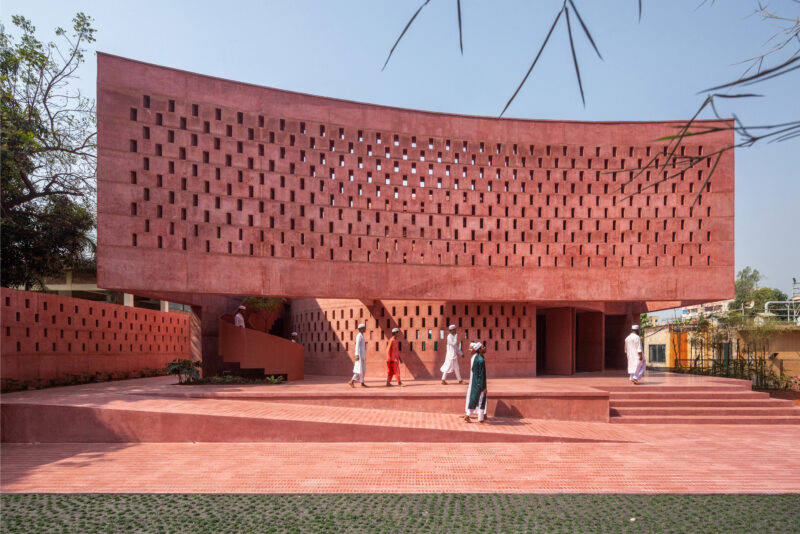
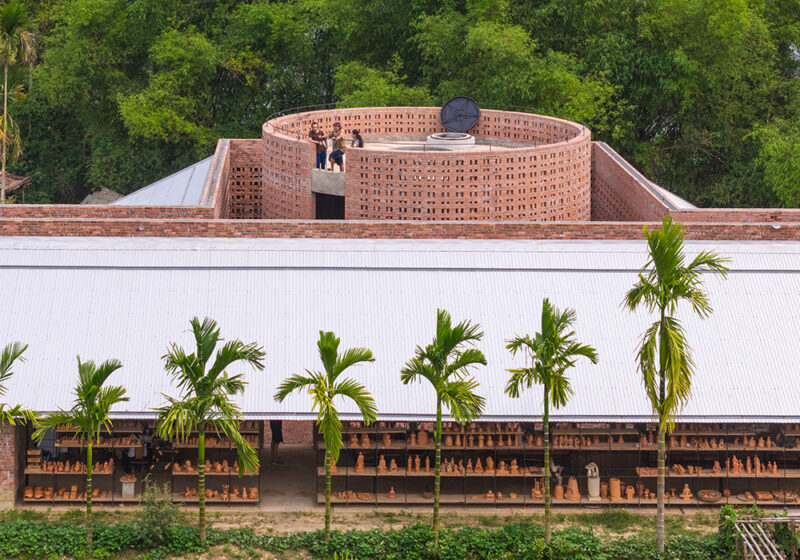
Bangladesh’s Zebun Nessa Mosque reinterprets religious architecture as a net-zero “breathing pavilion”, using light, ventilation, and shared space to connect worship and community life.
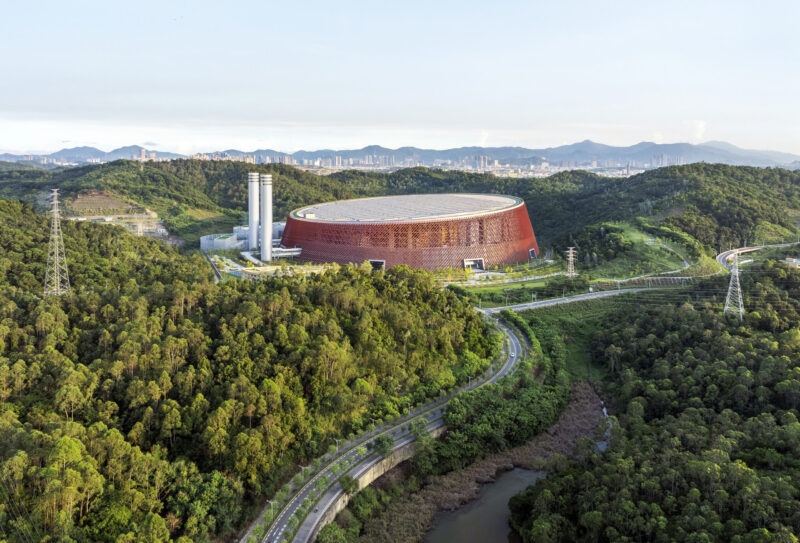
South Korea’s Dokebi Platform transforms an overlooked car park into a neighbourhood gathering space, and Iran’s Nedarag Guesthouse reworks traditional forms and materials into a shared courtyard building that supports hospitality, social ties, and local economic opportunity.
Education & Innovation
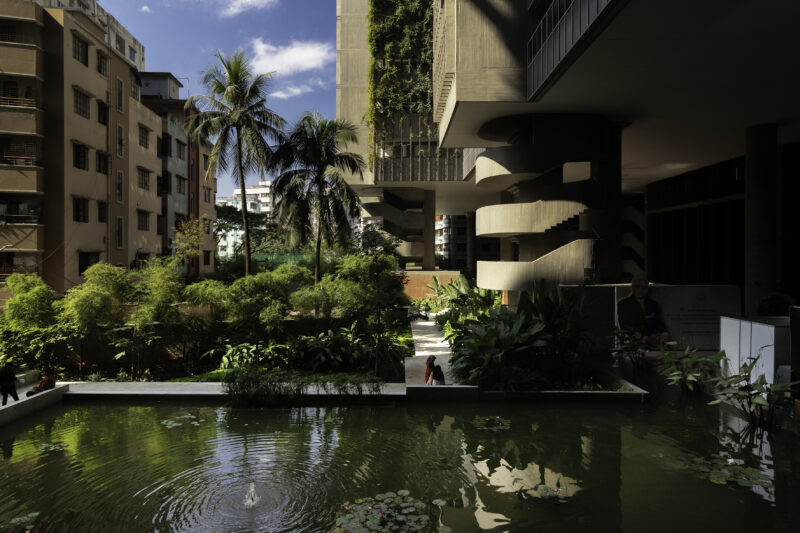
In Bangladesh, BRAC University transforms a former landfill site into a lush, vertical campus shaped by passive cooling and landscape-led design.
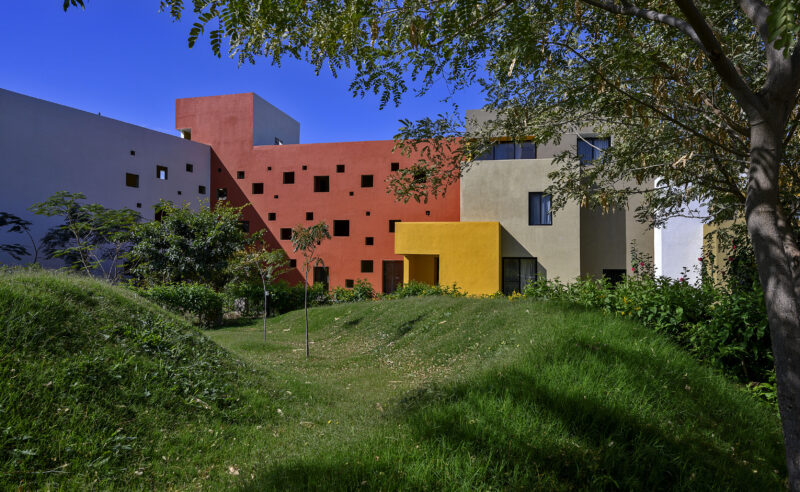
In India, Sondara Gurukulam employs a community-centred approach rooted in local climate, culture, and social need, creating a light-filled, naturally ventilated campus of terraces and plazas that anchors the school within its landscape.
The DY Patil Centre of Excellence integrates LEED Platinum sustainability with shaded courtyards, a two-acre sky garden, and craft-led design to reinforce the relationship between wellbeing and education.
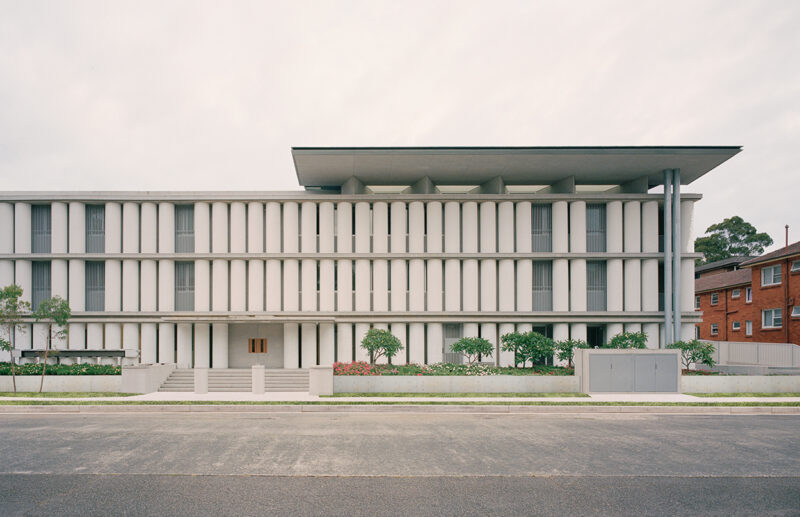
In Australia, Darlington Public School combines flexible learning hubs with outdoor spaces that reflect its urban context and Aboriginal heritage, embedding inclusion and local narratives into everyday learning.
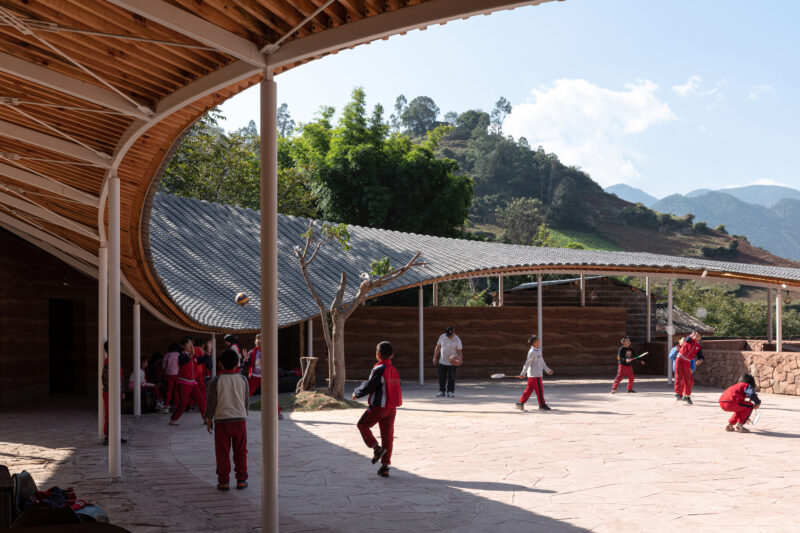
In China, the Foreign Language School Affiliated to Longhua Academy of Educational Sciences addresses acute educational demand through agile construction, using lightweight structures and circular layouts that create adaptable, climate-responsive learning spaces on temporary urban land. Innovation also extends to using buildings as teaching tools.
In Belgium, the WVDM Living Lab transforms at-risk modernist student housing into a live testbed for circular renovation, reuse, and modular adaptability, prioritising process over fixed outcomes and reframing preservation as a collaborative, evolving practice.
Sustainability & Housing
Housing on the shortlist tackles one of architecture’s most urgent challenges: delivering density, affordability, and environmental responsibility without compromising quality of life.
In Mexico, KON-TIGO provides incremental infill housing that grows over time, fostering community resilience in a neighbourhood affected by Hurricane Otis in 2023.
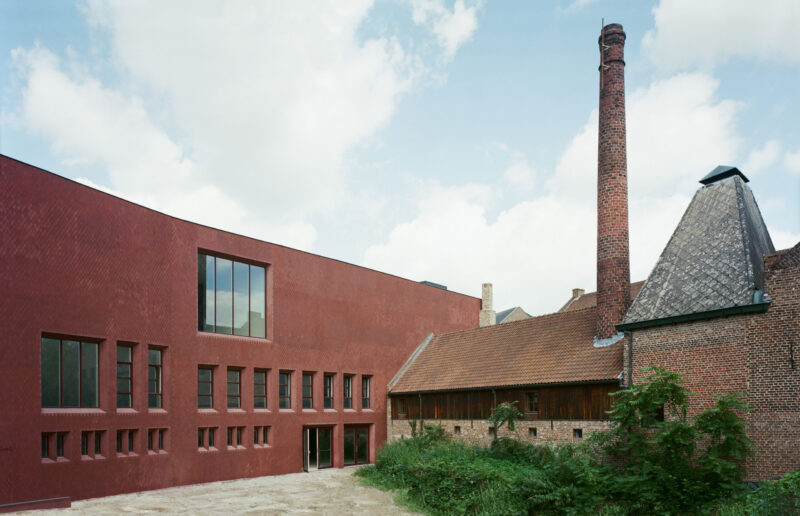
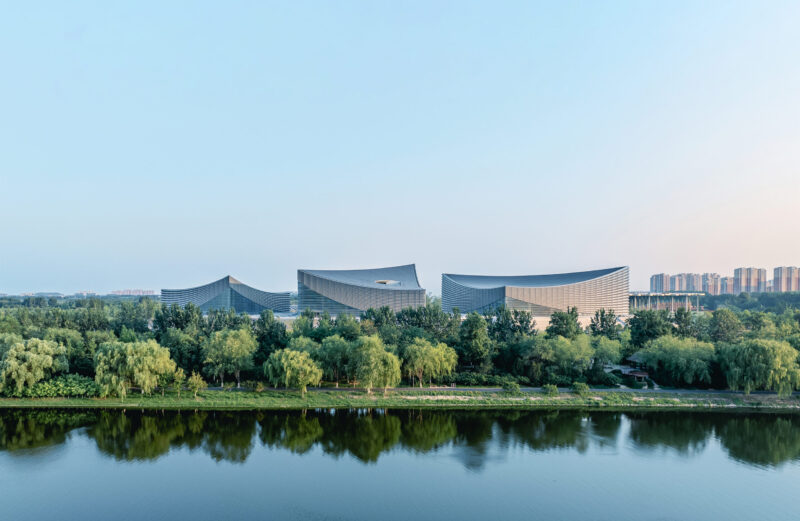
In Belgium, YIMBY revitalises a former garden-city district through small-scale, participatory interventions that reconnect homes, green spaces, and social life.
Several projects rethink urban living through adaptive reuse and low-carbon construction. In Paris, France, Wood Up delivers 132 timber housing units, a climbing gym, and a neighbourhood café, reducing carbon emissions and setting a benchmark for urban development.
Switzerland’s Transformation Warmbächli converts a former industrial warehouse into cooperative housing, prioritising shared living and resource efficiency. Other projects respond to landscape, heritage, and materials. Château de Beaucastel in France integrates low-tech sustainable strategies within a historic estate.
About the RIBA International Awards for Excellence
The pre-eminent awards for architecture outside the UK, recognising and promoting design innovation, sustainable technologies, and meaningful social impact. Given to buildings worldwide that stretch the boundaries of architecture and standards of excellence.
Winners of these awards are considered for the prestigious International Prize.
About the International Prize
The pinnacle of the RIBA International Awards, the RIBA International Prize is awarded to the project which demonstrates visionary, innovative thinking, and design excellence whilst making a distinct contribution for its users and within its physical context — be it the public realm, the natural environment, or both.
Awarded by the Grand Jury to the building considered to be the most significant and inspirational globally of the year, the prize reaffirms the visionary purpose of RIBA as stated in its 1837 charter: “for the general advancement of civil architecture.”