


Bangladesh’s meteoric rise in the global garment industry has long been admired, and now a deeper transformation is underway — one that reflects diversification, resilience, and ambition.

Amid global supply chain realignments and rising manufacturing costs in East Asia, Bangladesh has emerged as one of the world’s most export-ready economies.
But beyond the looms and threads, “Made in Bangladesh” businesses are stepping into the spotlight — from green technology and agribusiness to pharmaceuticals and consumer goods.
It’s time the world pays closer attention to the homegrown brands proudly carrying the “Made in Bangladesh” label.
The list is far from exhaustive, as Bangladesh is home to many more brands that deserve global recognition.
In this special feature, we bring into focus five companies and visionaries who have not only grown with the country but have also redefined what it means to be a “Made in Bangladesh” business.
From expanding beyond borders to competing with international players, their journeys reflect the spirit of a nation that refuses to be boxed in. A common thread binds them all — a relentless desire to rise despite the odds.
To begin the story, there is none other than Anis Ud Dowla, the visionary chairman of ACI Group. A pioneer in every sense, Dowla represents the kind of leadership that has helped redefine the possibilities of Bangladeshi enterprise.
Next comes Hossain Khaled, Chairman of City Bank. This visionary banker played a crucial role in transforming a struggling bank with weak financials into one of the top lenders in the country.
From the travel and tourism field, Sadia Haque — co-founder and CEO of ShareTrip — steals the spotlight with her innovations in the sector. The full-stack travel solutions her firm offers have brought about a massive change in the tourism landscape of Bangladesh.
No story on Bangladesh would be complete without mentioning Ahsan Khan Chowdhury, chairman and CEO of Pran-RFL Group — a perfect example of how a legacy can be nurtured and turned into an empire.
And last but not least, Walton Hi-Tech Industries PLC — the first Bangladesh-origin company to ship electrical and electronic appliances to international markets — stands as a testament to the nation’s growing industrial prowess.
Let’s explore the trailblazers behind the “Made in Bangladesh” renaissance.
A Beacon of Principled Leadership

In Bangladesh’s corporate history, few names command as much respect as M. Anis Ud Dowla. At a time when business and politics often converge, Dowla has carved a distinct path—one rooted in ethics, innovation, and an unwavering commitment to national progress.
His career began not in boardrooms but in the field, as a young executive with British Oxygen. Over nearly three decades, he rose through the ranks, managing operations across Pakistan, Kenya, and Bangladesh.
That global exposure laid the foundation for a leadership style defined by experimentation and efficiency.
The defining moment came in 1992, when Imperial Chemical Industries (ICI) offered him a chance to take over its Bangladesh operations.
The deal was unconventional: a “pay-as-you-earn” arrangement that required no upfront capital. Dowla accepted, and Advanced Chemical Industries (ACI) was born.
“The beginning was challenging, but I made sure that no matter what, I would remain fair to my workers,” Dowla said.
“I assured them that they would receive a fair share of the benefits for the efforts they were putting in. It was a 60:40 profit-sharing arrangement between the investors and workers. And it paid off.”

From modest beginnings with just 352 employees, ACI has grown into one of the country’s largest conglomerates, now employing over 30,000 people across 29 subsidiaries.
Its portfolio spans pharmaceuticals, consumer goods, agribusiness, and logistics.
Under Dowla’s leadership, ACI became the first Bangladeshi company to earn ISO 9001 certification, setting a benchmark for quality and transparency.
“I wanted to have a guardian who would ensure that there was no compromise in quality. The ISO certificate did that for me. They used to visit ACI, conduct audits, and help me produce quality products every time.”
“I went for the certificate to fulfil my dream of remaining true to our customers and never deceiving anyone in any way.”
Despite his success, Dowla remains grounded. His philosophy centres on values—quality, fairness, customer focus, and continuous improvement. These principles, he insists, are not slogans but lived realities within the company.
Dowla’s views on politics are equally clear-cut. He believes that mixing business with political ambition undermines merit and compromises governance. “I strongly believe entrepreneurs should not enter politics, and politicians should not be entrepreneurs.”

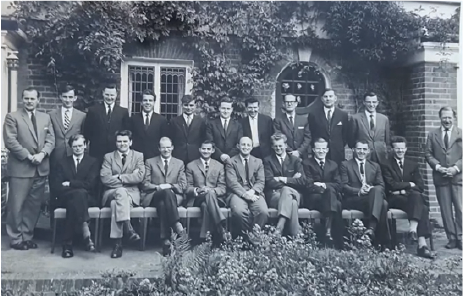
For Dowla, politics is a service, not a career path for entrepreneurs. At ACI, employees are treated as family. The ACI chairman sees leadership as a process of unlocking human potential.
To young entrepreneurs, his advice is simple yet profound: pursue what you love, embrace failure as a lesson, and never settle for shortcuts.
Even in his late eighties, Dowla remains active, drawing energy from ideas rather than rest.
In an era of blurred boundaries and shifting values, Anis Ud Dowla stands as a beacon of principled leadership—an icon admired not just for what he built, but for how he built it.
From Startup to Market Leader

When Sadia Haque set out to build a travel platform, her vision was rooted in something deeper than bookings and itineraries.
“We wanted a travel tech platform where everything would be shared,” said the ShareTrip CEO and Co-Founder.
“Sharing of adventure, sharing of experience, sharing of laughter, and sharing of joy. And from that perspective, the name came as ShareTrip.”
That philosophy of connection would go on to shape one of Bangladesh’s most successful digital ventures.
Drawing on her background in telecoms, media, and technology, Haque channelled over a decade of corporate experience into a startup that would soon redefine how the country travels.
What began as a small three-person team has grown into a full-scale digital ecosystem.
By 2019, ShareTrip launched its B2C platform, offering end-to-end travel services through its mobile app and website.
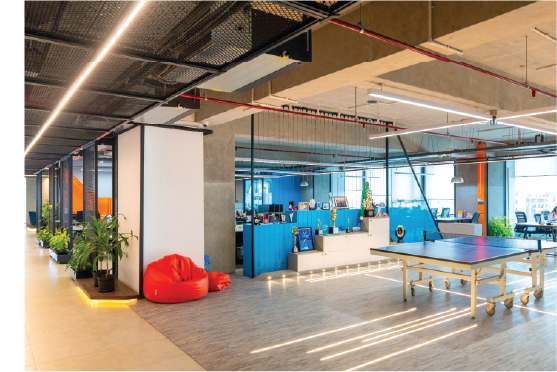
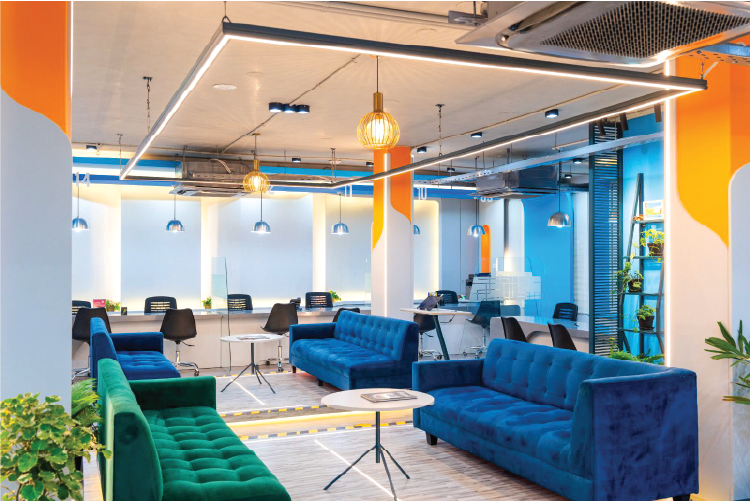
Within six years, it had become the market leader, transforming a fragmented industry into a streamlined, tech-driven experience.
Under Haque’s leadership, ShareTrip has not only captured domestic market share but also gained international recognition.
She received the Women Leader of the Year award at the Kotler Awards 2023 for her visionary leadership, innovation, and contributions to Bangladesh’s marketing and travel-tech landscape.
But Haque’s ambitions extend beyond commercial success. She has played a key role in identifying policy gaps and advocating for reforms in the tourism sector. Her efforts have helped build stronger public-private partnerships, positioning Bangladesh as a potential travel hub in South Asia.
“Our goal is to elevate ShareTrip to a point where, in the near future, it’s mentioned alongside global platforms like Agoda and Booking.com,” she said.

ShareTrip has revolutionised travel planning with its intuitive technology, smooth booking process, and commitment to transparency. It was also the first in Bangladesh to implement AI-powered flight booking solutions, enabling travellers to discover the most convenient and affordable options.
During the pandemic, the company pivoted quickly, launching a B2B model and a hotel management system that onboarded over 1,500 properties. With over 1.5 million app downloads and a rapidly growing customer base, ShareTrip proudly stands as Bangladesh’s first travel app to achieve this milestone.
For Haque, the journey is far from over. Her focus remains on scaling responsibly, advocating for digital policy reform, and ensuring that travel becomes more accessible for all. In her words, “We started because we loved to travel. Now, we continue because millions trust us with their journeys.”
City Bank’s Turnaround
Few Saw It Coming

In 1983, twelve entrepreneurs set out to create a bank that would do more than simply handle money. Their shared ambition sparked the launch of City Bank, one of Bangladesh’s first private commercial lenders.
For years, however, the bank’s promise was overshadowed by poor performance.
By 2007, rising non-performing loans and sluggish deposit growth had worsened the situation so much that the central bank appointed two observers to its board — a rare intervention signalling deep governance problems.
A turning point came in 2009 when City Bank became the exclusive issuer of American Express cards in Bangladesh, marking its entry into the global financial system.
Soon after, under Chairman Aziz Al Kaiser, a new leadership team began steering the bank towards recovery. Reform-minded executives such as Kazi Mahmood Sattar and Sohail RK Hussain helped stabilise operations.
“The days were tough, but detailed planning coupled with strong focus on goals led City to where it is today,” said Hossain Khaled, present chairman of City Bank.
“City has turned around, and we aspire to achieve more in the days to come,” he said.

The numbers support his claim. In 2024, the bank’s net profit surged 76.4% year-on-year to Tk 1,085 crore, while operating profit hit a 42-year high of Tk 2,305 crore.
“It is a monumental achievement for us. City crossed the Tk 2,000-crore operating profit margin for the first time, along with two other Bangladeshi local banks. It reflects the determination of City to grow further.”
“Technology has been central to that success,” said Khaled.
The bank’s Citytouch digital platform processed 28 million transactions last year, serving nearly 748,000 users.
“Citytouch was designed for the sake of our customers. We are happy that they not only liked it, but also owned it.”
That trust has translated into growth. Deposits jumped 31% to Tk 51,420 crore, while loans rose 12.3% to Tk 44,498 crore.
Last year, 2.28 lakh people — 633 new customers every day — opened savings accounts with City, the bank said in its latest annual report. Credit card lending also crossed the Tk 1,600 crore mark, up 11.7% year-on-year.
The bank’s partnership with bKash has further expanded its reach. The Digital Nano Loan programme disbursed Tk 857 crore in 2024 — a 73% annual increase.

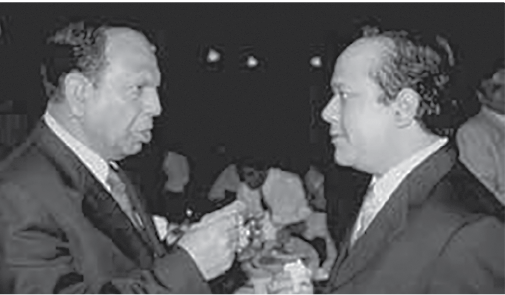
Meanwhile, innovations such as Tap & Pay, Google Pay integration, instant virtual cards, and digital savings schemes have cemented its position as a fintech-driven bank.
The bank has also diversified with products like City Alo for women, Citygem for premium clients, and City Islamic for Shariah-compliant banking.
In 2024, the Bangladesh Bank named City Bank the nation’s most sustainable lender, recognising its top scores in both financial and environmental performance.
With more than 6,707 employees, it now stands among the largest private-sector employers in the country.
“ From crisis to credibility, City Bank has reinvented itself,” said the chairman.
A Legacy Reimagined

When Ahsan Khan Chowdhury returned to Bangladesh in the early 1990s from the United States, he wasn’t just joining a company — he was stepping into a legacy.
His father, the late Major General (retd) Amjad Khan Chowdhury, had laid the foundation of Pran-RFL Group in 1981 with the belief that Bangladesh’s agricultural strength could be transformed into industrial opportunity.
Ahsan Khan Chowdhury’s entry marked a new chapter in the business. At the time, the company operated with just a few dozen employees and a modest turnover of Tk 1 crore. But Chowdhury saw beyond the numbers.
“Many years ago, we started our journey in Rangpur at the BSCIC Industrial Estate. In the year 1981, we started manufacturing tubewell products in the BSCIC Industrial Estate in Rangpur, and that’s how the journey of Pran-RFL Group started,” the Pran-RFL chairman said.
“I had a dream — to make this company the best in Bangladesh,” he once said.

That dream has since materialised into one of the country’s most expansive conglomerates. Today, Pran-RFL Group spans over 6,000 product lines, employs more than 167,000 people directly, and generates an annual turnover of $3 billion.
Its reach extends to 148 countries, with export earnings crossing $500 million — a testament to its global ambition and operational depth.
The group’s evolution from a pineapple-canning operation to a diversified industrial powerhouse reflects Ahsan’s strategic foresight.
Under his leadership, Pran-RFL ventured into processed foods, plastics, home appliances, footwear, bicycles, and heavy manufacturing.
“Diversification is very important for resilience,” the Pran-RFL chairman said. “We always tried alternate sectors when one failed to achieve expected success.”
About women’s participation in Pran-RFL, he said: “Women play a very active role in this company. We have got almost 60% women to take our manufacturing forward.”
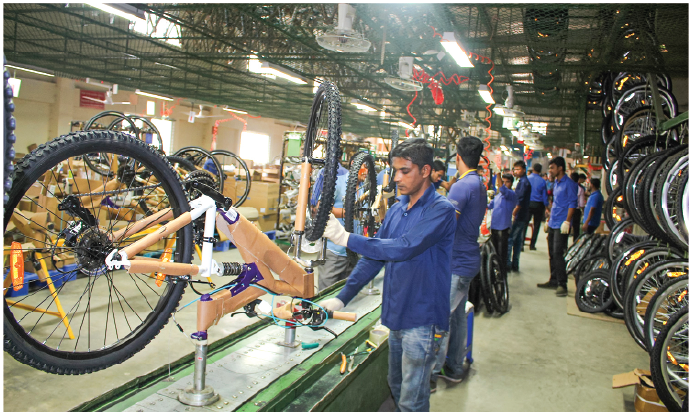
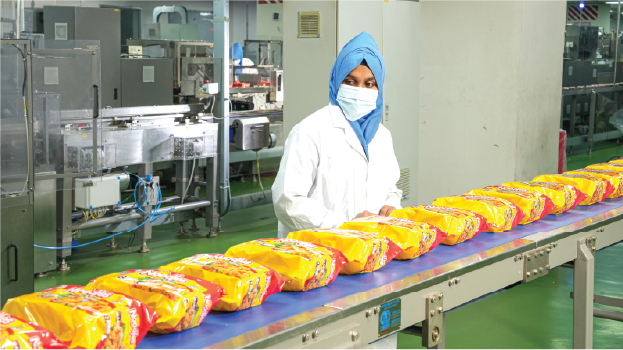
What sets Ahsan apart is not just his business acumen but his commitment to rural empowerment.
“We’re investing massively in northern and southern Bangladesh,” he said. His focus on decentralised growth has shifted the industrial narrative away from urban centres like Dhaka and Chattogram.
The company’s export strategy, too, has matured through experience. Initial setbacks against foreign competitors taught valuable lessons. “Dominate your domestic market first, then go abroad,” Ahsan noted.
Today, Pran-RFL’s global operations are guided by rigorous quality standards and market-specific innovation. “We’re building a culture where the next generation is ready to compete globally with fresh ideas and smart thinking,” he said.
As Pran-RFL Group continues to expand, Ahsan Khan Chowdhury stands as a rightful heir to his father’s vision. “For me, sustainability is a responsibility, not a slogan,” he commented.
From Paltan to the World
Walton’s Bold Rise

It all started in 1977, when SM Nazrul Islam launched “Rezvi and Brothers” on the lively streets of Paltan, Old Dhaka. Years later, his son SM Nurul Alam Rezvi — now a company director — stepped in with a daring ambition: to end Bangladesh’s dependence on imported appliances.
Rezvi laid the groundwork for Walton, and his four brothers took the baton forward.
“The story of Walton began with our father. He used to say that we would do business in a way that benefits the people of the country and the nation as a whole,” said SM Shamsul Alam, the founding managing director who now serves as chairman.
The band of brothers includes three more members, each playing a crucial role in Walton’s rise. SM Ashraful Alam, a founding director, currently serves as vice-chairman. SM Mahbubul Alam holds dual roles as managing director and director. SM Rezaul Alam, also a founding member, continues to serve as a director.
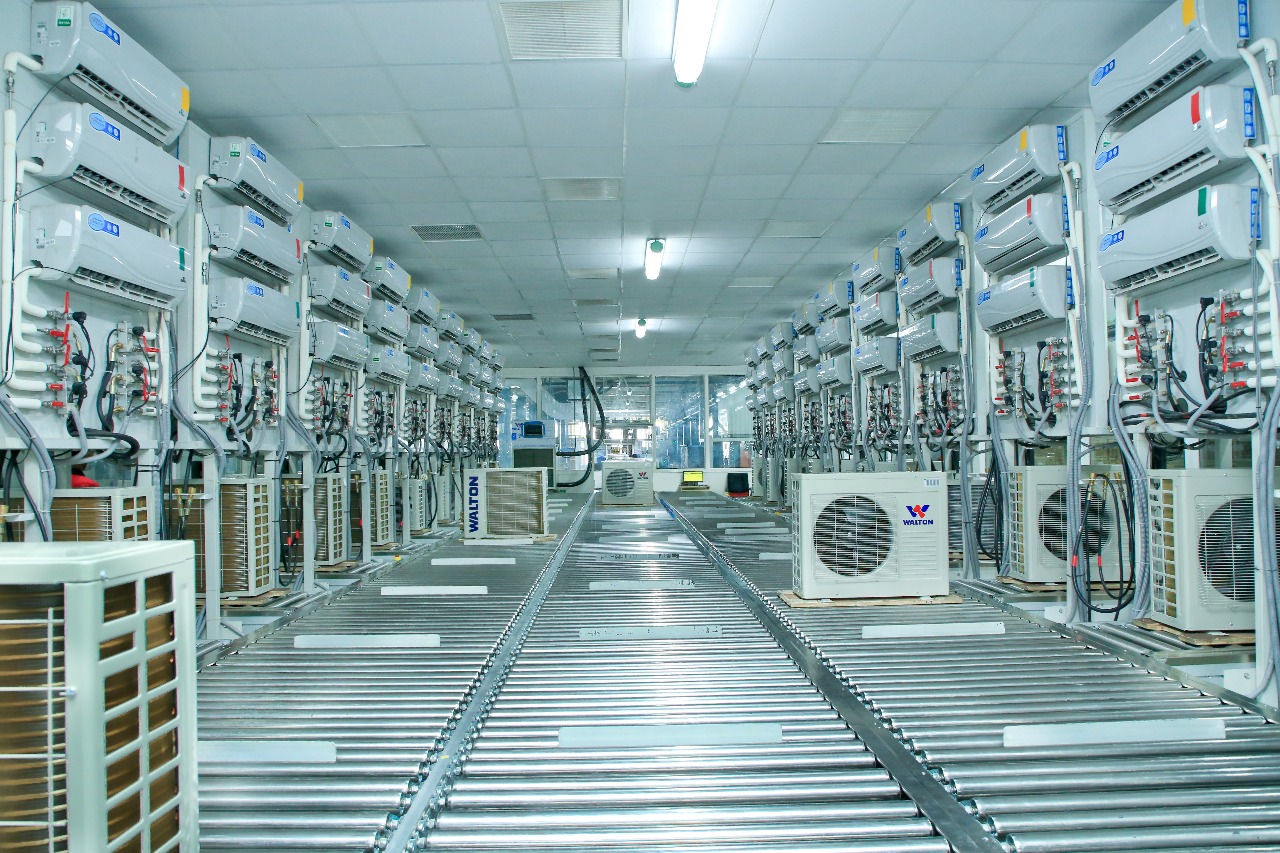
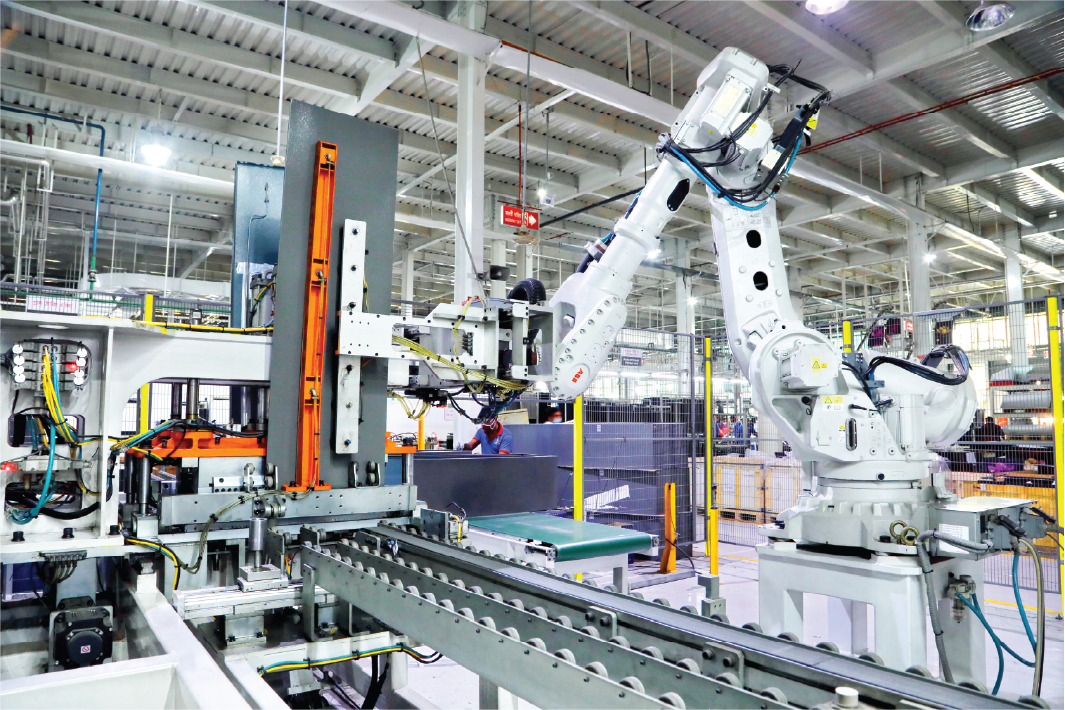
The company was officially incorporated on April 17, 2006, under the Companies Act of 1994. Operations kicked off in 2008, and by 2011, Walton had entered the export arena. A milestone came in 2015, when a deal with DEG, KfW Germany, opened new doors for Bangladesh’s export ambitions.
To cut back on imports, Walton built manufacturing facilities in Chandra, Gazipur — rolling out refrigerators, air conditioners, televisions, and motorcycles.
By 2016, the brand had seized over 60% of the home appliance market. The following year, it launched the country’s first compressor plant, marking another industry first.
Between 2018 and 2020, Walton went global — expanding to more than 40 countries. It became a publicly listed company on May 14, 2018, with shares debuting on the Dhaka and Chattogram stock exchanges on September 23, 2020.
Today, Walton’s portfolio spans refrigerators, freezers, air conditioners, televisions, elevators, kitchen and electrical appliances, compressors, molds, dies, fasteners, automobiles, and cables.
The company employs over 35,000 people and operates in more than 50 countries across Europe, North America, Africa, Asia, the Middle East, and Oceania.
Walton’s compressor plant isn’t just a facility — it’s a statement. Tucked inside its sprawling industrial complex, this rare installation places Bangladesh among an elite group of just 15 nations with such capability.
The company pairs innovation with a strong environmental vision, aiming for carbon neutrality by 2050 through solar energy and energy-efficient manufacturing — already achieving nearly 90% eco-friendly power use.

“Walton has served more than 177 million people around the world,” said chairman SM Shamsul Alam.
“In the 2024–25 fiscal year, we posted a profit of Tk 1,036.62 crore. That performance allowed us to recommend a Tk 530 crore cash dividend and a Tk 30 crore
stock dividend for our shareholders.”
“We’re the only company in Bangladesh that manufactures every type of elevator — and we’ve claimed a lion’s share of the lift market in record time,” he added.
Walton now operates six brands: Walton, Marcel, SAFE, ACC, Zanussi Elettromeccanica (ZEM), and Verdichter (VOE).
“Our aim is clear,” said Shamsul Alam. “By 2030, we want to be among the top five electrical and electronic appliance brands in the world.”
Shoyeb Rehaan