A City’s Story In Stitches and Strokes
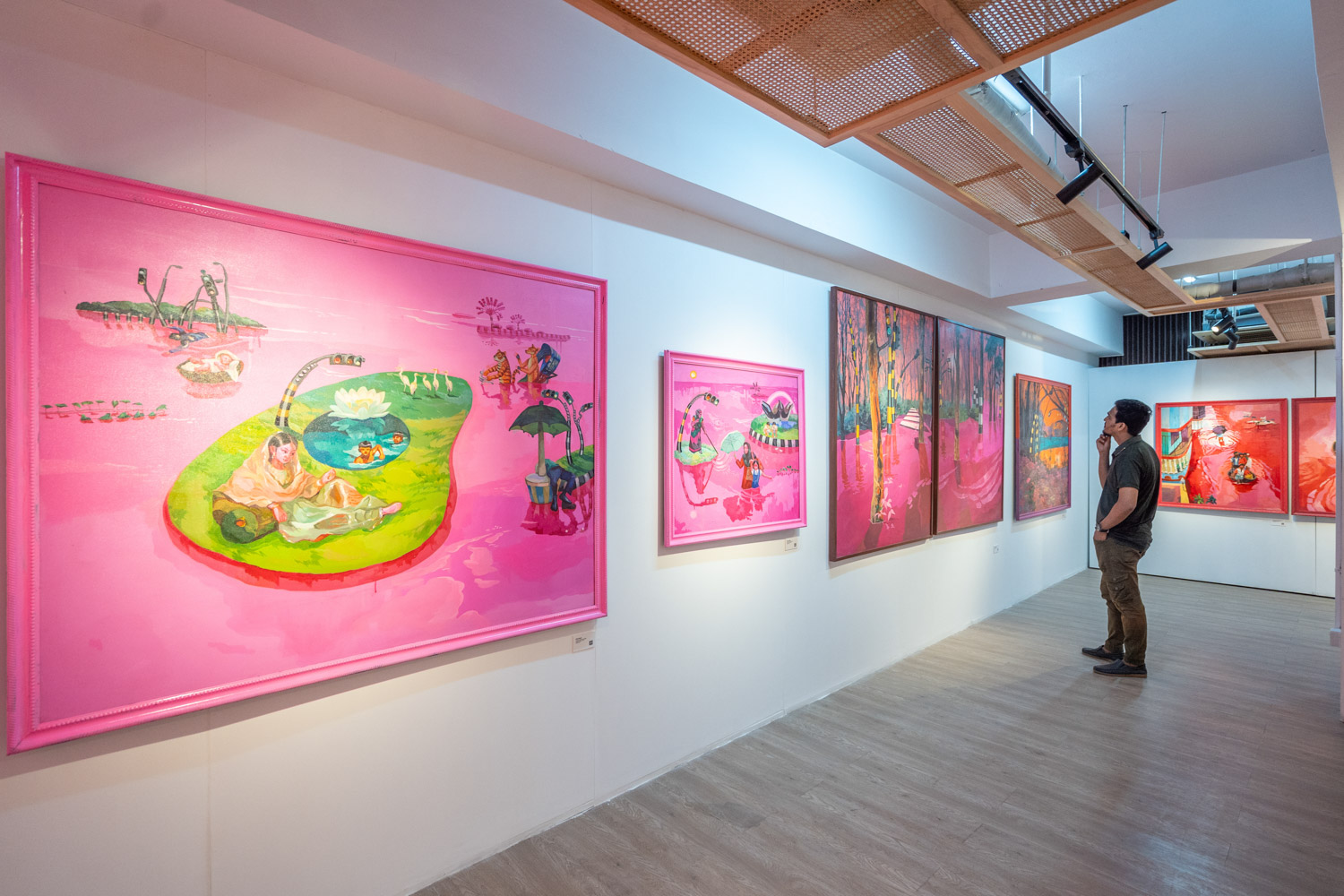
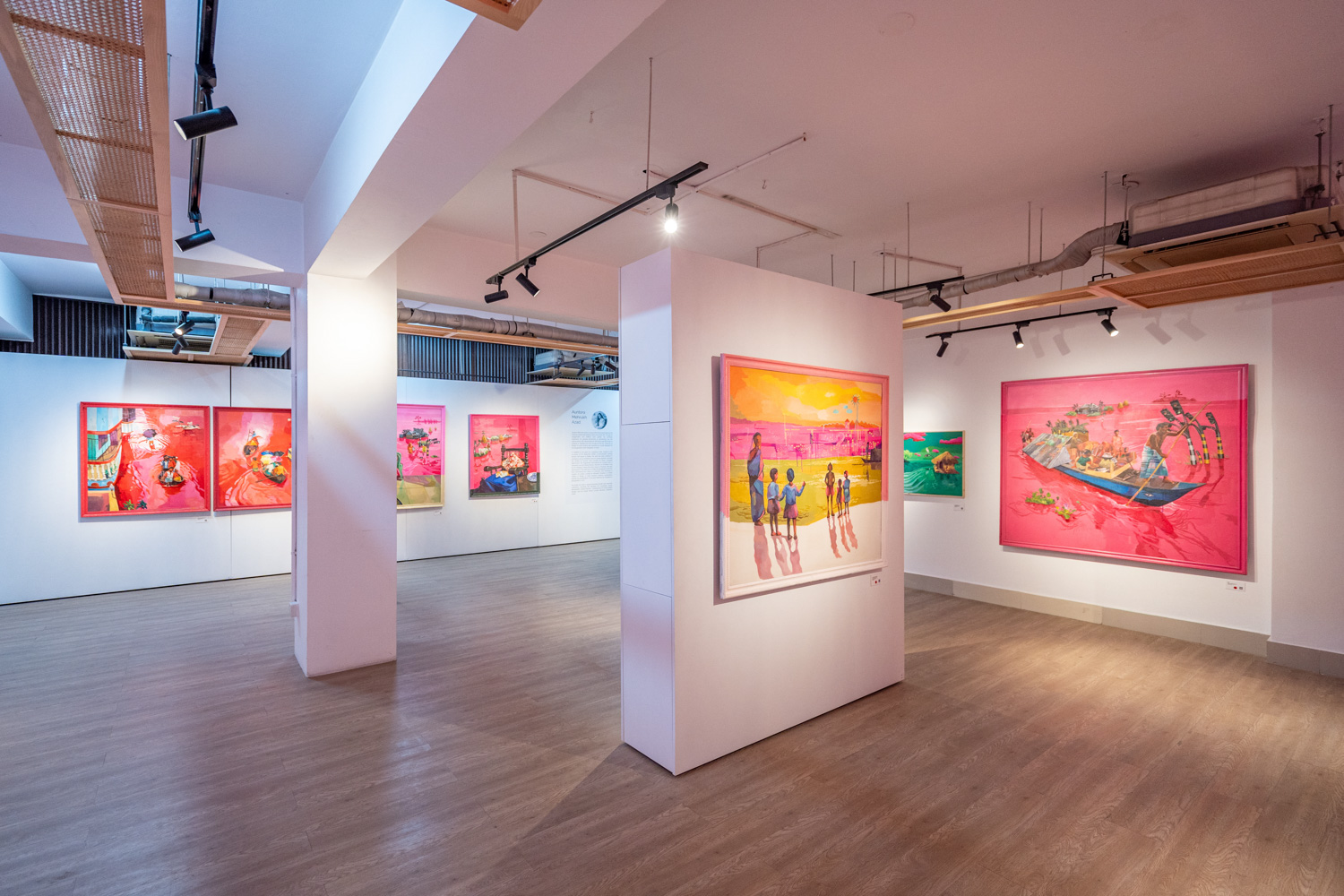
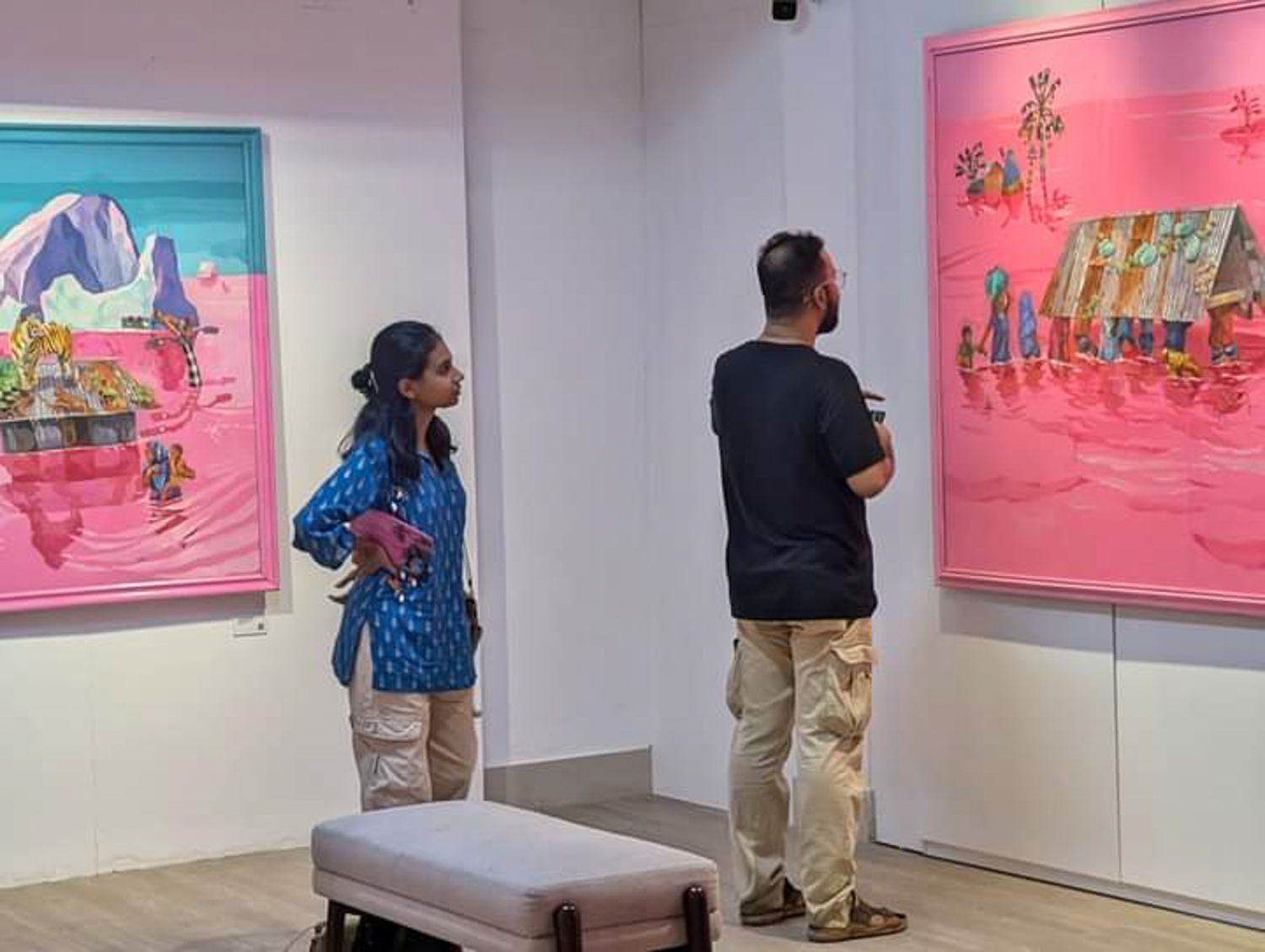
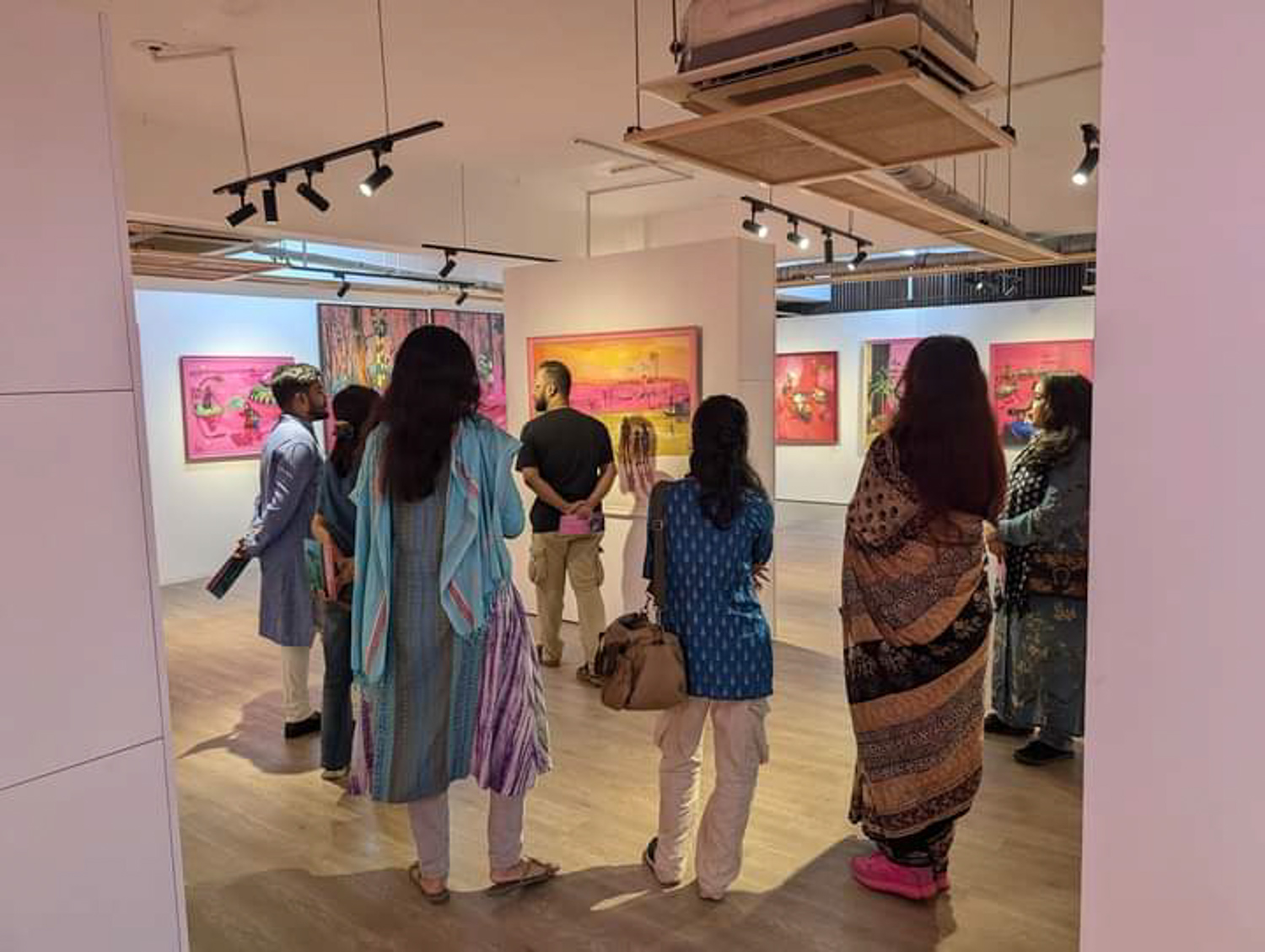
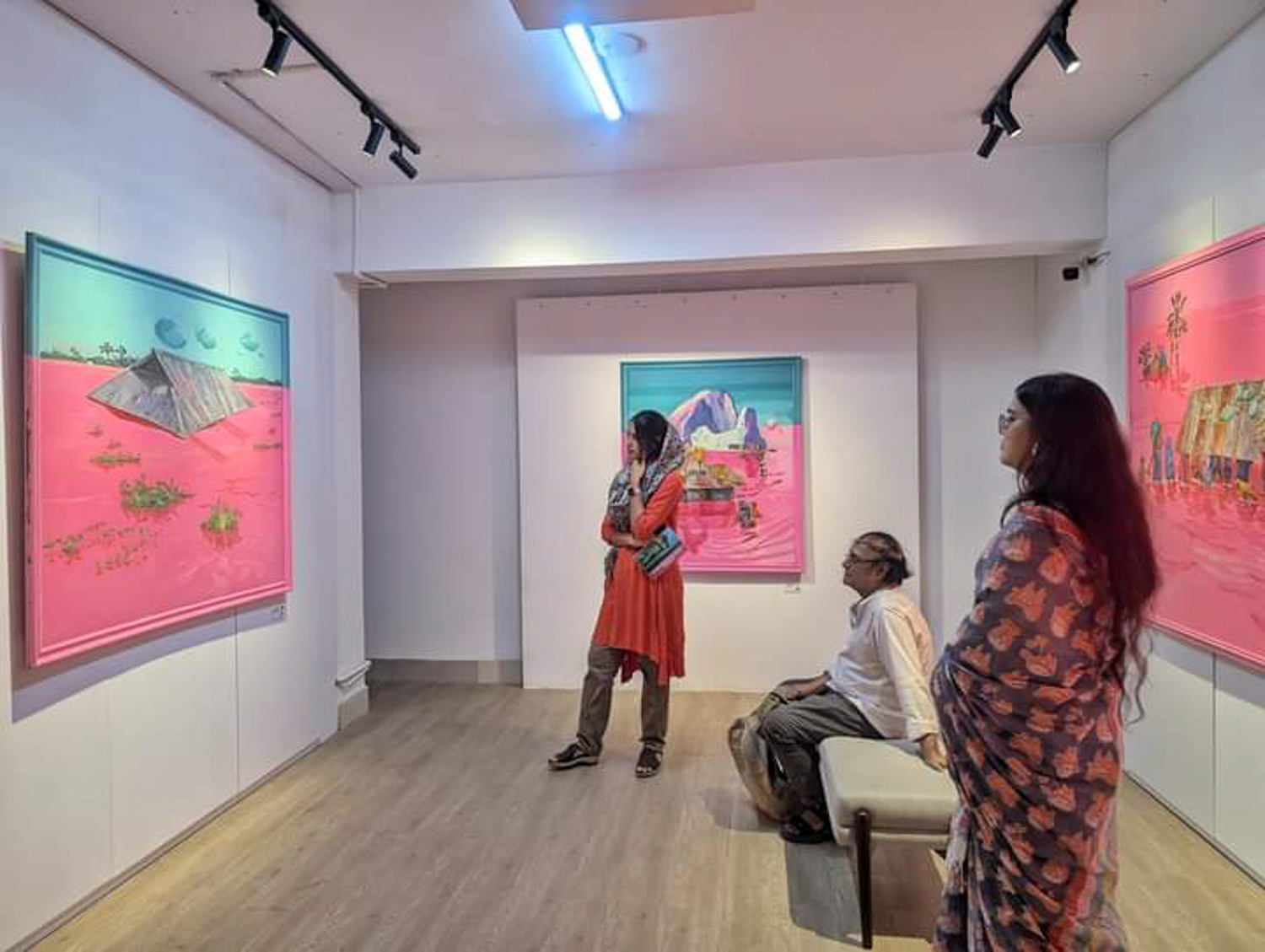
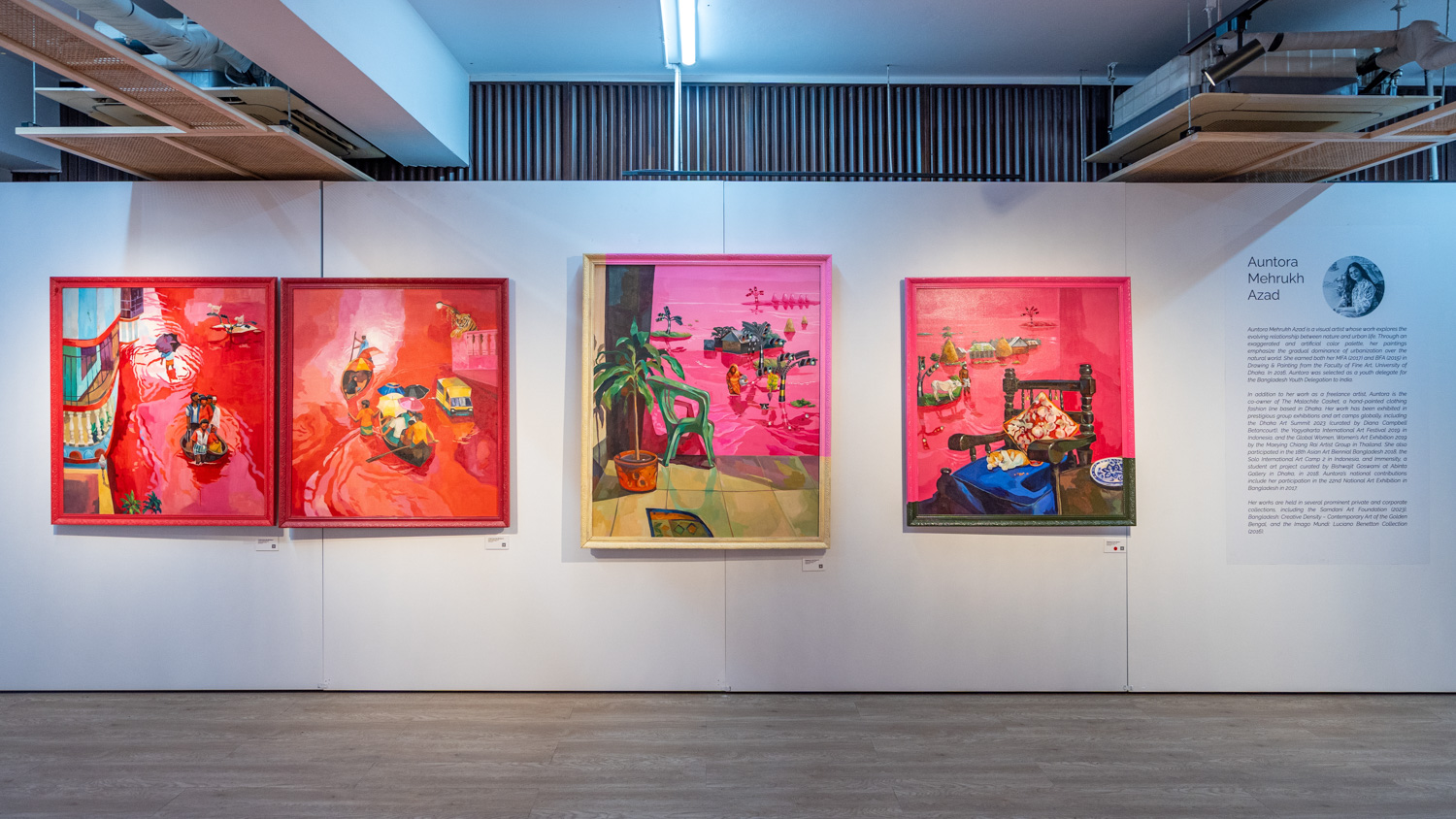
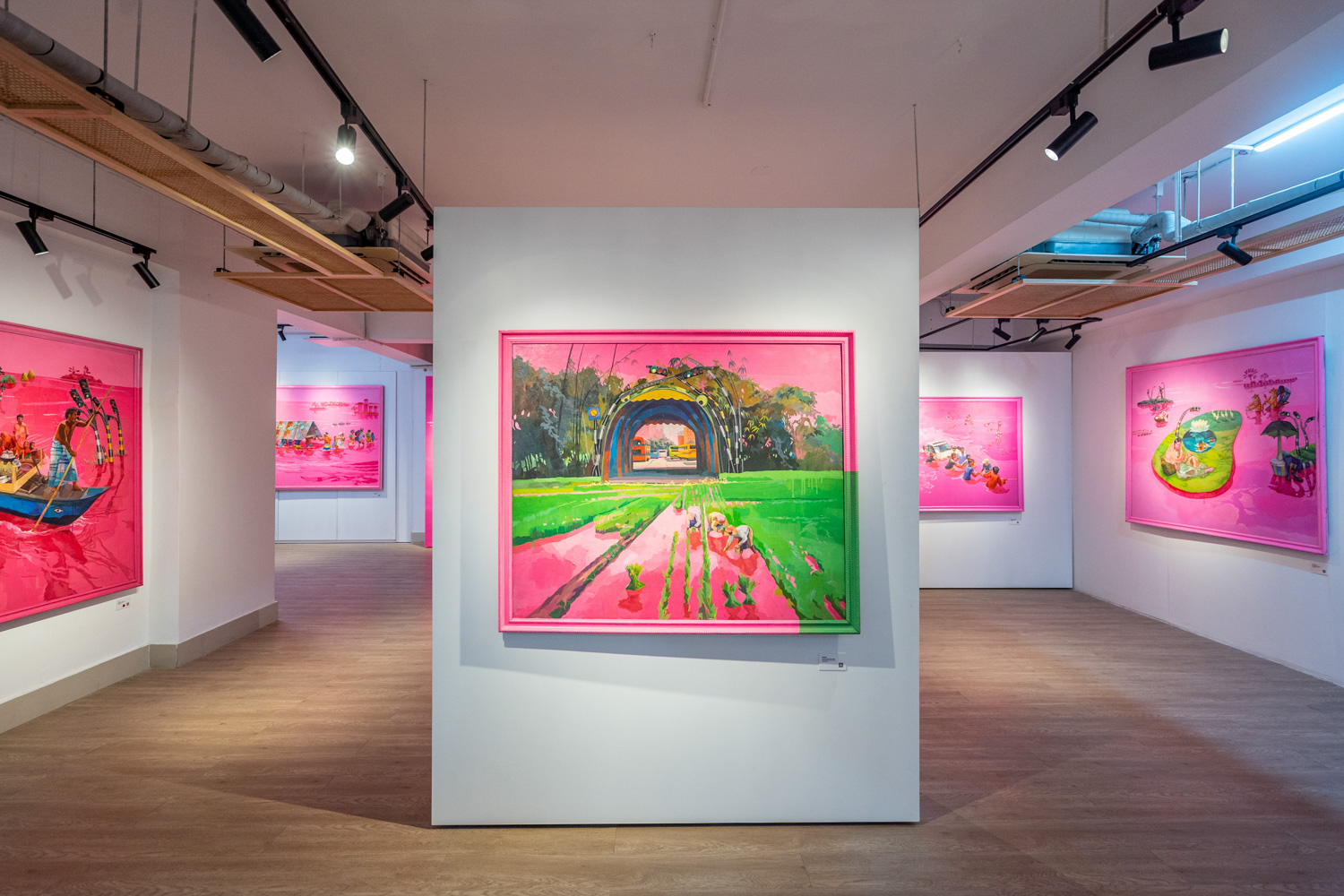
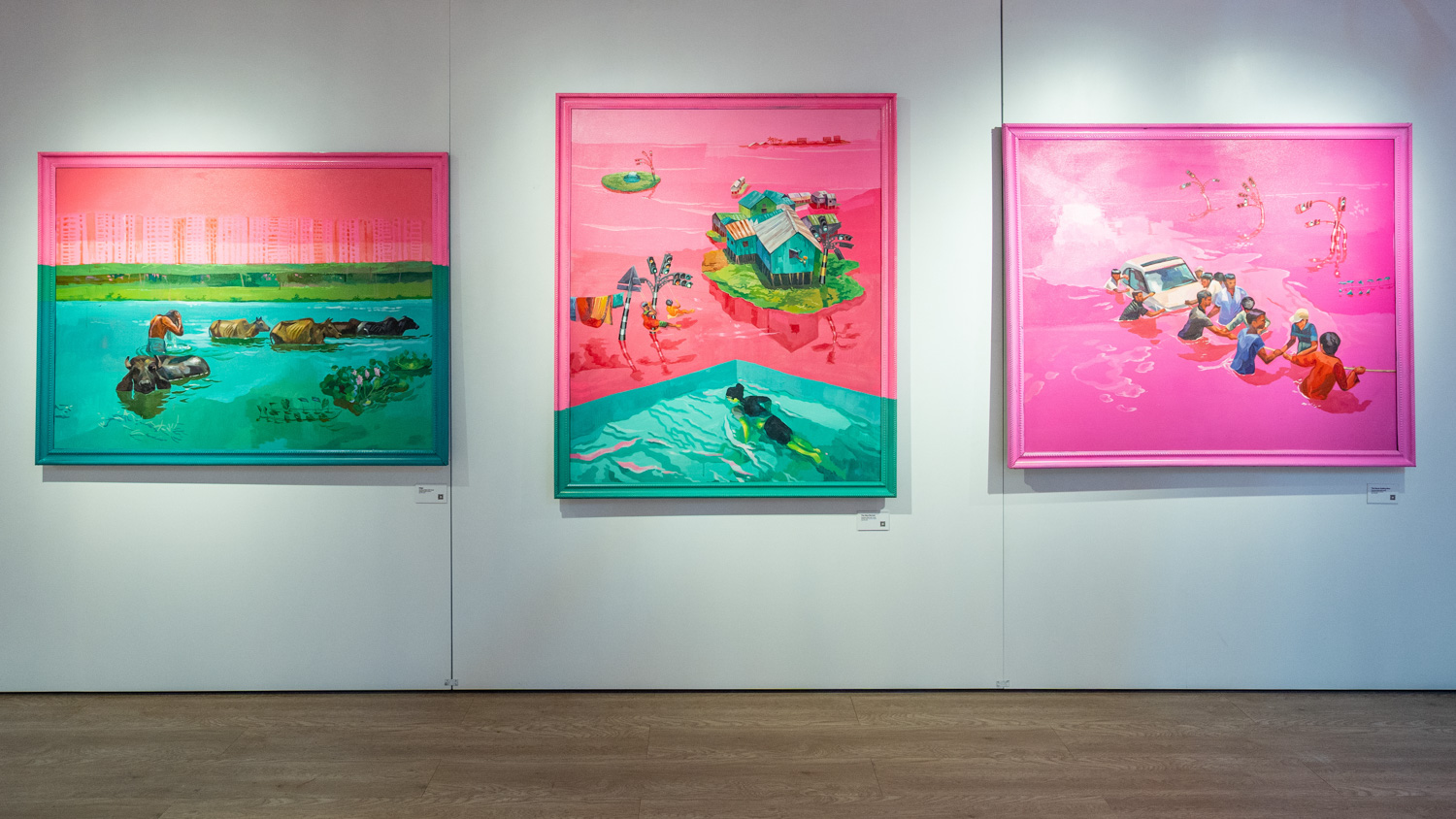
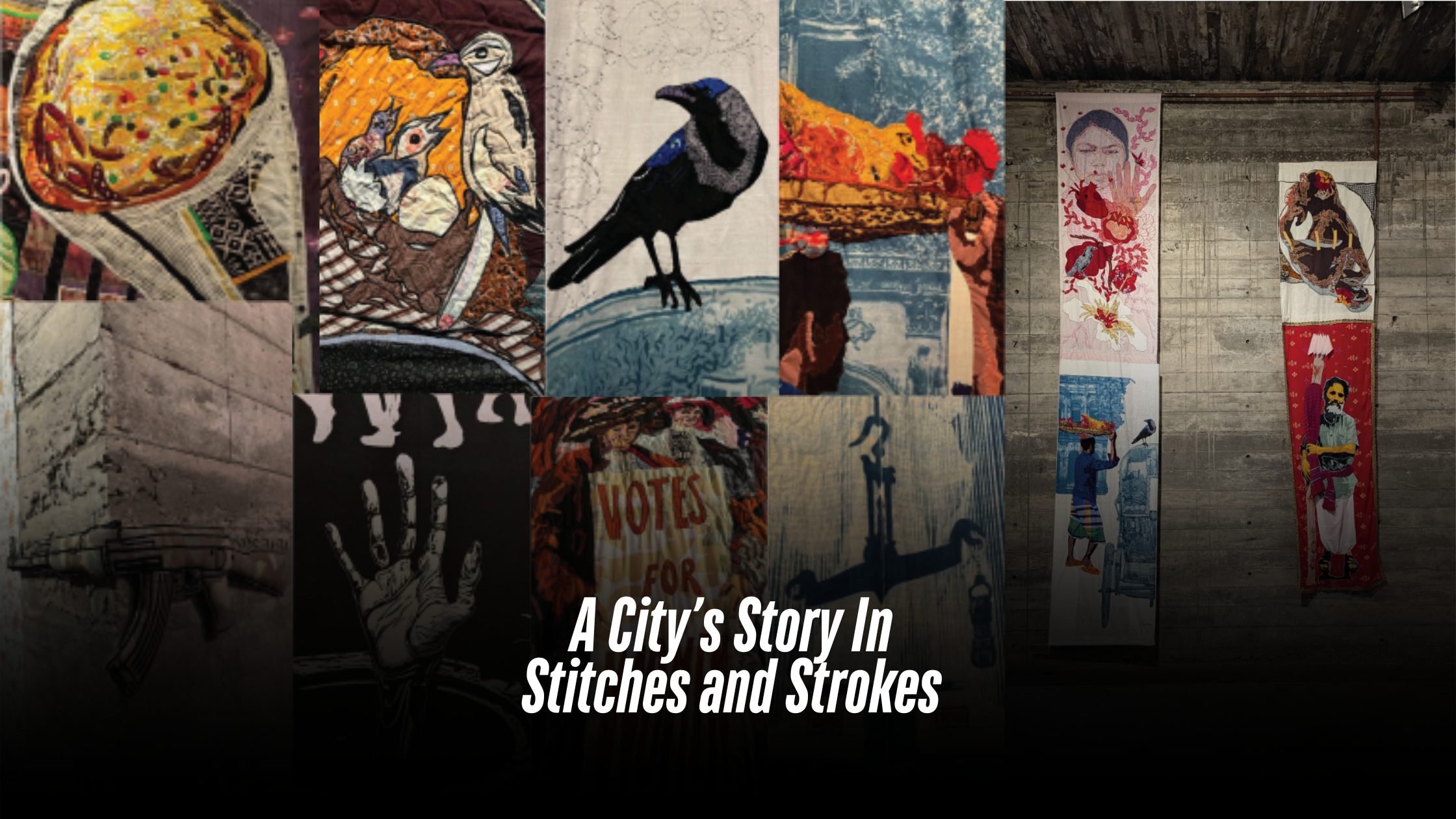
Dhaka’s rapid urbanization is impossible to ignore. This city of relentless energy and transformation is a place where tradition and modernity collide amidst its bustling streets and ever-changing skyline. As the economic heart of Bangladesh, it draws thousands seeking better opportunities. But this comes at a cost: overcrowding, strained resources, and a growing disconnect between the old and the new. Against this backdrop, ShohorNama Dhaka Episode II sought to explore the city’s complexities through art. Launched in early 2024, the project brought together visual artists, architects, artisans, and students from the University of Dhaka’s Faculty of Fine Art to create a tapestry of urban narratives. And the exhibition of this project took place from February 15 to 25 at the level 4 under construction space of the capital’s Bengal Shilpalay. The exhibition was inaugurated by H.E. Marie Masdupuy, Ambassador of France to Bangladesh, on February 15, 2025. Titled after the project name, the multidisciplinary exhibition wove together the threads of urban life, resilience, and creativity. Presented by the Bengal Arts Programme in collaboration with the Britto Arts Trust, ShohorNama II was a visual love letter to Dhaka, its people, and their stories. From large appliqué tents to wood-cut prints, installations, and performance art, it was a celebration of Dhaka’s artistic topography. At its core, ShohorNama was about storytelling. One of the standout features is the Pakghor Project, a community kitchen born out of necessity during the devastating floods of 2024 in the Khulna region. Pakghor provided warm meals to 500 villagers for a week. But it became more than just a kitchen—it became a space for shared stories, resilience, and hope. The Dorjikhana Project takes a different approach, focusing on textiles and their cultural significance. Through appliqué and embroidery, artists explore the connection between traditional practices and the modern garment industry. The project also draws inspiration from Bangladesh’s fading circus traditions. Resulting in a stunning collection of textile art that speaks to both the past and the present. Another striking element of ShohorNama is its use of tents. Historically, tents have symbolized temporary shelter for nomadic communities, and in this exhibition, they represent the fluidity of migration—whether due to natural disasters, economic hardship, or political unrest. The Big Tent installation captured this impermanence, reflecting the challenges faced by marginalized communities. The exhibition also highlighted the collaborative spirit of the project. Workshops with the University of Dhaka’s Department of Printmaking and Department of Craft allowed students to contribute to large-scale works, such as woodcut prints and appliqué pieces. These workshops not only honed technical skills but also fostered a sense of shared purpose, blending individual creativity into a cohesive vision. The exhibition was a feast for the senses! As Dhaka continues to evolve, exhibitions like “ShohorNama Dhaka Episode II” remind us of the importance of preserving our stories and traditions. Through art, we can find common ground, build resilience, and imagine a better future. Written by: Shahbaz Nahian Photo: Bengal Art Foundation | Courtesy

Ceramic Expo Bangladesh 2025 Opens in Dhaka, Showcasing National Industry to Global Markets
A four-day international exhibition has commenced in Dhaka to present Bangladesh’s ceramic industry to local, global buyers and investors. Organized by the Bangladesh Ceramic Manufacturers and Exporters Association (BCMEA), Ceramic Expo Bangladesh 2025, one of Asia’s largest and most influential international ceramic trade exhibitions, is being held at the International Convention City Bashundhara (ICCB). This fourth edition of the expo is set to host 135 companies and 300 global brands from 25 countries, including host Bangladesh, while more than 500 international delegates and buyers are scheduled to participate, underscoring the increasing global focus on Bangladesh’s rapidly expanding ceramic sector. BCMEA confirmed that the exhibition will feature three technical seminars, a job fair, extensive B2B and B2C meetings, live product demonstrations, spot-order opportunities, raffle draws, attractive giveaways, and the launch of new ceramic technologies and products. The exhibition is open to visitors free of charge from 10:00 AM to 6:00 PM daily and is expected to attract buyers, suppliers, and stakeholders from across the sector. Speaking at the opening ceremony, Commerce Adviser Sheikh Bashir Uddin said the industry, once fully dependent on imports, has now secured a strong position in global markets. He stressed the need for advanced technology adoption and uninterrupted energy supply to maintain production efficiency. The adviser added that the Interim Government will provide all necessary policy and regulatory support to accelerate the industry’s expansion. Following the inauguration, the adviser and distinguished guests visited various pavilions and stalls, where they praised the innovations and product displays. The commerce adviser expressed confidence that the sector will become increasingly export-driven. The event was presided over by BCMEA President Moinul Islam. Other speakers included Export Promotion Bureau Vice-Chairman Mohammad Hasan Arif, Italian Ambassador to Bangladesh Antonio Alessandro, BCMEA Senior Vice-Presidents Md Mamunur Rashid and Abdul Hakim Sumon, and BCMEA General Secretary Irfan Uddin. BCMEA President Moinul Islam noted that the ceramic industry has experienced rapid growth over the past decade. More than 70 factories producing tableware, tiles, and sanitary ware are currently in operation, serving a domestic market valued at Tk 8,000 crore annually. Over the last ten years, both production and investment have increased by nearly 150 percent. He added that Bangladesh now exports ceramic products to more than 50 countries, earning nearly Tk 500 crore in annual export revenue. Total industry investment exceeds Tk 18,000 crore, with the sector providing direct and indirect employment to approximately 500,000 workers. He further highlighted that major ceramic-producing nations, including China and India, are increasingly exploring investment opportunities in Bangladesh due to its competitive cost advantages and expanding global footprint. Fair Committee Chairman and BCMEA Secretary-General Irfan Uddin said Bangladeshi ceramic products are gaining international recognition for their quality, durability, and modern design. Demand is rising, and new global markets are opening for local manufacturers. He added that the expo will spotlight next-generation ceramic technologies, including automation, advanced digital printing, robotic handling, and upgraded production lines. “Smart tiles and sensor-integrated ceramic products, which are already popular worldwide, are expected to enter the domestic market soon. This expo will help local manufacturers connect with these emerging technologies,” he said. The event is supported by key industry partners. Sheltech Ceramics is serving as the Principal Sponsor, while DBL Ceramics, Akij Ceramics, and Meghna Ceramics are Platinum Sponsors. Gold Sponsors include Mir Ceramics, Abul Khayer Ceramics, HLT DLT, and SACMI, reflecting broad industry backing for the international expo. Written by: Mizanur Rahman Jewel
Gallery Plat-forms Hosts ‘Beyond the Veil’
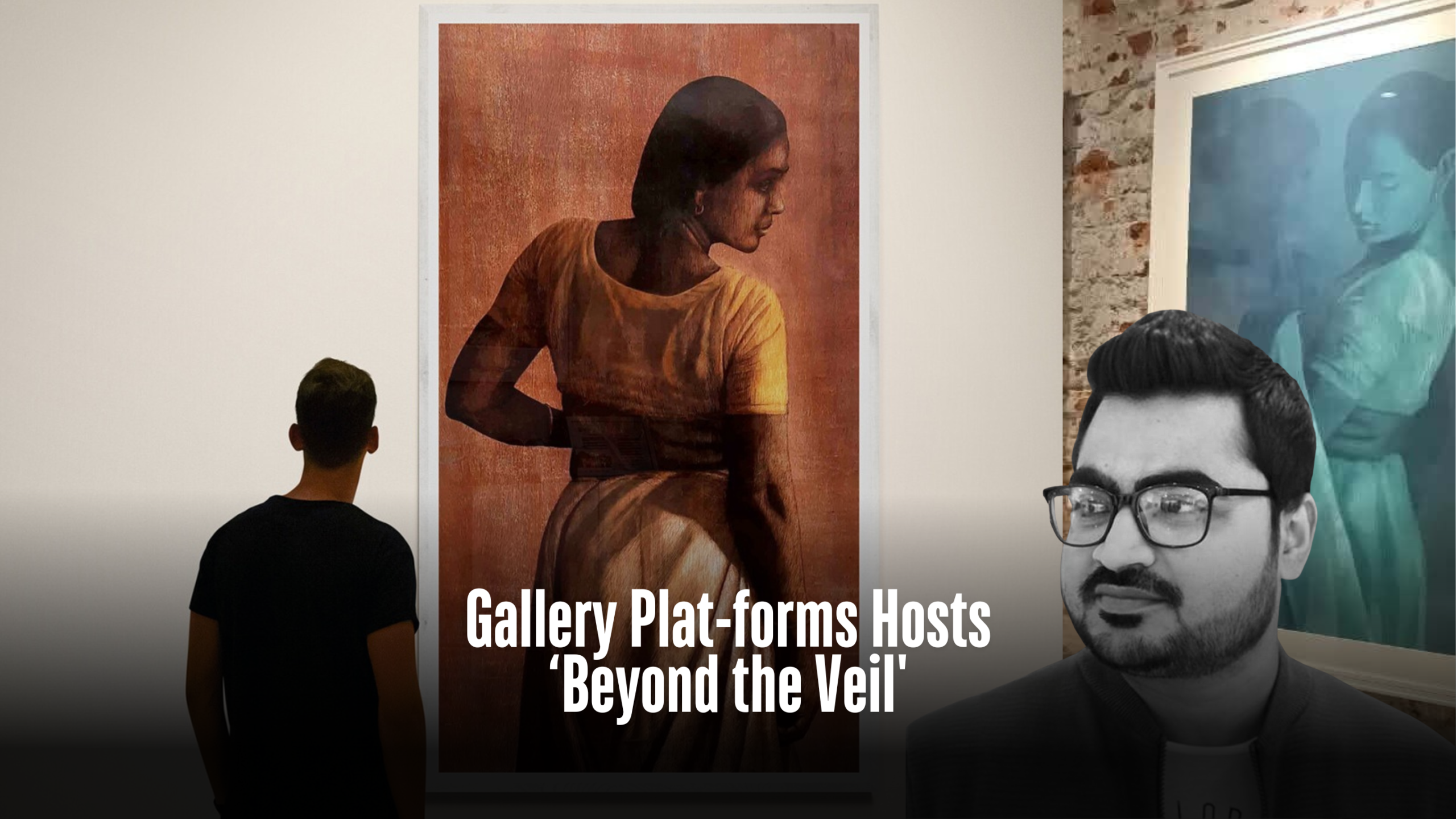
Gallery Plat-forms is hosting ‘Beyond the Veil’ – 3rd solo exhibition by M F I Mazumder Shakil. In this exhibition, the artist presents the ancient medium of woodcut in a fresh, contemporary artistic form. A total of 24 woodcut prints are on display which includes 8 large-scale works. The exhibition began on November 9 and has now been extended until December 13, with visiting hours from 11 am to 8pm. As noted by Gallery Plat-forms, in ‘Beyond the Veil’, Shakil revives the long-format woodcut to explore a world both intimate and exclusive. Through sweeping panels in amber, midnight blue, and stark monochrome, a woman emerges through fabric, fold and shadow. The veil becomes a threshold rather than concealment, inviting us to see without seeing. Each cut and layer conjures the textures of cloth and memory, secrecy and freedom. Part portrait, part landscape of the unseen. Beyond the veil transcends identity to question how we perceive, what lies hidden. Rooted in tradition yet distinctly contemporary. Shakil’s work reimagines the politics of visibility and expands the language of global printmaking. “My work is primarily in printmaking – specifically woodcut. I begin by drawing on plywood or any other board, then carve the block using woodcut tools based on the distribution of light and shadow. After that, I apply ink to the block with a roller through various processes, and finally transfer the print onto paper. Depending on the size, completing a single piece can take several months,” explains Shakil. “I have participated in various exhibitions, art camps, and art fairs both in Bangladesh and abroad. In the future, I plan to organize solo exhibitions outside the country as well. In recent times, young artists in Bangladesh have been tirelessly pursuing creative practice, and their works have already received significant recognition on the international stage. However, the overall acceptance of fine arts within the country has yet to reach the desired level. I remain hopeful that with proper patronage and support, our artists will be able to present Bangladesh’s artistic heritage to the world with even greater distinction,” the artist further adds. Mohammed Fakhrul Islam Mazumder, a Bangladeshi artist born in Comilla in 1989. He completed his M.F.A and B.F.A in Printmaking from the Faculty of Fine Arts at Dhaka University in 2016 and in 2014. Mazumder has held two solo exhibitions— “Obscure Beauty” (GalleryChitrak, 2023) and “The Odyssey of the Soul” (Zainul Gallery, 2018). His art has been showcased widely across Asia,Europe, and Australia, including major exhibitions in Japan, China, Thailand, Korea, India, Nepal, and Bangladesh. He has received numerous national and international awards such as the 26th Berger Young Painters’ Award (2022), Excellent Works Award, COP15 Global Art & Design Competition, China (2022), 2nd International Print Biennale Award, India (2021), and the Shilpacharya Zainul Abedin Award (2019). Mazumder’s works are part of collections at the China Printmaking Museum, Ino-cho Paper Museum (Japan), Bengal Foundation, and Lalit Kala Academy (India). He has also participated in several artist residencies, including the Chitrashala International Artist Residency in India and Kali Artist Residency at Cosmos Atelier 71, Bangladesh. Currently, Mazumder continues to experiment with layers of print, texture, and form to reflect the subtle interplay between the visible and the unseen. Through this exhibition, Shakil opens a new doorway not only to beauty but also to perception. His works, imprinted with the labor of hand-carved marks on solid wood surfaces, unfold into a poetry of light and shadow. This exhibition is part of Gallery Plat-forms’ commitment to presenting Bangladeshi artists who bring together heritage and contemporaneity, offering them anew to the global stage. Written by Tasmiah Chowdhury Photo Credits Sarmin Akter lina Gallery plat-Forms