

Lead Story
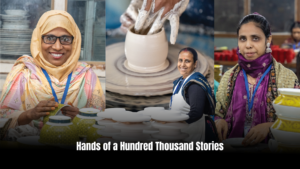
Hands of a Hundred Thousand Stories
In a large workshop, the air carries the smell of moist clay and burnt oil. Before a single bone china plate reaches the station of Morium Begum or Kamrun Nahar, it has already gone through many steps. It has been shaped by machines, fired until it is as hard as stone, and covered in liquid transparent glaze. But in the final stage of its creation, the loud sounds of industry fade. The atmosphere becomes quiet and focused. Here, hands that know the journey from raw clay to finished vessel perform the most delicate work. These are the hands of artisans. They guide thin, fragile decals onto smooth ceramic surfaces. Each touch is important. Each movement is a blessing on products that will travel to dinner tables around the world. These hands belong to Morium Begum and Kamrun Nahar. They are senior workers, known as “Uchha Dakkhya”—high-skilled artisans. Their lives are deeply connected to this place. Morium has worked in the Export Decoration Department for 25 years. Kamrun has spent 22 years in Bone China Decoration. Their story is not about mass production. It is about careful, patient work and the building of a future. “I’ve been working here for 25 years,” says Morium. Her voice carries conviction. It is more than loyalty to a job. “It doesn’t even feel like we are at a job.” In Bangladesh, factory work is often temporary and difficult. Many workers move from one place to another, facing harsh conditions. So what makes this factory different? What unwritten promise has turned it into a home for these women for more than two decades? The answer is not only in the products they make. It is in the lives they have built through this work. A Day’s Work: The Rhythm of the Kiln In the wide world of ceramic manufacturing, the decoration department is special. It is where the object finds its soul. It is a major step before completion, the moment when a blank plate or cup becomes something unique. Morium and Kamrun are the guardians of this transformation. Their days follow a rhythm shaped by tens of thousands of hours of practice. The morning begins not with machines, but with quiet preparation. They clean their stations. They arrange their tools. They prepare the raw material: stacks of ceramic ware, called “oil” in factory language. Each piece is carefully wiped to make sure the surface is flawless. Then they turn to the decals. These are intricate designs printed on special paper. The paper is dipped in water. Slowly, the design loosens from its backing. It is ready to be transferred. This is the most delicate moment. They lift the fragile film of colour from the water and slide it onto the ceramic surface. The placement must be perfect. The design must flow with the curves of the cup or bowl. No machine can do this. Only memory, skill, and an artist’s eye guide them. Once the decal is in place, they use a simple rubber tool. With gentle strokes, they press out every tiny air bubble and drop of water. “The design is placed on the ware, and then a rubber tool is used to gently rub and set it,” Kamrun explains. Her hands mimic the motion. “After it’s fired, the design is permanent. It won’t even wash off.” The final firing, called Decoration Firing Kiln (oven), makes the design indelible. The decorated pieces go back into the furnace. The heat fuses the decal into the glaze. The process is technical, demanding, and repetitive. Yet the meaning of their work goes beyond mechanics. To understand why they have given their lives to this craft, one must look at the culture of the factory. More Than a Factory: A Foundation for Family For Morium and Kamrun, the factory has been the backdrop of their adult lives. They entered as young women. Over time, they became matriarchs. The culture of the workplace shaped them as much as the skills they learned. It is a culture built on respect. On the factory floor, there are no raised voices. No harsh commands. The sound is a low, cooperative murmur. This is very different from the verbal abuse that they hear is common in other industries. “We don’t speak to anyone harshly here,” Morium says. “We don’t even raise our voices.” This dignity is matched by flexibility. It allows them to be both workers and mothers. When their children had exams or when illness struck, they could take leave for 15 days, even a month. They did not fear losing their jobs. This security is rare. “It’s just like a government job,” Kamrun says. “We can take a month off if we need it. You won’t get that anywhere else.” Support is built into the system. There is a medical centre with doctors and nurses. There is a daycare for young children. But the strongest support comes from the community itself. The women call each other sisters. They share joys and sorrows. One story shows this bond clearly. At the wedding of a cook’s daughter, workers pooled money to help with expenses. The “chairman madam” attended the celebration. Management and staff stood together. In such moments, differences of religion or background disappear. They eat together. They work together. They share goals. This respect, flexibility, and community have created stability. It is the foundation on which Morium and Kamrun have built their lives. It is what allowed them to dream of something lasting for their children. From Artisans to Architects of the Future The true measure of their decades of labour is not in the countless plates and cups they have decorated. It is in the futures they are building. Their hands have shaped clay, but they have also shaped possibilities. Morium is now the sole provider for her family. Her husband, once a worker at
Read More
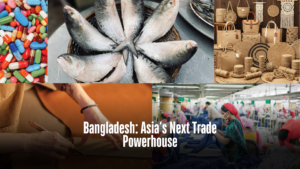
Bangladesh: Asia’s Next Trade Powerhouse
Bangladesh is quietly rewriting its economic story. Once known primarily for its ready-made garments, the country is now emerging as a diversified trade hub in Asia. Its export basket is expanding—and so is its global relevance. Earnings from exports have always been the nation’s driving force, and the last fiscal year was no different. Apparels played a dominant role, earning $48 billion, while other sectors also expanded their global reach. “Bangladesh’s export basket did not widen overnight—it was hard-won,” said Moynul Islam, president of the Bangladesh Ceramic Manufacturers and Exporters Association (BCMEA). “And now Bangladesh is home to a vibrant young population—more active and intelligent than their predecessors,” said Islam, who also serves as vice chairman of Monno Group. “From ceramics to garments, pharmaceuticals to electronics, this generational shift is redefining the business landscape and accelerating new export frontiers, positioning Bangladesh as one of Asia’s most promising investment and trade destinations,” he added. RMG : The Backbone of Bangladesh’s Trade Garments remain Bangladesh’s strongest export pillar, contributing over $39 billion in FY2024-25 knitwear and woven categories combined. Knitwear alone earned $21.1 billion, while woven garments brought in $18.1 billion, according to data from the Export Promotion Bureau (EPB). The sector’s strength lies in its scale and adaptability. Bangladesh retained its position as the world’s second-largest apparel exporter in 2024, as confirmed by the Bangladesh Garment Manufacturers and Exporters Association (BGMEA). Exports to non-traditional markets are rising, and shipments to the USA grew by 29 percent between January and April 2025. Yet, the industry faces headwinds. Rising production costs, energy inefficiencies, and compliance pressures are squeezing margins. Extortion in industrial belts and loan defaults among top exporters have also raised concerns, as noted by Bangladesh Bank. To stay competitive, the sector is embracing green manufacturing and automation. Over 260 factories are now LEED-certified, and green factories enjoy tax incentives and higher buyer preference. With continued investment in sustainability and worker welfare, RMG is poised to remain Bangladesh’s trade anchor. Home Textile: The Quiet Climber Once a niche category, home textiles have become Bangladesh’s second-largest textile export segment. The sector continued growing despite global challenges, earning $871 million in the last fiscal year. The rise of wellness living and interior-focused consumption has boosted demand for bed linens, curtains, and towels. Bangladesh’s manufacturers are responding with eco-friendly fabrics and design-led collections. However, the sector remains vulnerable to tariff uncertainties, especially in the US market. To mitigate this, the Bangladesh Knitwear Manufacturers and Exporters Association (BKMEA) recommends diversifying export destinations and investing in design innovation. With stable growth and rising global demand for sustainable home goods, Bangladesh’s home textile sector is quietly climbing the ranks. Leather and Leathergoods: A Legacy in Transition Bangladesh’s leather sector has shown resilient performance, earning over $1 billion annually since FY2018-19. Once hailed as the country’s second-largest export earner, the sector has struggled with environmental compliance and infrastructure bottlenecks. Shipments of leather and leathergoods have slowed due to delays in setting up the Central Effluent Treatment Plant (CETP) in Savar, said Arifur Rahman Chowdhury, general manager of ABC Footwear Industries Ltd, a concern of Abedin Group. “Without the CETP, many tanneries fail to meet global environmental standards, particularly the Leather Working Group (LWG) certification required by most European buyers,” he noted. Chowdhury added that the CETP’s completion would resolve nearly 80% of the sector’s challenges. Still, there is hope. According to the Leather Goods and Footwear Manufacturers & Exporters Association of Bangladesh (LFMEAB), 80 percent of exports go to just 10 countries—highlighting the potential for market expansion. With renewed focus on compliance and branding, leather could reclaim its place as a premium export. Frozen and Live Fish: The Blue Economy Awakens Bangladesh’s quiet revolution in aquaculture has made it a regional leader in sustainable fish farming. The country’s fisheries sector earned around half a billion US dollars in the last fiscal year, reflecting steady demand for shrimp, pangasius, and tilapia. Bangladesh Bank and the Ministry of Fisheries are working on improving traceability and certification standards. Yet, export volumes remain modest due to quality inconsistencies and limited cold-chain infrastructure. With rising global interest in clean protein and sustainable seafood, Bangladesh’s fish exports could scale rapidly—if supported by investment in logistics and branding. Empowering smallholder farmers with training, digital tools, and access to finance could unlock further growth. Strengthening community-based hatcheries and eco-friendly practices would ensure sustainability, while coordinated branding could position Bangladesh as a trusted global seafood supplier. Agricultural Commodities: A Sleeping Giant Agricultural exports brought in just over $1 billion in FY2024-25, led by fruits, vegetables, and processed foods. Mangoes, in particular, saw a rebound thanks to improved quality and packaging. However, the sector suffers from fragmented supply chains and slow policy support. Export growth has been inconsistent, and agricultural products face steep competition from regional players. The Ministry of Agriculture and EPB are now focusing on diaspora-driven demand and organic certification. Digital platforms for farm-to-market linkages, real-time price data, and quality monitoring could reduce inefficiencies and empower growers. Strategic partnerships with private investors and international buyers would further enhance competitiveness, ensuring that Bangladesh’s produce earns recognition in premium global markets and that agri-exports become a major growth engine. Pharmaceuticals: The Next Frontier Bangladesh now exports medicines to more than 160 countries after meeting 98 percent of its domestic demand, including shipments to highly regulated markets in Europe and North America. Pharmaceutical exports have nearly doubled in recent years to about $215 million, driven by WHO-compliant manufacturing facilities and competitively priced generic formulations. According to Md Zakir Hossain, secretary general of the Bangladesh Association of Pharmaceutical Industries (BAPI), exports could have easily surpassed the one-billion-dollar mark if not for a series of global setbacks, including the Covid-19 pandemic, the Ukraine–Russia war, and the ongoing devaluation of the Taka against
Read More
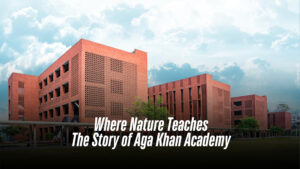
Where Nature Teaches: The Story of Aga Khan Academy
In Dhaka’s Bashundhara Residential Area, the Aga Khan Academy immediately catches your eye. Its warm brick walls, softened by greenery and a sparkling water channel, glow in the morning light. The building feels like a historical monument—orderly courtyards, intricate brickwork—yet the lively chatter of students reminds you this is a school—a place where learning blends seamlessly with nature’s rhythms. Bangladesh’s heritage that make it truly remarkable. Here, architecture becomes a canvas, interiors breathe with narrative, and every art installation stands as a tribute to the nation’s soul. Spanning in 17 acres, the award-winning Aga Khan Academy in Dhaka was developed through a collaboration between SHATOTTO Architecture for Green Living and Feilden Clegg Bradley Studios. The design draws inspiration from the region’s ancient Buddhist Mahaviharas, incorporating their architecture and philosophy into the campus. A clay model was used to visualise the design, helping stakeholders understand the campus’s spatial organisation before construction. Covering 74,150 square metres, this is Shatotto’s largest school project to date. The campus provides a green sanctuary within Dhaka’s urban environment. This academy represents a significant investment by the Aga Khan Development Network in Bangladesh’s future. As the fourth institution in a planned network of 18 Aga Khan Academies across Africa, South and Central Asia, and the Middle East, the Dhaka campus connects students to a wider academic and cultural community. Other campuses are located in Mombasa, Hyderabad, and Maputo, forming a global network focused on pluralism, leadership, and excellence. To support education from nursery to diploma level, Aga Khan Education Services required a permanent campus. This presented a challenge in a dense city like Dhaka. The project is designed to be scalable and sustainable, planned in seven construction phases. Since its first phase launched in September 2022, the academy has offered an integrated environment that connects nature with education, providing a calm setting within Bashundhara’s urban area. The Dhaka campus currently enrolls 750 students, with plans for expansion to 1,200. The masterplan includes residential facilities designed to accommodate students and staff from across Bangladesh and other countries. This lays the foundation for a diverse and inclusive learning environment upon full implementation. The vision for this project was led by Architect Rafiq Azam of Shatotto Architecture for Green Living, who incorporated Bangladesh’s heritage into the design. He conceptualized it as an “archaeological site, like our ancient monasteries.” Co-lead Architect Peter Clegg of Feilden Clegg Bradley Studios contributed global standards and technical precision. A central amphitheatre serves as a space for performances and gatherings. The adjacent Maidan, a large open playground, accommodates student activities, serving recreational and social functions. Brick buildings surround these shared areas on a planted base, offering unobstructed views of the Maidan from all directions. The Maidan functions as the campus’s central point, reflecting the spirit of ancient Buddhist Mahaviharas. These elements collectively support an environment where the physical space contributes to the educational process. “The school itself teaches,” says Rafiq Azam, lead architect of the Aga Khan Academy. “Students learn from books inside the classroom, but when they step outside, they begin to notice surroundings on their own — how water flows, how flowers bloom, how the sun moves across the sky, and how the breeze blows from a certain direction.” He adds, “This kind of learning happens naturally, guided by the environment rather than just by the teacher. The process encourages students to learn independently, beyond what is taught in the classroom.” Rafiq Azam emphasised the local context influencing the design, noting the significance of greenery, water, and rain in Bangladesh’s fertile landscape. This sensitivity is integrated into the campus layout, where natural elements are part of daily student life. The academy’s design heavily features brick, chosen for both its practical and aesthetic qualities, consistent with Bangladesh’s architectural history. Each brick is carefully positioned. According to Feilden Clegg Bradley Studios, brick was selected to revive local craftsmanship and to contrast with the render and concrete common in surrounding new buildings. The construction method involves deeply embedded mortar between brick pairs, a technique seen in historical sites, ensuring longevity and a timeless appearance. This strategic use of locally sourced brick, combined with Bangladeshi brick patterning, creates a cohesive campus. It establishes a hierarchy of spaces through its brickwork. Facade perforations allow daylight into interior corridors, using traditional techniques. Recessed windows, screens, and protruding brick columns provide shading for classrooms and create covered balconies and walkways. Classrooms are oriented to minimise solar gain in summer, with external walkways and adjacent buildings providing passive solar shading from the morning sun throughout the year. This ensures adequate daylight and outdoor views. Architects designed these spaces for passive heating and shading year-round to minimise energy consumption. This climate responsiveness was achieved through extensive sun pattern analysis and wind flow direction studies, optimising light and ventilation. The academy’s character reflects many original Buddhist universities in Bangladesh. It is defined by the massing and materiality of brick buildings located on a sculpted and planted landscape base surrounding the central Maidan. Alongside the main field, the complex includes smaller connected areas featuring concrete canopies for shelter, along with brick benches and planters. These peripheral spaces serve as transitions between the central Maidan and more intimate interior areas. Spaces are tailored for different age groups; for example, the senior courtyard offers shaded zones under planted trees for focused group activities. The assembly court is simple, with four ‘Dhaak trees,’ which inspired Dhaka’s name. The primary central courtyard accommodates larger gatherings and includes an amphitheatre built around a sand pit. This pit is designed to collect rainwater during heavy rainfall, holding up to 170 mm of water for approximately 10 to 30 minutes. The campus masterplan organises spaces into four zones—Intellectual, Moral, Physical, and Spiritual—supporting a holistic educational philosophy. Each block is designed for a specific function. The Academic Block, a central hub, contains administrative workstations, learning centers, group study areas, and a lecture hall, along with a terrace. Its white-walled classrooms vary in
Read More