Industry Leaders Unite for a Greener Bangladesh
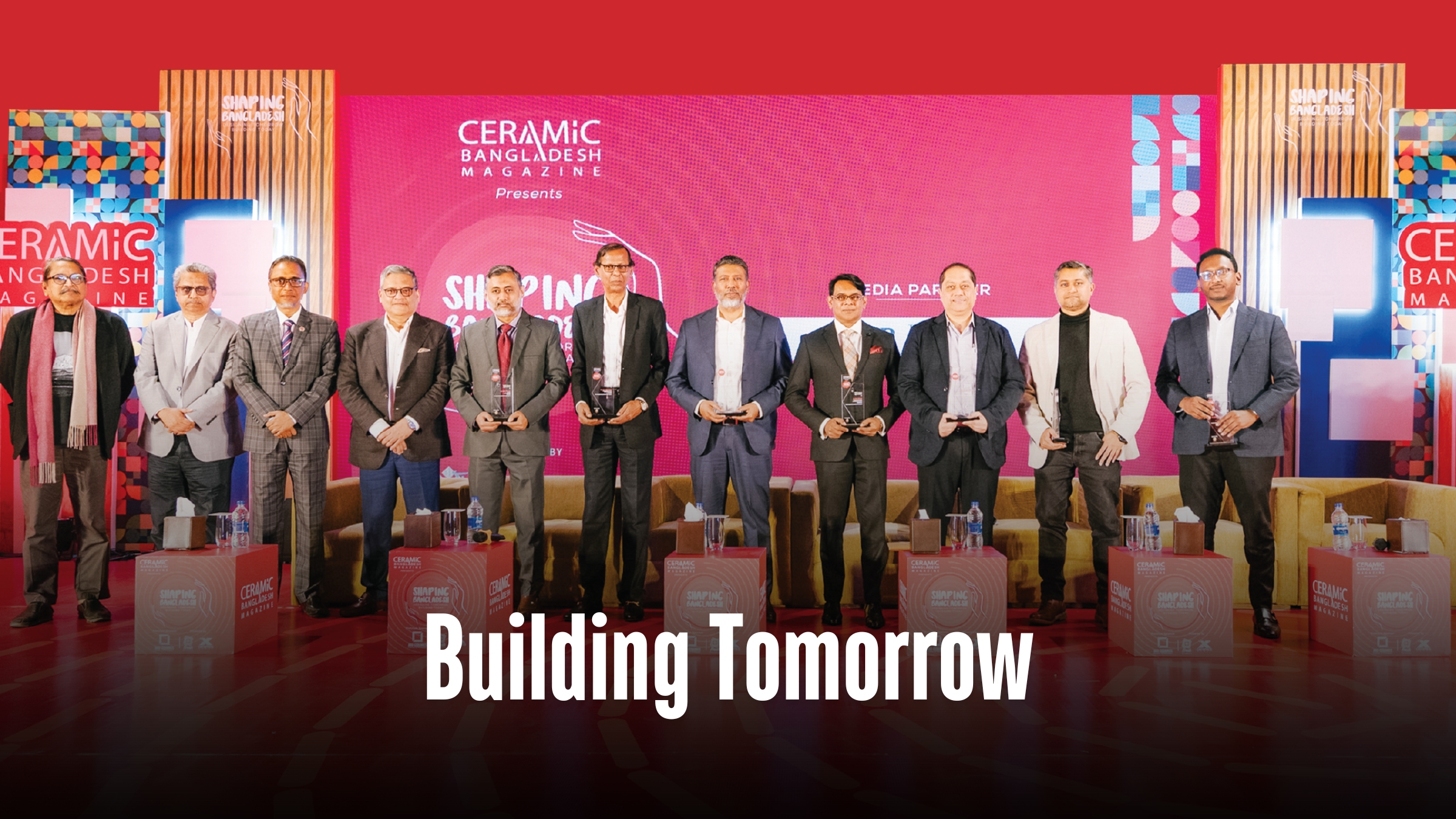
A Call for Sustainable Transformation On January 30, 2025, the Sheraton Hotel in Dhaka hosted “Shaping Bangladesh: Designing Tomorrow, Building Today”, a landmark event organised by Ceramic Bangladesh Magazine. It brought together leaders from construction, real estate, and ceramics to champion sustainability and innovation in response to environmental challenges. Thought Leadership for a Greener Future As part of the series “Innovating for a Sustainable Future II”, the multi-panel format featured experts from ceramics, cement, and real estate. Moderated by Dr. Amir Ahmed of Daffodil International University, the panels included Muhammad Badrul Hassan (BBS Cables), Salehin Musfique Sadaf (GPH Ispat), Architect Faysal Ahmed (Concord Real Estate), AKM Ziaul Islam (Magna Ceramic), Mohammad Khorshed Alam (Akij Bashir Group), Asadul Haque Sufyani (Metro Cement), and Babor Hossain (Khadim Ceramics). Key Recommendations for Sustainability Panelists urged greater investment in R&D to reduce reliance on imports and foster local innovation. They called for collaboration across sectors to promote recycled materials and eco-friendly components. Suggestions included using fly ash and slag in cement, adopting hybrid or electric furnaces, and implementing energy-efficient manufacturing. Smart Materials and Policy Reform Experts advocated for smart glass technologies—low-E, solar, and self-cleaning—to boost building efficiency. They also recommended policy reforms to protect local manufacturers from zero-tariff imports and emphasized the need for government-run clay mines to secure raw materials for ceramic production. Bangladesh’s Tile Industry Comes of Age AKM Ziaul Islam highlighted the tile industry’s evolution since 1984. “We started with 100 mm tiles in one color. Now, we export to the USA,” he said. Despite high production costs, innovation has improved working conditions and sustainability, making the industry globally competitive. Real Estate and Domestic Innovation Architect Faysal Ahmed reflected on the sector’s overreliance on imports between 2000 and 2015. He stressed the importance of collaboration among architects, engineers, and academics to develop sustainable materials locally and reduce dependency on foreign technologies. Material Optimization for Environmental Impact Salehin Musfique Sadaf emphasized that optimized material use can reduce emissions and speed up construction. “Using 15,000 kg of cement instead of 20,000 kg without compromising strength means real sustainability,” he explained. Rethinking Cement and Energy Asadul Haque Sufyani discussed the carbon footprint of cement production and promoted fly ash and slag as eco-friendly alternatives. He stressed the need for affordable, sustainable materials and energy-efficient technologies. Energy Crisis and the Future of Glass Mohammad Khorshed Alam raised concerns about gas shortages affecting glass furnaces. He urged investment in hybrid furnaces and advanced technologies and called on architects to incorporate more locally produced glass to avoid overcapacity and unsold stock. Ceramic Bricks: A Smarter, Greener Choice Babor Hossain showcased ceramic bricks’ advantages over handmade red bricks—lower water absorption, higher strength, and reduced structural load. “They were used in national landmarks and can cut construction costs by 13 percent,” he said, advocating for government-run clay mines to sustain innovation. A Unified Path Forward The event concluded with a call for synergy among policymakers, industry, and academia. With rising climate risks and infrastructure demands, embracing innovation is not just strategic—it’s essential. Photo: Courtesy
Three-day Global Sourcing Expo 2025 opens in Dhaka
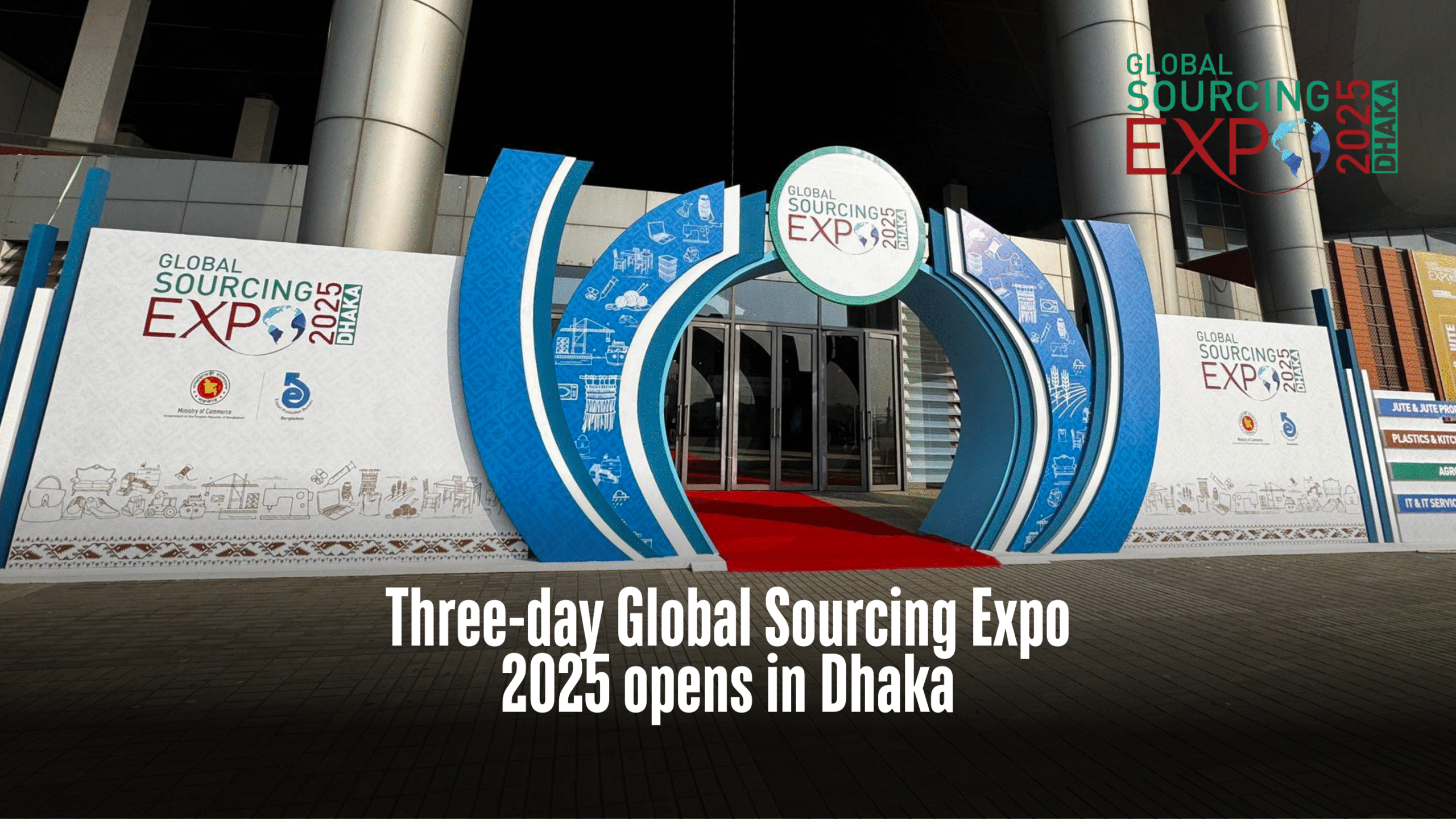
The Global Sourcing Expo 2025 – Dhaka has opened at the Bangladesh-China Friendship Exhibition Centre in Purbachal, bringing together exporters, buyers and trade bodies from across the world in a major push to diversify Bangladesh’s export markets. Jointly organised by the Export Promotion Bureau (EPB) and the commerce ministry, the three-day event is being billed as a strategic international platform showcasing Bangladesh’s evolution from a global apparel powerhouse to a diversified export hub. The expo features products from eight major sectors: readymade garments, leather and leather goods, jute and jute products, agricultural goods, plastics and kitchenware, home décor and furniture, pharmaceuticals, and ICT. More than 100 firms are taking part, including multinational companies, wholesalers and supply-chain representatives. Buyers and sourcing organisations from Afghanistan, China, Iran, Japan, Myanmar, Pakistan, Singapore, Sri Lanka, Thailand, the UAE, the US and several other countries are attending business-to-business meetings and negotiating potential contracts. The fair houses 200 stalls and includes 12 thematic seminars, fashion shows, product demonstrations, and both online and offline networking sessions. Organisers say the event is designed to connect local businesses with global buyers, trade bodies and new market opportunities to accelerate export growth and diversification. Commerce Adviser Sk Bashir Uddin, who inaugurated the expo, said Bangladesh must accelerate diversification, strengthen competitiveness and adopt forward-looking trade policies as it prepares to graduate from the group of least developed countries (LDCs). “To navigate this transition successfully, we must accelerate diversification, improve competitiveness, and adopt forward-looking trade policies,” he said. He added that while graduation is a major achievement, it will gradually reduce the preferential market access and duty benefits Bangladesh currently enjoys. At a seminar on the sidelines of the expo, Mohammad Hatem, president of the Bangladesh Knitwear Manufacturers and Exporters Association, said foreign involvement in port operations could improve efficiency. He also called for suspension of the amended labour law until a newly elected government is in place, arguing that the current changes are neither industry- nor worker-friendly. In another session, Inamul Haq Khan, senior vice-president of the Bangladesh Garment Manufacturers and Exporters Association, stressed the need for easier access to green financing, greater support from brands through knowledge sharing and technology transfer, and targeted interventions for SMEs. He urged wider regional inclusion so that areas such as North Bengal, Sylhet and Chattogram can benefit alongside Dhaka-centric clusters. Khan also called on the government to amplify the industry’s success stories through Bangladesh’s embassies and high commissions abroad, showcasing achievements on the global stage. The expo is being positioned as a vital opportunity for companies aiming to expand exports, launch new product lines or strengthen global brand visibility. With strong government backing for trade and investment, it reflects Bangladesh’s push for product and market diversification at a time when the country is seeking to secure its place in global markets beyond garments. Speakers at the event included Lutfey Siddiqi, special envoy for international affairs to the chief adviser; Mohammad Hasan Arif, EPB vice chairman; Mahbubur Rahman, commerce secretary; and Md Abdur Rahim Khan, administrator of the Federation of Bangladesh Chambers of Commerce and Industry (FBCCI). Organisers say the expo is not only about showcasing products but also about building long-term partnerships. The inclusion of thematic seminars and networking sessions is intended to encourage dialogue on issues ranging from sustainable production and green financing to supply-chain resilience and regional inclusion. The event comes at a critical time for Bangladesh’s economy. As the country prepares for LDC graduation, policymakers and industry leaders are emphasising the need to diversify the export basket, strengthen supply-side capacity and forge new partnerships with international buyers. The expo, they argue, provides a platform to address these challenges while highlighting Bangladesh’s achievements and ambitions. By bringing together stakeholders from across the world, the Global Sourcing Expo 2025 – Dhaka underscores the country’s determination to move beyond its reliance on garments and establish itself as a competitive player in a wider range of industries. Written by Nibir Ayaan
A Brilliant Conclusion with Countless Accolades Ceramic China 2024 Unfolds a New Chapter of Cooperation
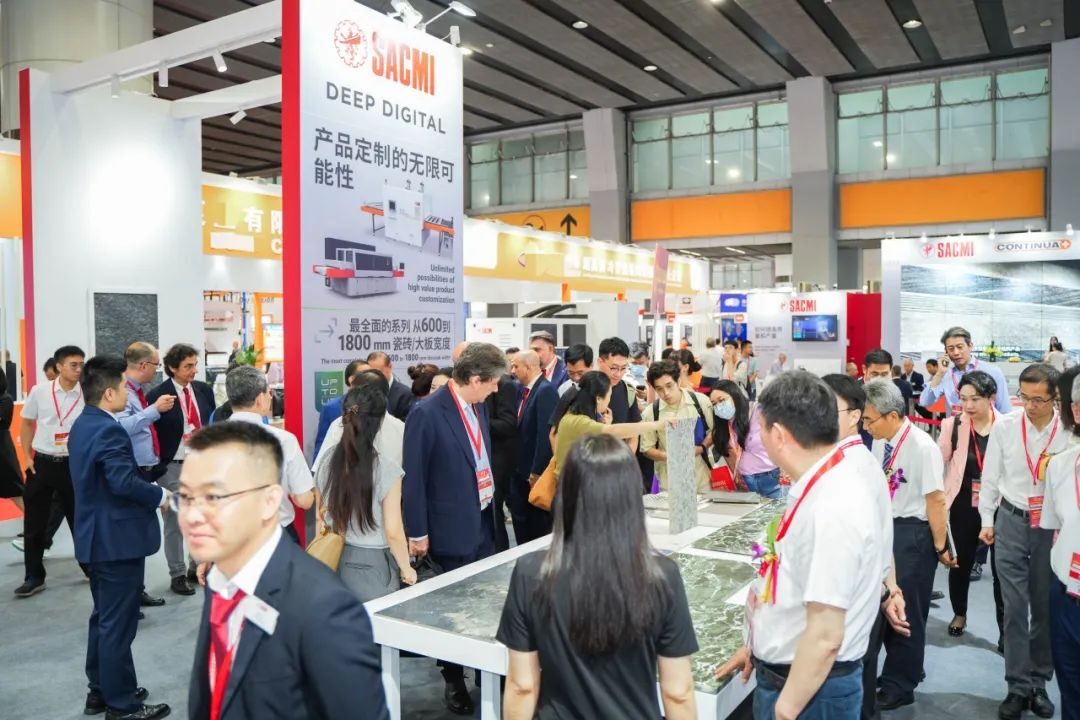
On June 18–21, 2024, CERAMICS CHINA 2024, with “Great Minds to Lead, Digital Intelligence for Brilliancy” as the theme, concluded successfully in extensive praise. This edition is jointly organized by seven entities, including China National Light Industry Council (CNLIC), China Building Materials Federation (CBMF), China Building Ceramic and Sanitaryware Association (CBCSA), China Ceramic Industry Association (CCIA), CCPIT Building Materials Sub-Council (CCPITBM), Unifair Exhibition Service Co., Ltd. and Beijing Jianzhan Technology Development Co., Ltd., thereby, the long-standing “Organizing Ceramics China by turns” has concluded, showcasing the strong influence and multifaceted benefits of the partnership between five national associations and two exhibition companies through united cooperation and resource integration. This act of union has drawn widespread industry attention and positive responses. Mr. Chen Guoqing, Executive Vice President of CBMF and President of CCPITBM, highly praised the collaborative efforts of the seven organizers in presenting this unprecedented exhibition and expressed sincere gratitude to all the exhibitors, visitors, buyers, and the media partners for their continued support for CERAMICS CHINA over the years. Mr. Du Tonghe, Vice President of CNLIC and President of CCIA, expressed full affirmation of the seven organizers for jointly holding the exhibition: “This is a powerful measure in line with the forward trend of the new era, promoting high-quality development in the ceramic industry, and giving full play to the role of the ‘national team’ of the ceramic industry. It has gained extensive industry support.” Ms. Han Xiuping, Managing Director of Unifair Exhibition Company urged industry peers to strengthen cooperation, unite efforts, and jointly propel the industry towards premium, smart, green, and integrated transformation for high-quality development.