


Ceramic Expo Bangladesh 2025 Opens in Dhaka, Showcasing National Industry to Global Markets
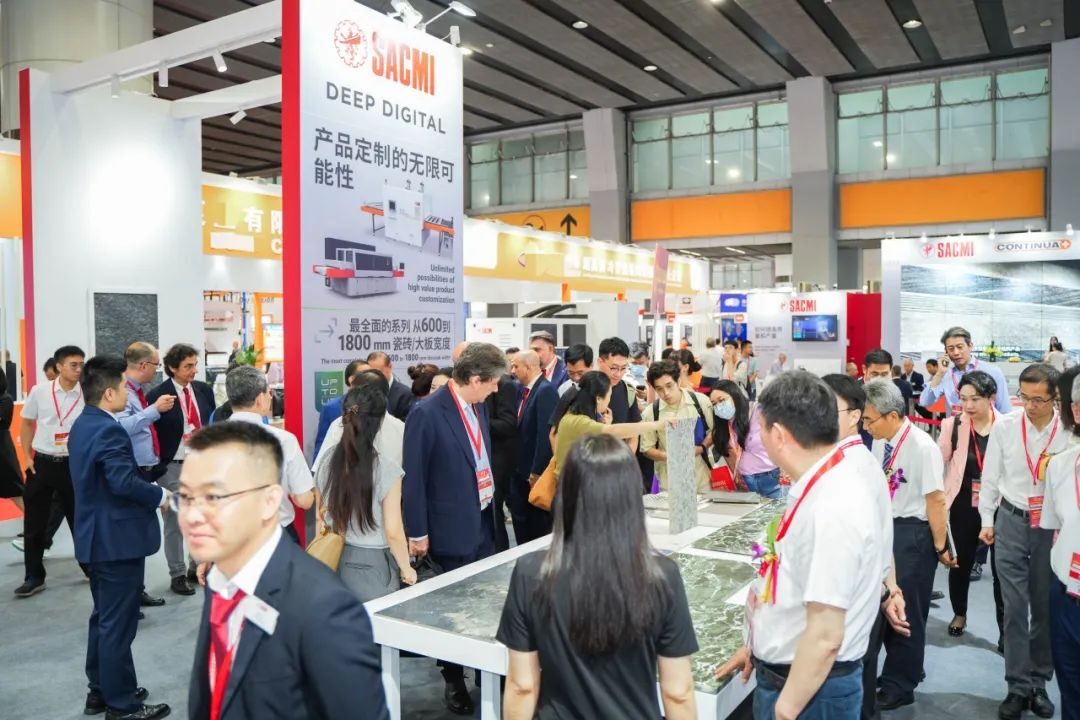
A four-day international exhibition has commenced in Dhaka to present Bangladesh’s ceramic industry to local, global buyers and investors. Organized by the Bangladesh Ceramic Manufacturers and Exporters Association (BCMEA), Ceramic Expo Bangladesh 2025, one of Asia’s largest and most influential international ceramic trade exhibitions, is being held at the International Convention City Bashundhara (ICCB). This fourth edition of the expo is set to host 135 companies and 300 global brands from 25 countries, including host Bangladesh, while more than 500 international delegates and buyers are scheduled to participate, underscoring the increasing global focus on Bangladesh’s rapidly expanding ceramic sector. BCMEA confirmed that the exhibition will feature three technical seminars, a job fair, extensive B2B and B2C meetings, live product demonstrations, spot-order opportunities, raffle draws, attractive giveaways, and the launch of new ceramic technologies and products. The exhibition is open to visitors free of charge from 10:00 AM to 6:00 PM daily and is expected to attract buyers, suppliers, and stakeholders from across the sector. Speaking at the opening ceremony, Commerce Adviser Sheikh Bashir Uddin said the industry, once fully dependent on imports, has now secured a strong position in global markets. He stressed the need for advanced technology adoption and uninterrupted energy supply to maintain production efficiency. The adviser added that the Interim Government will provide all necessary policy and regulatory support to accelerate the industry’s expansion. Following the inauguration, the adviser and distinguished guests visited various pavilions and stalls, where they praised the innovations and product displays. The commerce adviser expressed confidence that the sector will become increasingly export-driven. The event was presided over by BCMEA President Moinul Islam. Other speakers included Export Promotion Bureau Vice-Chairman Mohammad Hasan Arif, Italian Ambassador to Bangladesh Antonio Alessandro, BCMEA Senior Vice-Presidents Md Mamunur Rashid and Abdul Hakim Sumon, and BCMEA General Secretary Irfan Uddin. BCMEA President Moinul Islam noted that the ceramic industry has experienced rapid growth over the past decade. More than 70 factories producing tableware, tiles, and sanitary ware are currently in operation, serving a domestic market valued at Tk 8,000 crore annually. Over the last ten years, both production and investment have increased by nearly 150 percent. He added that Bangladesh now exports ceramic products to more than 50 countries, earning nearly Tk 500 crore in annual export revenue. Total industry investment exceeds Tk 18,000 crore, with the sector providing direct and indirect employment to approximately 500,000 workers. He further highlighted that major ceramic-producing nations, including China and India, are increasingly exploring investment opportunities in Bangladesh due to its competitive cost advantages and expanding global footprint. Fair Committee Chairman and BCMEA Secretary-General Irfan Uddin said Bangladeshi ceramic products are gaining international recognition for their quality, durability, and modern design. Demand is rising, and new global markets are opening for local manufacturers. He added that the expo will spotlight next-generation ceramic technologies, including automation, advanced digital printing, robotic handling, and upgraded production lines. “Smart tiles and sensor-integrated ceramic products, which are already popular worldwide, are expected to enter the domestic market soon. This expo will help local manufacturers connect with these emerging technologies,” he said. The event is supported by key industry partners. Sheltech Ceramics is serving as the Principal Sponsor, while DBL Ceramics, Akij Ceramics, and Meghna Ceramics are Platinum Sponsors. Gold Sponsors include Mir Ceramics, Abul Khayer Ceramics, HLT DLT, and SACMI, reflecting broad industry backing for the international expo. Written by: Mizanur Rahman Jewel
Rabiul Hussain in Architectural Narratives
On February 28, 2025 Bangladesh Institute of Architects (IAB) and the Bangladesh Liberation War Museum organized a day-long program to tribute architect Rabiul Hussain through visiting 3 of his projects- Bangladesh Agricultural Research Council (BARC), Jalladkhana Killing Ground and Jahangirnagar University. and taking a vow to protect the diversified works of the architect. Architect Rabiul Hussain (January 31, 1943 – November 26, 2019) was a prominent Bangladeshi architect, poet, art critic, short story writer, essayist, and cultural activist. A person of multifaceted talent, honored by the Government of Bangladesh with the Ekushey Padak for his contributions to language and literature in 2018, received the Bangla Academy Literary Award for his contributions to poetry in 2009, and the Bangladesh Institute of Architects (IAB) awarded him the Gold Medal for his outstanding contribution to architecture in 2016. He served four times as the President of the Bangladesh Institute of Architects, Vice-Chairman of the Architects Regional Council of Asia (ARCASIA), Vice-President of the Commonwealth Association of Architects, and President of the South Asian Association for Regional Cooperation of Architects. In addition, he was a trustee of the Liberation War Museum, an executive member of the 1971 Ghatok Dalal Nirmul Committee (Committee for Elimination of Martyrs’ Assassination), and made significant contributions to the preservation of the memories of the Independent War of Bangladesh. Although he was born in the village of Ratidanga in Shailkupa Upazila, Jhenaidah District, he completed his secondary and higher secondary education in Kushtia District. Later, in 1968, he earned his Bachelor degree in architecture from the then East Pakistan University of Engineering (now Bangladesh University of Engineering and Technology). After obtaining the graduation, he began his professional career as an architect working with architect Mazharul Islam and later joined Shahidullah Associates. Alongside his architectural practice, he also maintained a strong passion for writing. Throughout his career, he served as a life member of the Bangla Academy, and was involved in various organizations, including the Central Kachi-Kachhar Mela (a children’s and youth organization), the National Poetry Council, the Bangabandhu Sheikh Mujibur Rahman Memorial Museum, the International Film Critic Association of Bangladesh, and the Bangladesh Institute of Architects. Notable buildings designed by him include the Jalladkhana(Execution House), the Bangladesh Agricultural Research Council building, the entrance gate of Dhaka University, the Liberation and Independence Arch, the Jahangirnagar University gate, the Bhashani Hall, the Bangabandhu Hall, the Sheikh Hasina Hall, the Khaleda Zia Hall, the Wazed Mia Science Complex, the auditorium and academic building complex of Chittagong University, and alongside architect Mazharul Islam, the Bangladesh Agricultural Research Institute in Gazipur, Haji Mohammad Danesh Science and Technology University in Dinajpur, and polytechnic institutes in Chittagong and Khulna, among others. Bangladesh Agricultural Research Council (BARC) The Bangladesh Agricultural Research Council (BARC) was established in 1973 with the aim of conducting agricultural research and coordinating various related institutions in Bangladesh. Almost a decade after its founding, in 1982, architect Rabiul Hussain designed its current building. The design process, which began in 1978, spanned nearly four years. In a remarkable way, he crafted a unique architectural design using red brick masonry that harmonized with Bangladesh’s climate, nature, and way of life. This building is a symbol of post-independence architecture, reflecting a search for an architectural style; that is free from the burden of colonization in a newly liberated land. Each detail of the building echoes the same vision. The regional architectural influence of Maestro Mazharul Islam, the pioneer of Bangladesh’s regional architecture, is evident in the design, which he was fortunate to experience starting from his third year of architectural education. The building, located on a site shaped like the letter ‘L’ in the English alphabet, is easily noticeable among surrounding roads and structures. It stands at the junction of Airport Road and Khamar Bari Road, near Farmgate and Bijoy Sarani. The design symbolizes various aspects of aesthetic gravity, marking an early effort in the evolution of post-independence Bangladeshi architecture and the search for a Bengali “identity” in the country’s-built environment. The location of the building, near the capital’s main international airport at Tejgaon, limited the building’s height to four floors. The rectangular building, measuring 223 feet in length and 63 feet in width, has a total built-up area of 32,700 square feet. It is aligned along the east-west axis and is equipped with optimal provisions for cross-ventilation and prevailing south winds. The three-story building is vertically divided into three functional zones. The first floor is allocated for administrative offices; the second floor houses the executive branch. The third floor features a 7,500-square-foot conference room with seating for 280 people at its center, along with a 1,350-square-foot library and a meeting room. The first and second floors are organized along a double-loaded corridor, with two staircases at the eastern and western ends of the building. In harmony with local traditions, the roof was projected to protect the building from torrential rain and scorching sun. The BARC building essentially consists of two parts: one is the brick-clad inner shell that spans the main area, while the additional levels moderate the harsh tropical sun and protect the building during the monsoon season. Architect Mazharul Islam’s office- Vastukalabid was a key influence in experimenting with such a critical combination of climate consideration and modernist aesthetics along with that of brick mason for architect Rabiul Hussain and many young architects in the early 1970s. To give an example, his designs, including the National Institute of Public Administration (1964), encouraged a generation of architects to explore “critical regionalism” through a lens that considered climatic aspects in the visual language of architecture. Since stone is rare and fired bricks can be produced in abundance from local clay, architects saw bricks as an unprecedented symbolic representation of the delta and its culture. Representing the soil of the riverine country, bricks were the purest or most organic building material believed by the Bangladeshi architects. The “poetry” of bricks is hard to miss in the concept and construction of the BARC headquarters building. Also, the influence of
Cubeinside Design bags DNA Paris Design Awards 2025
Cubeinside Design Ltd, a prominent Bangladeshi architectural and interior design firm, has earned international acclaim after being named one of the winners at the DNA Paris Design Awards 2025—an internationally sought-after recognition for architects and creative people. The award-winning project, Bait Ur Rayyan, is a small-scale mosque designed by Cubeinside, located near the banks of the mighty Arial Kha River in Bangladesh’s Madaripur. The Bangladeshi firm was the consultant for the project, built for the Rokeya Feroza Foundation on a land area of 7,346 square metres. Cubeinside says: “This particular design is an exercise of abstract interpretation of basic symbolism of Islamic architecture. Geometry has been the principal tool for this abstraction in terms of transforming both the form and spatial quality.” The DNA Paris listed Khandaker Ashifuzzaman and Shakhawat Hossain Rocky as the lead designers of Bait Ur Rayyan, which won the award in the Public Architecture category. The annual awards also mentioned Mehri Farnaz, Anis Khan Shanto and Abdullah Al Jaber as members of the mosque’s design team. About the mosque, it was noted on the DNA Paris website: “A human-centric approach created a space for community, keeping the scale sacred yet intimate, using local materials like red bricks, while lights played the most vital role to uplift the spiritual entity of this mosque.” “The concept of ‘Abstract Semiotics’ was applied in measurable mass and space, and other immeasurable aspects with a deeper perceptual level.” DNA Paris, which celebrates the best in global design from over 70 countries, recognises excellence in Architecture, Landscape, Interior, Product and Graphic Design, with entries divided into ‘Professional’ and ‘Emerging’ categories. The latter is reserved for outstanding student work. Farmani Group, a global authority in architecture, design and photography curation, in partnership with In Between, a Paris-based collective of creatives and thinkers, jointly organise the DNA Paris Design Awards. In addition to typology-based subcategories, the most distinguished entries across all five disciplines and both sections are awarded the Grand Prix—the highest honour of the programme. Recipients of the Grand Prix receive a trophy created by Studio Briand & Berthereau, designed to strike a balance between form and function, while addressing the financial and environmental constraints faced by every project. All submissions are evaluated by an expert jury of design luminaries. The jury committee is comprised of designers, editors and creatives who are devoted to true excellence in design. The juries come from different countries, including the UK, the USA, Spain, Argentina, Japan, Sweden, France, Kenya, Thailand, Brazil, Italy, South Korea, Hong Kong, Mexico, Greece and Saudi Arabia. The evaluation of entries is based on a range of criteria that are constantly adapted to current standards. DNA Paris has already announced all winners across different categories for this year, who will be honoured at an event in Paris on October 24. Written by Nibir Ayaan