
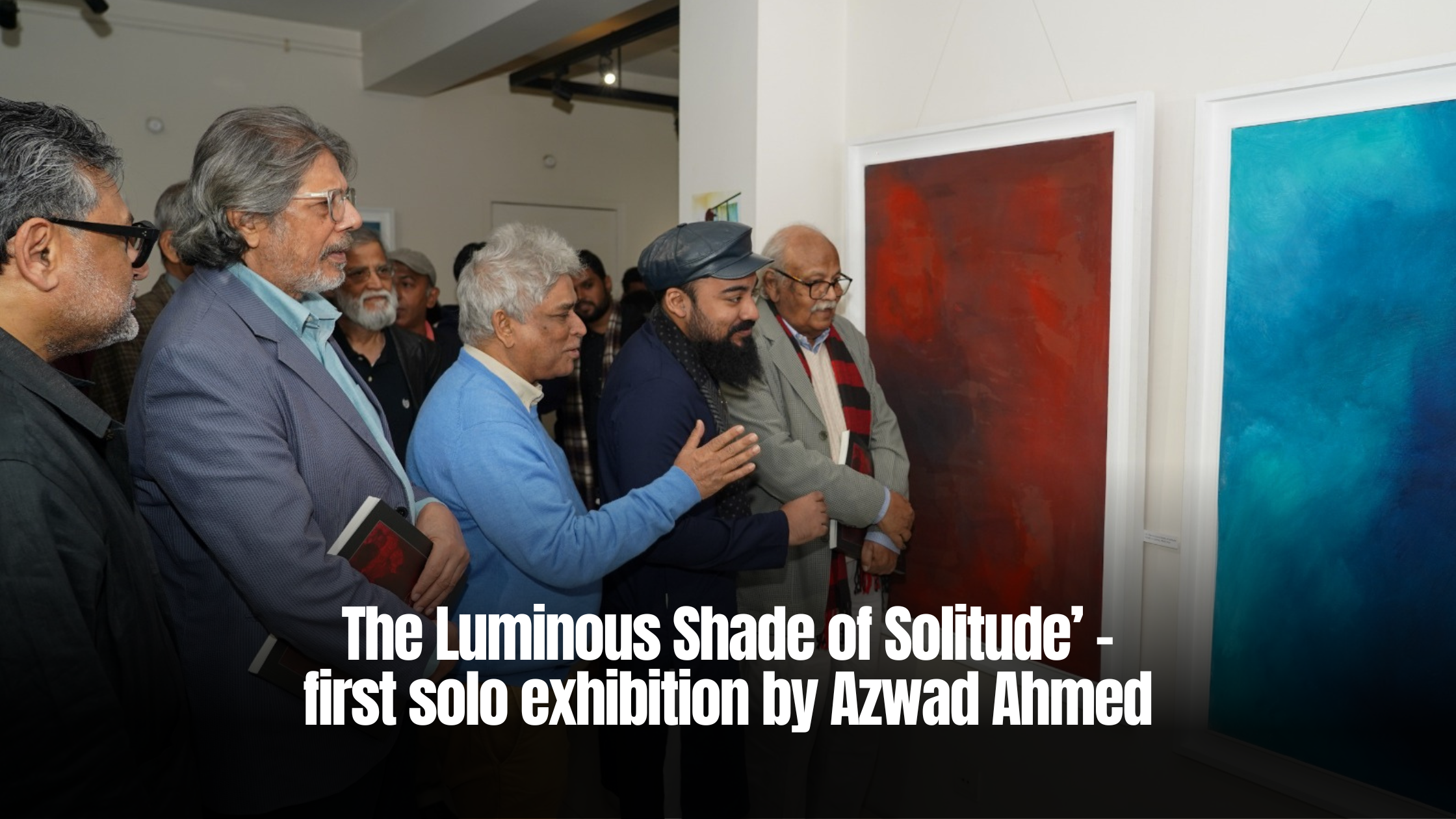

Azwad Ahmed’s first solo exhibition, The Luminous Shade of Solitude, presented a compelling selection of his recent works exploring themes of silence, emotional restraint, and inner reflection.

The exhibition was inaugurated on December 18 and ran until December 24 at Gallery Chitrak.
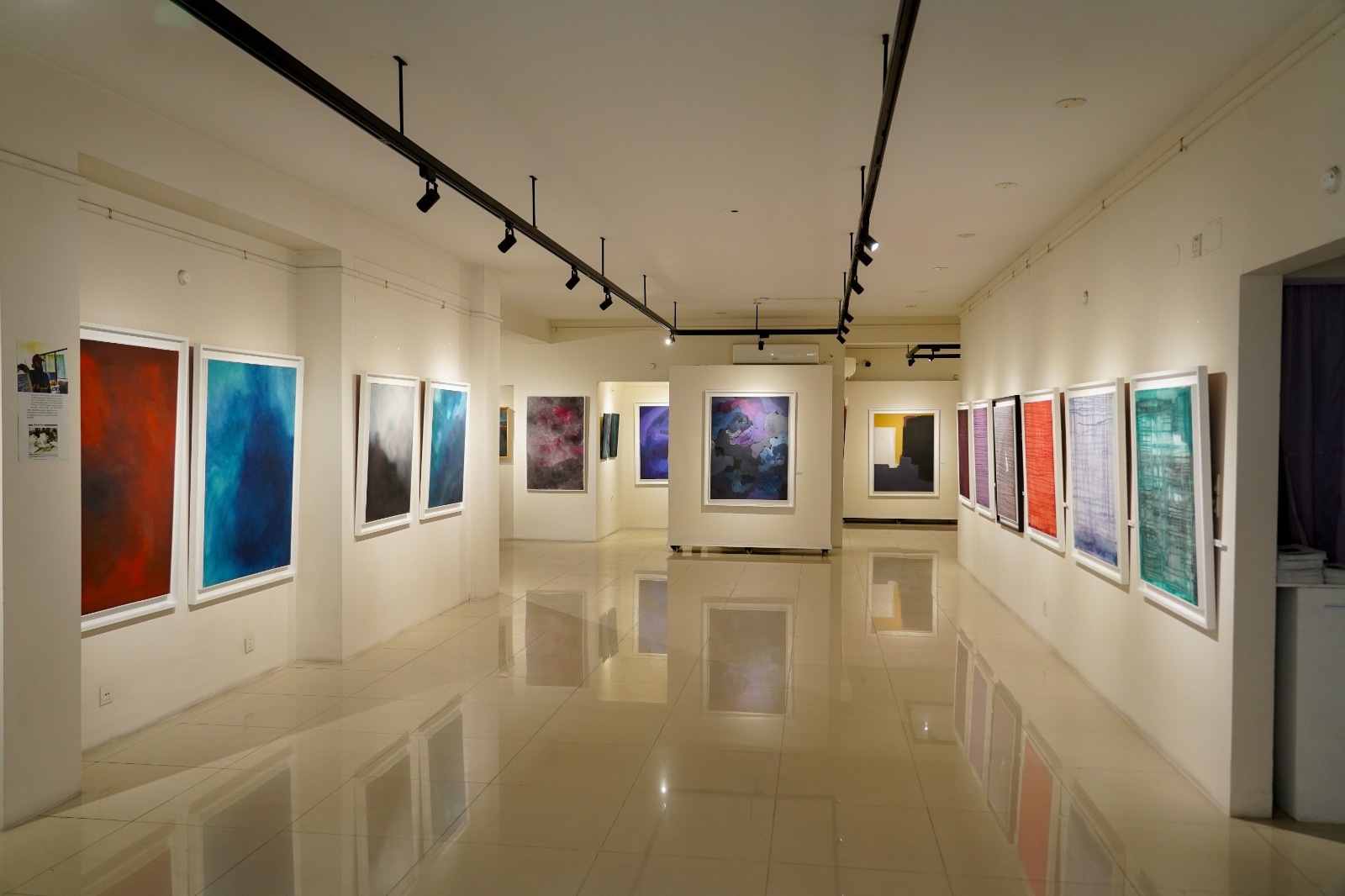
Ahmed’s work is subtle yet displays an evocative visual language. Through a restrained use of form, tone, and imagery, the artworks speak softly but with great impact, inviting viewers into deeper emotional and intellectual reflection.
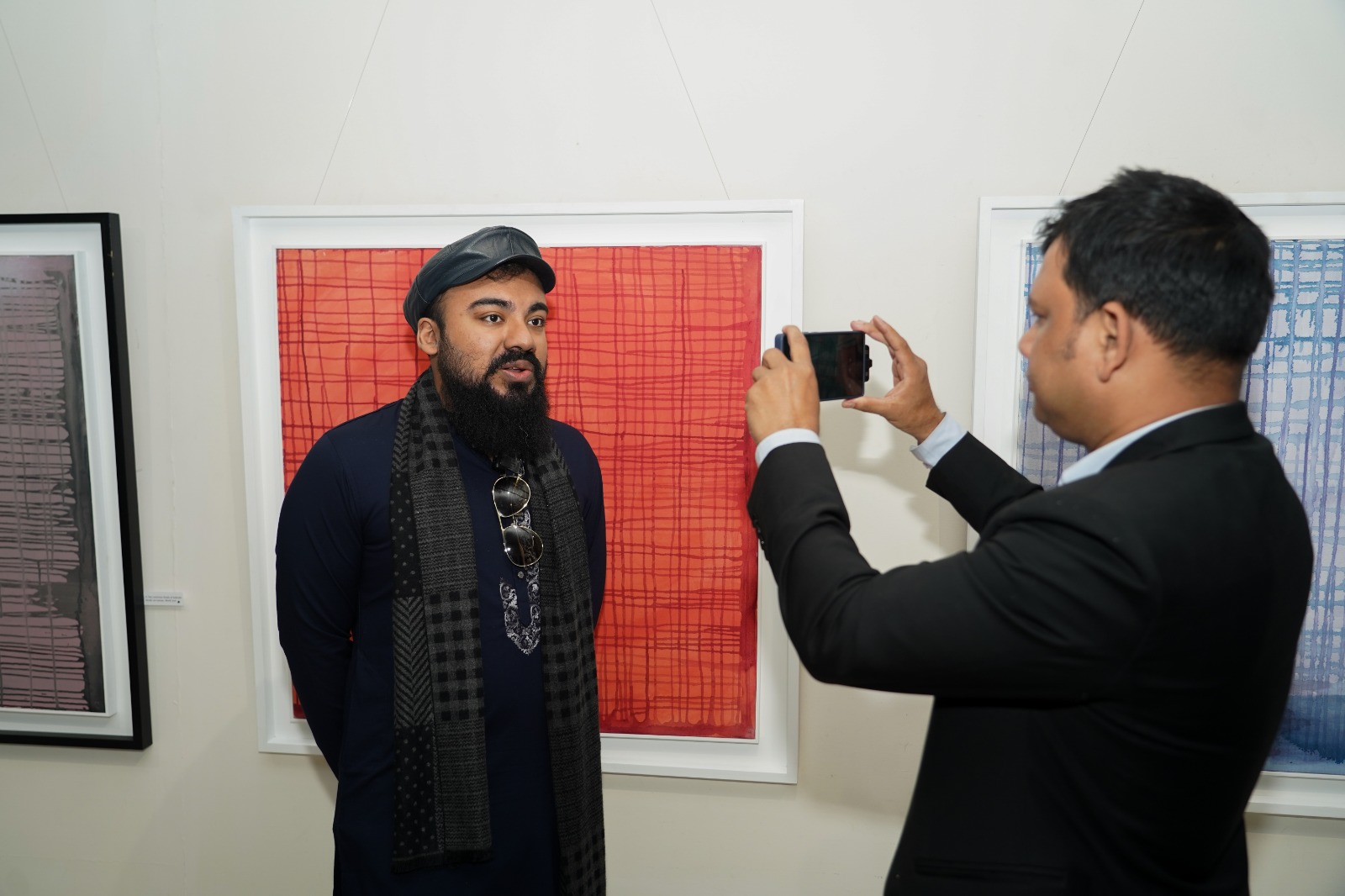
“The majority of the work in the exhibition is more recent and is centred around two main series. The first was inspired by a painting done in 2016 named Moshari,” expressed the artist.
“This series was made using a technique that I developed through experimentation with acrylic paints and water. The process is reminiscent of childhood memories—watching raindrops slide across the windows of a moving car.”
Curated by eminent artist and academic Professor Nisar Hossain, the opening ceremony was attended by distinguished artists, academics, and art enthusiasts.
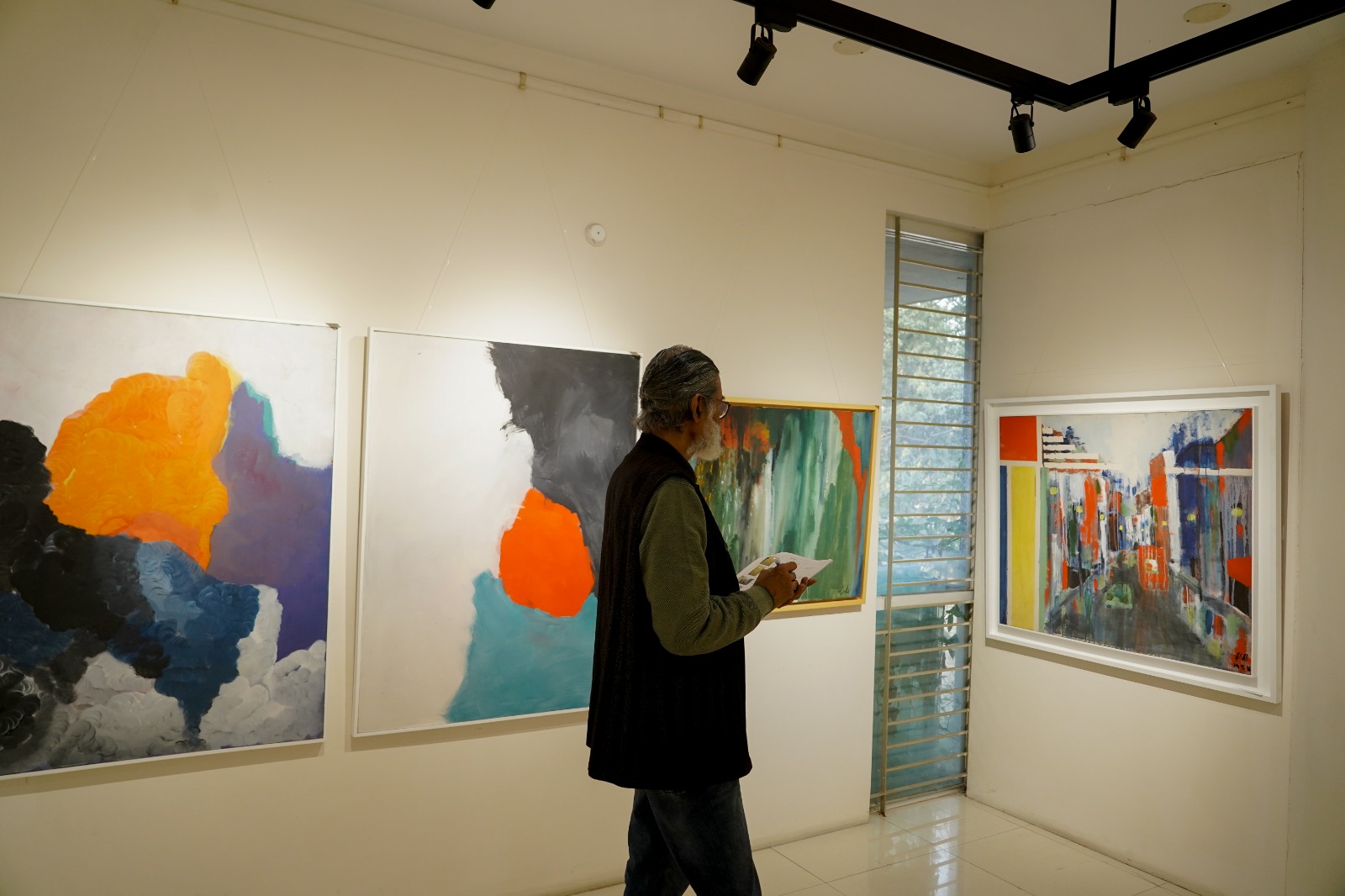
Noted art critic Professor Moinuddin Khaled presided over the opening event and shared his reflections on the exhibition. Professor Emeritus Rafiqun Nabi attended the inauguration as the chief guest, while eminent artists Professor Mohammed Eunus and Javed Jalil were present as special guests.
Another series featured in the exhibition explores the blending of one or two colours, creating a symphony of emotional experiences. This series is more abstract and offers a sense of meditative calm and peaceful reflection.
“These paintings are very meaningful to me because they highlight the beauty of colours that I have always loved, in a way that evokes calmness and spiritual contemplation,” Ahmed said.

“There are other paintings as well, influenced by mid‑century modern aesthetics, which complement contemporary design in a very symbiotic way,” he added.
Discussing his creative process, the artist revealed that it is based on the principle of working on larger batches of paintings, which he believes is the best way to create beautiful work in the long run.
He often immerses himself in specific colour palettes, creating multiple works simultaneously while exploring different compositions and letting the flow of colour guide the process.
He prefers to work in natural light and uses acrylic or oil paints in a variety of techniques developed through experimentation and learning from other artists. There are specific methods for various kinds of paintings, but sometimes the process becomes blurred when ideas start to flow and everything feels automatic.
Although he most often uses acrylics, his older pieces include more oil paints. He has also experimented with watercolours, ink on paper, and sculpture using metal wire, among other mediums.
The paintings in the exhibition were mostly divided by series: the Moshari series was primarily acrylic‑based, while the meditative collection contained more oils.
When asked for advice to young artists, Azwad suggested they remain stubborn and true to themselves.
“The best way to create something that represents you is to follow the thread of inspiration that leads you to creativity honestly and authentically. The world may be changing rapidly, but humanity has been making art for thousands of years. Make art that you would hang in your own home.”
Azwad’s plans for the future include expanding his practice and connecting with the global art world.
He intends to work on larger paintings and develop a responsible digital art presence that can help carry the humanity of this process into what he believes is increasingly becoming soulless and sloppy.
He wants to continue in the direction he has been moving, focusing on the inner beauty of human experience.
Written by Tasmiah Chowdhury