

Glimpse of The Architectural Legacy of DWm4
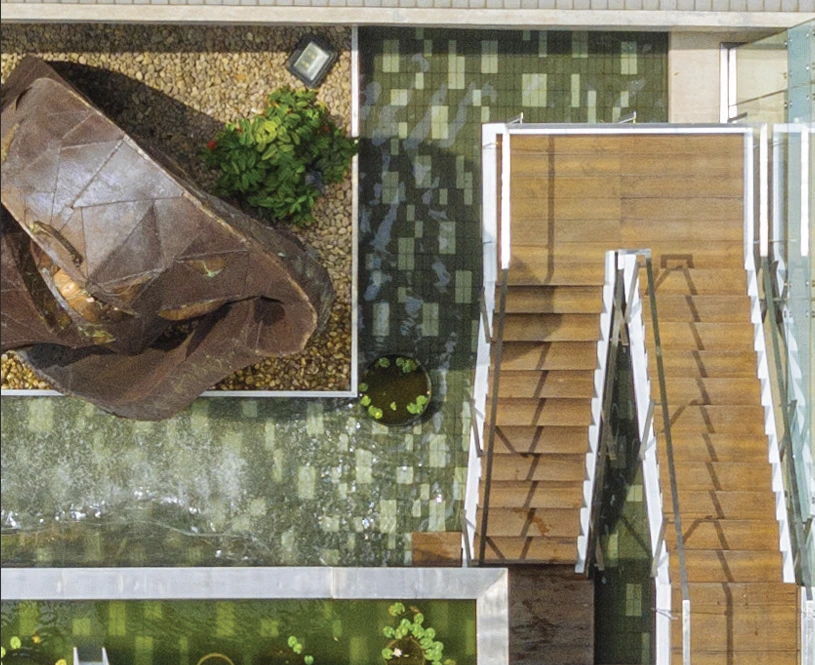
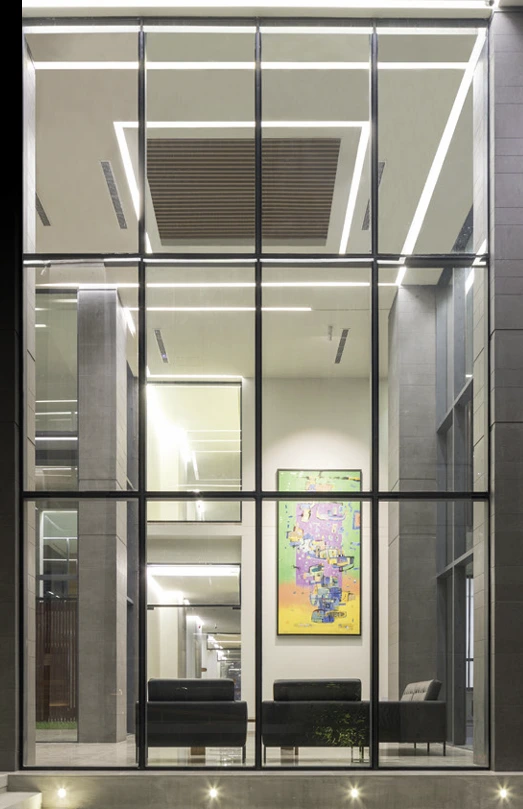
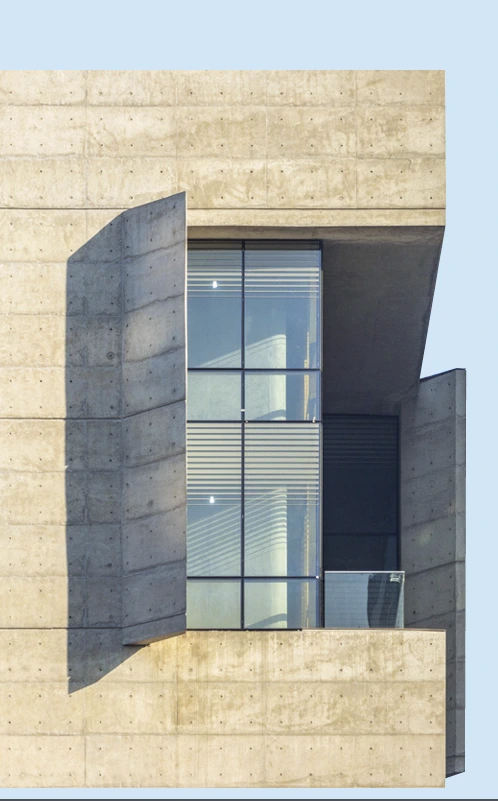
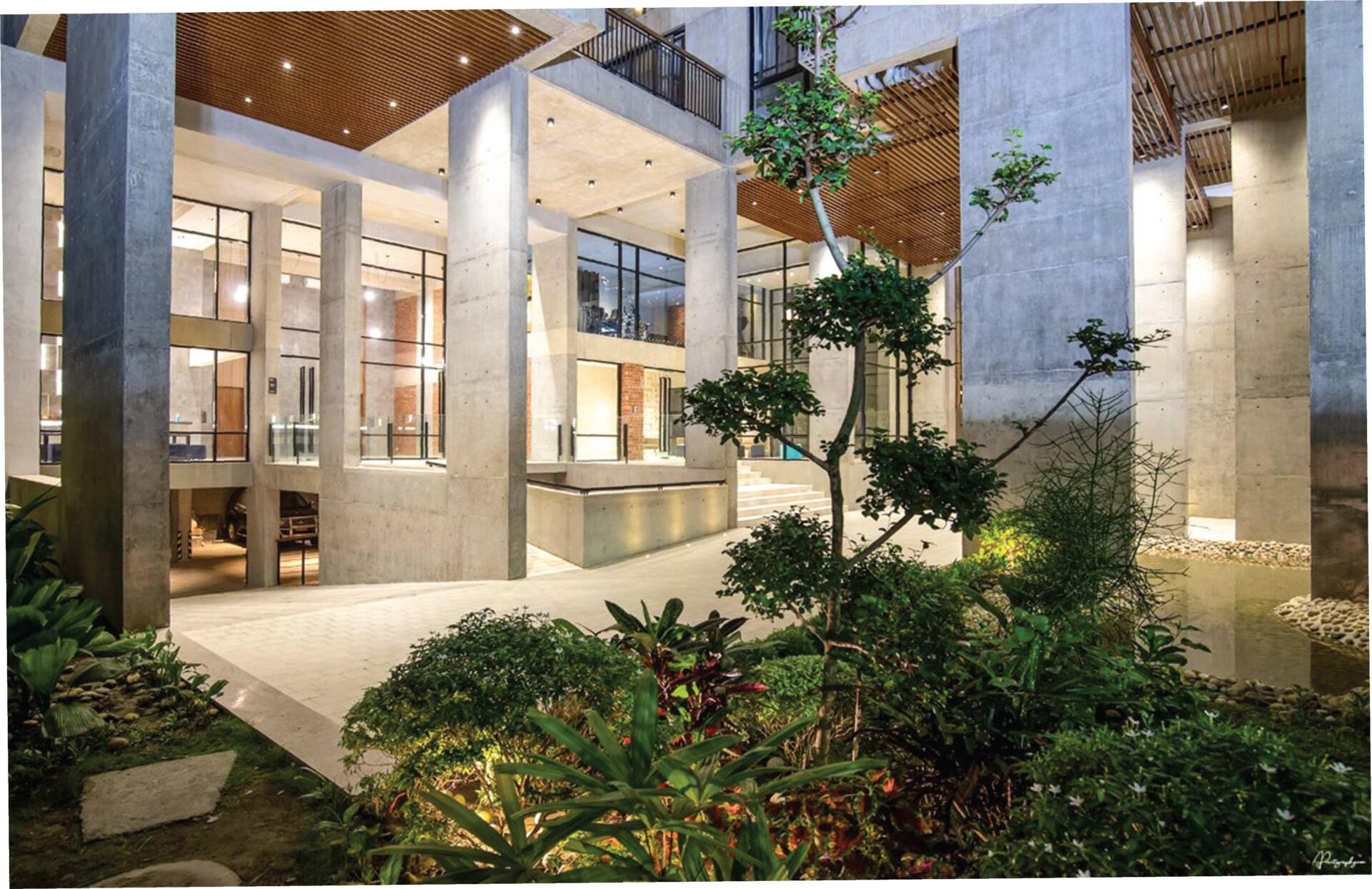
DWm4 Architecture stands out as an innovative and visionary design studio, among the leading firms in the country. With its unwavering commitment to excellence, DWm4 has redefined the architectural landscape of Bangladesh through its creative and sustainable designs. Under the partnership of architect Mamnoon Murshed Chowdhury, architect Mahmudul Anwar Riyaad, and architect Shaoki Shamim, this renowned firm has been at the forefront of reshaping the country’s urban landscape with its innovative designs. In practice since 1995, DWm4 has been open to reshaping itself in terms of new design ideas, and also in management and operating strategies. Over the years, the practice has involved three separate and autonomously run units for architectural design [DWm4 Architects], interior design [DWm4 Intrends], and design-build projects [DWm4 Interprise]. While the founding partners, architect Mamnoon Murshed Chowdhury and architect Mahmudul Anwar Riyaad are involved in all three; the ID and Design-Build establishments have partners namely architect Daniel Haque and architect Arif Khan in chief executive and operating positions. In 2022, architect Shaoki Shamim joined DWm4 Architects as the third partner. All three architects had been members of the DWm4 team for a good number of years before joining as partners. With the younger generation coming on board, the vigour and architectural energy are strengthened through better mid-level management, enabling the practice to continuously make additions to its visions. The focus on re-structuring and evolution in DWm4 is based on the intent to produce designs of significance and relevance. While all projects follow the essential principles of being truthful to function, climate, structure, and aesthetics, they vary significantly so as not to be repetitive and predictable. For example, the architectural language is different in the office buildings like Bay’s Edgewater, Prime Bank Head Office on Gulshan Avenue, and Grameen Telecom Trust [GTT] Bhaban in Mirpur. The differences inherently are derived from site context and structural and functional prerogatives. landscaped precinct is created to bring tranquility to the context by appearing as an oasis to the pedestrians. The landscape is viewed from the interiors through the glass façade, and from the terrace formed by terminating the concrete portal on the 8th Floor, which is adjacent to the social spaces like the dining hall area, and daycare room. Another terrace facing East, adjacent to the Board Room on the 19th floor, is also a nod to the context as it provides a panoramic view of Hatirjheel. The design of Bay’s Edgewater celebrates the building’s location – accentuating the views from the interior spaces towards the sensual curves of the lake. At the same time, the layout does justice to its setting in a corner plot – separating the incoming traffic toward the more public café and gallery areas from the regular officegoers. Due to the careful attention to functional attributes, MEP, and BMS elements, after almost a decade of completion, the performance of the building is still stellar. The Prime Bank building is set deeper into the site as much as possible to be away from the maddening traffic of Gulshan Avenue. This was possible due to the site’s elongated shape. A 70-foot deep The Grameen Telecom Trust (GTT) project was designed on a partially built structure with fixed cores. By deleting one structural grid at the front and creating a water body at the place, the architects created a transcendent mediating space between the street and the double-height entry. Similarly, the very deep building floor plate was broken into two blocks by doing away with the middle parts of the floor slab by inserting a skylit atrium, which also ensured north-south airflow. The edges of the atrium are not static and shift in sections at different vertical levels. The facade is an intriguing composition of glass and concrete, creating a dynamic interplay of transparency and solidity. The patterns are inspired by organic lines of leaves and provide the building with a dynamic expression. The transparent glass sections allow natural light to enter the building, reducing the reliance on artificial lighting. About the project, architect Mahmudul Anwar Riyaad said, “We worked with the section of the building, which resembles a gallery. The ground floor lobby is dedicated to the people and space, encompassing a vast openness.” The building, designed in collaboration with architect Rashed Chowdhury reflects on people, progress, and emancipation. The field becomes more than just a patch of land; it becomes a symbol of joy, innocence, and a shared sense of community: In the typology of residential buildings, DWm4 has a large number of building projects that address the core concerns of natural light, ventilation, optimisation of space, and communicating with the context. Be it a single-family residence like the Reaz Loft in Khanpur, Narayanganj, or a multi-family building like Pohela Boishakh in Banani, Dhaka, these ideals find reflection in the designed forms. In Pohela Boishakh, the front landscape, the double-height drop-off area, and the lobby mediate with the street and creates a transition from public to private domain. The community space on the ground floor has a space that is designed as a café where residents come together and bond. The textures on the wall and floor are inspired by alpona motifs, reinforcing the spirit of Pohela Boishakh. The collaboration between the developer Signature 11 and DWm4 Architects ensured the seamless integration of architectural design and real estate development expertise, resulting in a remarkable building. The Reaz Loft stands as an incredible architectural achievement within the busy town of Narayanganj. This home on a very narrow strip of land, blends in with its surroundings and embodies modern living while paying attention to treasured memories of a special childhood field that is located in front of the loft. The elegant layout exhibits modernism with an emphasis on functionality and clear lines. As architect Riyaad explains, “Even though there was no room for horizontal deviations, we used our creativity to play with the building’s sectional elevations.” The structure stands as evidence of the designers’ keen eye for detail and commitment to creating spaces that resonate with the
Meet Architect Salauddin Ahmed- UN HOMME AVEC DU PANACHE
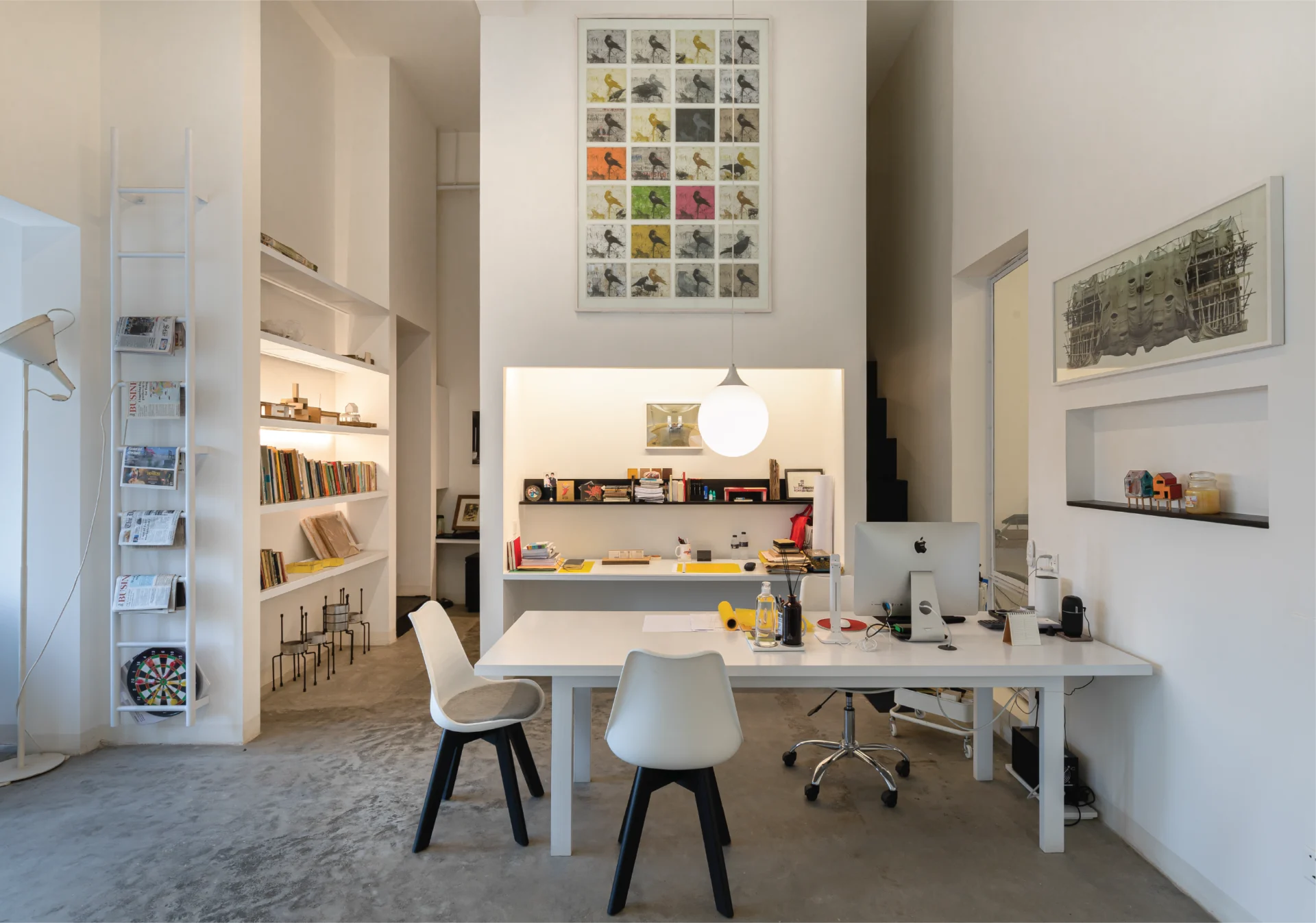
Many people spend their entire lives believing that the arts and music are completely different from the hard sciences, which include physics, chemistry, engineering, and even architecture. But are they really? Enter architect Salauddin Ahmed’s Atelier Robin Architects (ARA) in Hazaribagh and marvel in the atelier’s (French for studio) all-white, lofty, and expansive interior. You will see that architecture is not truly that far from art, if at all. Walking into Salauddin’s studio was in part equivalent to getting a glimpse of his inner workings: neat, geometrically perfect, and symmetrical. Aside from the conference room, which doubles as a miniature gallery, paintings and his sketchbooks are neatly spread out in the spatial atelier, where voices echo. Salauddin, a creator as well, designed most of the fixtures and furniture in the studio. But what sets ARA’s principal architect apart from the other practitioners in the industry? His schooling is in the US. His decade-and-a-half-long stay in the US, where he studied architecture at the University of Pennsylvania, in his career-forming phase exposed him to elements of his trade that are otherwise tough to attain in Bangladesh. “I didn’t come here to settle down. I came here to try it out. During my time away from here and being involved academically, I met architect, urbanist, and architectural historian Kazi Khaleed Ashraf. He influenced me to try out my trade in Bangladesh, as there were many opportunities here when I was starting out professionally, circa 1995. Then I did discover the vastness of the architectural practice in Bangladesh,” Salauddin said, explaining why he stayed back. Then he went on to compare architecture with music, alluding to how Wolfgang Amadeus Mozart perfected music from the age of four for the love of music—not commercialisation or leaving behind a vast collection but simply a legacy. “If an architect is just building buildings at an existential level, then,” he retorted, “it’s not architecture at all. Architecture is in the conscious and the subconscious; that is the vastness of architectural practice.” As Dhaka expands northward, homogenous residential buildings are popping out everywhere. People need a place to live, yes, but these buildings are just mere cages with the most basic elements that do not remotely enhance the art of living. The schooling our young architects are receiving just deals with hyper-commercial ways of living—ways in which more buildings and apartments can be crammed into the ever-so-dwindling space of Dhaka. “The application of laws, codes, and the conduct of architecture are barely taken into consideration by the authority. All the authority cares for, almost in a military fashion, is that the buildings conform to straight lines and extremely basic designs. They are not bothered by the emotional contact that architecture bears with the art of living. Habitats that enhance the beauty of living are underscored as a passion project, and they simply don’t make a lot of money. The number of architects presently practicing is sky-high, but that number needs to be threefold as high. However, they also have the mammoth task of dictating to society how architecture works. Bangladeshi architect and urban planner Muzharul Islam embodies that ideal concept of architecture. Later on, a school was set up to learn and then unlearn Muzharul Islam to create room for fresher ideas. That has been a successful way forward, a tried and tested system through which many contemporary architects of renown have come forward. But a few exceptions cannot be an example. In a country like Bangladesh, one or two exceptions will not do,” he explained it in detail. In all sincerity, Salauddin stressed emphatically the importance of ‘averageness’. “The word average carries a negative meaning in our society. But it has been proven that a person who carries themselves with the average air is the most attractive. However, the importance of averageness is not taught at an academic level. For example, all circles don’t have to be spherical. There is beauty in a slightly elliptical and average circle as well.” This city should represent an old ‘kantha’ that is average and not gaudy, so that everyone feels a level of comfort and familiarity, thus explaining averageness. Most Dhaka residents cannot afford such luxury, which makes an average approach go hand in hand with architecture: turning an empty lot into a home. “Dhaka is growing, but as an orphan,” Salauddin said morosely. Although much opportunity is not there to salvage Dhaka anymore from its systematic ruination, “possibilities” are, however, still there. His atelier is proof of that! Walking through the mazes of what used to be the heart of the now-removed tannery industry in Hazaribagh leads to his studio. A 15-foot gate, which could almost function as a castle drawbridge, welcomes you into the imposing interior. One would be left in awe that such a magnificent studio can be set up in a relic of a retired tannery. To Salauddin, it is the will and temperament that matter. “It’s a part of my ensemble: I take immense personal struggle to show someone the possibility.” Getting back on the matter of urban design, he spoke briefly about how it is done in successful cosmopolitan cities, one in which he once resided for a while. He elaborated, “Everybody here wants a south-facing veranda. Okay, but his neighbour might be deprived of the southern wind if he takes up all the space. In New York, for example, there’s a code: your building cannot project two hours of shadow on any surface in an eight-hour window. If you cast a shadow long enough, the adjacent building will need more heating capacity in the cold and get much less sun during the day. Your design form has to respect the many constituencies of urban design. This is impossible to even imagine in Dhaka.” The long conversation ended on a beautiful note. He said, “Ninety
Architect Rashed and the Poetics of Practice
In the crowded clusters of Dhaka’s architectural offices—where every firm spoke in bold, predetermined tones—finding an original voice was never easy. For Architect Rashed Hassan Chowdhury, the journey began not with buildings, but with books and design experiments of all kinds. Encouraged by his elder brother to pursue architecture, he entered BUET carrying curiosity and a restless desire to make and learn. Even as a student, Rashed was never confined to one discipline. He moved fluidly between book design, graphic work, product design—anything that allowed imagination to unfold in tangible form. But the multiplicity of voices, the weight of tradition and pressure of trends, left him with a fundamental question: How does one discover one’s own architecture? Rashed’s answer, at least in the early years, was to do everything. His first role was as a researcher at BUET’s Green Architecture Cell, followed by a post as lecturer at the University of Asia Pacific. After office hours, he joined architects like Nahas Khalil, Marina Tabassum, and Mahmudul Anwar Riyaad on project-based work—each collaboration sharpening instincts and broadening vocabulary. And at night, in the chilekotha/attic of his brother’s office—with only a computer and printer—he began sketching the contours of his own practice. Sleep was rare, but happiness abundant. Eventually came the realization: energy without direction cannot sustain itself. “I was doing too much, but none of it was really going anywhere,” Rashed recalls. That reckoning pushed him to leave the safety of multiple jobs and commit to a singular vision. Out of that decision was born Dehsar Works—a multidisciplinary practice whose very name is simply the last-to-first spelling of “Rashed,” a gesture as honest and direct as the work it produces. Learning by Doing Dehsar Works is not merely an architecture office—it is a laboratory. For Rashed, design is not about formula but about process, about finding concept and clarity. “The design process excites me most. It still does, every single time,” he says. This philosophy is reflected in the kinds of projects he chooses and the way they evolve: adaptive reuse, experimentation with materials, finding beauty in imperfection, and above all, engaging with the everyday lives of users. The Blues Communications Office, a transformation of a warehouse into a bold new workspace, tested both his patience and creativity. The design called for a complex metal structure—one that contractors hesitated to take on. Instead of abandoning the idea, Rashed and his team decided to build it themselves. They formed a sister concern, aptly named Workshop, to execute the construction. Through trial, error, and persistence, they not only completed the project but also gained a wealth of knowledge about materials and making. Ajo Idea Space is perhaps the purest example of his ethos. Conceived as a café and gathering space, it was never meant to be a conventional air-conditioned box. Instead, it embraced openness, natural ventilation, and a certain looseness that invited people to linger. The pavilion-like structure, with its vaulted steel forms and porous screens, blurred the boundary between inside and outside. It embodied sustainability not as a checklist but as a lived experience: a place where people ate, conversed, and created in ways that felt organic. Another notable work is the Beximco Learning and Development Center, a lightweight, semi-circular hall framed with steel and clad in polycarbonate sheets. Here, the emphasis was on creating an affordable, sustainable, and flexible learning environment that could anticipate future uses. By designing with recyclability and climate responsiveness in mind, Rashed sought to redefine what corporate infrastructure could mean in Bangladesh. Similarly, the Artistry Marble & Granite Experience Center transformed an old warehouse into a gallery-like environment for natural stones. Rather than demolish and rebuild, the design preserved and reinterpreted the existing shell, reusing nearly half the materials. The result was a spatial narrative where light and texture interacted with surfaces, allowing visitors to experience stone not as a static product but as a dynamic material. Another iconic project of Rashed is Suvastu Rialto Tower, a contemporary commercial landmark in Dhanmondi. Developed by Suvastu Properties Ltd., the project embodies functionality, visibility, and refined contemporary design. Suvastu Rialto Tower is a 3-basement, ground plus 13-storey commercial building, developed on approximately 10 kathas of land. The vertical organization of the building efficiently accommodates parking, retail, and office functions, addressing both spatial optimization and urban density challenges. The architectural language of Suvastu Rialto Tower is distinctly modern, characterized by clean lines, transparency, and material contrast. The façade features a glass curtain wall system, combined with aluminium elements and contemporary detailing. The glass facades not only enhance the building’s aesthetic appeal but also maximizes daylight penetration, contributing to a pleasant and productive interior environment. A Philosophy of Effort Rashed is not shy about offering advice to the younger generation of architects. His words are sharp but encouraging: “Stop complaining and start enhancing your skills.” For him, the profession is not merely about constructing buildings but about learning by doing—whether in furniture, graphic design, or urban experiments. Bangladesh, in his eyes, is a land of vast opportunity, waiting for those willing to work with patience and integrity. “There is so much to do, but very few skilled people willing to put in the effort,” he says. The formal degree, while important, is not enough. Real growth, he believes, happens through curiosity, through the courage to try, to fail, and to learn. Toward a Different Future The story of Dehsar Works is, in many ways, the story of one architect’s relentless pursuit of authenticity. From a chilekotha room with a single computer to award-winning projects recognized internationally, the journey has been marked not just by structures built but by lessons learned. As Rashed continues to shape spaces that are adaptive, playful, and deeply contextual, he reminds us that architecture is less about monuments and more about moments: the