



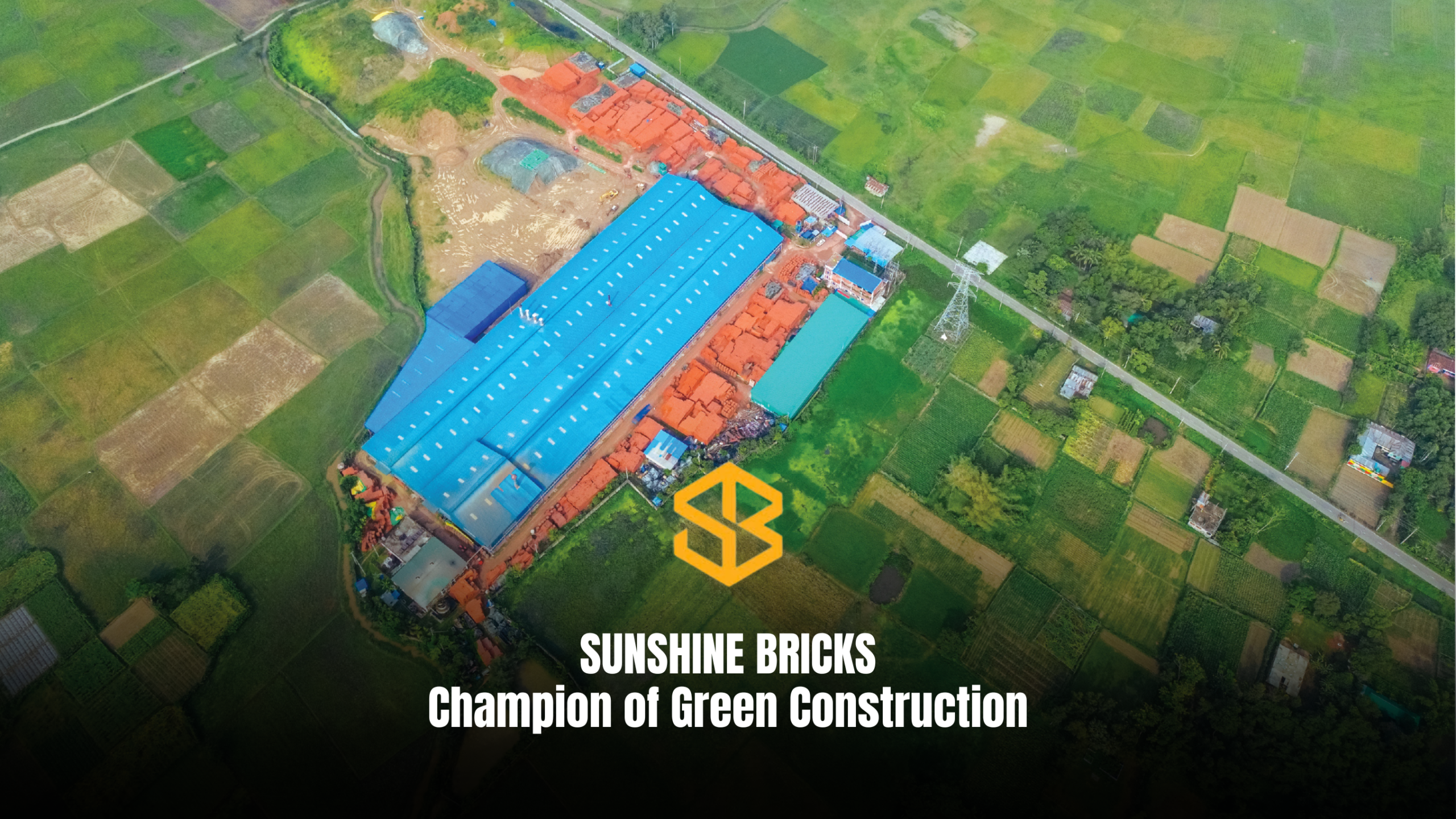
SUNSHINE BRICKS: Champion of Green Construction
“It’s not about 10-hole bricks. It’s about a formula for a lifetime investment.” That is how Sakif Ariff Tabani, vice chairman of Mirpur Ceramics, Khadim Ceramics and Sunshine Bricks, describes the philosophy behind one of Bangladesh’s most ambitious ventures in the building materials sector. In a country where traditional red bricks have long dominated construction, Sunshine Bricks has emerged as a standout brand, reshaping expectations of durability, design, and sustainability. From Habiganj to the National Stage
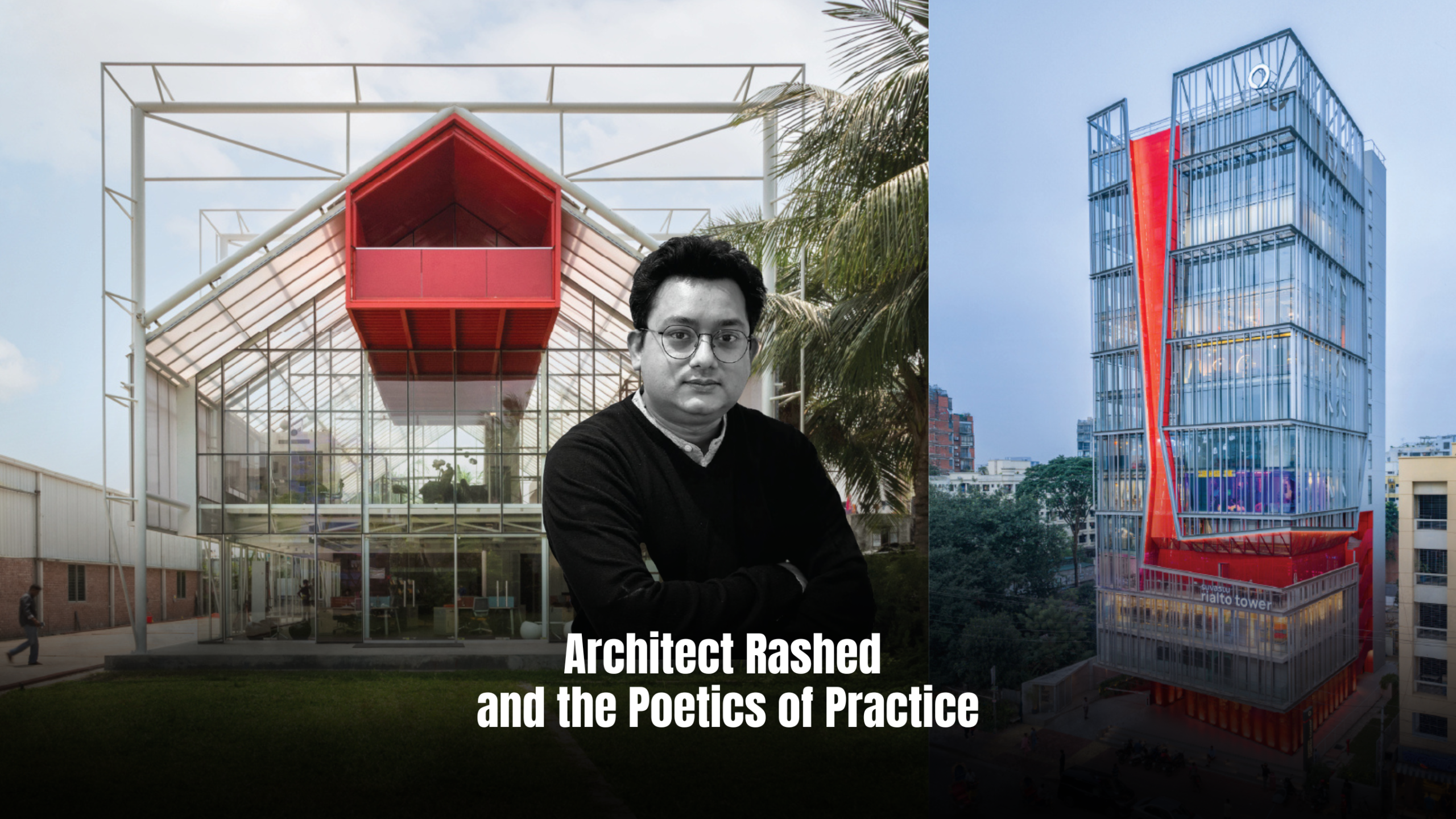
Architect Rashed and the Poetics of Practice
In the crowded clusters of Dhaka’s architectural offices—where every firm spoke in bold, predetermined tones—finding an original voice was never easy. For Architect Rashed Hassan Chowdhury, the journey began not with buildings, but with books and design experiments of all kinds. Encouraged by his elder brother to pursue architecture, he entered BUET carrying curiosity and a restless desire to make and learn. Even as a student, Rashed was never confined to one discipline. He moved fluidly between
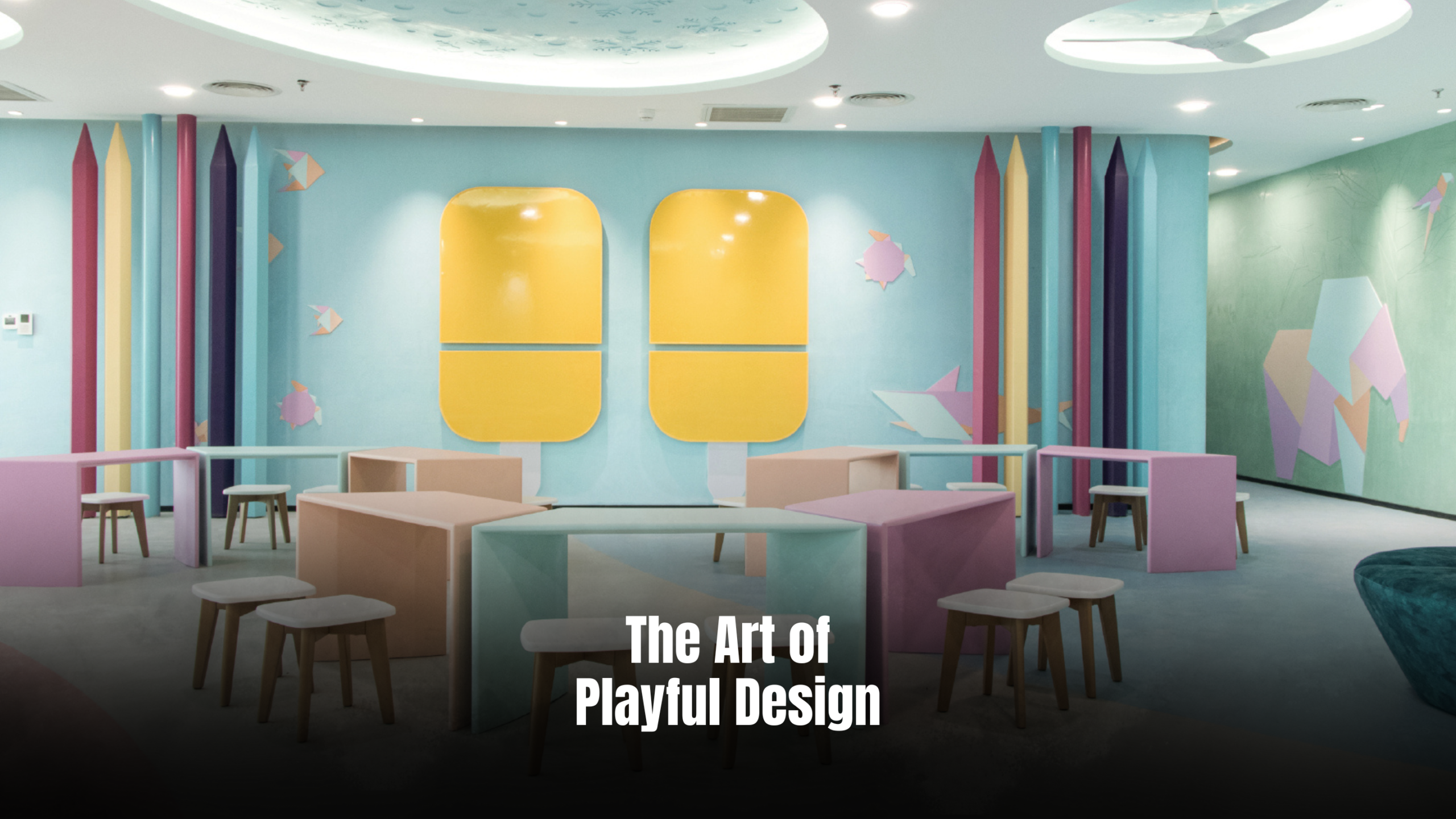
The Art of Playful Design A Look Inside BRAC University’s Child-Centric Sanctuary
A new chapter in early childhood care begins with the opening of the second BRAC University Daycare Centre, located in the vibrant Badda Campus of BRAC University, Dhaka. This thoughtfully designed facility serves as a sanctuary for children up to eight years old, offering a nurturing environment that prioritizes safety and development. Designed by Dwm4 Intrends, with an enchanting lighting scheme from Miro Lighting, the daycare centre is a dynamic and imaginative world where play, learning, and exploration
Every year on the 26th of March, Bangladesh proudly celebrates its Independence Day—a symbol of courage, sacrifice, and national pride. This historic day marks the beginning of the nation’s struggle for freedom in 1971, when the call for independence united millions of people. The journey to independence was marked by immense sacrifice. Millions of brave martyrs laid down their lives to secure the freedom we cherish today. Their courage, resilience, and unwavering spirit became the foundation of an independent Bangladesh. The Liberation War of 1971 was not just a battle for land, but a fight for identity, culture, and dignity. On this day, the nation pays deep respect to those heroes. The National Martyrs’ Memorial stands as a powerful symbol of remembrance, where people from all walks of life gather to honor their sacrifice. The national flag flies high across the country, representing the pride, freedom, and blood that shaped the nation. Independence Day is not only a time to remember the past but also a moment to reflect on our responsibilities. It inspires us to uphold unity, justice, and progress, and to contribute to building a stronger and more prosperous Bangladesh. As we celebrate this great day, we renew our commitment to the values of freedom and honor the sacrifices of our heroes. Salute to the martyrs of our independence. Their legacy lives on forever.
Architect Rashed and the Poetics of Practice
In the crowded clusters of Dhaka’s architectural offices—where every firm spoke in bold, predetermined tones—finding an original voice was never easy. For Architect Rashed Hassan Chowdhury, the journey began not with buildings, but with books and design experiments of all kinds. Encouraged by his elder brother to pursue architecture, he entered BUET carrying curiosity and a restless desire to make and learn. Even as a student, Rashed was never confined to one discipline. He moved fluidly between book design, graphic work, product design—anything that allowed imagination to unfold in tangible form. But the multiplicity of voices, the weight of tradition and pressure of trends, left him with a fundamental question: How does one discover one’s own architecture? Rashed’s answer, at least in the early years, was to do everything. His first role was as a researcher at BUET’s Green Architecture Cell, followed by a post as lecturer at the University of Asia Pacific. After office hours, he joined architects like Nahas Khalil, Marina Tabassum, and Mahmudul Anwar Riyaad on project-based work—each collaboration sharpening instincts and broadening vocabulary. And at night, in the chilekotha/attic of his brother’s office—with only a computer and printer—he began sketching the contours of his own practice. Sleep was rare, but happiness abundant. Eventually came the realization: energy without direction cannot sustain itself. “I was doing too much, but none of it was really going anywhere,” Rashed recalls. That reckoning pushed him to leave the safety of multiple jobs and commit to a singular vision. Out of that decision was born Dehsar Works—a multidisciplinary practice whose very name is simply the last-to-first spelling of “Rashed,” a gesture as honest and direct as the work it produces. Learning by Doing Dehsar Works is not merely an architecture office—it is a laboratory. For Rashed, design is not about formula but about process, about finding concept and clarity. “The design process excites me most. It still does, every single time,” he says. This philosophy is reflected in the kinds of projects he chooses and the way they evolve: adaptive reuse, experimentation with materials, finding beauty in imperfection, and above all, engaging with the everyday lives of users. The Blues Communications Office, a transformation of a warehouse into a bold new workspace, tested both his patience and creativity. The design called for a complex metal structure—one that contractors hesitated to take on. Instead of abandoning the idea, Rashed and his team decided to build it themselves. They formed a sister concern, aptly named Workshop, to execute the construction. Through trial, error, and persistence, they not only completed the project but also gained a wealth of knowledge about materials and making. Ajo Idea Space is perhaps the purest example of his ethos. Conceived as a café and gathering space, it was never meant to be a conventional air-conditioned box. Instead, it embraced openness, natural ventilation, and a certain looseness that invited people to linger. The pavilion-like structure, with its vaulted steel forms and porous screens, blurred the boundary between inside and outside. It embodied sustainability not as a checklist but as a lived experience: a place where people ate, conversed, and created in ways that felt organic. Another notable work is the Beximco Learning and Development Center, a lightweight, semi-circular hall framed with steel and clad in polycarbonate sheets. Here, the emphasis was on creating an affordable, sustainable, and flexible learning environment that could anticipate future uses. By designing with recyclability and climate responsiveness in mind, Rashed sought to redefine what corporate infrastructure could mean in Bangladesh. Similarly, the Artistry Marble & Granite Experience Center transformed an old warehouse into a gallery-like environment for natural stones. Rather than demolish and rebuild, the design preserved and reinterpreted the existing shell, reusing nearly half the materials. The result was a spatial narrative where light and texture interacted with surfaces, allowing visitors to experience stone not as a static product but as a dynamic material. Another iconic project of Rashed is Suvastu Rialto Tower, a contemporary commercial landmark in Dhanmondi. Developed by Suvastu Properties Ltd., the project embodies functionality, visibility, and refined contemporary design. Suvastu Rialto Tower is a 3-basement, ground plus 13-storey commercial building, developed on approximately 10 kathas of land. The vertical organization of the building efficiently accommodates parking, retail, and office functions, addressing both spatial optimization and urban density challenges. The architectural language of Suvastu Rialto Tower is distinctly modern, characterized by clean lines, transparency, and material contrast. The façade features a glass curtain wall system, combined with aluminium elements and contemporary detailing. The glass facades not only enhance the building’s aesthetic appeal but also maximizes daylight penetration, contributing to a pleasant and productive interior environment. A Philosophy of Effort Rashed is not shy about offering advice to the younger generation of architects. His words are sharp but encouraging: “Stop complaining and start enhancing your skills.” For him, the profession is not merely about constructing buildings but about learning by doing—whether in furniture, graphic design, or urban experiments. Bangladesh, in his eyes, is a land of vast opportunity, waiting for those willing to work with patience and integrity. “There is so much to do, but very few skilled people willing to put in the effort,” he says. The formal degree, while important, is not enough. Real growth, he believes, happens through curiosity, through the courage to try, to fail, and to learn. Toward a Different Future The story of Dehsar Works is, in many ways, the story of one architect’s relentless pursuit of authenticity. From a chilekotha room with a single computer to award-winning projects recognized internationally, the journey has been marked not just by structures built but by lessons learned. As Rashed continues to shape spaces that are adaptive, playful, and deeply contextual, he reminds us that architecture is less about monuments and more about moments: the
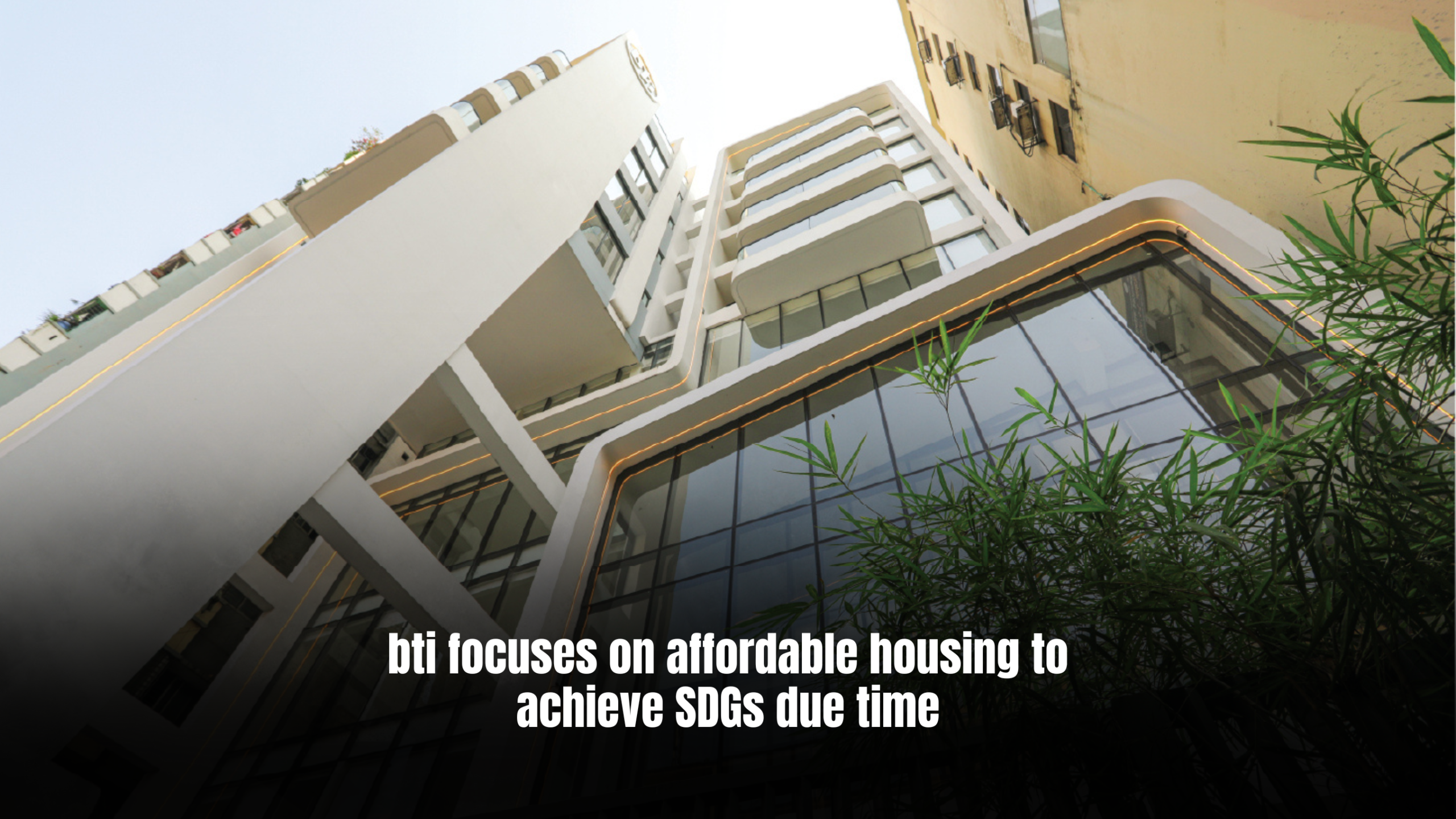
bti focuses on affordable housing to achieve SDGs due time
The Building Technology & Ideas Ltd (bti), a real estate developing company in Bangladesh, started its journey in 1984. Over the years, the company has become a pioneer in the construction of high-rise and luxury buildings in the country. The company has already constructed around 450 buildings so far, and is working on 72 projects at the moment, and additional 100 projects are in pipelines. It has around 8,000 clients. “Thanks to maintaining customers’ commitment, accountability, delivering product timely, and ensuring quality products, the bti has made its today’s place in the country’s real estate sector,” Faizur Rahman Khan, managing director of the bti, shared his views with the Ceramic Bangladesh Magazine in an exclusive interview. He said the company’s motto is customer satisfaction. However, the bti started its journey with three projects in 1984. The company had six projects in 1990. How did bti expand its business? In 1992, it started building costlier luxury apartments in Gulshan at first, and in 1993 in Baridhara. It was a milestone for the real estate sector. Basically, the housing industry continued to expand after 2000. But in the 2007-08 year, the industry began to suffer owing to political unrest, Faizur Rahman informed. He stated that innovation is what sets the company apart from others. “We always try to bring innovation in every project. Customers are overwhelmed by our diversity. That is why they feel comfortable with the bti. Now it is a leader in aesthetic architecture.” In the 1990s, real estate companies faced a difficulty to buy land for housing as individual owners did not want to give up their lands easily. Besides, there were also complications regarding the registration of lands and flats. The bti took the initiative to build houses by sharing apartments with the landowners and approached the government for legislation. Later, only land registration was possible at the time. As a result, if you bought a flat, you would not be the owner of the land. “We started linking the flat ownership with the land ownership,” he said. He added that the Real Estate and Housing Association of Bangladesh (REHAB) has 500- 600 registered members. Of this, literally, there are 5-6 companies who are very active in the sector, and 10-12 companies who did one-two projects. The rest of the companies are ‘name only company’. “We cordially maintain commitment to customer, and hand over projects timely which are very crucial for the business. Even, we try to hand over projects before several months ago from agreement time for last few years. We don’t compromise in design and construction so we follow all codes, and rules of RAJUK and other organizations. We think so that clients are not faced any troubles in future,” the managing director said. Basically, bti serves three category of apartments – luxury apartment, classic, and affordable. The luxury apartments are generally built in Gulshan, Banana, Baridhara, and Dhanmondi areas. Classic apartments high demand to customers. The highest number of this apartments is in Bashundhara region where 40 mid-level projects are undergoing, and others are at Lalmatia, Mogbazar, and Segunbagicha areas. “Finally, affordable apartments—recently we started this as IMF and World Bank encourage it to ensure SDGs,” Rahman said. Generally, its apartment size is 500-600 squre feet. Its price is less than Tk 50 lakh. Customers can buy the apartment taking 70% of loan. So, bank loan should be fixed at reasonable interest rate for a long time. Ensuring safe and affordable housing for all Faizur Rahman highlighted that now the bti is focusing on affordable housing to achieve Sustainable Development Goal (SDGs) right time. In this regard, they discuss with a Japanese company to ensure Tk 200 crore investment in the industry. The affordable housing is addressed within the United Nation (UN)’s SDG- 11, which aims to make cities and human settlements inclusive, safe, resilient, and sustainable. Specifically, SDG target 11.1 by 2030 calls to ‘ensure access for all to ensure adequate, safe and affordable housing and basic services, and upgrade slums’. “To achieve the goal, all government’s officials should be cordial. There is needed a bribe, corruption, and hassles free business environment in the country,” he also commented. Real estate industry facing multiple challenges Faizur Rahman highlighted that the industry is facing multiple challenges including Detailed Area Plan (DAP). The DAP should be practical. There is a big gap between academia and industry. To make it successful, there is needed consultation with the realtors. The Floor Area Ratio (FAR) should not reduce such level which will create a problem to give space for the people as it is a density population country. Investment in projects has become slow as the government halted many mega projects. Besides, there is political instability right now. So, the demand for apartments also decline. Potential of ceramic products in housing industry Faizur Rahman said there is huge potential of ceramic products particularly tiles in real estate industry. The demand for the items rapidly increased in both local and international markets. The products contribute to bring attractive, and save time in construction of buildings. Written By Rafikul Islam
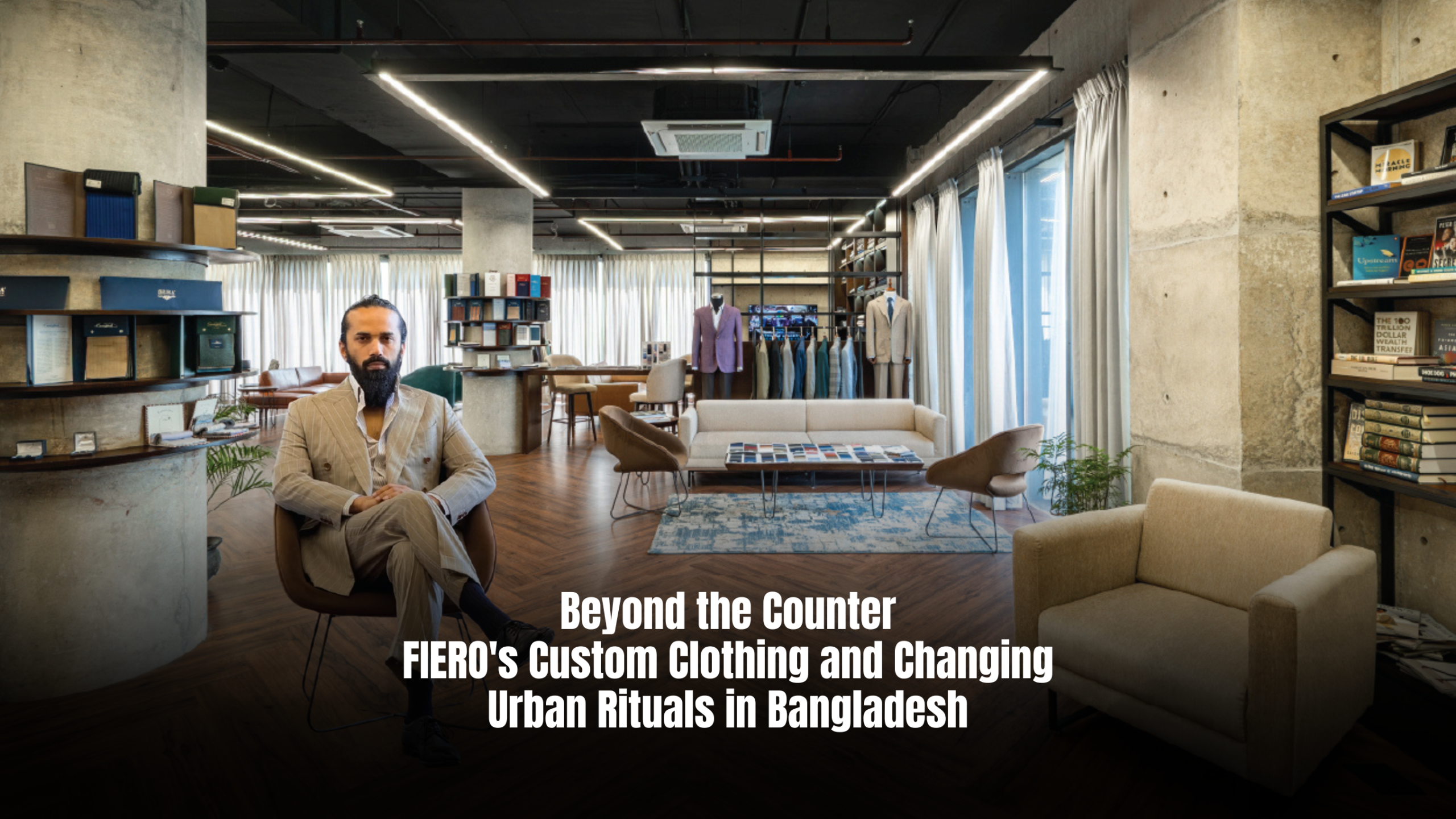
FIERO’s Custom Clothing and Changing Urban Rituals in Bangladesh
What began as a modest idea in mid-2017—to provide home-service tailoring for people constrained by time—has, within eight and a half years, evolved into FIERO, a leading bespoke and made-to-measure clothing practice in Bangladesh. Rooted in Dhaka yet informed by global traditions of craftsmanship, FIERO reflects a quiet shift in how custom clothing is conceived, experienced, and delivered in the local context. To understand this shift, it is necessary to look back at the tailoring culture that shaped earlier generations. For decades, the ritual was familiar: men accompanying their fathers or uncles to fabric stores overflowing with rolls of cloth in every imaginable colour and quality—good, bad, and everything in between. One would select a fabric, have it cut, leave measurements behind, and depart. The process was largely transactional, often hurried, and rarely comfortable. Instead of functioning like a conventional store, the tailoring journey is reimagined as something closer to being hosted in a living room. Guests are encouraged to slow down, sit comfortably with a cup of tea, and engage in unhurried conversation about what they wish to make. Founder and Managing Partner Syed Easir Alam (Yasir) explains that this sense of hospitality is intentional. “We welcome our guests with tea when they enter. Then we sit together and discuss fabric options. Our store is not a display centre of fabrics,” he says. With globalisation and changing lifestyles, bespoke clothing gradually became repositioned as a more exclusive, almost privileged service. Yet demand persisted across social strata—from lower-middle to upper segments—particularly among professionals, corporate executives, and business leaders for whom clothing remains closely tied to identity and confidence. FIERO emerged at this intersection of inherited practice and contemporary expectation. While a few brands in Bangladesh now offer bespoke services, FIERO’s approach centres less on retail and more on process. Rather than racks and shelves, fabrics are curated through carefully organised swatch books. Sourced from different parts of the world, these materials offer a range of quality and variety rarely available locally. Today, the collection includes more than 10,000 fabric options. Displaying such a volume physically would be impractical, but through swatches, clients can compare textures, weights, and finishes—many of them high-end, super-fine fabrics not commonly found in Bangladesh. This working method directly influenced the spatial decisions behind FIERO’s flagship space on Gulshan Avenue. The previous location, less than half the size, was inadequate for hosting multiple guests comfortably. The new space was conceived not merely as a store, but as a place where time could be spent without pressure. Guests may book appointments or walk in, settle into the space, and look out over the city. The intention is clear: no rushing, no crowding—only a calm environment that feels closer to home than to retail. Once fabrics are selected, measurements are taken by an in-house tailor to maintain consistency and quality. Design decisions follow, guided by a comprehensive catalogue that brings together options across categories—from trousers and jackets to full suits. Rather than prescribing styles, the process encourages clients to participate actively, choosing details that align with their needs and lifestyles. The interior design reinforces this approach. “We needed a place that felt like home—spacious and breathable,” says Alam. The layout prioritises openness, uninterrupted sightlines, and abundant daylight. Visual connections between inside and outside are maintained, allowing the city to remain a constant backdrop. A small book corner acknowledges FIERO’s largely educated and corporate clientele, for whom reading and reflection are familiar parts of daily life. In an era when people are increasingly particular—even about sleepwear—custom clothing demands attention to detail and emotional comfort. FIERO recognises that good decisions are made in good moods, and that environment plays a crucial role in the making process. Designed by Kaleek Consultants, the interior balances functionality with warmth: a continuous open space, multiple lounge-like seating areas, fitting rooms, tailoring zones, and work areas, all unified by light, views, and calm. FIERO’s story is not only about clothing. It is about rethinking bespoke tailoring in Bangladesh as a process shaped by time, comfort, and thoughtful design as much as by craftsmanship—offering a grounded example of what “Made in Bangladesh” can signify today. Written By Sadia Tarannum
