


MADE IN BANGLADESH: Homegrown Champions of Change
Bangladesh’s meteoric rise in the global garment industry has long been admired, and now a deeper transformation is underway — one that reflects diversification, resilience, and ambition. Amid global supply chain realignments and rising manufacturing costs in East Asia, Bangladesh has emerged as one of the world’s most export-ready economies. But beyond the looms and threads, “Made in Bangladesh” businesses are stepping into the spotlight — from green technology and agribusiness to pharmaceuticals and consumer goods.
Architect Marina Tabassum A Rare Brilliance
Architect Marina Tabassum has carved a luminous path that transcends architecture and redefined design as a language of place—rooted in climate, culture, and community. Her Bait Ur Rouf Mosque, completed in 2012, became a global milestone when it earned the Aga Khan Award for Architecture in 2016. In 2025, she achieved the rare distinction of winning the Aga Khan Award again, this time for Khudi Bari. Her brilliance extends far beyond these awards. Tabassum has designed the Museum of
Welcome to the World of Ceramics
Once a quiet corner of the industrial map, Bangladesh’s ceramic sector has sculpted its way into the spotlight. Over the past decade, the industry has witnessed an extraordinary 150 percent surge in both production and investment, transforming it from a modest manufacturing niche into a vibrant engine of growth. It’s a milestone that marks the rise of a sector now central to the country’s architectural identity. That journey now enters a new chapter with the return of Ceramic
Bangladesh ArchSummit 2025 Begins Alongside the IAB Build Expo 2025
The Institute of Architects Bangladesh (IAB) inaugurated the Bangladesh ArchSummit 2025 today, December 11. This year’s theme, “Crafting Space, Shaping Habitat,” sets the stage for a grand celebration of architecture, education, profession and practice, ideas, innovation, and excellence. Running in parallel with the Summit, IAB also launched the IAB Build Expo 2025, the country’s largest exhibition of building materials and construction innovations. Both events will continue until December 13 at the Bangladesh China Friendship Conference Centre (BCFCC). The Summit is open exclusively to registered participants, while the Expo is open to all visitors. This year’s Summit has been carefully planned with a distinguished lineup of renowned international and national speakers, along with a range of enriching programmes, including an exhibition of award-winning architectural works, roundtable discussions, a young citizens’ painting competition, a photography competition, and exciting cultural events for registered participants. Participants will also have the opportunity to attend the Student Forum, Youth Forum, and plenary sessions, where esteemed speakers will share their ideas, design philosophies, and professional insights throughout the three-day event. Day One began with the Student Forum, featuring a quiz and debate competition, and included the Summit and Build Expo Inauguration Ceremony. Other attractions include the Open Photography Competition, Young Citizens’ Painting Competition, and Public Exhibition on Architecture. The Young Painting Exhibition features curated artworks submitted by students from Classes 6 to 10. The jury panel for the selection included Architect Rafiq Azam, artist Afzal Hossain, and Farida Zaman. The theme of the architectural works exhibition, PEOPLE | PLACE | PRESENCE, celebrates architecture that shapes communities, responds to context, and defines presence through space. The exhibition showcases curated works selected from project submissions in the following categories: Internationally Awarded Projects (2024–2025) from Bangladesh IAB & BERGER Award Projects (last cycle) Public Projects (nationwide) Projects Located in Old Dhaka The project selection team comprised Dr. Abu Sayeed M Ahmed, Ar. Khan Md. Mahfuzul Hug Zaglul, Ar. Nowajish Mahbub, Dr. Khurshid Zabin Hossain Taufique, and Prof. Zainab Faruqui Ali. The ArchSummit and Build Expo aim to provide a platform for architects, students, industry professionals, and the public to explore architecture, innovation, and the future of the built environment in Bangladesh. Written By Tasmiah Chowdhury

BANKS BRUISED but Still Standing Strong for Manufacturing
Bruised by inflation, foreign exchange volatility, and a surge in non-performing loans, Bangladesh’s banking sector has nonetheless held its ground — emerging as the country’s lone financial engine in a year of global and domestic disruption. With the capital market still lacklustre, banks have shouldered the full weight of financing both government and private enterprise, keeping the wheels of development turning. In 2024, the sector showed remarkable grit, navigating macroeconomic turbulence while maintaining liquidity and credit flow across industries. This resilience was not just structural — it was strategic. As investor sentiment cooled, the private sector leaned harder on banks, reaffirming their role as the backbone of Bangladesh’s economic recovery. Profits Surge as Six Banks Break Records Performance-wise, several private commercial banks surged ahead, with six institutions — BRAC Bank, Pubali Bank, Jamuna Bank, Bank Asia, Shahjalal Islami Bank, and Dhaka Bank — surpassing their entire 2024 profit figures within just the first nine months of 2025 — a testament to operational strength and depositor confidence. Combined, these banks earned Tk 7,411 crore from investments, mostly in treasury bonds — a roughly 70 percent increase from the previous year. Moreover, BRAC Bank and City Bank crossed the Tk 1,000 crore profit mark in 2024 for the first time in the country’s banking history, while others recorded their highest-ever earnings. Sustainability Ratings Reflect Governance Strength Recognizing this momentum, Bangladesh Bank named 10 banks and two non-bank financial institutions (NBFIs) as sustainable performers in its Sustainability Rating 2024. The banks include BRAC Bank, City Bank, Dutch-Bangla Bank, Eastern Bank, Jamuna Bank, Mutual Trust Bank, NCC Bank, Prime Bank, Pubali Bank, and Shahjalal Islami Bank. Among NBFIs, IDLC Finance and IPDC Finance retained their positions. These 12 institutions were evaluated across five key indicators: the sustainable finance index, CSR activities, green project financing, the core banking sustainability index, and banking services coverage. Banks with strong risk management, healthy capital adequacy, and low non-performing loans scored higher, while metrics like Tier-1 capital to risk-weighted assets, CMSME loan share, large-loan exposure, and agent banking reach added depth to the rankings. The sector also saw moderate asset growth, with total assets rising 9.65% in 2024 to Tk 26,29,775 crore — reversing declines from 2021 and 2022, according to the central bank’s Financial Stability Report. Liquidity remained sound, with the Advance-to-Deposit Ratio at 81.55% — well below the 87% ceiling — while strong deposit growth continued to fuel rising loan demand. In a year defined by uncertainty, Bangladesh’s banking sector didn’t just endure — it evolved. With sustainability, profitability, and resilience converging, it has reaffirmed its role as the country’s principal engine of financial stability and growth. Governance: The Line Between Success and Struggle “Some banks in the banking sector have performed very well, while others have done quite poorly,” said Syed Mahbubur Rahman, CEO and Managing Director of Mutual Trust Bank. “The main factor behind weak performance in some banks is governance — banks with better governance have performed better. Those where the Board of Directors interfered in day-to-day operations have not done well,” he said. On the other hand, banks that followed proper corporate governance practices have consistently performed well, and their non-performing loans have remained within limits, he added. The sluggish pace of NPL recovery has also contributed to the accumulation of NPLs. Additionally, the Russia-Ukraine war, global tensions, local currency depreciation, and other domestic economic challenges are straining business operations and reducing borrowers’ repayment capacity — further accelerating the banking sector’s NPLs in Bangladesh, according to Bangladesh Bank’s Financial Stability Report. Even though some banks have underperformed, the banking sector has made a major contribution to the economy — especially as the capital market remains small and its role in capital formation negligible, he said. The bond market is also nearly non-existent. Since independence, industrialisation, employment, and per capita income growth have been supported 80–90 percent by the banking sector, directly and indirectly, he clarified. Banks have facilitated letters of credit for trade, enabled remittance inflows, and provided refinancing during Covid-19. From agricultural loans to start-up financing, the sector has stepped in whenever funding was needed. Most CSR spending in the country also comes from banks. “The banking sector is definitely playing a significant role in overall economic activity,” he said. “The banks are contributing to sustainable finance too,” added Rahman, also a former president of the Association of Bankers, Bangladesh (ABB). Some banks are doing extraordinarily well in increasing their sustainable and green financing. Toufic Ahmad Choudhury, a former Director General (DG) of the Bangladesh Institute of Bank Management (BIBM), said that although there were high NPLs in the banking sector “under the carpet,” which were not previously disclosed, the poor health of some banks is now clear. “This is a positive sign that the problem of some banks is now diagnosed.” Most importantly, the central bank is focusing on the banking sector to ensure good governance in every bank. “It is another good sign that good governance is now being ensured across the sector,” he said. Regarding the merger of five banks, he said that if new leadership can boost public confidence and the government does not interfere unnecessarily, only then can the banks be revived. Depositor Confidence and the Road to Reform Banking sector deposits registered an average annual growth rate of 7.69 percent by the end of 2024, compared to 10.15 percent the year prior, according to Bangladesh Bank data. Deposit growth slowed mainly due to high inflation and a confidence crisis in several banks. Inflation in Bangladesh has hovered above 9 percent since May 2023, and stood at 8.36 percent in September 2025. Among asset managers who invest in bank shares and analyse their performance most closely is Mir Ariful Islam, CEO and Managing Director of Sandhani Asset Management. He said some banks saw significantly

Real Estate in Bangladesh High Potential Mounting Challenges
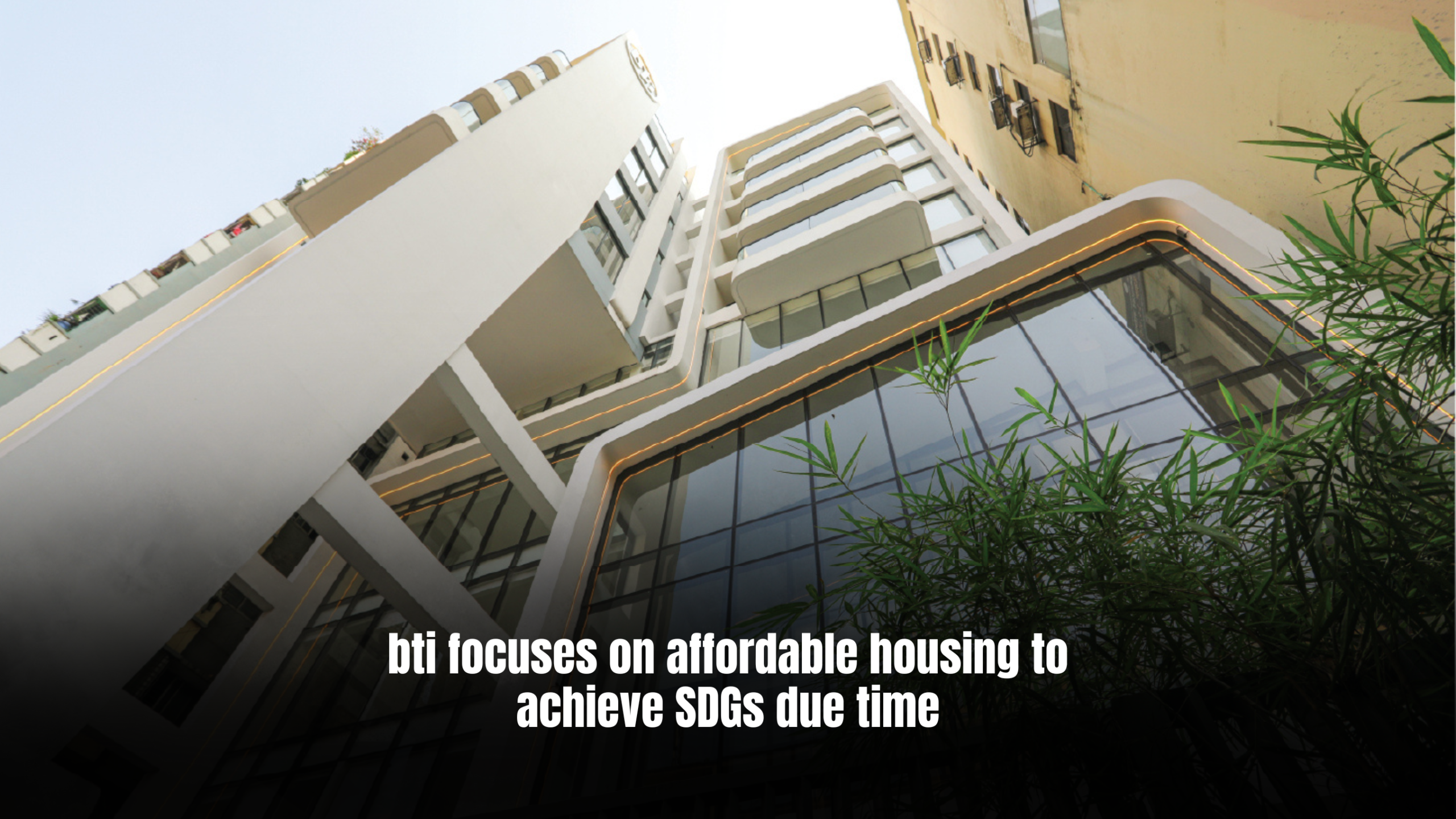
Bangladesh’s real estate sector stands at a defining moment. With an annual housing demand of nearly 100,000 new apartments and rapid urbanisation, the sector holds enormous promise. Yet affordability, regulatory constraints, volatile economic conditions, and weak financing continue to hold it back. As cities like Dhaka and Chattogram sprawl under population pressure, a more inclusive, well-regulated, and investor-friendly environment is crucial to unlock the sector’s full potential. Industry leaders and analysts agree that timely reforms and coordinated strategies are vital for steering real estate towards sustainable growth. A Burgeoning Market Over the past two decades, Bangladesh has seen unprecedented urbanisation, driven by rural-to-urban migration. Dhaka alone absorbs around 300,000 new residents each year, fuelling soaring demand for both residential and commercial spaces. “We developers have the capacity to meet the entire demand,” said FR Khan, managing director of Building Technology and Ideas (bti). Yet the current supply meets only about 8 percent of annual demand, revealing both opportunity and inefficiency. At the same time, housing preferences are shifting. Buyers are seeking wellness-focused, eco-friendly and community-oriented living rather than plain apartments, reflecting changing lifestyles and higher expectations. Affordability and Rising Costs Homeownership remains out of reach for most middle-income families due to high borrowing costs. Mortgage rates of 12 to 13 percent make long-term loans unaffordable, while the standard 30 percent down payment blocks many aspiring buyers. In a high-inflation economy where daily living costs keep rising, saving for such an amount is nearly impossible. “Even those with stable jobs and moderate incomes can’t commit to housing loans due to high rates and economic uncertainty,” said M Hoque Faisal, director of sales and marketing at Tropical Homes Ltd. “What we need is a subsidised loan scheme for the middle class—say, at 5 percent interest.” Most banks cater to high-net-worth clients, leaving middle-income households with limited financing options. Without tailored financial products, millions remain excluded from the housing market. Rising construction costs and land scarcity have worsened the crisis. Fluctuating exchange rates and higher VAT and customs tariffs on materials such as steel, lifts, and cement have sharply pushed up costs. The taka’s depreciation against the US dollar has further compounded the problem. Land acquisition in urban areas is also becoming prohibitively expensive. “Shortage of land is making investors pay a fortune,” said M Mahbubur Rahman, CEO of Rupayan City. These twin pressures have squeezed developer margins and pushed housing prices even higher. Economic and Political Instability Real estate is highly sensitive to broader economic and political trends. Inflation, currency instability, and election-year uncertainty have all dampened investor confidence. According to Bangladesh Bank data, outstanding construction loans fell to Tk 1.23 trillion during April–June FY2024–25, down from Tk 1.26 trillion in the previous quarter. Residential housing loans for urban buyers dropped by 3.96 percent, while infrastructure loans declined by 2.05 percent. “Banks and developers are becoming increasingly cautious,” said economist Dr Masrur Reaz. “Commercial housing has shown resilience due to higher margins, but overall lending has slowed, signalling a contraction in the sector.” The DAP Controversy The Detailed Area Plan (DAP), introduced by Rajuk in 2022, has sparked heated debate among developers. The main concern is the Floor Area Ratio (FAR), which limits how many units can be built on a plot. “While the DAP is academically sound, it doesn’t account for the dense, historic nature of Dhaka,” said FR Khan. “It’s based on planning models from low-density, developed cities.” Since the DAP’s implementation, over 200 industries connected to real estate have been affected, according to the Real Estate and Housing Association of Bangladesh (REHAB). Landowners are increasingly reluctant to offer their property for joint ventures, citing reduced profitability under stricter zoning and height limits. REHAB has formally urged the government to revise the DAP to reflect Dhaka’s ground realities and revive sectoral momentum. Market Trends and Opportunities Even as high-end housing demand cools amid declining purchasing power, the mid-market segment is expanding. Many people are investing in real estate to hedge against inflation, viewing property as a safer long-term asset. Rental yields in Dhaka and Chattogram have remained relatively stable. The sector is also a major employment driver—ranking as the country’s third-largest employer—and supports industries such as cement, steel, transport, and home electronics. In 2020, the government’s policy allowing undeclared income to flow into real estate channelled over Tk 20,000 crore into the sector, generating Tk 2,000 crore in tax revenue. Sustainability: A Growing Focus Environmental awareness is reshaping real estate practices. The Bangladesh National Building Code (BNBC) now promotes energy-efficient designs, rainwater harvesting, and sustainable materials. Green-certified buildings appeal to climate-conscious buyers and help developers access international green financing. Policy Roadmap for Reform To unlock the sector’s full potential, experts call for coordinated action between the government and private developers. Home loans must become more affordable through lower interest rates, while fixed-rate mortgage options can shield buyers from rate volatility. Raising loan-to-value ratios would let buyers borrow a greater share of property value. Bangladesh Bank could introduce targeted credit lines for first-time and middle-income buyers to expand access to financing. Registration fees and stamp duties should be reduced to encourage participation in the formal housing market. Lower VAT and import duties on materials would cut construction costs. Tax rebates or subsidies for first-time buyers, especially from middle-income brackets, would make ownership more achievable. The DAP’s FAR and zoning rules need to better reflect Dhaka’s urban density. Increasing FAR in suburban and peri-urban areas would promote growth beyond the city centre, while planning models should align with Bangladesh’s infrastructure capacity and population dynamics. Investment in satellite towns equipped with schools, hospitals, markets, and transport links would ease pressure on Dhaka and Chattogram. Strengthening inter-city connectivity and ensuring public services and job opportunities outside major cities would support balanced regional development. Licensing and
Bangladesh ArchSummit 2025 Begins Alongside the IAB Build Expo 2025
The Institute of Architects Bangladesh (IAB) inaugurated the Bangladesh ArchSummit 2025 today, December 11. This year’s theme, “Crafting Space, Shaping Habitat,” sets the stage for a grand celebration of architecture, education, profession and practice, ideas, innovation, and excellence. Running in parallel with the Summit, IAB also launched the IAB Build Expo 2025, the country’s largest exhibition of building materials and construction innovations. Both events will continue until December 13 at the Bangladesh China Friendship Conference Centre (BCFCC). The Summit is open exclusively to registered participants, while the Expo is open to all visitors. This year’s Summit has been carefully planned with a distinguished lineup of renowned international and national speakers, along with a range of enriching programmes, including an exhibition of award-winning architectural works, roundtable discussions, a young citizens’ painting competition, a photography competition, and exciting cultural events for registered participants. Participants will also have the opportunity to attend the Student Forum, Youth Forum, and plenary sessions, where esteemed speakers will share their ideas, design philosophies, and professional insights throughout the three-day event. Day One began with the Student Forum, featuring a quiz and debate competition, and included the Summit and Build Expo Inauguration Ceremony. Other attractions include the Open Photography Competition, Young Citizens’ Painting Competition, and Public Exhibition on Architecture. The Young Painting Exhibition features curated artworks submitted by students from Classes 6 to 10. The jury panel for the selection included Architect Rafiq Azam, artist Afzal Hossain, and Farida Zaman. The theme of the architectural works exhibition, PEOPLE | PLACE | PRESENCE, celebrates architecture that shapes communities, responds to context, and defines presence through space. The exhibition showcases curated works selected from project submissions in the following categories: Internationally Awarded Projects (2024–2025) from Bangladesh IAB & BERGER Award Projects (last cycle) Public Projects (nationwide) Projects Located in Old Dhaka The project selection team comprised Dr. Abu Sayeed M Ahmed, Ar. Khan Md. Mahfuzul Hug Zaglul, Ar. Nowajish Mahbub, Dr. Khurshid Zabin Hossain Taufique, and Prof. Zainab Faruqui Ali. The ArchSummit and Build Expo aim to provide a platform for architects, students, industry professionals, and the public to explore architecture, innovation, and the future of the built environment in Bangladesh. Written By Tasmiah Chowdhury
Bangladesh ArchSummit 2025 Begins Alongside the IAB Build Expo 2025
The Institute of Architects Bangladesh (IAB) inaugurated the Bangladesh ArchSummit 2025 today, December 11. This year’s theme, “Crafting Space, Shaping Habitat,” sets the stage for a grand celebration of architecture, education, profession and practice, ideas, innovation, and excellence. Running in parallel with the Summit, IAB also launched the IAB Build Expo 2025, the country’s largest exhibition of building materials and construction innovations. Both events will continue until December 13 at the Bangladesh China Friendship Conference Centre (BCFCC). The Summit is open exclusively to registered participants, while the Expo is open to all visitors. This year’s Summit has been carefully planned with a distinguished lineup of renowned international and national speakers, along with a range of enriching programmes, including an exhibition of award-winning architectural works, roundtable discussions, a young citizens’ painting competition, a photography competition, and exciting cultural events for registered participants. Participants will also have the opportunity to attend the Student Forum, Youth Forum, and plenary sessions, where esteemed speakers will share their ideas, design philosophies, and professional insights throughout the three-day event. Day One began with the Student Forum, featuring a quiz and debate competition, and included the Summit and Build Expo Inauguration Ceremony. Other attractions include the Open Photography Competition, Young Citizens’ Painting Competition, and Public Exhibition on Architecture. The Young Painting Exhibition features curated artworks submitted by students from Classes 6 to 10. The jury panel for the selection included Architect Rafiq Azam, artist Afzal Hossain, and Farida Zaman. The theme of the architectural works exhibition, PEOPLE | PLACE | PRESENCE, celebrates architecture that shapes communities, responds to context, and defines presence through space. The exhibition showcases curated works selected from project submissions in the following categories: Internationally Awarded Projects (2024–2025) from Bangladesh IAB & BERGER Award Projects (last cycle) Public Projects (nationwide) Projects Located in Old Dhaka The project selection team comprised Dr. Abu Sayeed M Ahmed, Ar. Khan Md. Mahfuzul Hug Zaglul, Ar. Nowajish Mahbub, Dr. Khurshid Zabin Hossain Taufique, and Prof. Zainab Faruqui Ali. The ArchSummit and Build Expo aim to provide a platform for architects, students, industry professionals, and the public to explore architecture, innovation, and the future of the built environment in Bangladesh. Written By Tasmiah Chowdhury

Bangladesh: Asia’s Next Trade Powerhouse
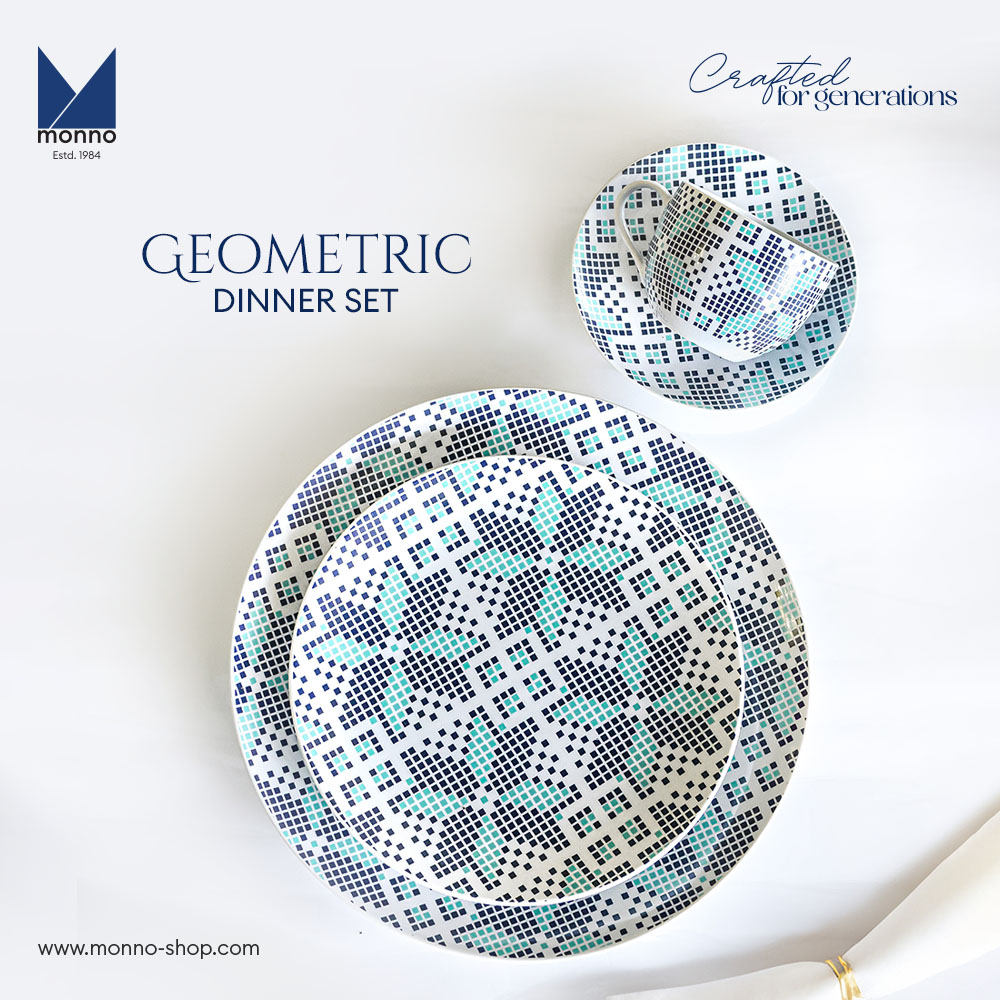
Bangladesh is quietly rewriting its economic story. Once known primarily for its ready-made garments, the country is now emerging as a diversified trade hub in Asia. Its export basket is expanding—and so is its global relevance. Earnings from exports have always been the nation’s driving force, and the last fiscal year was no different. Apparels played a dominant role, earning $48 billion, while other sectors also expanded their global reach. “Bangladesh’s export basket did not widen overnight—it was hard-won,” said Moynul Islam, president of the Bangladesh Ceramic Manufacturers and Exporters Association (BCMEA). “And now Bangladesh is home to a vibrant young population—more active and intelligent than their predecessors,” said Islam, who also serves as vice chairman of Monno Group. “From ceramics to garments, pharmaceuticals to electronics, this generational shift is redefining the business landscape and accelerating new export frontiers, positioning Bangladesh as one of Asia’s most promising investment and trade destinations,” he added. RMG : The Backbone of Bangladesh’s Trade Garments remain Bangladesh’s strongest export pillar, contributing over $39 billion in FY2024-25 knitwear and woven categories combined. Knitwear alone earned $21.1 billion, while woven garments brought in $18.1 billion, according to data from the Export Promotion Bureau (EPB). The sector’s strength lies in its scale and adaptability. Bangladesh retained its position as the world’s second-largest apparel exporter in 2024, as confirmed by the Bangladesh Garment Manufacturers and Exporters Association (BGMEA). Exports to non-traditional markets are rising, and shipments to the USA grew by 29 percent between January and April 2025. Yet, the industry faces headwinds. Rising production costs, energy inefficiencies, and compliance pressures are squeezing margins. Extortion in industrial belts and loan defaults among top exporters have also raised concerns, as noted by Bangladesh Bank. To stay competitive, the sector is embracing green manufacturing and automation. Over 260 factories are now LEED-certified, and green factories enjoy tax incentives and higher buyer preference. With continued investment in sustainability and worker welfare, RMG is poised to remain Bangladesh’s trade anchor. Home Textile: The Quiet Climber Once a niche category, home textiles have become Bangladesh’s second-largest textile export segment. The sector continued growing despite global challenges, earning $871 million in the last fiscal year. The rise of wellness living and interior-focused consumption has boosted demand for bed linens, curtains, and towels. Bangladesh’s manufacturers are responding with eco-friendly fabrics and design-led collections. However, the sector remains vulnerable to tariff uncertainties, especially in the US market. To mitigate this, the Bangladesh Knitwear Manufacturers and Exporters Association (BKMEA) recommends diversifying export destinations and investing in design innovation. With stable growth and rising global demand for sustainable home goods, Bangladesh’s home textile sector is quietly climbing the ranks. Leather and Leathergoods: A Legacy in Transition Bangladesh’s leather sector has shown resilient performance, earning over $1 billion annually since FY2018-19. Once hailed as the country’s second-largest export earner, the sector has struggled with environmental compliance and infrastructure bottlenecks. Shipments of leather and leathergoods have slowed due to delays in setting up the Central Effluent Treatment Plant (CETP) in Savar, said Arifur Rahman Chowdhury, general manager of ABC Footwear Industries Ltd, a concern of Abedin Group. “Without the CETP, many tanneries fail to meet global environmental standards, particularly the Leather Working Group (LWG) certification required by most European buyers,” he noted. Chowdhury added that the CETP’s completion would resolve nearly 80% of the sector’s challenges. Still, there is hope. According to the Leather Goods and Footwear Manufacturers & Exporters Association of Bangladesh (LFMEAB), 80 percent of exports go to just 10 countries—highlighting the potential for market expansion. With renewed focus on compliance and branding, leather could reclaim its place as a premium export. Frozen and Live Fish: The Blue Economy Awakens Bangladesh’s quiet revolution in aquaculture has made it a regional leader in sustainable fish farming. The country’s fisheries sector earned around half a billion US dollars in the last fiscal year, reflecting steady demand for shrimp, pangasius, and tilapia. Bangladesh Bank and the Ministry of Fisheries are working on improving traceability and certification standards. Yet, export volumes remain modest due to quality inconsistencies and limited cold-chain infrastructure. With rising global interest in clean protein and sustainable seafood, Bangladesh’s fish exports could scale rapidly—if supported by investment in logistics and branding. Empowering smallholder farmers with training, digital tools, and access to finance could unlock further growth. Strengthening community-based hatcheries and eco-friendly practices would ensure sustainability, while coordinated branding could position Bangladesh as a trusted global seafood supplier. Agricultural Commodities: A Sleeping Giant Agricultural exports brought in just over $1 billion in FY2024-25, led by fruits, vegetables, and processed foods. Mangoes, in particular, saw a rebound thanks to improved quality and packaging. However, the sector suffers from fragmented supply chains and slow policy support. Export growth has been inconsistent, and agricultural products face steep competition from regional players. The Ministry of Agriculture and EPB are now focusing on diaspora-driven demand and organic certification. Digital platforms for farm-to-market linkages, real-time price data, and quality monitoring could reduce inefficiencies and empower growers. Strategic partnerships with private investors and international buyers would further enhance competitiveness, ensuring that Bangladesh’s produce earns recognition in premium global markets and that agri-exports become a major growth engine. Pharmaceuticals: The Next Frontier Bangladesh now exports medicines to more than 160 countries after meeting 98 percent of its domestic demand, including shipments to highly regulated markets in Europe and North America. Pharmaceutical exports have nearly doubled in recent years to about $215 million, driven by WHO-compliant manufacturing facilities and competitively priced generic formulations. According to Md Zakir Hossain, secretary general of the Bangladesh Association of Pharmaceutical Industries (BAPI), exports could have easily surpassed the one-billion-dollar mark if not for a series of global setbacks, including the Covid-19 pandemic, the Ukraine–Russia war, and the ongoing devaluation of the Taka against

Architect Marina Tabassum A Rare Brilliance
Architect Marina Tabassum has carved a luminous path that transcends architecture and redefined design as a language of place—rooted in climate, culture, and community. Her Bait Ur Rouf Mosque, completed in 2012, became a global milestone when it earned the Aga Khan Award for Architecture in 2016. In 2025, she achieved the rare distinction of winning the Aga Khan Award again, this time for Khudi Bari. Her brilliance extends far beyond these awards. Tabassum has designed the Museum of Independence, Panigram Eco Resort, Hamidur Rahman Memorial Complex, and Comfort Reverie, each reflecting her mastery of rhythm, sustainability, and memory. Internationally, she was commissioned to design the Serpentine Pavilion in London. Marina studied architecture at the Bangladesh University of Engineering and Technology (BUET) and founded her own firm, Marina Tabassum Architects (MTA), in 2005. She has taught at renowned institutions worldwide: Professor at the Technical University of Delft (2022–23), Gerald Sheff Visiting Chair at the University of Toronto, and lecturer at the Harvard Graduate School of Design, University of Texas, Bengal Institute, and BRAC University. Her work has earned numerous international accolades, including an honorary doctorate from the Technical University of Munich, the Arnold Brunner Memorial Prize from the American Academy of Arts and Letters, the Gold Medal from the French Academy of Architecture, and the Soane Medal in Architecture from the United Kingdom. She chairs FACE (Foundation for Architecture and Community Equity) and Prakriti, a fair‑trade organization, and is a fellow of the Royal Society of Arts. Between 2017 and 2022, she served on the Steering Committee of the Aga Khan Award for Architecture. Her accolades span continents: TIME 100 (2024), Chevalier of Arts and Letters (2023), UIA Vassilis Sgoutas Prize (2023), Jameel Prize (2018), and Prospect’s Top Ten Thinkers (2020). Bait Ur Rouf Mosque In the northern edge of Dhaka, beside the Turag Canal, the Bait Ur Rouf Mosque rises as a beacon of simplicity, spirituality, and environmental consciousness. Designed by Marina Tabassum in 2006, the project was deeply personal—commissioned by her grandmother, who donated the land. The mosque rejects ornamentation, instead embracing perforated brickwork that allows natural light and ventilation to animate the prayer hall. This environmentally friendly approach is rare in Bangladesh, where mosques often rely on artificial cooling and lighting. Here, light itself becomes the architecture—shifting with the hours of prayer, creating atmospheres of contemplation and serenity. Tabassum’s design responds to both urban transformation and community needs. As Dhaka’s sprawl consumed open spaces, she envisioned the mosque as more than a place of worship: a plinth and gathering space for dialogue, reflection, and social interaction. Rooted in Islamic tradition, where mosques historically served multiple civic functions, the building reclaims that identity for modern times. The prayer hall, rotated to align with the qibla, is supported by eight columns and wrapped in load‑bearing brickwork, balancing cost efficiency with timeless strength. Awarded the Aga Khan Award for Architecture in 2016, Bait Ur Rouf Mosque stands as a model of climate‑responsive, community‑driven design—an enduring testament to the power of light, space, and faith. Khudi Bari In Bangladesh’s fragile deltaic landscape, where rivers shift and floods displace thousands, Marina Tabassum envisioned Khudi Bari—a self‑initiated experiment that has grown into a global model of resilience. Meaning “small house,” the lightweight, modular shelter is built from bamboo and corrugated metal, designed to be assembled quickly, relocated easily, and withstand the pressures of a volatile climate. What began as a modest idea has transformed lives across chars, floodplains, and refugee camps. Families who once lost everything to river erosion now remain together during disasters, a safeguard against child marriage and trafficking. In Rangpur, when surrounding homes collapsed in a storm, Khudi Bari units stood firm. The design’s impact extends beyond Bangladesh. The Vitra Design Museum in Germany acquired a Khudi Bari for its permanent collection, while the World Food Programme commissioned Tabassum to adapt the system for Rohingya refugee camps in Cox’s Bazar. There, Khudi Bari evolved into women‑friendly community centres, food distribution outlets, and “Shantikhana” or Houses of Peace—spaces for education, livelihood, and healing. Awarded the Aga Khan Award for Architecture in 2025, Khudi Bari is more than shelter. It is architecture as empathy—an elegant, low‑cost structure that restores dignity, strengthens communities, and redefines how design can serve humanity. To honour the brilliance and achievements of Architect Marina Tabassum, Ceramic Bangladesh Magazine, a publication of the Bangladesh Ceramic Manufacturers and Exporters Association (BCMEA), in partnership with ArchiConnect—the first and largest digital platform for architects and professionals in the construction industry in Bangladesh—organised a grand event at the Renaissance Dhaka Gulshan Hotel on November 8. Architect Moushumi Ahmed moderated the beautifully crafted night, attended by the country’s leading architects, real estate and construction industry leaders, and media personnel. In his opening remarks, Architect Jalal Ahmed, FIAAB, KIA, founder and CEO of ArchiConnect, said: “Winning the Aga Khan Award for Architecture—often referred to as the ‘Oscar of architecture’—was no accident. It is the result of her deep thinking, clarity of perspective, and unwavering ethical commitment.” PANEL DISCUSSION The grand event had a panel discussion featuring the country’s top architectural minds. Architect Mahmudul Anwar Riyaad, principal designer and director of DWM4 Architects, moderated the session, opening with the question of how the Aga Khan Awards had affected architects during the 1980s. Architect Fuad Hassan Mallick, professor and dean of the School of Architecture and Design at BRAC University, recalled the surprise of the first award cycle: “I personally felt that architecture’s spectrum is much larger than what we understood—and also it seemed relevant for our country. This sort of thing ended up being number one for many of us. After that, when Mimar magazine appeared, we understood architecture is not only Western, American, and Europe‑centric. Something is there in our region also.” Architect Nahas Ahmed Khalil, principal designer of ARC Architectural Consultants, praised the honesty in Marina’s design
Bangladesh ArchSummit 2025 Begins Alongside the IAB Build Expo 2025
The Institute of Architects Bangladesh (IAB) inaugurated the Bangladesh ArchSummit 2025 today, December 11. This year’s theme, “Crafting Space, Shaping Habitat,” sets the stage for a grand celebration of architecture, education, profession and practice, ideas, innovation, and excellence. Running in parallel with the Summit, IAB also launched the IAB Build Expo 2025, the country’s largest exhibition of building materials and construction innovations. Both events will continue until December 13 at the Bangladesh China Friendship Conference Centre (BCFCC). The Summit is open exclusively to registered participants, while the Expo is open to all visitors. This year’s Summit has been carefully planned with a distinguished lineup of renowned international and national speakers, along with a range of enriching programmes, including an exhibition of award-winning architectural works, roundtable discussions, a young citizens’ painting competition, a photography competition, and exciting cultural events for registered participants. Participants will also have the opportunity to attend the Student Forum, Youth Forum, and plenary sessions, where esteemed speakers will share their ideas, design philosophies, and professional insights throughout the three-day event. Day One began with the Student Forum, featuring a quiz and debate competition, and included the Summit and Build Expo Inauguration Ceremony. Other attractions include the Open Photography Competition, Young Citizens’ Painting Competition, and Public Exhibition on Architecture. The Young Painting Exhibition features curated artworks submitted by students from Classes 6 to 10. The jury panel for the selection included Architect Rafiq Azam, artist Afzal Hossain, and Farida Zaman. The theme of the architectural works exhibition, PEOPLE | PLACE | PRESENCE, celebrates architecture that shapes communities, responds to context, and defines presence through space. The exhibition showcases curated works selected from project submissions in the following categories: Internationally Awarded Projects (2024–2025) from Bangladesh IAB & BERGER Award Projects (last cycle) Public Projects (nationwide) Projects Located in Old Dhaka The project selection team comprised Dr. Abu Sayeed M Ahmed, Ar. Khan Md. Mahfuzul Hug Zaglul, Ar. Nowajish Mahbub, Dr. Khurshid Zabin Hossain Taufique, and Prof. Zainab Faruqui Ali. The ArchSummit and Build Expo aim to provide a platform for architects, students, industry professionals, and the public to explore architecture, innovation, and the future of the built environment in Bangladesh. Written By Tasmiah Chowdhury