


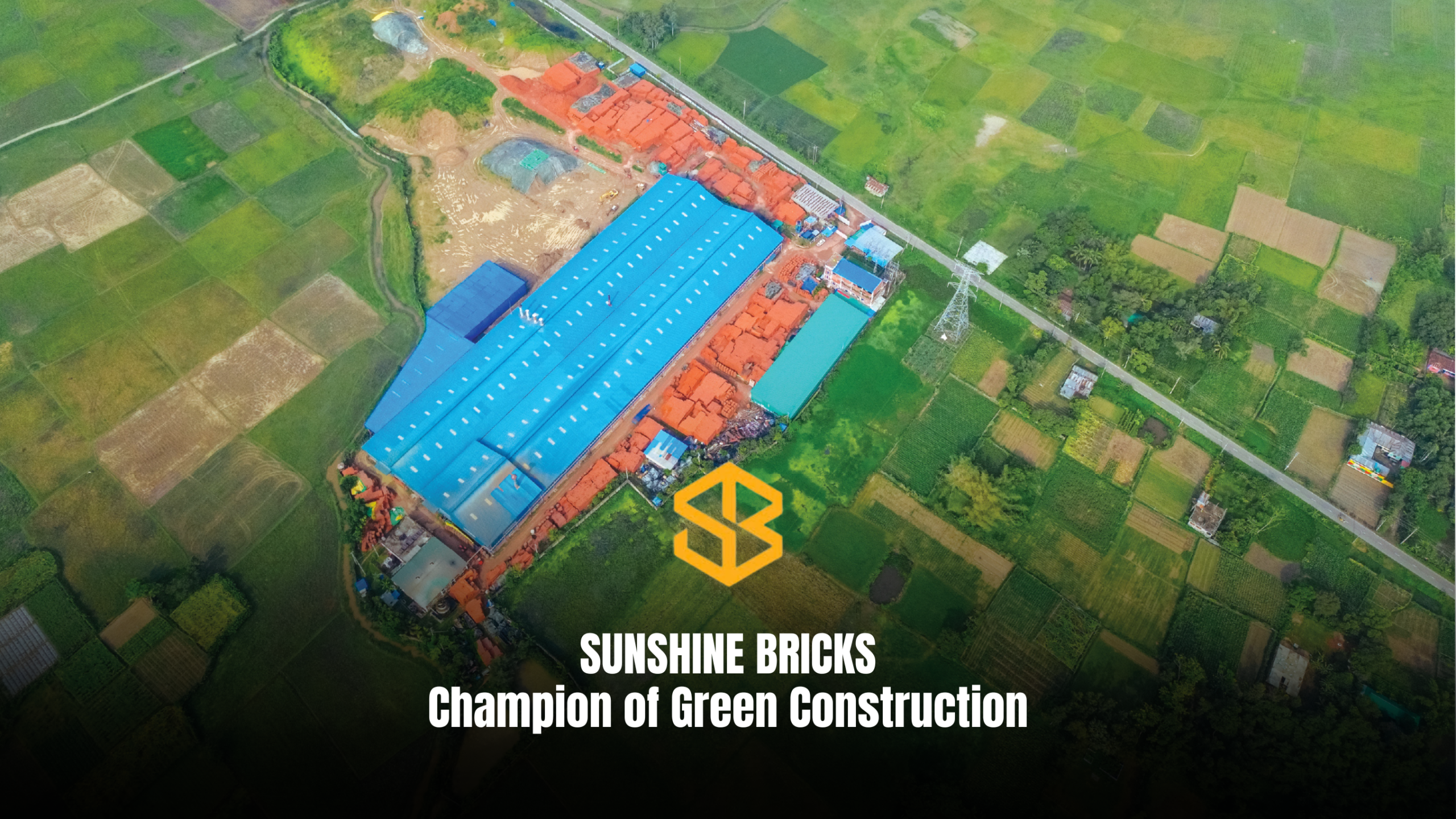
SUNSHINE BRICKS: Champion of Green Construction
“It’s not about 10-hole bricks. It’s about a formula for a lifetime investment.” That is how Sakif Ariff Tabani, vice chairman of Mirpur Ceramics, Khadim Ceramics and Sunshine Bricks, describes the philosophy behind one of Bangladesh’s most ambitious ventures in the building materials sector. In a country where traditional red bricks have long dominated construction, Sunshine Bricks has emerged as a standout brand, reshaping expectations of durability, design, and sustainability. From Habiganj to the National Stage
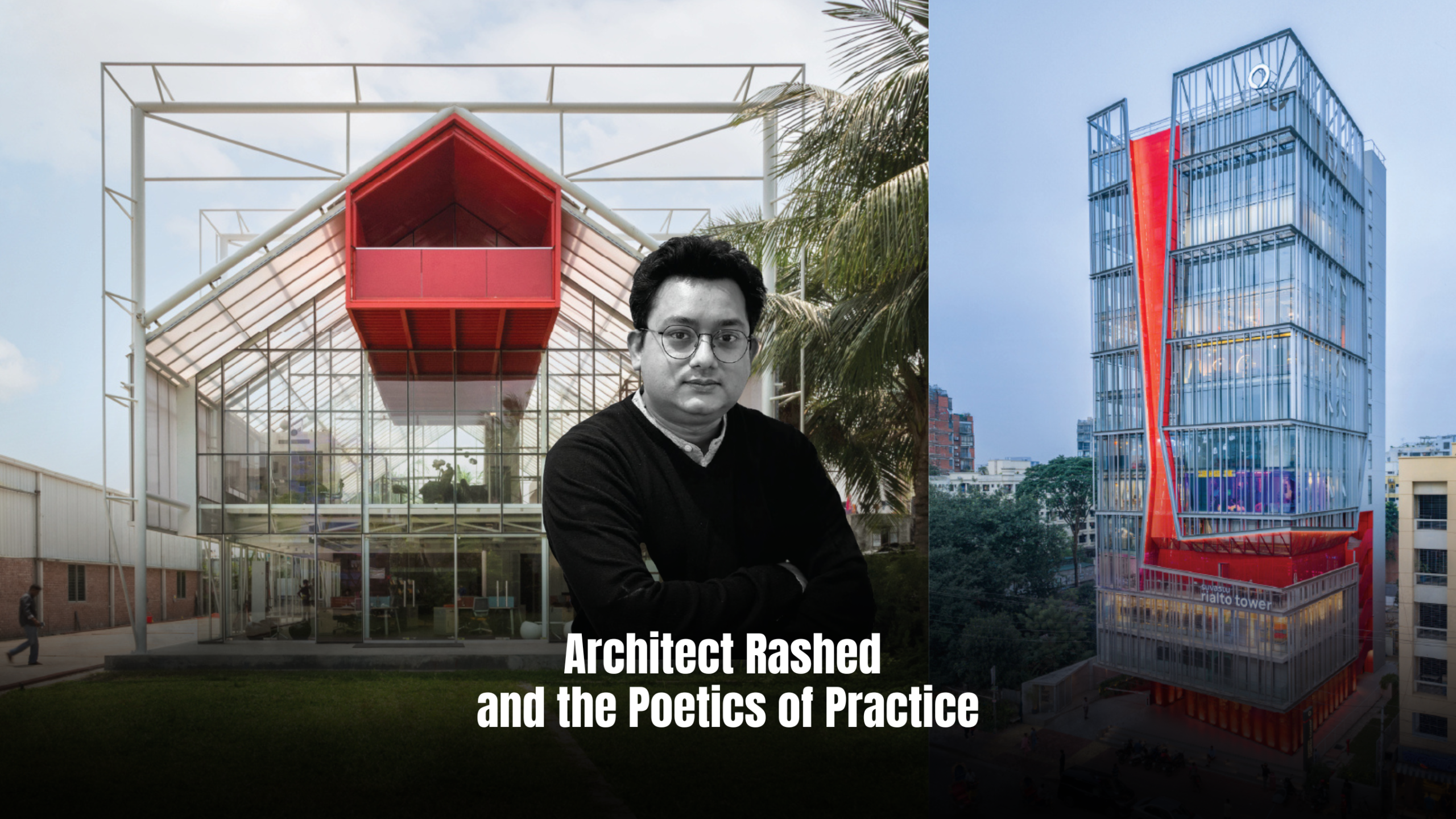
Architect Rashed and the Poetics of Practice
In the crowded clusters of Dhaka’s architectural offices—where every firm spoke in bold, predetermined tones—finding an original voice was never easy. For Architect Rashed Hassan Chowdhury, the journey began not with buildings, but with books and design experiments of all kinds. Encouraged by his elder brother to pursue architecture, he entered BUET carrying curiosity and a restless desire to make and learn. Even as a student, Rashed was never confined to one discipline. He moved fluidly between
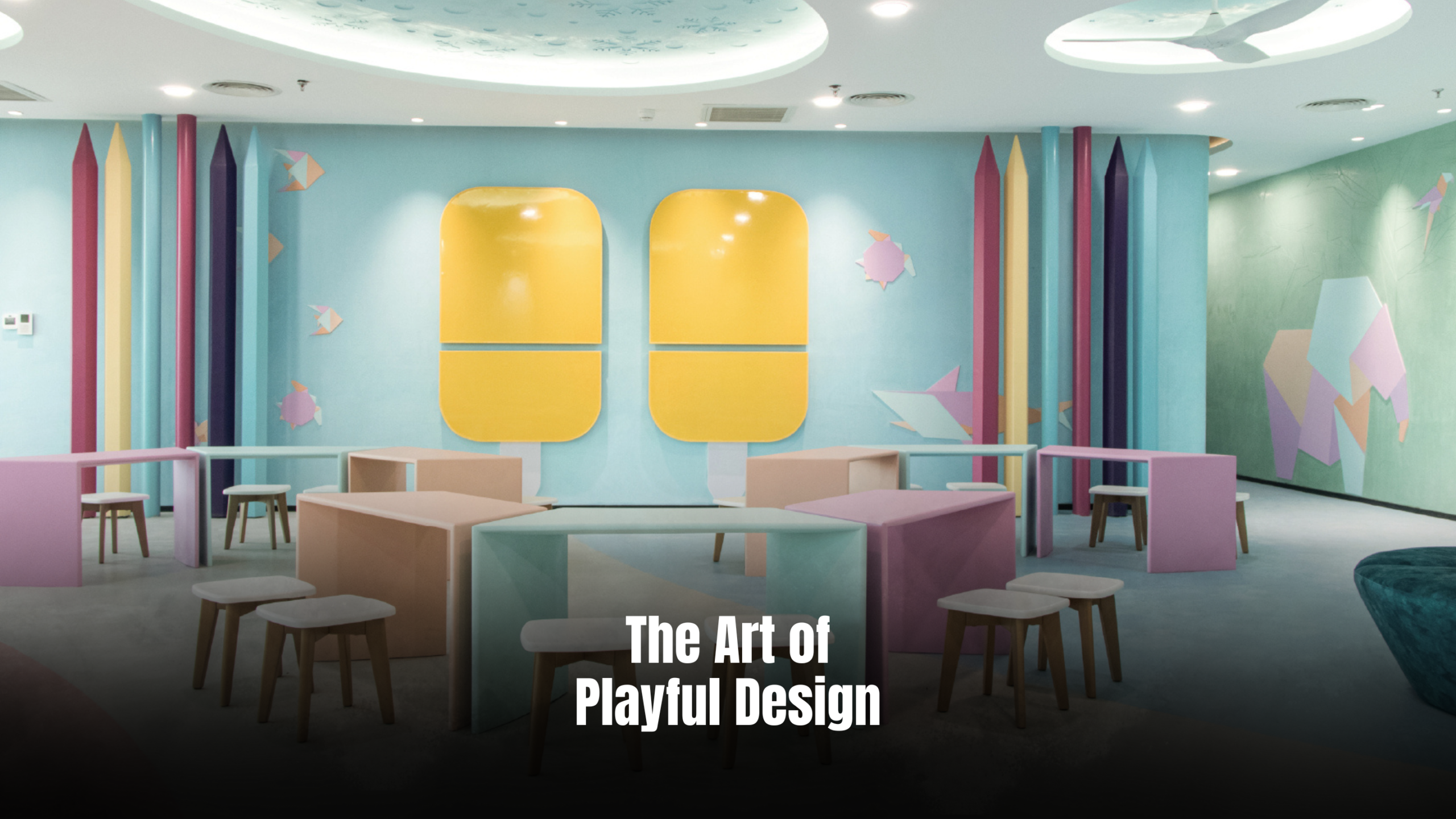
The Art of Playful Design A Look Inside BRAC University’s Child-Centric Sanctuary
A new chapter in early childhood care begins with the opening of the second BRAC University Daycare Centre, located in the vibrant Badda Campus of BRAC University, Dhaka. This thoughtfully designed facility serves as a sanctuary for children up to eight years old, offering a nurturing environment that prioritizes safety and development. Designed by Dwm4 Intrends, with an enchanting lighting scheme from Miro Lighting, the daycare centre is a dynamic and imaginative world where play, learning, and exploration
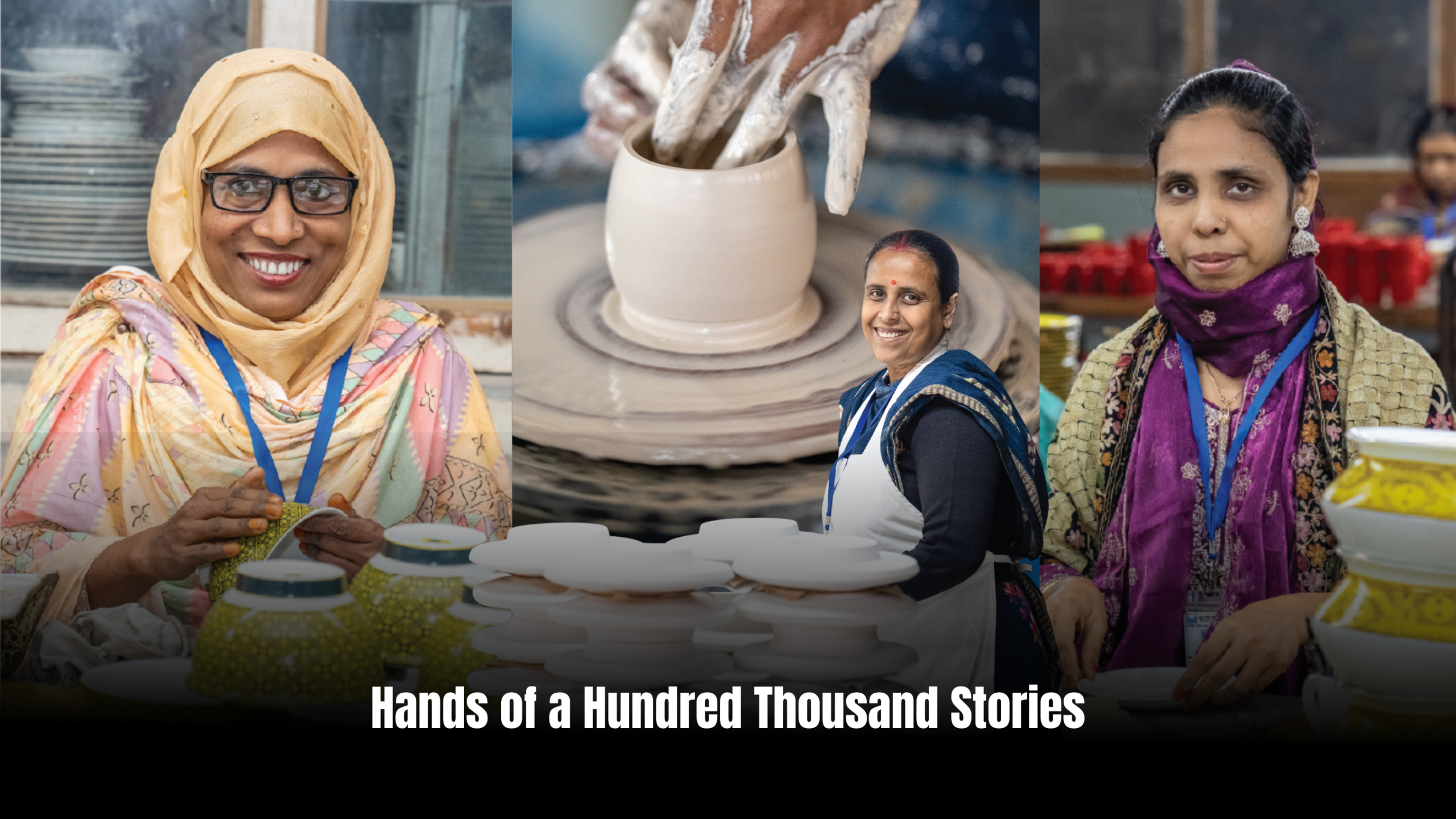
Hands of a Hundred Thousand Stories
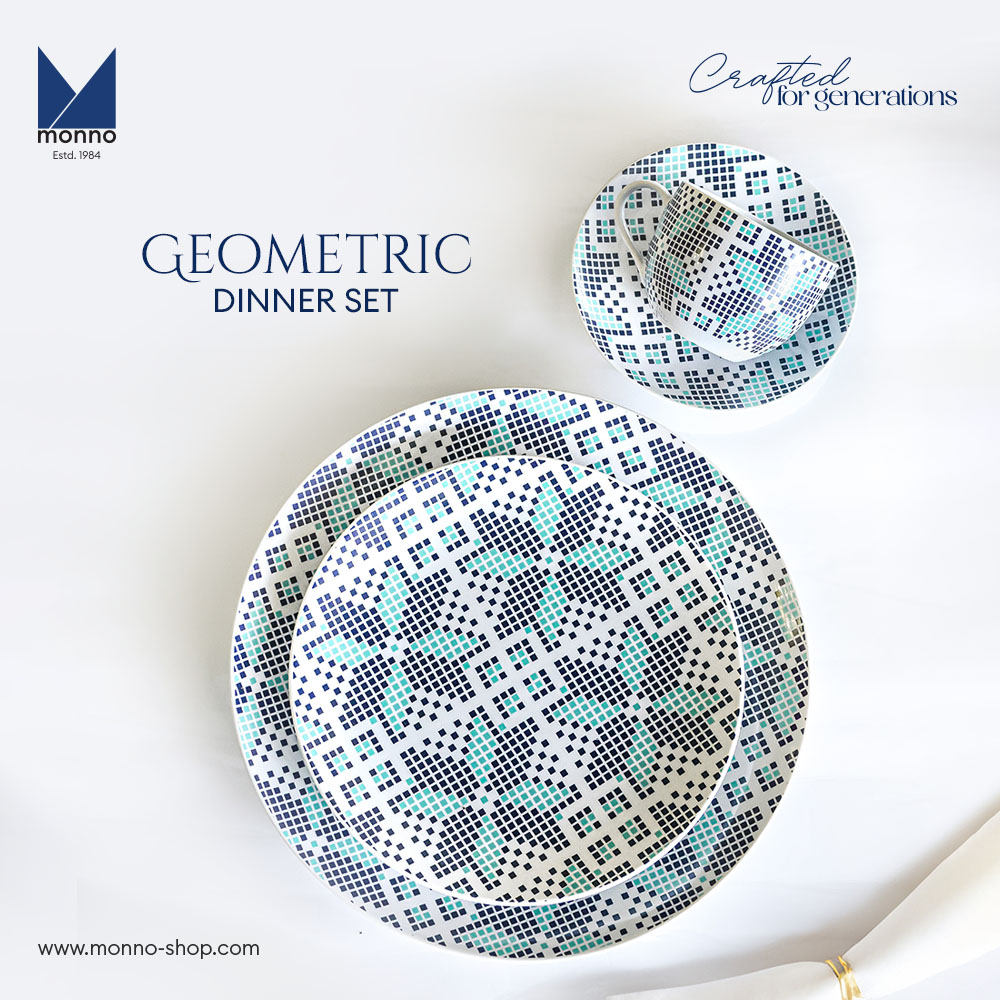
In a large workshop, the air carries the smell of moist clay and burnt oil. Before a single bone china plate reaches the station of Morium Begum or Kamrun Nahar, it has already gone through many steps. It has been shaped by machines, fired until it is as hard as stone, and covered in liquid transparent glaze. But in the final stage of its creation, the loud sounds of industry fade. The atmosphere becomes quiet and focused. Here, hands that know the journey from raw clay to finished vessel perform the most delicate work. These are the hands of artisans. They guide thin, fragile decals onto smooth ceramic surfaces. Each touch is important. Each movement is a blessing on products that will travel to dinner tables around the world. These hands belong to Morium Begum and Kamrun Nahar. They are senior workers, known as “Uchha Dakkhya”—high-skilled artisans. Their lives are deeply connected to this place. Morium has worked in the Export Decoration Department for 25 years. Kamrun has spent 22 years in Bone China Decoration. Their story is not about mass production. It is about careful, patient work and the building of a future. “I’ve been working here for 25 years,” says Morium. Her voice carries conviction. It is more than loyalty to a job. “It doesn’t even feel like we are at a job.” In Bangladesh, factory work is often temporary and difficult. Many workers move from one place to another, facing harsh conditions. So what makes this factory different? What unwritten promise has turned it into a home for these women for more than two decades? The answer is not only in the products they make. It is in the lives they have built through this work. A Day’s Work: The Rhythm of the Kiln In the wide world of ceramic manufacturing, the decoration department is special. It is where the object finds its soul. It is a major step before completion, the moment when a blank plate or cup becomes something unique. Morium and Kamrun are the guardians of this transformation. Their days follow a rhythm shaped by tens of thousands of hours of practice. The morning begins not with machines, but with quiet preparation. They clean their stations. They arrange their tools. They prepare the raw material: stacks of ceramic ware, called “oil” in factory language. Each piece is carefully wiped to make sure the surface is flawless. Then they turn to the decals. These are intricate designs printed on special paper. The paper is dipped in water. Slowly, the design loosens from its backing. It is ready to be transferred. This is the most delicate moment. They lift the fragile film of colour from the water and slide it onto the ceramic surface. The placement must be perfect. The design must flow with the curves of the cup or bowl. No machine can do this. Only memory, skill, and an artist’s eye guide them. Once the decal is in place, they use a simple rubber tool. With gentle strokes, they press out every tiny air bubble and drop of water. “The design is placed on the ware, and then a rubber tool is used to gently rub and set it,” Kamrun explains. Her hands mimic the motion. “After it’s fired, the design is permanent. It won’t even wash off.” The final firing, called Decoration Firing Kiln (oven), makes the design indelible. The decorated pieces go back into the furnace. The heat fuses the decal into the glaze. The process is technical, demanding, and repetitive. Yet the meaning of their work goes beyond mechanics. To understand why they have given their lives to this craft, one must look at the culture of the factory. More Than a Factory: A Foundation for Family For Morium and Kamrun, the factory has been the backdrop of their adult lives. They entered as young women. Over time, they became matriarchs. The culture of the workplace shaped them as much as the skills they learned. It is a culture built on respect. On the factory floor, there are no raised voices. No harsh commands. The sound is a low, cooperative murmur. This is very different from the verbal abuse that they hear is common in other industries. “We don’t speak to anyone harshly here,” Morium says. “We don’t even raise our voices.” This dignity is matched by flexibility. It allows them to be both workers and mothers. When their children had exams or when illness struck, they could take leave for 15 days, even a month. They did not fear losing their jobs. This security is rare. “It’s just like a government job,” Kamrun says. “We can take a month off if we need it. You won’t get that anywhere else.” Support is built into the system. There is a medical centre with doctors and nurses. There is a daycare for young children. But the strongest support comes from the community itself. The women call each other sisters. They share joys and sorrows. One story shows this bond clearly. At the wedding of a cook’s daughter, workers pooled money to help with expenses. The “chairman madam” attended the celebration. Management and staff stood together. In such moments, differences of religion or background disappear. They eat together. They work together. They share goals. This respect, flexibility, and community have created stability. It is the foundation on which Morium and Kamrun have built their lives. It is what allowed them to dream of something lasting for their children. From Artisans to Architects of the Future The true measure of their decades of labour is not in the countless plates and cups they have decorated. It is in the futures they are building. Their hands have shaped clay, but they have also shaped possibilities. Morium is now the sole provider for her family. Her husband, once a worker at
SUNSHINE BRICKS: Champion of Green Construction
“It’s not about 10-hole bricks. It’s about a formula for a lifetime investment.” That is how Sakif Ariff Tabani, vice chairman of Mirpur Ceramics, Khadim Ceramics and Sunshine Bricks, describes the philosophy behind one of Bangladesh’s most ambitious ventures in the building materials sector. In a country where traditional red bricks have long dominated construction, Sunshine Bricks has emerged as a standout brand, reshaping expectations of durability, design, and sustainability. From Habiganj to the National Stage Sunshine Bricks was founded to revolutionise Bangladesh’s brick industry. Based in Habiganj, it serves growing demand for quality building materials nationwide. As part of the Mirpur Ceramics group, alongside Khadim Ceramics—both renowned for manufacturing excellence—the company was created to fill a market gap for ceramic bricks and blocks that combine durability with aesthetic appeal. “With a strong foundation in ceramics, Sunshine Bricks was launched to evolve into a leading brand in Bangladesh’s ceramic bricks and structural clay product industry,” said the vice chairman. Traditional red bricks offered strength but little else. Sunshine Bricks changed that by investing in advanced technology and automation, producing materials that enhance structures while meeting the highest standards of quality. “Over time, Sunshine has become a key player in domestic and international markets, offering sustainable, versatile products for diverse construction needs,” said Sakif Ariff Tabani. The “Wonder Blocks” Sunshine Bricks is not a traditional auto-bricks company using Chinese technology. It is not about producing 10-hole bricks. Instead, it is about creating products that deliver comfortable living conditions and cost savings in energy consumption. Certified for eco-friendly products, the company has positioned itself as a pioneer in sustainable building materials. Among its most celebrated innovations are ceramic clay blocks, branded as “Wonder Blocks”. “These blocks are ideal for high-rise buildings, offering eco-friendly and energy-saving solutions,” said Sakif Ariff Tabani. “Sunshine Bricks is also the first company in Bangladesh to produce facing bricks, coloured and textured bricks, and ceramic blocks—setting it apart from traditional manufacturers.” “The coloured and textured bricks offer architects and developers a wide variety of designs and colours, enabling visually striking facades for residential and commercial buildings,” he said. Produced using cutting-edge technology, these bricks ensure durability, weather resistance, and colour consistency. The ceramic blocks are designed for specific purposes such as soundproofing and lightweight building solutions. Their lightweight nature reduces the overall weight of a structure without compromising strength, while their sound-insulating properties make them ideal for noise-sensitive areas. “By introducing these products, Sunshine Bricks is addressing modern needs such as energy efficiency, noise control, and aesthetic value,” said the veteran entrepreneur. Technology at the Core Sustainability is embedded in Sunshine Bricks’ production process. The company employs state-of-the-art technology to minimise environmental impact while ensuring high-quality output. Its fully automated production line ensures precision and consistency, reducing waste and optimising resources. A key innovation is Tunnel Kiln Technology, which is far more energy-efficient than traditional kiln methods. Tunnel kilns use controlled heat distribution, allowing for consistent firing and better energy use. This reduces the carbon footprint while ensuring higher-quality bricks with fewer defects. Recycling processes are also integral. Water used in manufacturing is filtered and reused, minimising waste. Raw materials are sourced responsibly, and the company incorporates alternative, eco-friendly materials into production. Sustainability is not an afterthought but a guiding principle. The “Green Champion” Recognition The decision to invest in Tunnel Kiln Technology was driven by efficiency and environmental responsibility. Traditional vertical kilns are costly and environmentally damaging. Tunnel kilns, by contrast, allow for consistent production with less energy consumption and precise temperature control. The result is higher-quality bricks with fewer defects. The measurable gains have been significant. Energy consumption has reduced by about 30 percent, while emissions have decreased substantially. The use of alternative fuels in firing further lowers the carbon footprint. These achievements earned Sunshine Bricks the “Green Champion” title, validating its efforts. For Tabani, however, the recognition is more than an accolade—it is a reminder that sustainability in manufacturing is necessary for long-term success. Serving Diverse Markets Sunshine Bricks serves customers across domestic and international markets. Its primary clients include government entities and public sector projects, supplying materials for major initiatives such as the metro rail, railway infrastructure, and education sector developments. These large-scale projects demand durability, consistency, and high quality—hallmarks of Sunshine Bricks. The private sector is equally vital. Developers, architects, and homeowners rely on the company for solutions that are both functional and aesthetically pleasing. From luxury residences to commercial and mixed-use projects, Sunshine Bricks delivers products that meet diverse needs. Internationally, Sunshine Bricks has expanded into the Middle East and Singapore, where demand for innovative, high-quality materials is rising. By tailoring offerings to local codes and design preferences, Sunshine Bricks has ensured adaptability—key to its success across markets. A Legacy Since 1958 Sunshine Bricks is part of a proud legacy dating back to 1958, when Mirpur Ceramics first began producing bricks and building materials in Bangladesh. Over the decades, Mirpur Ceramics earned a strong reputation for quality, reliability, and innovation. That experience and commitment are deeply embedded in Sunshine Bricks today. Drawing on this rich history, Sunshine Bricks represents the modern evolution of Bangladesh’s brick and ceramics industry. Decades of expertise have been combined with advanced automation, eco-friendly technology, and modern design concepts to meet the growing demands of sustainable urban development. Leading the Transformation As Bangladesh urbanises, demand for sustainable, high-quality building materials is rising. Sunshine Bricks sees itself leading this transformation—driving the industry toward greener, smarter, and more design-oriented solutions. The company also seeks to expand internationally, showcasing Bangladeshi innovation through exports to the Middle East and Southeast Asia. With over six decades of experience, Sunshine Bricks is not just building structures—it is helping build a more sustainable and progressive Bangladesh. Redefining Building
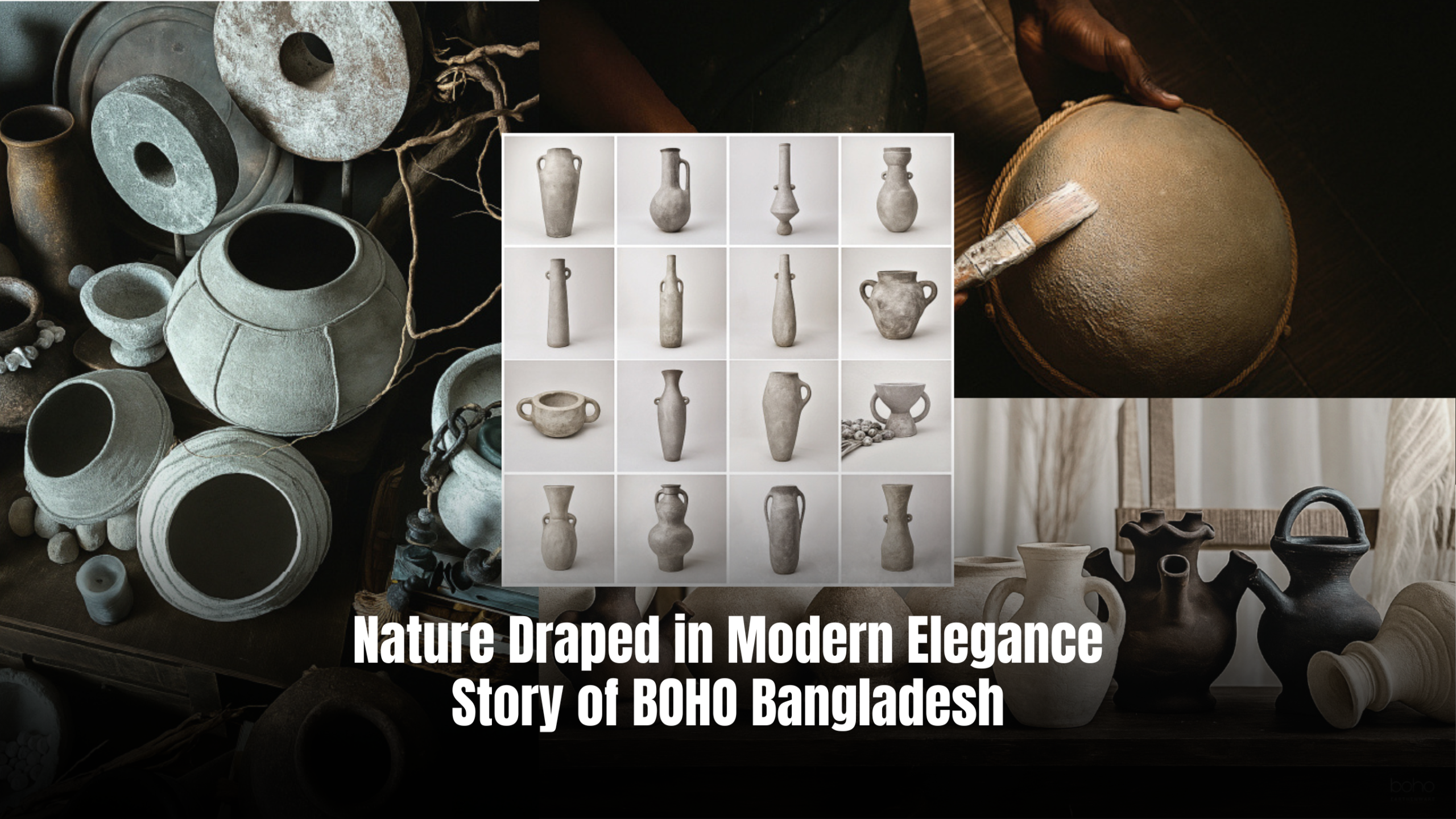
Nature Draped in Modern Elegance Story of BOHO Bangladesh
As we turn back towards nature and value the earth more than ever, are we equally ready to embrace green décor to adorn our spaces? Bangladesh has a rich tradition of ceramics, from glossy dinnerware to heritage terracotta. Yet when it comes to home décor, the exploration has often leaned on the familiar. Boho Bangladesh has taken on such a challenge with grace, weaving modern sensibilities into age-old elements of nature. Born by the sea in Cox’s Bazar, Boho Bangladesh grew from a vision to prove that sustainable living can be beautiful, versatile, and globally relevant. Their offerings span ceramics and pottery, organic and recycled textiles, home décor, and select limited-edition creations. To uncover the story of Boho Bangladesh—a brand redefining bespoke, eco-friendly home décor like never before, we sat down with its Chief Creative Officer and one of the co-founders, Poroma Shahrin, to trace their journey so far. Making of a green boutique lifestyle store: Partners in life and now in purpose, Poroma Shahrin and her better half ASM Asaduzzaman returned home, leaving their glorious career abroad, driven by a shared calling to nurture their roots. To them, BOHO was conceived from a desire to empower the raw, untapped resources of Bangladesh. They recognised that their nation’s rich, fertile land was capable of cultivating materials the world is now valuing more than ever. “The idea behind the brand was to reimagine heritage in its newest form—implementing innovation in ways that inspire young minds to engage with raw, natural materials that are often undervalued. While there are already a few pioneering brands in this field, I find their approach often lacks innovation. Synthetic products may look attractive at first, but they’re not sustainable. Our goal is to prove that natural, eco-friendly design can be just as appealing—when crafted with creativity and vision.” quotes Poroma Shahrin. With a display centre at The Muslin, Le Meridien Dhaka, Boho Bangladesh has been operating online since its inception. When asked about their online journey so far, Poroma said— “Our online presence has played a pivotal role in understanding people’s preferences, connecting with consumers, and navigating the kind of design direction they are drawn to. Although we believe Boho’s true spirit thrives in physical spaces. That’s why we’re launching a Dhaka studio store—envisioned not just as retail, but as a creative community for artisans and innovators. We’ve only executed about 30% of our vision, with much more planned.” Bespoke Green Décor: Is the Market Ready? “My husband and I often wondered if the Bangladeshi market was ready to embrace Boho Bangladesh’s vision. Most people in our country get influenced by a lot of factors in making their choices of lifestyle. The truth is, it’s still an emerging industry, but it’s evolving. People are gradually becoming more appreciative of sustainable décor, though greater education and awareness are still needed. Encouragingly, we’ve received strong validation from creative professionals—especially architects, artists, and interior designers—who truly recognize the value of our work,” said Poroma. Balancing Purpose and Profit: The team notes the irony that natural raw materials are currently the costliest, making it difficult to balance purpose with profit. They plan to address this with the launch of their studio store, which is designed to boost business sustainability and unlock new growth avenues. Furthermore, Boho Bangladesh is continuously refining production techniques to ensure product durability and reduce maintenance needs. This commitment not only minimises the risk of erosion but also guarantees customers high-quality, long-lasting, sustainable pieces. The entire production process is sustainable, ensuring safety by using nature-extracted colours and renewable resources, employing eco-friendly heating with zero carbon emissions, and recycling all production waste. The brand’s X-factor is an environment that encourages creativity and collaboration regardless of background. They strategically attract talent nationwide who bring hereditary expertise to their craft. A store by the beach Boho Bangladesh is planning an exciting expansion with a studio store in Cox’s Bazar. The location directly inspires their aesthetic, drawing from the Mediterranean bohemian lifestyle. Designed as a community platform rather than just a shop, the store will offer tourists a unique experience, featuring panoramic sea views and room for performances—a space where, as the founders note, “creativity flows best in nature”. Written By Fariha Hossain
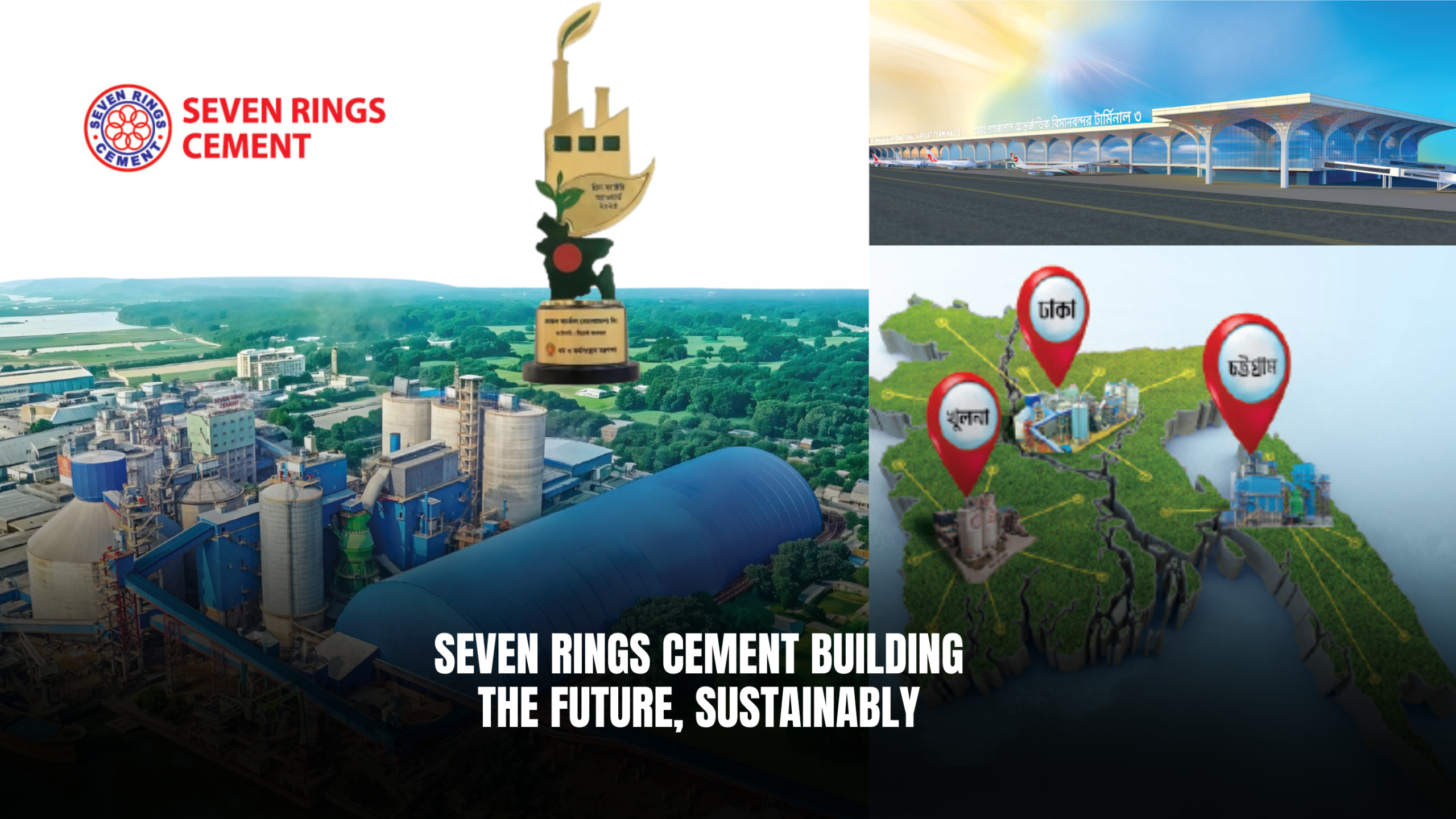
SEVEN RINGS CEMENT BUILDING THE FUTURE, SUSTAINABLY
SEVEN RINGS CEMENT’s Commitment to a Stronger, Greener Bangladesh. In a nation where infrastructure is the backbone of economic growth and social progress, the quality and resilience of building materials are non-negotiable. As Bangladesh strides confidently towards its development goals, the construction sector stands at the forefront of this transformation. At Seven Rings Cement, we are not just suppliers of a fundamental material; we are partners in nation-building, committed to fuelling this progress with advanced technology, an unwavering commitment to quality, and a deep sense of environmental responsibility. As part of the Hong Kong-based multinational Shun Shing Group—founded in 1988 and a leading raw material supplier in Asia—Seven Rings Cement began its journey in Bangladesh in 1991. Fueled by market confidence and backed by the unparalleled raw material expertise of our Group’s trading arm, Cemcoa, we have grown into a premier manufacturer. Today, we operate with an annual installed production capacity of 8.4 million metric tons, delivering consistent, superior-quality cement to the nation’s development for over three decades. ENGINEERING STRENGTH WITH TECHNOLOGICAL EXCELLENCE At the heart of Seven Rings Cement’s operations lies a relentless pursuit of technological advancement. We understand that the integrity of every bridge, high-rise, and highway begins with the microscopic precision of its core material. Our state-of-the-art manufacturing plant is equipped with cutting-edge automation and process control systems, ensuring unparalleled consistency. This includes a unique technological setup in Bangladesh, featuring both Vertical Roller Mills (VRM) and Ball Mills, integrated with roller press technology for specialized slag grinding. Our commitment to quality is validated by rigorous independent testing. Seven Rings Cement is consistently evaluated and certified by premier national institutions including BUET, CUET, RUET, MIST, IUT etc. as well as by international testing bodies. This multi-layered verification ensures that every kilogram, whether a high-early-strength variant for rapid projects or a specialized grade for mega-infrastructure, delivers guaranteed, uncompromised performance—meeting and exceeding both local and global standards. A ROBUST DELIVERY SYSTEM: THE PROMISE OF RELIABILITY A superior product is only as good as its availability. Recognizing the critical timelines of modern construction, Seven Rings Cement has invested significantly in building one of the most robust and reliable supply chain and delivery systems in the industry. As the only cement manufacturer in Bangladesh with integrated production facilities in three strategic locations—Dhaka, Chittagong, and Khulna—we have established an unparalleled logistical advantage. Our extensive network, comprising a dedicated fleet and strategically placed distribution hubs radiating from these plants, ensures that our cement reaches every corner of the country promptly and in pristine condition. This tri-factory footprint minimizes transport time and cost, guaranteeing a steady, responsive supply to projects of all scales. GREEN MANUFACTURING: A PLEDGE TO THE PLANET True leadership in today’s industrial landscape means prioritizing the planet alongside productivity. Seven Rings Cement is profoundly committed to sustainable manufacturing, with a vision that extends beyond our borders—including our Green Factory in Dubai, which sets a global benchmark for eco-friendly production. Domestically, our initiatives in energy efficiency, waste heat recovery, and responsible resource management have firmly established our sector leadership. This comprehensive dedication has been nationally recognized with the prestigious Green Factory Award 2025, an accolade that celebrates our holistic environmental stewardship. We have implemented advanced systems to significantly reduce carbon emissions, conserve water, and maximize the use of alternative and recycled materials across our operations. By embracing greener practices locally and globally, we are actively reducing the environmental footprint of the construction industry, ensuring that the growth we help create today safeguards the well-being of future generations. THE CORNERSTONE OF QUALITY: PROVEN ON BANGLADESH’S MEGA PROJECTS Quality is a promise validated on the grandest stages. The rise in per capita cement consumption must be matched by a demonstrable commitment to excellence, and Seven Rings Cement’s quality is proven where it matters most: in Bangladesh’s landmark mega projects. Our cement has been a trusted component in the construction of critical infrastructure that defines modern Bangladesh. From the iconic Padma Bridge, a symbol of national pride and engineering marvel, to the Hatirjheel Integrated Development Project that transformed urban mobility in Dhaka, Seven Rings Cement has provided foundational strength. Our products have been integral to key national infrastructures like the Payra Port, and critical roadways such as the Sylhet-Mymensingh Highway. We are a trusted cement supplier to major government entities, including BMTF and MES, supporting defense and public construction projects nationwide. Our cement has also contributed to key aviation expansions at Shahjalal International Airport, Cox’s Bazar Airport, and Sylhet Osman Goni Airport, and vital urban transport links including the Metro Rail, Kuril Flyover, and Mayor Hanif Flyover. Most significantly, we are proud to be associated with the Rooppur Nuclear Power Plant, Patuakhali 330 MW Power Plant where uncompromising material quality is essential for national energy security. A SHARED VISION FOR NATIONAL PROSPERITY Much like the visionary approaches seen in allied building materials industries, Seven Rings Cement believes in the transformative power of core materials. We see our role as integral to developing a self-reliant industrial ecosystem. Our journey is aligned with the nation’s aspirations. As per capita cement consumption grows and mega projects reshape our horizon, Seven Rings Cement remains a dedicated partner. We continue to innovate, strengthen our delivery promises, and deepen our green initiatives, Seven Rings Cement remains a dedicated partner in constructing a stronger, more resilient, and greener Bangladesh—one solid, responsible foundation at a time.