


Ceramic Bangladesh Magazine

test

IAB Build Expo, ArchSummit See Vibrant Participation of Architects on Day 2

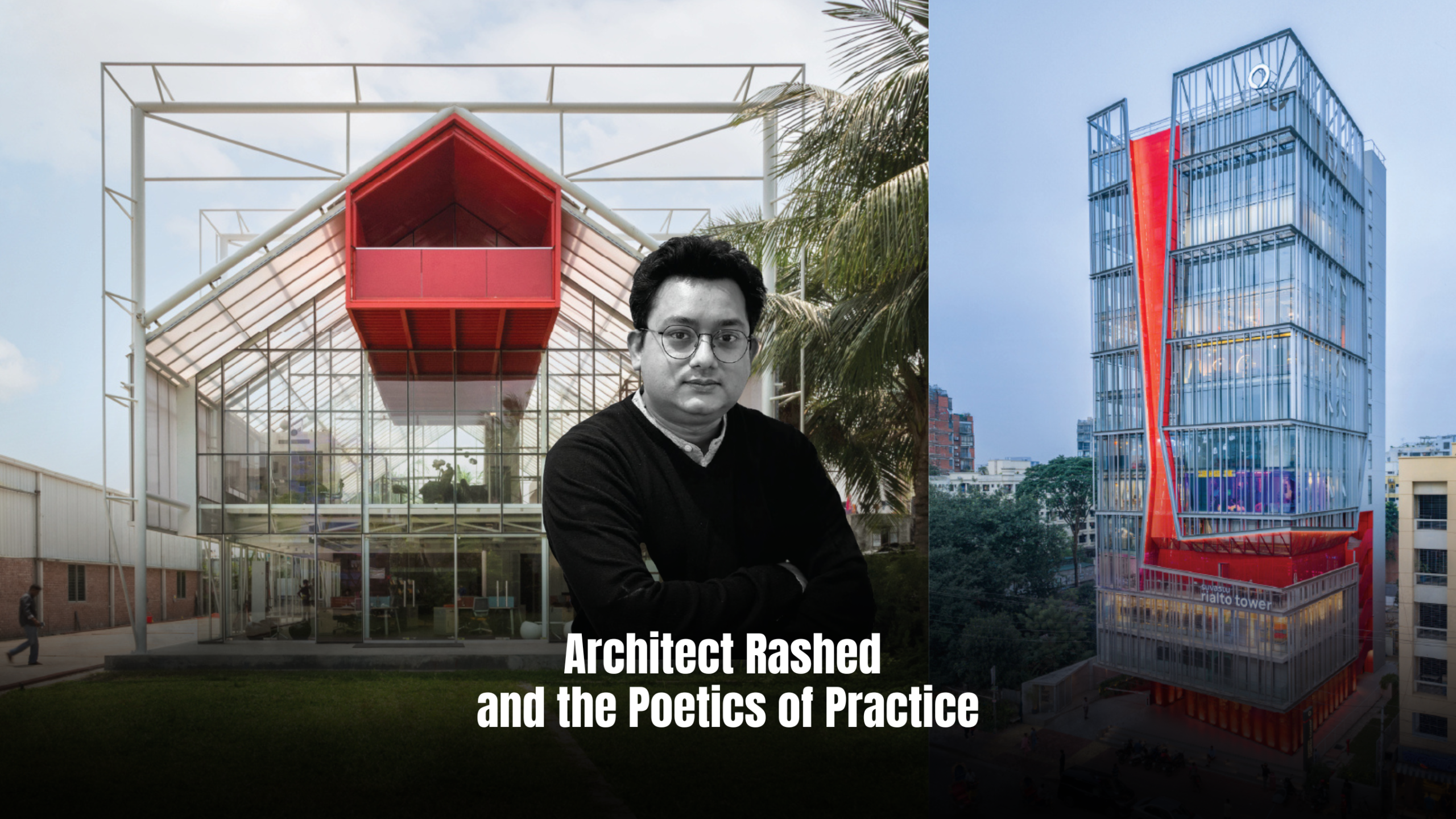
Day two of the global events of the Institute of Architects Bangladesh (IAB) — the IAB Build Expo 2025 and Bangladesh ArchSummit 2025 — saw vibrant participation from architects, designers, academics, and industry leaders from home and abroad.   While the ArchSummit hosted curated seminars and panel discussions for registered participants, addressing key issues within the contemporary architectural landscape, the IAB Build Expo — the country’s largest exhibition of building materials and construction innovations — remained open to all visitors. Held at the Bangladesh-China Friendship Conference Centre (BCFCC) in the capital alongside the expo, IAB launched Bangladesh ArchSummit 2025 under the theme “Crafting Space, Shaping Habitat.” The three-day event, running from December 11 to 13, brought together global and local experts from various fields to engage in dialogue on the future of Asia’s built environment.   The ground floor of BCFCC hosted a lively exhibition where leading brands showcased their latest products and innovations, allowing visitors to explore advancements that support stronger, safer, and more sustainable construction. The second floor featured a dedicated ArchSummit seminar hall, with adjacent corridors displaying award-winning architectural projects from Bangladesh, creating a well-curated and dynamic event overall. Architect Rashed Chowdhury, a practising architect and founder of Dehsar Works (DW), opened the second day’s roundtable discussion on the “Poetics of Crafting Spaces” with a fundamental question: “Where is here?” “Our geographical and socio-political context inevitably shapes our responsibilities as designers — influencing how we think about space-making and the materials we choose,” he said.   By posing this question, he invited participants to examine how the sense of belonging is defined, whether “here” is determined by political boundaries or by the deeper, more enduring contours of culture and identity. Speaking on materiality, award-winning green architect Rizvi Hassan remarked that it is much like cooking — and that, like any good chef, architects should feel free to use all the ingredients available to them. Shamsul Wares, a trailblazer of contemporary Bangladeshi architecture and an eminent art critic, reflected on how modern architecture’s obsession with efficiency has fallen short, arguing that true value lies in quality and the poetic dimension of space. “Architecture is about designing experience,” he said, highlighting light as both phenomenon and material. Wares urged architects to learn from modernity’s mistakes while considering the body, soul, and society in their work. “All art wants to be poetry. Poetry wants to be music. And music ultimately wants to be spirituality,” he concluded.   The event’s guest of honour, Architect Fawad Suhail Abbasi, president of the Institute of Architects, Pakistan (IAP), reflected on how the day’s discussion prompted him to reassess his own practice. With his firm long focusing on brick and sustainable architectural practice, he realised that one cannot overlook the foundational lessons inherited from peers and mentors. He emphasised the importance of finding the mentor within oneself, following that inner direction, and discovering one’s own architectural path, much like the evolving journey of Bangladeshi architects today. After a break for prayer and lunch, a second panel discussion on design, dialogue, and direction in shaping habitat brought together local architects and academics. The discussion highlighted how governments worldwide often overlook the realities of architectural practice — advising against costly materials without recognising that every material has its place when used appropriately. One panellist noted that while academic curricula aligned with the SDGs have expanded, they fail to create responsible citizens who can truly improve the city and country.   The day concluded with the IAB Induction Ceremony 2025, welcoming its new fellows and members. Chief Adviser of the Government of Bangladesh, Muhammad Yunus, conveyed his heartfelt congratulations virtually, noting that one of the year’s first significant milestones was the unification of the Architects’ Association of South Asia. With representatives from seven countries coming together, he emphasised that this collaboration would strengthen knowledge exchange, professional cooperation, and a sense of fraternity among architects across the region — particularly as many of their challenges remain shared.   Written by Fariha Hossain

IAB Build Expo, ArchSummit See Vibrant Participation of Architects on Day 2

Day two of the global events of the Institute of Architects Bangladesh (IAB) — the IAB Build Expo 2025 and Bangladesh ArchSummit 2025 — saw vibrant participation from architects, designers, academics, and industry leaders from home and abroad.   While the ArchSummit hosted curated seminars and panel discussions for registered participants, addressing key issues within the contemporary architectural landscape, the IAB Build Expo — the country’s largest exhibition of building materials and construction innovations — remained open to all visitors. Held at the Bangladesh-China Friendship Conference Centre (BCFCC) in the capital alongside the expo, IAB launched Bangladesh ArchSummit 2025 under the theme “Crafting Space, Shaping Habitat.” The three-day event, running from December 11 to 13, brought together global and local experts from various fields to engage in dialogue on the future of Asia’s built environment.   The ground floor of BCFCC hosted a lively exhibition where leading brands showcased their latest products and innovations, allowing visitors to explore advancements that support stronger, safer, and more sustainable construction. The second floor featured a dedicated ArchSummit seminar hall, with adjacent corridors displaying award-winning architectural projects from Bangladesh, creating a well-curated and dynamic event overall. Architect Rashed Chowdhury, a practising architect and founder of Dehsar Works (DW), opened the second day’s roundtable discussion on the “Poetics of Crafting Spaces” with a fundamental question: “Where is here?” “Our geographical and socio-political context inevitably shapes our responsibilities as designers — influencing how we think about space-making and the materials we choose,” he said.   By posing this question, he invited participants to examine how the sense of belonging is defined, whether “here” is determined by political boundaries or by the deeper, more enduring contours of culture and identity. Speaking on materiality, award-winning green architect Rizvi Hassan remarked that it is much like cooking — and that, like any good chef, architects should feel free to use all the ingredients available to them. Shamsul Wares, a trailblazer of contemporary Bangladeshi architecture and an eminent art critic, reflected on how modern architecture’s obsession with efficiency has fallen short, arguing that true value lies in quality and the poetic dimension of space. “Architecture is about designing experience,” he said, highlighting light as both phenomenon and material. Wares urged architects to learn from modernity’s mistakes while considering the body, soul, and society in their work. “All art wants to be poetry. Poetry wants to be music. And music ultimately wants to be spirituality,” he concluded.   The event’s guest of honour, Architect Fawad Suhail Abbasi, president of the Institute of Architects, Pakistan (IAP), reflected on how the day’s discussion prompted him to reassess his own practice. With his firm long focusing on brick and sustainable architectural practice, he realised that one cannot overlook the foundational lessons inherited from peers and mentors. He emphasised the importance of finding the mentor within oneself, following that inner direction, and discovering one’s own architectural path, much like the evolving journey of Bangladeshi architects today. After a break for prayer and lunch, a second panel discussion on design, dialogue, and direction in shaping habitat brought together local architects and academics. The discussion highlighted how governments worldwide often overlook the realities of architectural practice — advising against costly materials without recognising that every material has its place when used appropriately. One panellist noted that while academic curricula aligned with the SDGs have expanded, they fail to create responsible citizens who can truly improve the city and country.   The day concluded with the IAB Induction Ceremony 2025, welcoming its new fellows and members. Chief Adviser of the Government of Bangladesh, Muhammad Yunus, conveyed his heartfelt congratulations virtually, noting that one of the year’s first significant milestones was the unification of the Architects’ Association of South Asia. With representatives from seven countries coming together, he emphasised that this collaboration would strengthen knowledge exchange, professional cooperation, and a sense of fraternity among architects across the region — particularly as many of their challenges remain shared.   Written by Fariha Hossain

Read More »

Bangladesh ArchSummit 2025 Begins Alongside the IAB Build Expo 2025

  The Institute of Architects Bangladesh (IAB) inaugurated the Bangladesh ArchSummit 2025 today, December 11. This year’s theme, “Crafting Space, Shaping Habitat,” sets the stage for a grand celebration of architecture, education, profession and practice, ideas, innovation, and excellence.   Running in parallel with the Summit, IAB also launched the IAB Build Expo 2025, the country’s largest exhibition of building materials and construction innovations.   Both events will continue until December 13 at the Bangladesh China Friendship Conference Centre (BCFCC). The Summit is open exclusively to registered participants, while the Expo is open to all visitors.     This year’s Summit has been carefully planned with a distinguished lineup of renowned international and national speakers, along with a range of enriching programmes, including an exhibition of award-winning architectural works, roundtable discussions, a young citizens’ painting competition, a photography competition, and exciting cultural events for registered participants.   Participants will also have the opportunity to attend the Student Forum, Youth Forum, and plenary sessions, where esteemed speakers will share their ideas, design philosophies, and professional insights throughout the three-day event.     Day One began with the Student Forum, featuring a quiz and debate competition, and included the Summit and Build Expo Inauguration Ceremony.   Other attractions include the Open Photography Competition, Young Citizens’ Painting Competition, and Public Exhibition on Architecture.     The Young Painting Exhibition features curated artworks submitted by students from Classes 6 to 10. The jury panel for the selection included Architect Rafiq Azam, artist Afzal Hossain, and Farida Zaman.   The theme of the architectural works exhibition, PEOPLE | PLACE | PRESENCE, celebrates architecture that shapes communities, responds to context, and defines presence through space.   The exhibition showcases curated works selected from project submissions in the following categories: Internationally Awarded Projects (2024–2025) from Bangladesh IAB & BERGER Award Projects (last cycle) Public Projects (nationwide) Projects Located in Old Dhaka   The project selection team comprised Dr. Abu Sayeed M Ahmed, Ar. Khan Md. Mahfuzul Hug Zaglul, Ar. Nowajish Mahbub, Dr. Khurshid Zabin Hossain Taufique, and Prof. Zainab Faruqui Ali.   The ArchSummit and Build Expo aim to provide a platform for architects, students, industry professionals, and the public to explore architecture, innovation, and the future of the built environment in Bangladesh.   Written By Tasmiah Chowdhury

Read More »

IAB Build Expo, ArchSummit See Vibrant Participation of Architects on Day 2

Day two of the global events of the Institute of Architects Bangladesh (IAB) — the IAB Build Expo 2025 and Bangladesh ArchSummit 2025 — saw vibrant participation from architects, designers, academics, and industry leaders from home and abroad.   While the ArchSummit hosted curated seminars and panel discussions for registered participants, addressing key issues within the contemporary architectural landscape, the IAB Build Expo — the country’s largest exhibition of building materials and construction innovations — remained open to all visitors. Held at the Bangladesh-China Friendship Conference Centre (BCFCC) in the capital alongside the expo, IAB launched Bangladesh ArchSummit 2025 under the theme “Crafting Space, Shaping Habitat.” The three-day event, running from December 11 to 13, brought together global and local experts from various fields to engage in dialogue on the future of Asia’s built environment.   The ground floor of BCFCC hosted a lively exhibition where leading brands showcased their latest products and innovations, allowing visitors to explore advancements that support stronger, safer, and more sustainable construction. The second floor featured a dedicated ArchSummit seminar hall, with adjacent corridors displaying award-winning architectural projects from Bangladesh, creating a well-curated and dynamic event overall. Architect Rashed Chowdhury, a practising architect and founder of Dehsar Works (DW), opened the second day’s roundtable discussion on the “Poetics of Crafting Spaces” with a fundamental question: “Where is here?” “Our geographical and socio-political context inevitably shapes our responsibilities as designers — influencing how we think about space-making and the materials we choose,” he said.   By posing this question, he invited participants to examine how the sense of belonging is defined, whether “here” is determined by political boundaries or by the deeper, more enduring contours of culture and identity. Speaking on materiality, award-winning green architect Rizvi Hassan remarked that it is much like cooking — and that, like any good chef, architects should feel free to use all the ingredients available to them. Shamsul Wares, a trailblazer of contemporary Bangladeshi architecture and an eminent art critic, reflected on how modern architecture’s obsession with efficiency has fallen short, arguing that true value lies in quality and the poetic dimension of space. “Architecture is about designing experience,” he said, highlighting light as both phenomenon and material. Wares urged architects to learn from modernity’s mistakes while considering the body, soul, and society in their work. “All art wants to be poetry. Poetry wants to be music. And music ultimately wants to be spirituality,” he concluded.   The event’s guest of honour, Architect Fawad Suhail Abbasi, president of the Institute of Architects, Pakistan (IAP), reflected on how the day’s discussion prompted him to reassess his own practice. With his firm long focusing on brick and sustainable architectural practice, he realised that one cannot overlook the foundational lessons inherited from peers and mentors. He emphasised the importance of finding the mentor within oneself, following that inner direction, and discovering one’s own architectural path, much like the evolving journey of Bangladeshi architects today. After a break for prayer and lunch, a second panel discussion on design, dialogue, and direction in shaping habitat brought together local architects and academics. The discussion highlighted how governments worldwide often overlook the realities of architectural practice — advising against costly materials without recognising that every material has its place when used appropriately. One panellist noted that while academic curricula aligned with the SDGs have expanded, they fail to create responsible citizens who can truly improve the city and country.   The day concluded with the IAB Induction Ceremony 2025, welcoming its new fellows and members. Chief Adviser of the Government of Bangladesh, Muhammad Yunus, conveyed his heartfelt congratulations virtually, noting that one of the year’s first significant milestones was the unification of the Architects’ Association of South Asia. With representatives from seven countries coming together, he emphasised that this collaboration would strengthen knowledge exchange, professional cooperation, and a sense of fraternity among architects across the region — particularly as many of their challenges remain shared.   Written by Fariha Hossain

Read More »

IAB Build Expo, ArchSummit See Vibrant Participation of Architects on Day 2

Day two of the global events of the Institute of Architects Bangladesh (IAB) — the IAB Build Expo 2025 and Bangladesh ArchSummit 2025 — saw vibrant participation from architects, designers, academics, and industry leaders from home and abroad.   While the ArchSummit hosted curated seminars and panel discussions for registered participants, addressing key issues within the contemporary architectural landscape, the IAB Build Expo — the country’s largest exhibition of building materials and construction innovations — remained open to all visitors. Held at the Bangladesh-China Friendship Conference Centre (BCFCC) in the capital alongside the expo, IAB launched Bangladesh ArchSummit 2025 under the theme “Crafting Space, Shaping Habitat.” The three-day event, running from December 11 to 13, brought together global and local experts from various fields to engage in dialogue on the future of Asia’s built environment.   The ground floor of BCFCC hosted a lively exhibition where leading brands showcased their latest products and innovations, allowing visitors to explore advancements that support stronger, safer, and more sustainable construction. The second floor featured a dedicated ArchSummit seminar hall, with adjacent corridors displaying award-winning architectural projects from Bangladesh, creating a well-curated and dynamic event overall. Architect Rashed Chowdhury, a practising architect and founder of Dehsar Works (DW), opened the second day’s roundtable discussion on the “Poetics of Crafting Spaces” with a fundamental question: “Where is here?” “Our geographical and socio-political context inevitably shapes our responsibilities as designers — influencing how we think about space-making and the materials we choose,” he said.   By posing this question, he invited participants to examine how the sense of belonging is defined, whether “here” is determined by political boundaries or by the deeper, more enduring contours of culture and identity. Speaking on materiality, award-winning green architect Rizvi Hassan remarked that it is much like cooking — and that, like any good chef, architects should feel free to use all the ingredients available to them. Shamsul Wares, a trailblazer of contemporary Bangladeshi architecture and an eminent art critic, reflected on how modern architecture’s obsession with efficiency has fallen short, arguing that true value lies in quality and the poetic dimension of space. “Architecture is about designing experience,” he said, highlighting light as both phenomenon and material. Wares urged architects to learn from modernity’s mistakes while considering the body, soul, and society in their work. “All art wants to be poetry. Poetry wants to be music. And music ultimately wants to be spirituality,” he concluded.   The event’s guest of honour, Architect Fawad Suhail Abbasi, president of the Institute of Architects, Pakistan (IAP), reflected on how the day’s discussion prompted him to reassess his own practice. With his firm long focusing on brick and sustainable architectural practice, he realised that one cannot overlook the foundational lessons inherited from peers and mentors. He emphasised the importance of finding the mentor within oneself, following that inner direction, and discovering one’s own architectural path, much like the evolving journey of Bangladeshi architects today. After a break for prayer and lunch, a second panel discussion on design, dialogue, and direction in shaping habitat brought together local architects and academics. The discussion highlighted how governments worldwide often overlook the realities of architectural practice — advising against costly materials without recognising that every material has its place when used appropriately. One panellist noted that while academic curricula aligned with the SDGs have expanded, they fail to create responsible citizens who can truly improve the city and country.   The day concluded with the IAB Induction Ceremony 2025, welcoming its new fellows and members. Chief Adviser of the Government of Bangladesh, Muhammad Yunus, conveyed his heartfelt congratulations virtually, noting that one of the year’s first significant milestones was the unification of the Architects’ Association of South Asia. With representatives from seven countries coming together, he emphasised that this collaboration would strengthen knowledge exchange, professional cooperation, and a sense of fraternity among architects across the region — particularly as many of their challenges remain shared.   Written by Fariha Hossain

Read More »

Bangladesh ArchSummit 2025 Begins Alongside the IAB Build Expo 2025

  The Institute of Architects Bangladesh (IAB) inaugurated the Bangladesh ArchSummit 2025 today, December 11. This year’s theme, “Crafting Space, Shaping Habitat,” sets the stage for a grand celebration of architecture, education, profession and practice, ideas, innovation, and excellence.   Running in parallel with the Summit, IAB also launched the IAB Build Expo 2025, the country’s largest exhibition of building materials and construction innovations.   Both events will continue until December 13 at the Bangladesh China Friendship Conference Centre (BCFCC). The Summit is open exclusively to registered participants, while the Expo is open to all visitors.     This year’s Summit has been carefully planned with a distinguished lineup of renowned international and national speakers, along with a range of enriching programmes, including an exhibition of award-winning architectural works, roundtable discussions, a young citizens’ painting competition, a photography competition, and exciting cultural events for registered participants.   Participants will also have the opportunity to attend the Student Forum, Youth Forum, and plenary sessions, where esteemed speakers will share their ideas, design philosophies, and professional insights throughout the three-day event.     Day One began with the Student Forum, featuring a quiz and debate competition, and included the Summit and Build Expo Inauguration Ceremony.   Other attractions include the Open Photography Competition, Young Citizens’ Painting Competition, and Public Exhibition on Architecture.     The Young Painting Exhibition features curated artworks submitted by students from Classes 6 to 10. The jury panel for the selection included Architect Rafiq Azam, artist Afzal Hossain, and Farida Zaman.   The theme of the architectural works exhibition, PEOPLE | PLACE | PRESENCE, celebrates architecture that shapes communities, responds to context, and defines presence through space.   The exhibition showcases curated works selected from project submissions in the following categories: Internationally Awarded Projects (2024–2025) from Bangladesh IAB & BERGER Award Projects (last cycle) Public Projects (nationwide) Projects Located in Old Dhaka   The project selection team comprised Dr. Abu Sayeed M Ahmed, Ar. Khan Md. Mahfuzul Hug Zaglul, Ar. Nowajish Mahbub, Dr. Khurshid Zabin Hossain Taufique, and Prof. Zainab Faruqui Ali.   The ArchSummit and Build Expo aim to provide a platform for architects, students, industry professionals, and the public to explore architecture, innovation, and the future of the built environment in Bangladesh.   Written By Tasmiah Chowdhury

Read More »

IAB Build Expo, ArchSummit See Vibrant Participation of Architects on Day 2

Day two of the global events of the Institute of Architects Bangladesh (IAB) — the IAB Build Expo 2025 and Bangladesh ArchSummit 2025 — saw vibrant participation from architects, designers, academics, and industry leaders from home and abroad.   While the ArchSummit hosted curated seminars and panel discussions for registered participants, addressing key issues within the contemporary architectural landscape, the IAB Build Expo — the country’s largest exhibition of building materials and construction innovations — remained open to all visitors. Held at the Bangladesh-China Friendship Conference Centre (BCFCC) in the capital alongside the expo, IAB launched Bangladesh ArchSummit 2025 under the theme “Crafting Space, Shaping Habitat.” The three-day event, running from December 11 to 13, brought together global and local experts from various fields to engage in dialogue on the future of Asia’s built environment.   The ground floor of BCFCC hosted a lively exhibition where leading brands showcased their latest products and innovations, allowing visitors to explore advancements that support stronger, safer, and more sustainable construction. The second floor featured a dedicated ArchSummit seminar hall, with adjacent corridors displaying award-winning architectural projects from Bangladesh, creating a well-curated and dynamic event overall. Architect Rashed Chowdhury, a practising architect and founder of Dehsar Works (DW), opened the second day’s roundtable discussion on the “Poetics of Crafting Spaces” with a fundamental question: “Where is here?” “Our geographical and socio-political context inevitably shapes our responsibilities as designers — influencing how we think about space-making and the materials we choose,” he said.   By posing this question, he invited participants to examine how the sense of belonging is defined, whether “here” is determined by political boundaries or by the deeper, more enduring contours of culture and identity. Speaking on materiality, award-winning green architect Rizvi Hassan remarked that it is much like cooking — and that, like any good chef, architects should feel free to use all the ingredients available to them. Shamsul Wares, a trailblazer of contemporary Bangladeshi architecture and an eminent art critic, reflected on how modern architecture’s obsession with efficiency has fallen short, arguing that true value lies in quality and the poetic dimension of space. “Architecture is about designing experience,” he said, highlighting light as both phenomenon and material. Wares urged architects to learn from modernity’s mistakes while considering the body, soul, and society in their work. “All art wants to be poetry. Poetry wants to be music. And music ultimately wants to be spirituality,” he concluded.   The event’s guest of honour, Architect Fawad Suhail Abbasi, president of the Institute of Architects, Pakistan (IAP), reflected on how the day’s discussion prompted him to reassess his own practice. With his firm long focusing on brick and sustainable architectural practice, he realised that one cannot overlook the foundational lessons inherited from peers and mentors. He emphasised the importance of finding the mentor within oneself, following that inner direction, and discovering one’s own architectural path, much like the evolving journey of Bangladeshi architects today. After a break for prayer and lunch, a second panel discussion on design, dialogue, and direction in shaping habitat brought together local architects and academics. The discussion highlighted how governments worldwide often overlook the realities of architectural practice — advising against costly materials without recognising that every material has its place when used appropriately. One panellist noted that while academic curricula aligned with the SDGs have expanded, they fail to create responsible citizens who can truly improve the city and country.   The day concluded with the IAB Induction Ceremony 2025, welcoming its new fellows and members. Chief Adviser of the Government of Bangladesh, Muhammad Yunus, conveyed his heartfelt congratulations virtually, noting that one of the year’s first significant milestones was the unification of the Architects’ Association of South Asia. With representatives from seven countries coming together, he emphasised that this collaboration would strengthen knowledge exchange, professional cooperation, and a sense of fraternity among architects across the region — particularly as many of their challenges remain shared.   Written by Fariha Hossain

Read More »

MADE IN BANGLADESH: Homegrown Champions of Change

Bangladesh’s meteoric rise in the global garment industry has long been admired, and now a deeper transformation is underway — one that reflects diversification, resilience, and ambition.     Amid global supply chain realignments and rising manufacturing costs in East Asia, Bangladesh has emerged as one of the world’s most export-ready economies.   But beyond the looms and threads, “Made in Bangladesh” businesses are stepping into the spotlight — from green technology and agribusiness to pharmaceuticals and consumer goods.   It’s time the world pays closer attention to the homegrown brands proudly carrying the “Made in Bangladesh” label.   The list is far from exhaustive, as Bangladesh is home to many more brands that deserve global recognition.   In this special feature, we bring into focus five companies and visionaries who have not only grown with the country but have also redefined what it means to be a “Made in Bangladesh” business.   From expanding beyond borders to competing with international players, their journeys reflect the spirit of a nation that refuses to be boxed in. A common thread binds them all — a relentless desire to rise despite the odds.   To begin the story, there is none other than Anis Ud Dowla, the visionary chairman of ACI Group. A pioneer in every sense, Dowla represents the kind of leadership that has helped redefine the possibilities of Bangladeshi enterprise.   Next comes Hossain Khaled, Chairman of City Bank. This visionary banker played a crucial role in transforming a struggling bank with weak financials into one of the top lenders in the country.   From the travel and tourism field, Sadia Haque — co-founder and CEO of ShareTrip — steals the spotlight with her innovations in the sector. The full-stack travel solutions her firm offers have brought about a massive change in the tourism landscape of Bangladesh.   No story on Bangladesh would be complete without mentioning Ahsan Khan Chowdhury, chairman and CEO of Pran-RFL Group — a perfect example of how a legacy can be nurtured and turned into an empire.   And last but not least, Walton Hi-Tech Industries PLC — the first Bangladesh-origin company to ship electrical and electronic appliances to international markets — stands as a testament to the nation’s growing industrial prowess.   Let’s explore the trailblazers behind the “Made in Bangladesh” renaissance.   A Beacon of Principled Leadership     In Bangladesh’s corporate history, few names command as much respect as M. Anis Ud Dowla. At a time when business and politics often converge, Dowla has carved a distinct path—one rooted in ethics, innovation, and an unwavering commitment to national progress.   His career began not in boardrooms but in the field, as a young executive with British Oxygen. Over nearly three decades, he rose through the ranks, managing operations across Pakistan, Kenya, and Bangladesh.   That global exposure laid the foundation for a leadership style defined by experimentation and efficiency.   The defining moment came in 1992, when Imperial Chemical Industries (ICI) offered him a chance to take over its Bangladesh operations.   The deal was unconventional: a “pay-as-you-earn” arrangement that required no upfront capital. Dowla accepted, and Advanced Chemical Industries (ACI) was born.   “The beginning was challenging, but I made sure that no matter what, I would remain fair to my workers,” Dowla said.   “I assured them that they would receive a fair share of the benefits for the efforts they were putting in. It was a 60:40 profit-sharing arrangement between the investors and workers. And it paid off.”     From modest beginnings with just 352 employees, ACI has grown into one of the country’s largest conglomerates, now employing over 30,000 people across 29 subsidiaries.   Its portfolio spans pharmaceuticals, consumer goods, agribusiness, and logistics.   Under Dowla’s leadership, ACI became the first Bangladeshi company to earn ISO 9001 certification, setting a benchmark for quality and transparency.   “I wanted to have a guardian who would ensure that there was no compromise in quality. The ISO certificate did that for me. They used to visit ACI, conduct audits, and help me produce quality products every time.”   “I went for the certificate to fulfil my dream of remaining true to our customers and never deceiving anyone in any way.”   Despite his success, Dowla remains grounded. His philosophy centres on values—quality, fairness, customer focus, and continuous improvement. These principles, he insists, are not slogans but lived realities within the company.   Dowla’s views on politics are equally clear-cut. He believes that mixing business with political ambition undermines merit and compromises governance. “I strongly believe entrepreneurs should not enter politics, and politicians should not be entrepreneurs.”     For Dowla, politics is a service, not a career path for entrepreneurs. At ACI, employees are treated as family. The ACI chairman sees leadership as a process of unlocking human potential.   To young entrepreneurs, his advice is simple yet profound: pursue what you love, embrace failure as a lesson, and never settle for shortcuts.   Even in his late eighties, Dowla remains active, drawing energy from ideas rather than rest.   In an era of blurred boundaries and shifting values, Anis Ud Dowla stands as a beacon of principled leadership—an icon admired not just for what he built, but for how he built it.   From Startup to Market Leader     When Sadia Haque set out to build a travel platform, her vision was rooted in something deeper than bookings and itineraries.   “We wanted a travel tech platform where everything would be shared,” said the ShareTrip CEO and Co-Founder.   “Sharing of adventure, sharing of experience, sharing of laughter, and sharing of joy. And from that perspective, the name came as ShareTrip.”   That philosophy of connection would go on to shape one of Bangladesh’s most successful digital ventures.   Drawing on her background in telecoms, media, and technology, Haque channelled over a decade of corporate experience into a startup that would soon redefine how the country travels.

Read More »