Related Posts
The Tales of Terracotta Temple
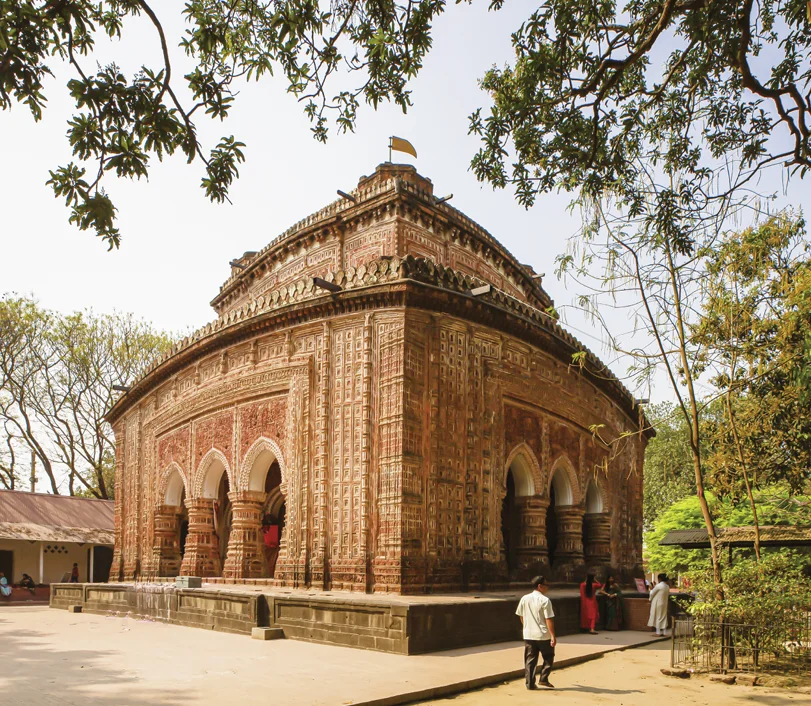
A embodiment of the weirdly mysterious vibe that ancient structures often procure, Kantaji is undoubtedly the most colossal example of terracotta architecture in the region. Often, it’s the grandiosity or beauty of religious space and/or the stories attached that give an inexplicable feeling of peace to believers, and even to the visitors when they enter the space. Kantaji is not only a Hindu temple dedicated to Lord Krishna, but this sublime piece of architecture meditating on the banks of Dhepa for three centuries, consisting of almost 15,000 pieces of delicate terracotta on its skin, and has its list of stories and myths attached as well. These, when combined, give the space a mysterious character that it tenderly holds. But even if you do not know much about Kantaji, being present at the site at the right time when the wind charmingly flows, you will understand that the atmosphere has suddenly taken you to a place where you do not know how old the time is. The story of Kantaji’s initiation blooms from a bud consisting of conspiracies. It was 1862, the reign of the last mighty Mughal ruler, Aurangzeb, the youngest son of Shahjahan who built the iconic TajMahal. It was also a time when the zamindari of the Dinajpur region was going through a rough phase. The then zamindar, Prannath Roy, was perched on the throne after the consecutive deaths of his two elder brothers. Unlike many of his contemporaries, Prannath was loved by his people. And within a few years, just like many other royal rivalry stories straight out of a novel, enters King Raghbendro Roy, zamindar of Ghoraghat. There was already a rivalry in existence between both the zamindar families of Dinajpur and Ghoraghat. Raghbendro plotted a conspiracy to take advantage of the situation and sent a letter to Aurangzeb, blatantly lying that Prannath had perched on the throne by killing his two elder brothers, Ramdeb and Joydeb. That he was not only a tyrannical zamindar, but also refused to obey the authority of Delhi’s ruler, Aurangzeb, and was irregular in sending the required tax. The plot worked. A furious Aurangzeb ordered a show cause and Prannath eventually traveled to the palace of the emperor with gifts. A while after they met, coming across the integrity of the kind-hearted Prannath, Aurangzeb realised his mistake and, out of kindness, gave Prannath the title of King and ordered him to carry on his usual zamindari of Dinajpur. The story of Kantaji’s initiation blooms from a bud consisting of conspiracies Here comes the most interesting part. As a devotee to Lord Krishna, when Prannath got out of this danger and received the title of King, as a devotee to Lord Krishna, he decided to do something out of love for his religion. While on his journey back to Delhi, he decided to visit Brindaban for a while and set up a Krishna temple in Dinajpur once he returned. During his stay in Brindaban, he was blown away by a beautiful Krishna statue, and he wanted to bring it back home for the temple he wanted to build. But, as said, he had a dream where Lord Krishna himself appeared and asked him not to take this particular statue as the feelings of the local devotees would be hurt. Instead, Krishna was said to have told Prannath to be patient because he was about to receive a Krishna statue identical to the one he desired during bath the next day, and that Krishna would travel with him on that statue. Soon after the divine dream, the next day, as Prannath was having his bath, he found an identical Krishna statue, beaming with its entire godly aura. This is what Prannath brought back Dinajpur to install in Kantaji. But that mysterious Krishna statue is not there anymore. It is believed that after the massive earthquake of 1897, when the temple was badly damaged and lost its original nine spires, for which it was also called “Navaratna”, the statue was stolen from the disastrous site. There is also a myth that Aurangzeb himself ordered Prannath to set up a Krishna temple, whereas Aurangzeb was a Muslim. And speaking of that, the architects Prannath commissioned for Kantaji were all Muslims. You can still find the brick mosque they built for themselves a few minutes distance from Kantaji. Another interesting fact is that just outside Kantaji’s premise; you will find an abandoned temple-like structure. That was the temporary temple that Prannath originally built, but he eventually wanted a grander one, hence he began the construction of Kantaji in 1704. Sadly, Prannath could not live long enough to witness the completion of this terracotta masterpiece. Every inch of the walls is embedded with a highly sophisticated opera of art, composed in a rhythm. Beautiful floral designs, amazing stories depicted from Ramayana-Mahabharata, and many extremely fascinating contemporary local stories, etc. Perhaps the most fabulously interesting ornamentation on the skins of Kantaji would be the depiction of erotic scenes. All these stories say so much about spirituality, about what is pious and what is not, about togetherness between human beings of different religions and so on. King Prannath Roy passed away in 1722. His adopted son, Ramnath Roy, took charge of the throne and, according to the last wish of his beloved father, finished the construction in 1752, which stands till date. With no tickets required, the temple is open at any time of the day and is open to all, regardless of faith. It’s one of the major archeological sites in Bangladesh.
The Voyage of Bajra and Rangeela’s Mosque
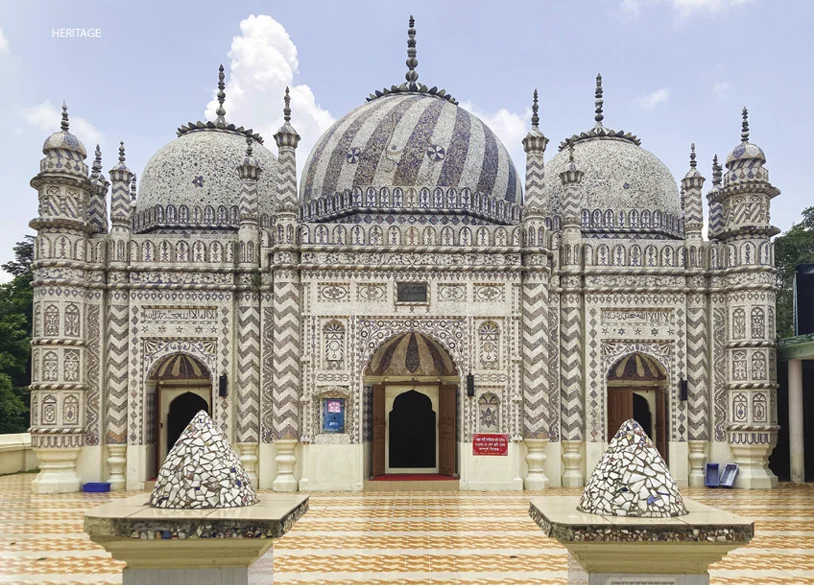
Rangeela is the word which denotes vibrant/joyous, often mixed with quirkiness. So is the tale of Bajra Shahi Masjid, apparently unconnected unless it is told. After all, how many 281 years’ old mosques do you know named after a watercraft! Being a silent witness like a vessel through the waves of time, while breathing over four separate centuries, this Chinni-tikri skinned sublime architecture was built in the middle of a village. It has such a riveting history that it is a bit arduous to decide where one should begin while trying to tell its tales. With Rangeela, shall we, to unravel the ‘mystery’? Abu Al-Fatah Nasir Ud-Din Muhammad Shah was another one-of-a-kind emperor in the collection of Mughal Empire emperors. Passing away at the age of 45 this interesting man lived quite a colourful life whilst having an eventful reign. Born as Roshan Akhtar, and eventually becoming The Muhammad Shah, after ascending to the legendary Peacock Throne, this handsome-looking man had multiple wives. One being a dancer peeks a hint about his time where worldly pleasures were always a priority rather than tensely being busy with bloodshed to protect the reign and expand like most other emperors. Whilst on the throne of a once mighty empire that was at the beginning of its eventual end, he was more glued to orchestrating orders that would vastly contribute to the cultural developments of the region. He was greatly influenced by genres of creative practices and his pen-name was Sada Rangeela which loosely translates as ‘always joyful’. How is Rangeela connected to the story of Bajra Imam Hasan Siddiqui, a simple old man, is Bajra’s current Imam and has been there for the past 27 years. Appointed through a legacy of seven generations, his veins are carrying the blood of the first ever Imam, who was appointed at this vibrant space of worship almost three centuries back, by Rangeela himself. You can read an honour board carrying the names of his forefathers in his office room inside the tiled compound of this graceful mosque. And it is not a sort of unspoken rule for the place; after a time it was the love of the locals, who out of admiration asked for the legacy of the first-ever Imam, Shah Sufi Abu Siddiqui to be continued. Sufi, who was a former resident of the holy city Mecca, was the first and longest-serving Imam for 55 years at his beloved Bajra. According to Imam Hasan Siddiqui, popular stories and recorded history, the story of Bajra’s birth may be something like the following one: Adored representatives of Rangeela, the brothers Amanullah and Sanaullah, were ordered to go on inspection of the reigned regions. They were to build a beautiful mosque, in reflection of The Delhi Shahi Mosque (Masjid-e Jehan-Numa), on the location where the siblings along their troops would run out of food and water, during the expedition. Closer to the location of the mosque that we see elegantly embracing its guests today, is where Amanullah’s water vessel was anchored at the banks of Bulbuli. After offering prayers, this is the site where Amanullah decided to construct a mosque. Hence, the name Bajra became popular. The Bengali word defines a particular type of water vessel, a big-sized boat, that was used mostly by the wealthy elites and royals of the time to travel across this riverine delta. The mosque was named after that eventually, and the village where it homes was formerly known as Umrabadh, which got its new and identical name after the mosque. According to another version of the story, Zamindar Amanullah built his house thereafter, during the stoppage of his inspection tour. Later, by the order of Rangeela, built the mosque there. There are many interesting local folklores attached as well. Till his death, Amanullah was the mutawalli of the mosque and after his demise, younger one Sanaullah was given the responsibility. In the early 1900s Bajra zamindars Khan Bahadur Ali Ahmad and Khan Bahadur Mujir Uddin Ahmad extensively repaired and decorated the mosque. Although an extension has been built in recent years to accommodate increasing number of devotees in congregations. It is still one of those few historically significant monuments in the country that were taken care of over the years and in a surprisingly better state. The Bajra mosque is not a common thing to pop up on a non-local’s mind. Apart from travel and history enthusiasts, how many are aware that one of the comeliest mosque complexes of Bangladesh has been quietly standing with all its gracefulness for almost 300 years inside a not much heard about village in Noakhali? After a long while on tracks, under the soothing shades of green, you will be welcomed by the suavely calm waters of a 30 acres huge pond which not only complements the complexion of the space, but is also special as it was dug to use its earth to construct the elevated platform where Bajra stands beside. Although identical to its other Mughal siblings, having alluring arches, delightful domes, magnificent minarets, and a gorgeous gate on the east, what makes Bajra so special is its enthralling complexity of ornamentation with Chinese ceramics or Chinni-tikri all over its pearl white skin. As if all the ravishing floral and other designs on its body, the dark green ceiling you stare at standing under the marbled dome while inside, has been calligraphed with essences embedded of stories and folklores, often attached to age-old architectures that profusely decorates its already mystic domain of aura, which sends pulses of abstruse serenity to its guests. . A 300-year-old breeze caressing your hair as you sit by Bajra’s pond after Asr, and gazing forever at the kisses of golden hour glistening on Bajra’s surface might make you start counting masjids (mosques) in this country. There aren’t many like Bajra. Written by Shahbaz Nahian
The Unfinished Mughal Fortress
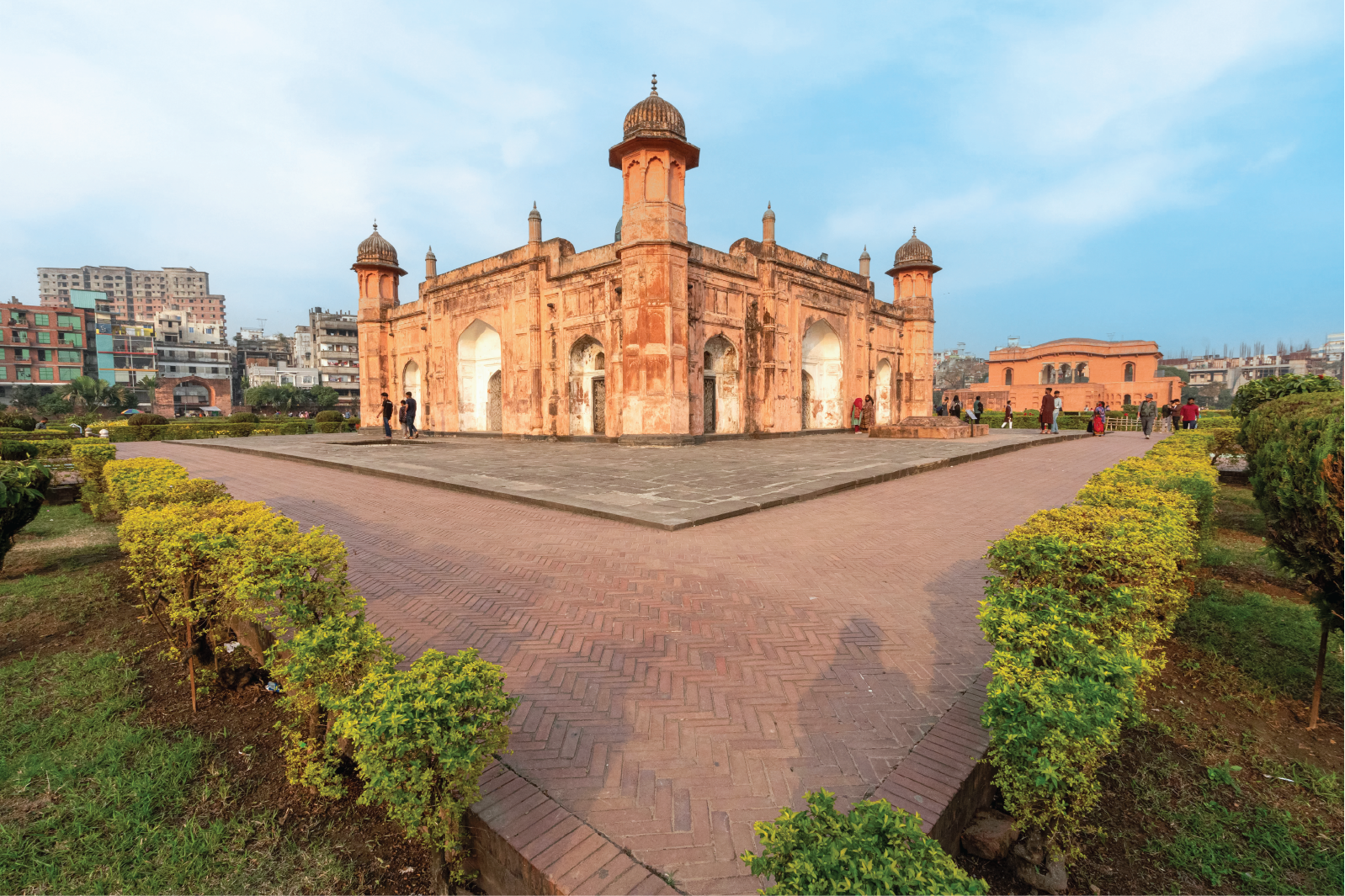
Lalbagh Kella is perhaps the most quintessential remnant of the Mughal era in Bangladesh. Also known as Lalbagh Fort or Fort Aurangabad, it is a majestic historical site located in the heart of the old town of Dhaka. Built during the 17th century, Lalbagh Fort is a testament to the grandeur of this region’s rich history. Commissioned by Prince Muhammad Azam, the third son of Emperor Aurangzeb, it is also one of the most renowned Mughal structures in the subcontinent. Although Prince Azam initiated its construction, it was left incomplete due primarily to untimely death of his beloved wife, Pari Bibi. Iran Dukht Rahmat Banu, more known as Pari Bibi, was the daughter of Shaista Khan and grandniece of Nur Jahan, the consort of the Mughal Emperor Jahangir. Prince Muhammad Azam’s dream of creating a magnificent fort was left incomplete due to his wife’s untimely death and his own departure to join his father’s military campaign. This poignant episode in the prince’s life is an integral part of the fort’s history. The incomplete status, frozen in time, grips the guests within an aura of wonder about what it might have looked like had it been finished. In 1678, Mughal Prince Muhammad Azam Shah embarked on the construction of Lalbagh Fort along the bank of Buriganga in the southwestern part of Dhaka city. At the time, he held the position of Subedar (Provincial Ruler) of Bengal. However, his tenure in Bengal was only 15 months. His father Emperor Aurangzeb called him to Delhi to suppress the Maratha rebellion. Despite this setback, significant progress had been made, including construction of a mosque and the Darbar Hall. In 1680, Shaista Khan assumed again the role of Subedar of Bengal and took up the mantle of completing the fort. Under his guidance, the construction resumed. However, tragedy struck when Shaista Khan’s daughter, Pari Bibi, passed away prematurely within the fort in 1684. Grief-stricken, Shaista Khan deemed the fort is inauspicious and halted further construction, leaving it forever incomplete and abandoned. Shaista Khan ruled Bengal in Mughal period for a total of 22 years, from 1664 to 1678 and from 1680 to 1688. He was the maternal uncle of Emperor Aurangzeb. During his reign Dhaka prospered greatly and the best period of Mughal rule passed. He built Chota Katara Mosque and Seven Dome Mosque near Lalbag fort. Chittagong victory is one of his notable achievements. He also defeated the British in the Anglo-Mughal war. The architecture of the fort reflects the distinctive style, characterised by its typical grandeur, symmetry, and meticulous attention to ornamented details. Built primarily with brick, it showcases the finesse of Mughal-era craftsmanship. The fort’s main gateway is a three-story structure that embodies the classic Mughal arch. The gateway features ornate floral motifs and Quranic inscriptions, a sublime fusion of Islamic art and architecture. With its symmetrical design and elegant arches, the southern gate of the fort is another splendid example of Mughal architecture. The fort is adorned with massive corner towers, each with a distinctive style. These towers served both decorative and defensive purposes, and they provided an excellent vantage point to appreciate the entire site and its surrounding landscape. Tomb of Pari Bibi: A Testament to Love and Tragedy The tomb of Pari Bibi stands as one of the three primary structures within Lalbagh Fort — a silent witness to love, loss, and architectural beauty. In 1684, tragedy struck when Pari Bibi, the beloved wife of Prince Muhammad Azam and daughter of Subedar Shaista Khan, passed away prematurely. Her final resting place became the under-constructed Lalbagh Fort, where a tomb was erected to honour her memory. As visitors enter through the main gate of Lalbagh Fort, Pari Bibi’s tomb immediately captures their attention. In fact, the iconic image associated with “Lalbagh Fort” is none other than the exquisite tomb of Pari Bibi herself. The tomb boasts a quadrangular design, crafted from pristine white marble adorned with delicately carved screens and intricate floral motifs. Inside, nine rooms reveal a symphony of materials: marble stones, rough stones, and glazed tiles adorned with colourful flowers and leaves. The central chamber houses Pari Bibi’s burial site, surrounded by eight additional rooms. Among them, the southeast room cradles another small tomb — the resting place of Pari Bibi’s daughter, Samsad Begum. The tomb’s roof, fashioned in the corbel style, features four octagonal minarets at the corners and a central octagonal dome. Once gilded, the dome now wears a covering of brass and copper sheets. The interior, too, gleams with white marble stones. This 20.2-square-meter tomb was constructed before 1688 AD, but fate had other plans. After Subedar Shaista Khan’s departure from Dhaka, the fort lost its significance, eventually falling into abandonment. The shift of Bengal’s capital to Murshidabad (West Bengal) further contributed to Lalbagh Fort’s decline. In 1844, following the end of the Mughal Empire, the area was renamed from “Aurangabad” to “Lalbagh” (Red Garden) Lalbagh Fort: A Fusion of History and Architecture The Lalbagh Fort, a captivating blend of heritage and design, encompasses three distinct structures: a mosque, the tomb of Pari Bibi, and the Dewan-e-Aam. Alongside these focal points, two grand arcades and a partially ruined fortified wall contribute to the fort’s allure. Recent archaeological excavations, led by the Bangladesh Directorate of Archaeology, have unveiled additional hidden treasures within the fort’s grounds. Among these discoveries was a sizable dome situated at the southwestern corner of the southern fort wall. To the north of this wall stood various edifices — buildings, stables, and administrative structures. On the western side, a picturesque terraced garden adorned with reservoirs and fountains graced the landscape. Residential quarters occupied the space between the western and eastern sections of the fort, primarily clustered southwest of the mosque. The southern fort wall boasted five towers, each rising two stories high at regular intervals. Meanwhile, the western fort wall featured two towers, with the largest guarding the southern main entrance. Beneath one of these towers lay an underground tunnel that traversed


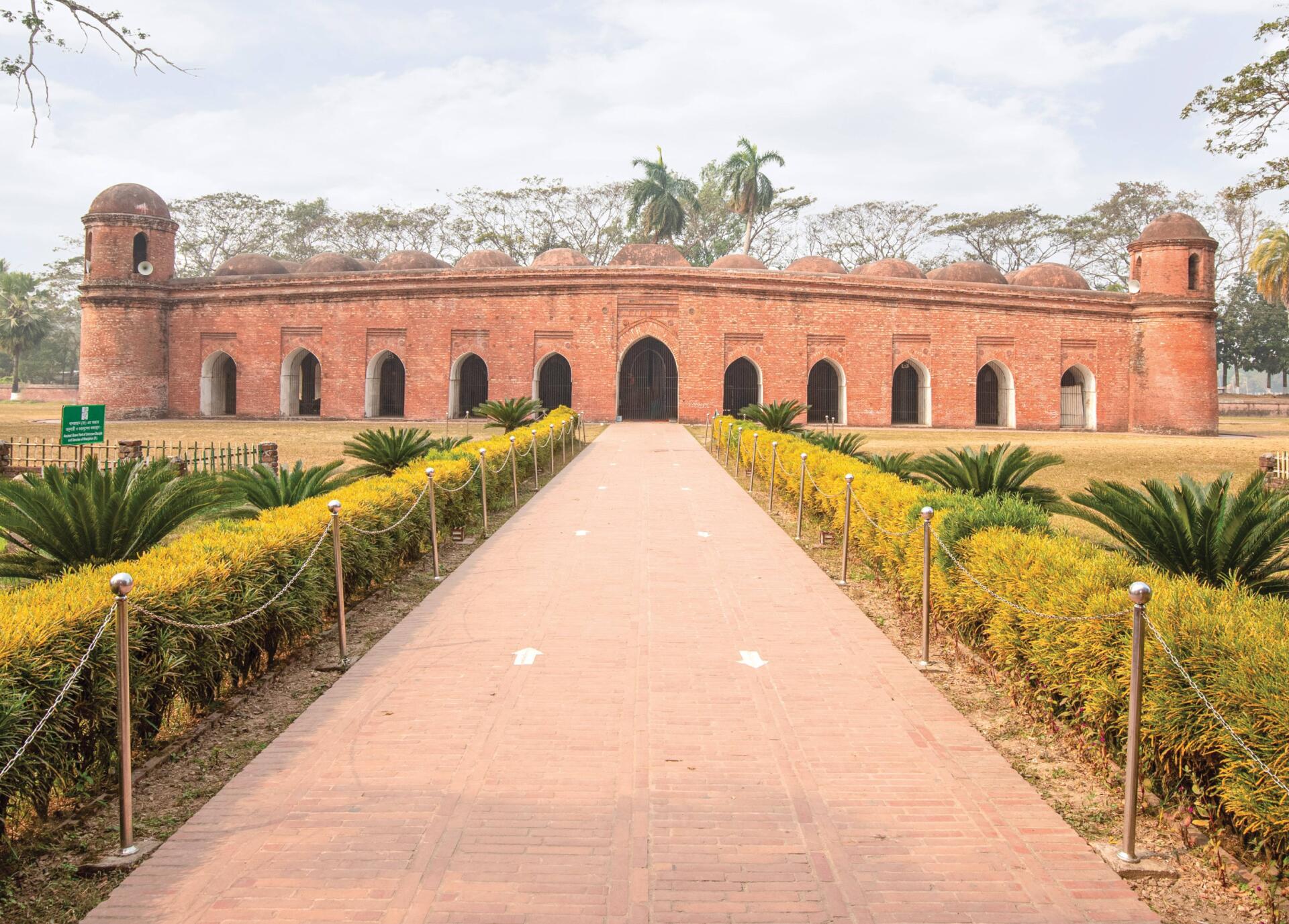

 The Shat Gambuj Mosque is located five kilometers from the main town of Bagerhat. It is situated by the eastern bank of the Ghoradighi which has increased the beauty of the Mosque remarkably. The amazing construction work of the mosque started in 1442. It ended in 1459 and is a proven example of glorious history and beauty declared by UNESCO as a world heritage site in 1985. In the mosque, Muslims offer prayers (Namaz) five times a day and Eid prayers also take place here. Every Friday at noon, more than 5,000 people pray Jumma prayers here and visit the Shat Gambuj Mosque and explore the beauty of historical evidence since long-gone centuries. The building of Shat Gambuj Mosque began in the middle of 15th century with establishment of a Muslim colony near the mangrove forest, the Sundarban, another UNESCO heritage site in Bangladesh. The colony was founded by a revered general named Khan Al-Azam Ulugh Khan Jahan. He was also a great and famous Muslim saint and the local ruler of Khalifabad (present Bagerhat). Khan Al-Azam Ulugh Khan Jahan conquered the greater part of southern Bengal and the prosperous area was named Khalifabad in honour of the reigning Sultan Nasiruddin Mahmud Shah (1435-59). Khan Jahan ruled the region with the seat of administration at Haveli-Khalifatabad, identified with present Bagerhat, till his death in 1459.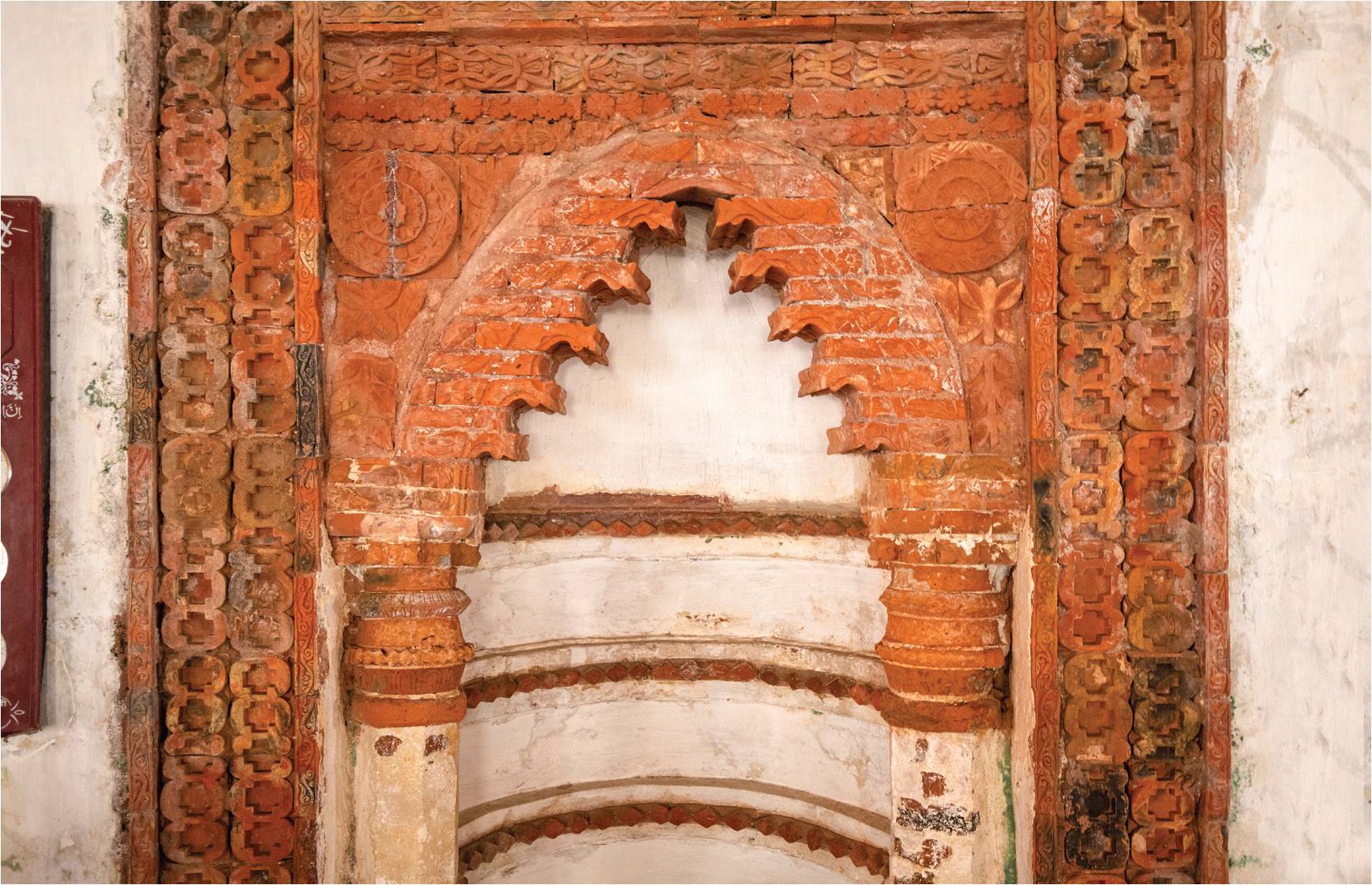
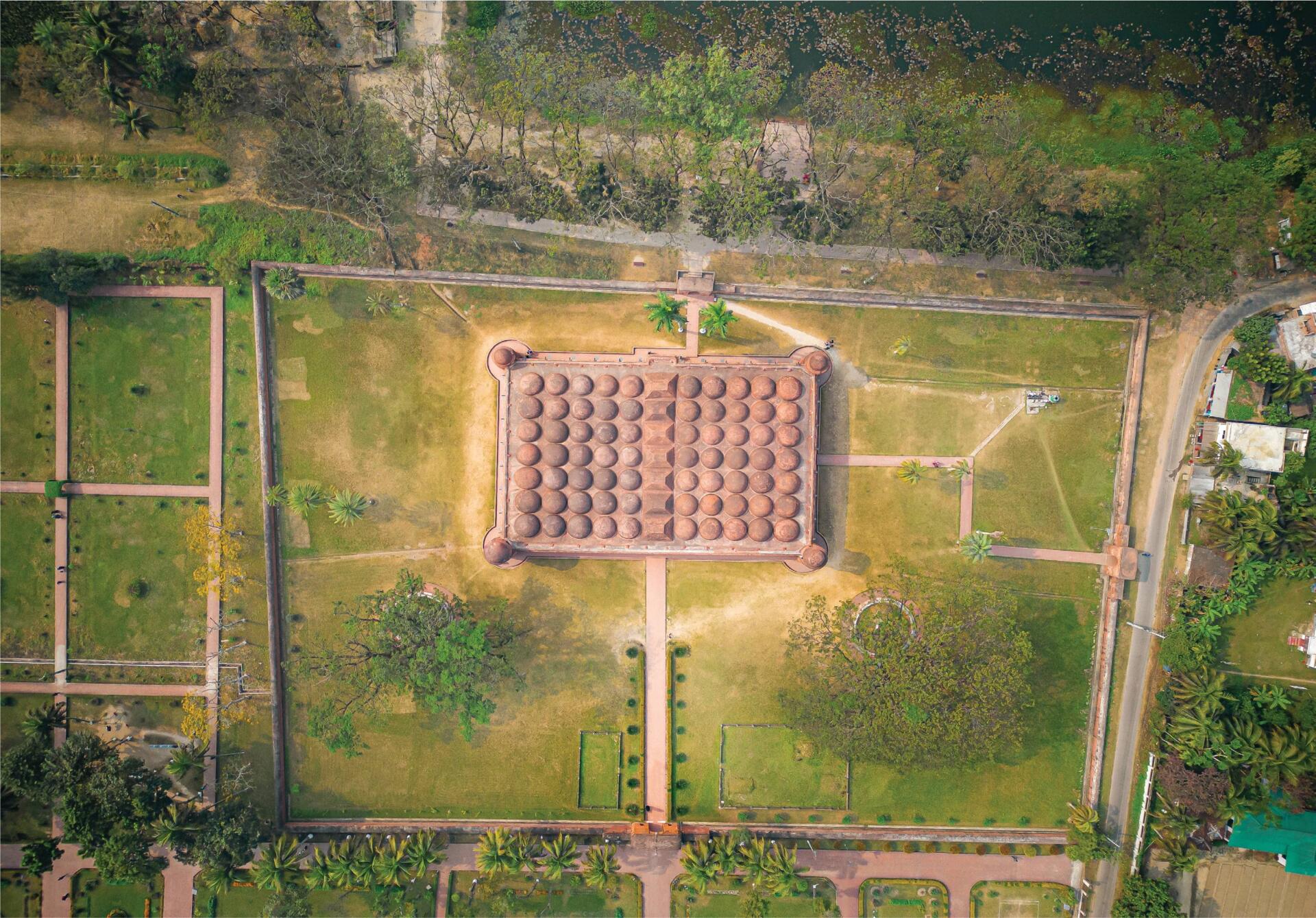
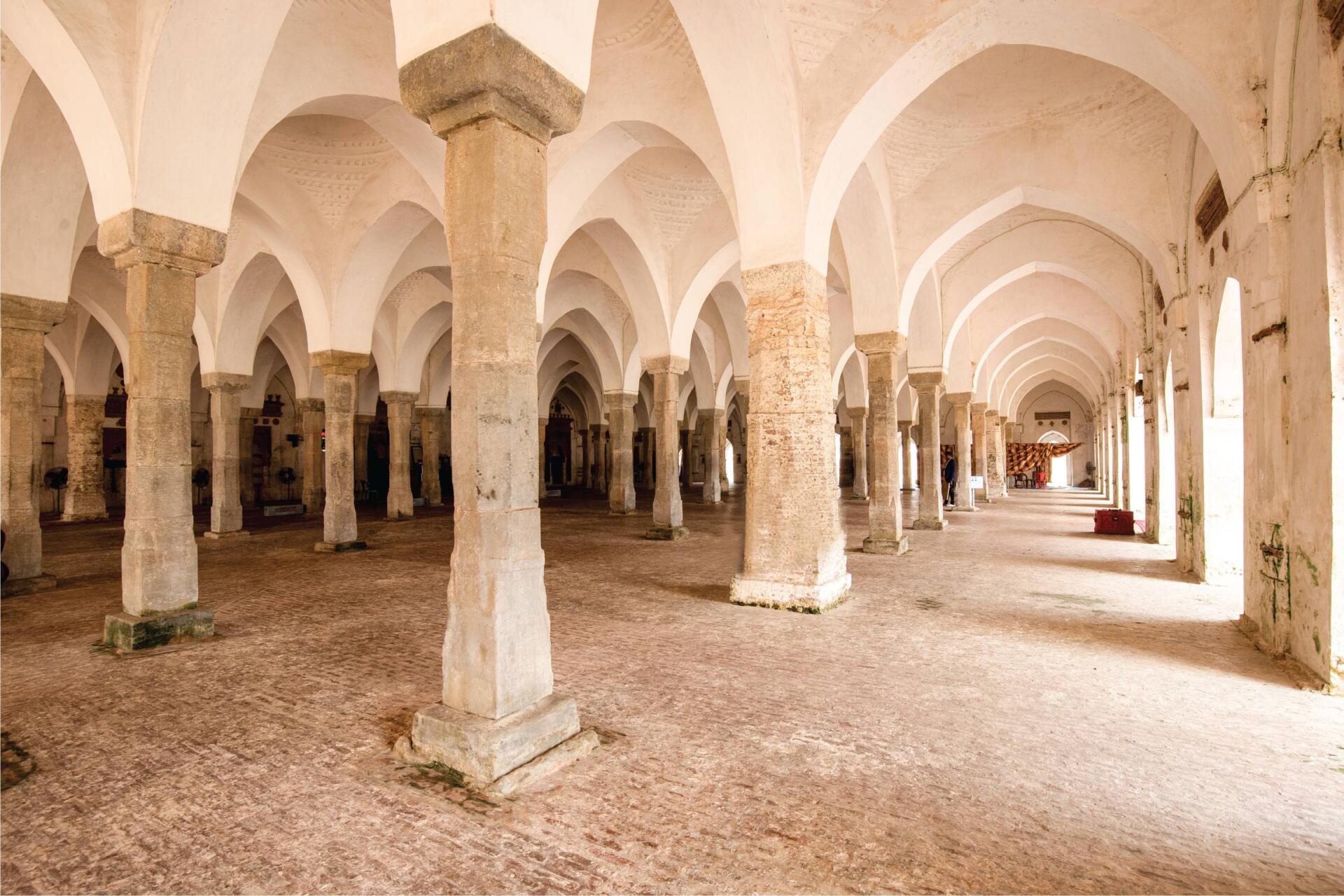
 The Mosque is also known as the Sultanate Mosque, which was used for ruling the area and a court at that time. The mosque was not used only for prayers, but also as a madrasha and a parliament assembly hall. Though the Shat Gambuj Mosque refers to a mosque with 60 domes or Roof Gambuj. However, it actually has 77 squat (low) domes, arranged in seven rows of eleven, and two-storied four high domes or tower on four corners, bringing the total to 81 domes. Two of these four high domes or towers were used for Azan or the call for prayers. On the east side of the mosque, there are 11 arched doorways, while the north and south each have seven doors. These arched doorways also providing ventilation and light in the hall. The interior is divided into seven longitudinal aisles and 11 deep bays by 60 slender stone columns, which culminate in numerous arches that support the roof. The vast prayer hall of the Mosque has walls of unusually thick, tapered brick in the Tughlaq architecture style of Delhi and a hut-shaped roofline that anticipates later styles.
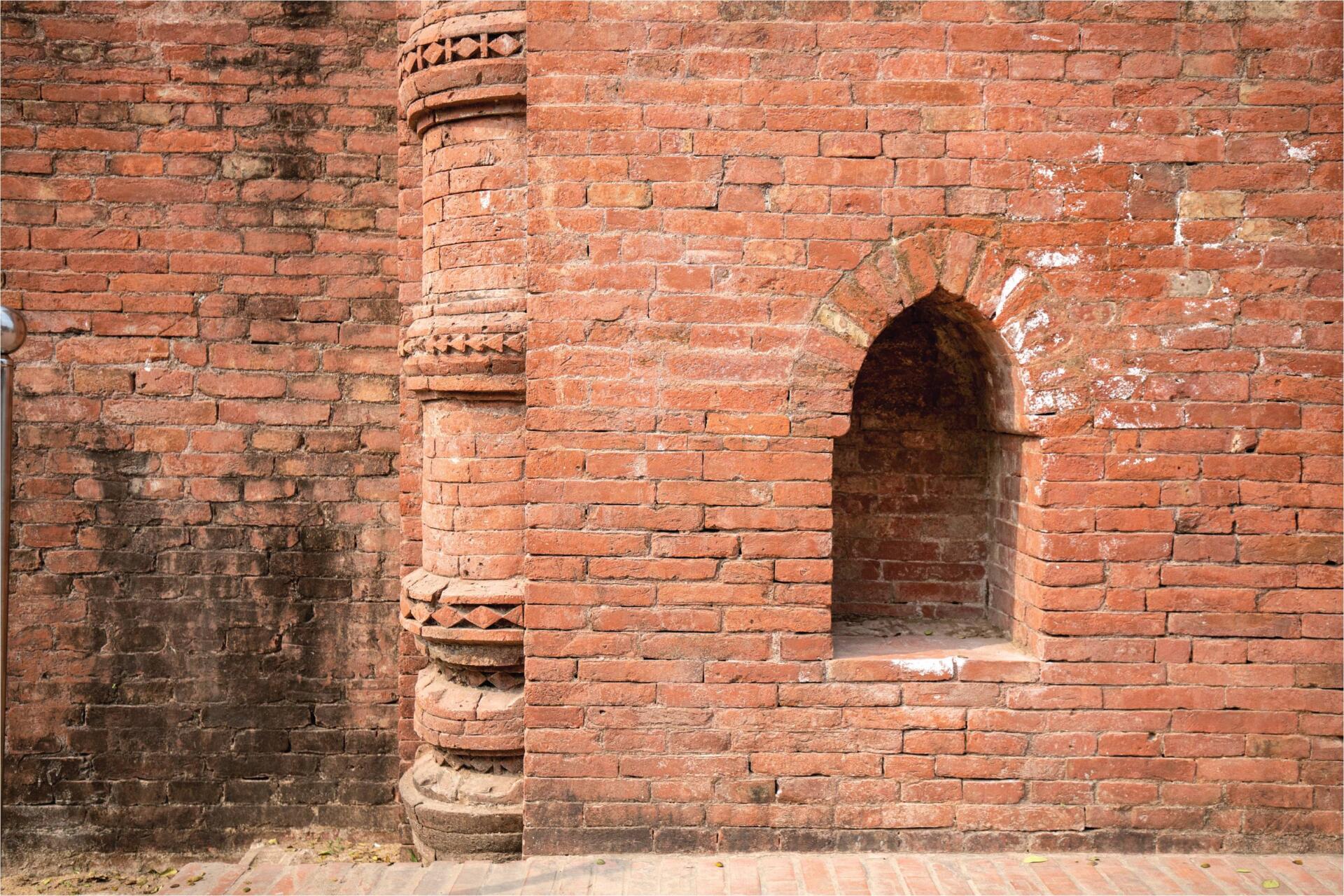
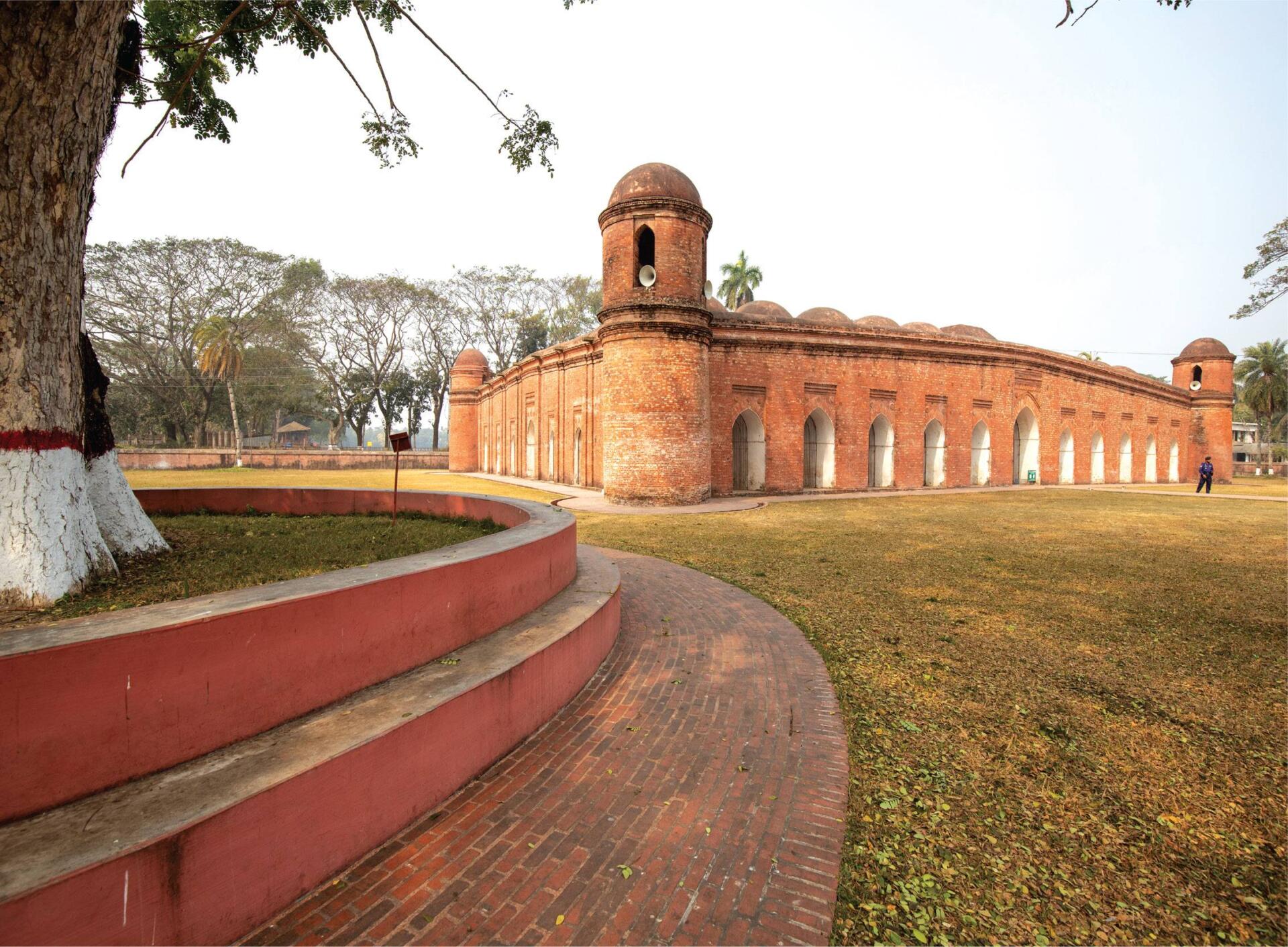 The inside space of the mosque is 48m x 33m (160 feet x 108 feet = 17,280 sq feet), and the wall of the mosque is almost six feet (1.8m) thick. To enhance the mosque’s attractiveness and give it an exceptional appearance, the entire structure is constructed of red burned mud or bricks. The Turkey style of architecture was followed using tempered brick in the mosque. The detailing of the mosque is prepared with terracotta decoration. So anyone can notice the exquisite detailing around the doors with beautiful design. Inside the mosque, the walls are crafted based on the former Muslim cultural tradition. The atmosphere inside the mosque is cool and comforting for the unusual thickness of the wall. Inside the mosque, among the ten “Mihrabs” the central one was built of stone and a special doorway had been built in “Qibla”. The central mihrab, which corresponds to the central nave, is bigger than its flanking counterparts and shows a rectangular projection on the outer side, carried up to roof level. These mihrabs are also decorated with stonework (grey sandstone) and terracotta and the floor of the mosque is made of brick. Its ornamentation is in the Muslim style of carving in shallow and low relief.
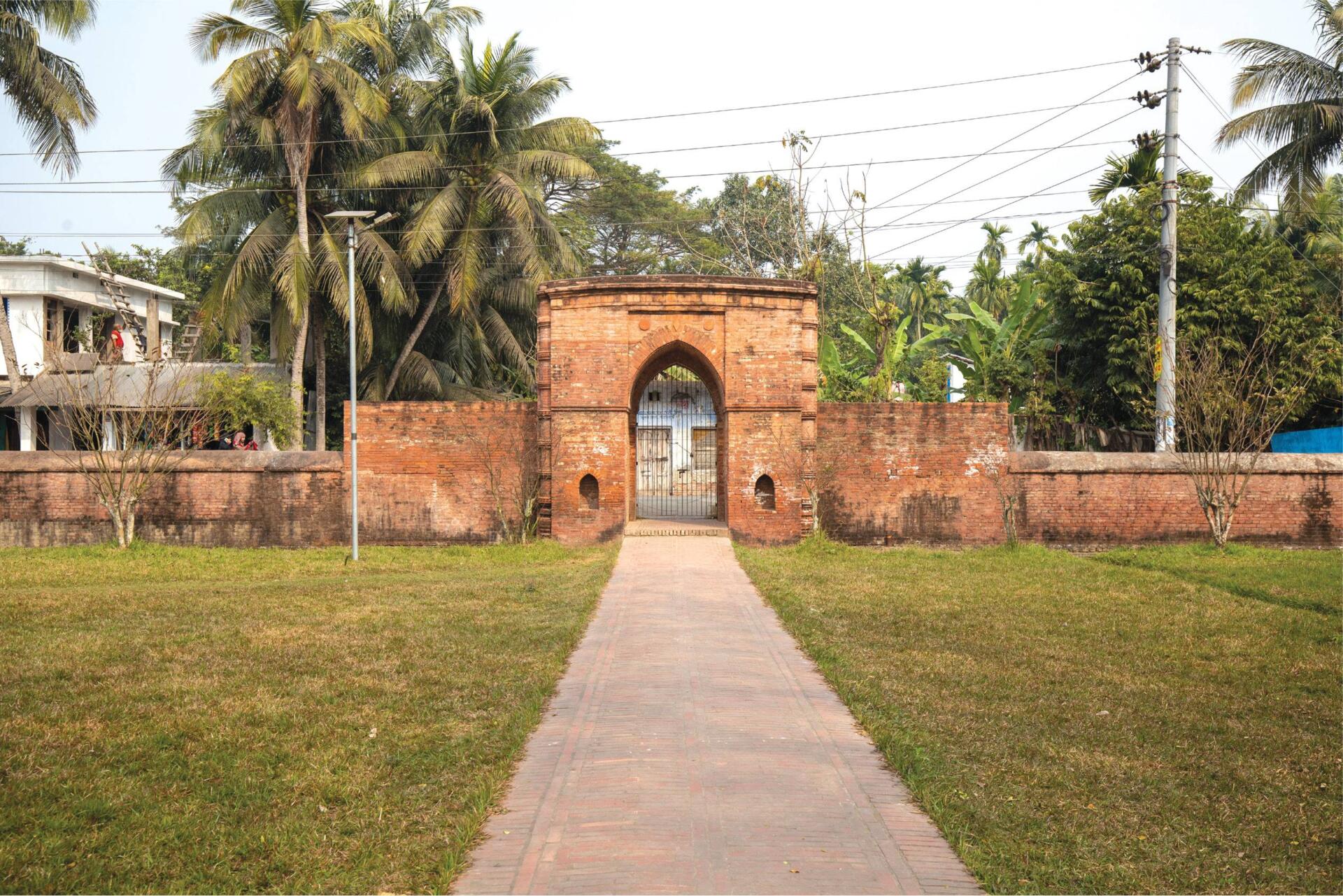 The mosque yard is surrounded by an old, ornamented boundary wall. The enclosed compound was originally entered through two gateways – one in the east, now restored and repaired, and the other in the north, no longer extant. The eastern gateway, facing cardinally the central archway of the mosque proper, appears to be a monument by itself. It measures 7.92m by 2.44m and consists of an archway having a span of about 2.44m with a beautiful curvature on top.