Brishtite Roder Kona’ reminisces Kazi Abdul Baset
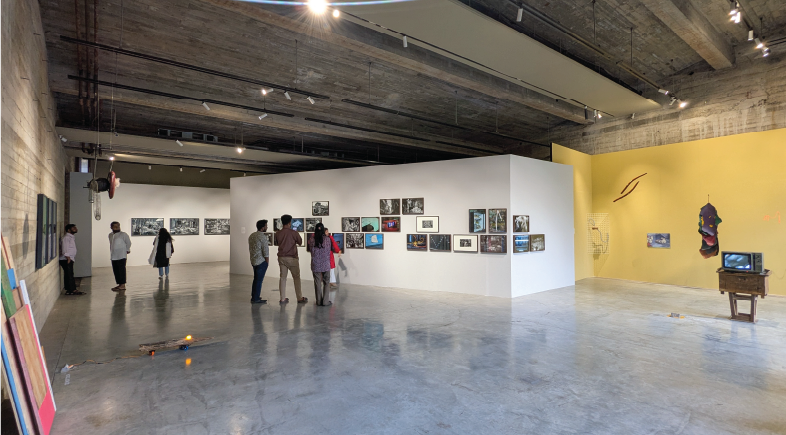
The ongoing exhibition titled ‘Brishtite Roder Kona’ at Bengal Shilpalay lets new audiences be introduced to the works of one of the finest artists from Bangladesh, Kazi Abdul Baset. In an age when electricity has reached even the most remote corners of Bangladesh and air conditioning is ubiquitous, the image of a woman cooling herself with a traditional handheld fan may appear to be a relic of the past. However, this simple act of seeking relief from the heat was immortalised in the works of Baset. While his works are rarely exhibited these days, the exhibition at Bengal Gallery in Dhanmondi has provided a unique opportunity to view a comprehensive collection of his work. The exhibition features 72 pieces in a variety of mediums, including acrylic, pastel, charcoal, watercolour, and ink drawings. The artworks are all from private collections and have been generously shared to introduce Baset’s genius to a new generation. Kazi Abdul Baset’s legacy is enormous but unappreciated. Baset, a humble and introverted guy, was recognised for his plain pyjama and grey panjabi outfit, as well as his rigorous guidance of his students. He received a Fulbright scholarship and studied in Chicago from 1963 to 1964. Baset’s work has a unique blend of figurative and abstract styles. Despite his modernist approach, Baset’s themes frequently revolved around the simplicity and beauty of rural life, capturing its essence with profound depth. His depictions of rural women and domestic life added a new dimension to modern Bangladeshi art, specially his paintings of woman with a fan becoming almost a trademark of his artistic identity. Baset had a close relationship with fellow artist Mohammad Kibria, another shining light in Bangladesh’s art history, and analogies between their works were frequently made. Their mutual influence and inspiration resulted in considerable artistic synergy, which shaped Bangladesh’s art scene in the 1960’s. Baset began his career as an art teacher at Nawabpur High School, where other notable figures such as Mohammad Kibria and Murtaza Bashir taught. Baset’s artistic development—from his early realistic images of rural life to his later experimentation with abstraction and return to realism—reflects a dynamic and diversified artistic journey. This show at Bengal Gallery is a fitting tribute to the brilliance of Kazi Abdul Baset, providing spectators with a unique opportunity to immerse themselves in the works of a master who caught the soul of Bangladesh with unsurpassed sensitivity. Presented by Bengal Arts Programme, the exhibition walls adorns the works of Baset which he produced between the 1960’s and 1990’s. All the works being showcased are collected from the personal collections of Abul Khair, Abul Hasnat-Nasimun Ara Haque, Matiur Rahman and Luva Nahid Choudhury. Open for all, the exhibition commenced on 8 November 2024 and will run till 11 January 2025. Written by Shahbaz Nahian
‘Solastalgia’: Fragments of a fading horizon
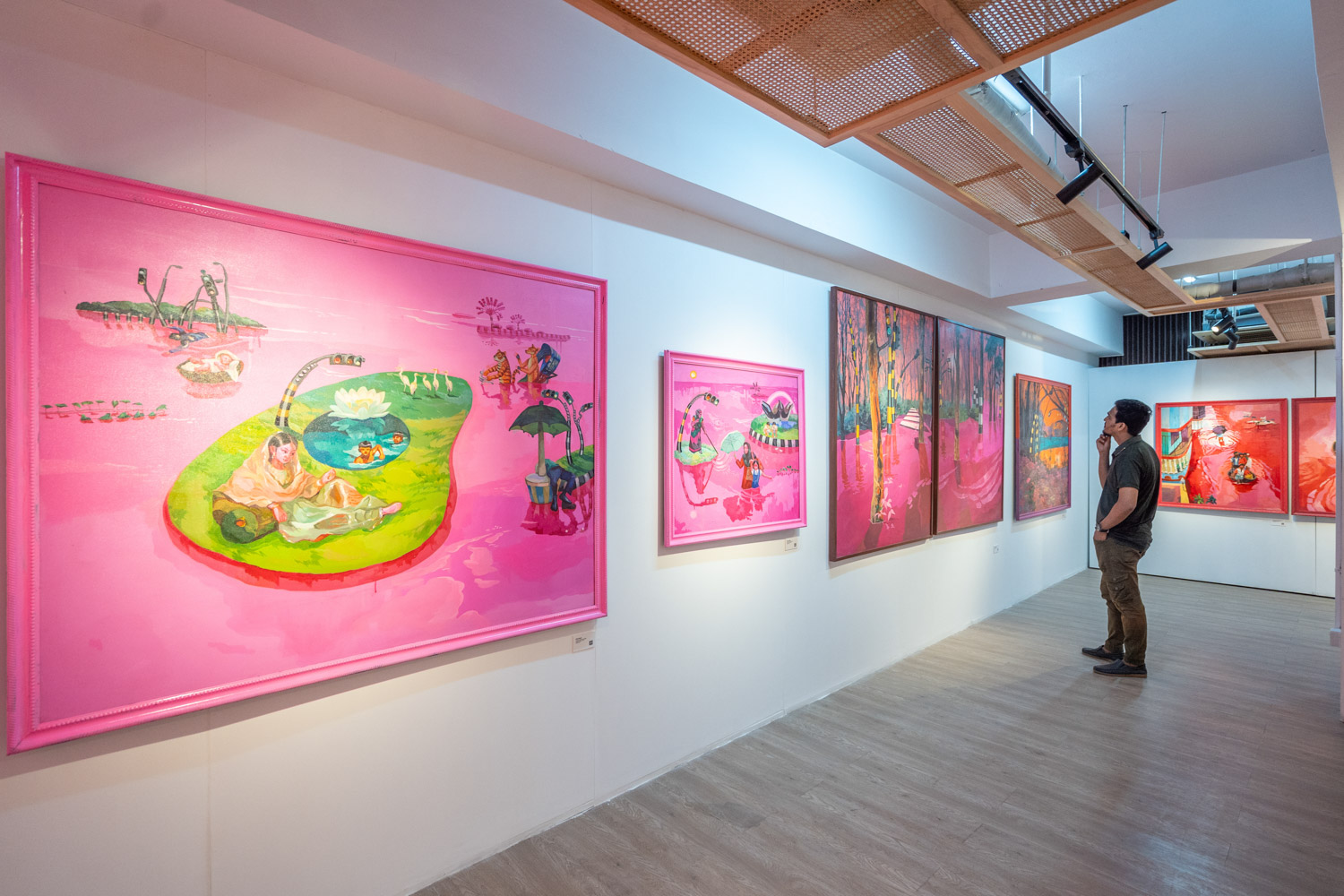
From October 19 to November 16, Platforms will host Auntora Mehrukh Azad’s solo exhibition “Solastalgia: Fragments of a Fading Horizon,” at its gallery in Pragati Sarani, Baridhara, Dhaka from 11am to 8pm daily. Her work is inspired by the universal and personal feelings of environmental change, with a particular focus on Bangladesh’s rivers and landscapes. Azad’s art explores the impact of environmental loss, displacement and transformation in rural and urban landscapes from the Sundarbans to Dhaka. All the art enthusiasts, collectors, and connoisseurs are invited to explore Azad’s evocative works.
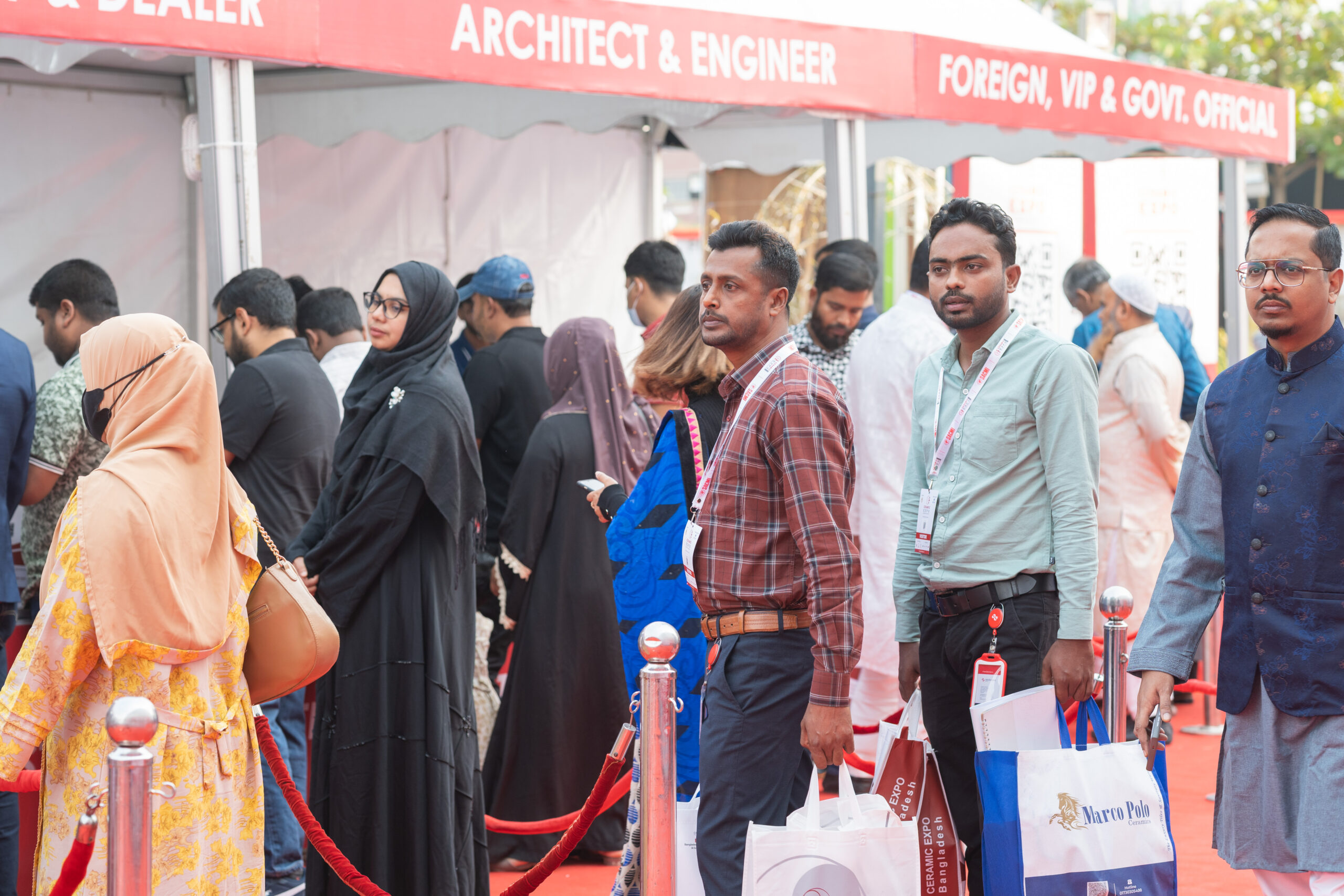
The Ceramic Expo bustling with a large number of people on the 2nd day
Dhaka (28 November 2025): The BCMEA Ceramic Expo Bangladesh 2025 has gathered in the capital. On the second day of this four-day vibrant event, the International Convention City Bashundhara was bustling with local and foreign visitors, exhibitors, businessmen, engineers, architects, and representatives from various companies. The arriving businessmen held meetings with B2B, B2C, and representatives from different companies. In the various pavilions and stalls, they demonstrated their products and ensured spot orders. Senior officials of various companies stated that due to the holiday, there was a noticeable crowd of visitors from the morning, and many placed orders for products. Artist Shahin Mahmud Reza, participating in the fair for the first time, expressed satisfaction with the organization of the fair. As every year, dealer Md. Rahim Uddin has come to the expo from Chittagong. He mentioned that he has seen many new designs at this year’s expo. Following this, a seminar was held in a very large hall where relevant stakeholders participated. Mohammad Khaled Hasan, Deputy General Manager of Sheltech Ceramics Limited, the titled sponsor of the expo, mentioned that the ceramic industry of Bangladesh is a glorious sector. Earlier, we used to import ceramic products at about 80 percent, but nowadays approximately 15 to 20 percent we import; we export it and gradually extend its market. One of the visiting engineers stated that this sector has achieved an average growth of over 20 percent, setting records. Despite the gas crisis, the uninterrupted supply of electricity, and various domestic and international crises, this industry remains an emerging sector. Unlike the ready-made garment, jute, and textile sectors, which receive policy support, this sector has reached a respectable position solely due to the courageous initiatives of entrepreneurs. One could say that the ceramic industry has brought about a silent revolution in the last 10 years. Through rapid expansion in the local market, stable presence in foreign markets, and massive job creation, this industry has demonstrated that with industry-friendly policies, uninterrupted gas supply, and proper branding, it will be capable of exporting billions of dollars in the future solely in Asia. Today, there are about 65–70 ceramic factories and brands in the country producing various products including tableware, tiles, sanitary ware, and electric insulators. As a result, instead of being import-dependent like before, Bangladesh now fulfils a large part of its own demand and sends excess production to the global market; this is not a small change but rather a picture of slow yet steady success in industrial policy. The domestic market for Bangladeshi ceramic products is currently considered to be worth around 70 to 90 billion BDT, with annual growth hovering around 20 percent for a long time. Once where 80 percent of the market was occupied by foreign brands, today local companies meet nearly 85 percent of market demand; in tableware, local participation exceeds 90 percent. Some visitors stated rapid urbanisation, development in the housing sector, rising incomes of the middle class, and changes in lifestyle perspectives have contributed to this achievement. The use of tiles and sanitary products in new flats, shopping malls, hotels, and restaurants is now not just a necessity but also a symbol of prestige and taste. In this way, the ceramic industry has become directly linked to the dreams of the urban middle class, as if the contribution of this industry is silently signing on the walls and floors of every new flat. Although the export earnings of the ceramic industry are still seen by many as ‘less compared to the size of investment’, in reality, it has passed an important initial phase. In the fiscal year 2022–23, the export earnings from ceramic products reached around 43–55 million USD (equivalent to 600–650 crore BDT), which is the highest in four years. The export growth in this sector from 2021–22 to 2022–23 was over 21 percent, although in the fiscal year 2023–24, it has slightly decreased by nearly two percent. Tableware occupies the largest share in the export basket; recently, tiles have also been added. Bangladeshi ceramic products now go to over 50 countries; United States, Canada, Germany, France, Italy, Japan, and various countries in the Middle East are major destinations. In such a reality, despite slight fluctuations, it is clear that Bangladesh is establishing itself as a reliable source of ‘low-cost but quality’ ceramic products in the global market. This expo carries a very high potential for the Bangladeshi ceramic industry and also plays a vital role in the economy. Written by: Mizanur Rahman Jewel