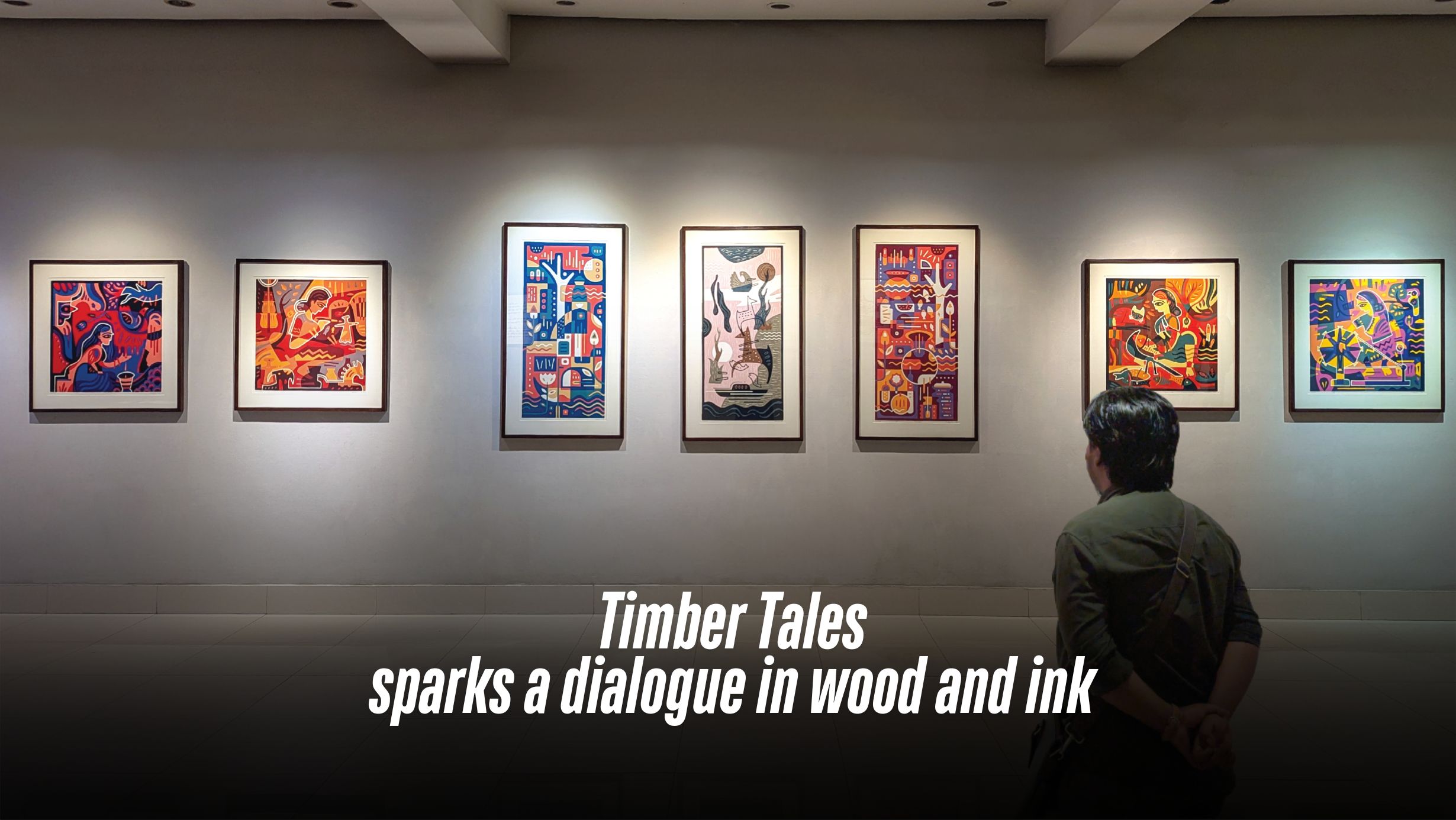
Timber Tales sparks a dialogue in wood and ink
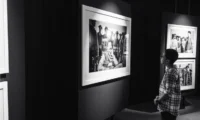
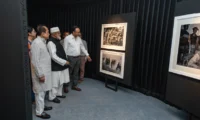
The ongoing exhibition titled Timber Tales at La Galerie, Alliance Française de Dhaka invites audiences to experience the collaborative journey of three emerging artists who explore memory, process, and material through the art of woodcut printmaking. Within the exhibition, a faint, earthy scent of wood and ink hangs in the air. Walking into the gallery, some might find themselves pausing longer than expected, tracing the grain of the wood as if searching for their own stories between the lines. The exhibition features three artists—Rakib Alam Shanto, Shakil Mridha, and Abu Al Naeem—who express individuality through their woodcut prints. This contemplative exhibition is running from June 17 to June 25, 2025. Curated by the artists themselves, the exhibition reimagines the possibilities of woodcuts as a medium. Here, the tactile intimacy of carved timber meets the visual language of reflection, nostalgia, and search. As you wander through the space, individual voices emerge. Shakil Mridha’s work, with its minimalistic yet profound geometric forms, feels like a contemporary ode to Bangladeshi folk art, skillfully abstracting familiar motifs. Rakib Alam Shanto’s large-scale black-and-white pieces command attention, a powerful revival of a tradition, showcasing his remarkable focus. Abu Al Naeem’s pieces, often abstract, subtly reveal hidden figures, reflecting his continuous exploration of materials and techniques. Each artist, in their unique way, elevates woodcut beyond mere reproduction, transforming it into a medium of profound personal expression. And through that expression, each of their work reflects the heart of the creative process, where stories are carved into existence. At the heart of Timber Tales is a tribute to beginnings, to the mentor who shaped them, and to the space where it all began. Their acknowledgement of Professor Md. Anisuzzaman, whose generous guidance helped steer their vision, reveals the deeply collaborative ethos of the show. “This is where it all began—for the three of us,” reads a line from the exhibition note, underscoring the intimate bond between craft, community, and coming-of-age. In an era of digital immediacy, there’s something revolutionary about the deliberate slowness of woodcuts. And the three artists have breathed new life into the ancient art of woodcut. More than just a technique, it’s a dialogue between human touch and natural materials. Each frame holds a deeper narrative of tireless dedication—the careful selection of wood, the precise cuts, the methodical inking, and the final, expectant press. Open to all and continuing until 25 June 2025, Timber Tales will leave visitors with more than just images on paper. In a city rushing to reinvent itself, the exhibition feels like a pause, a reminder of our roots with a sense of belonging—to the artists, to the materials, and to the timeless, meditative act of making. Written by Samira Ahsan
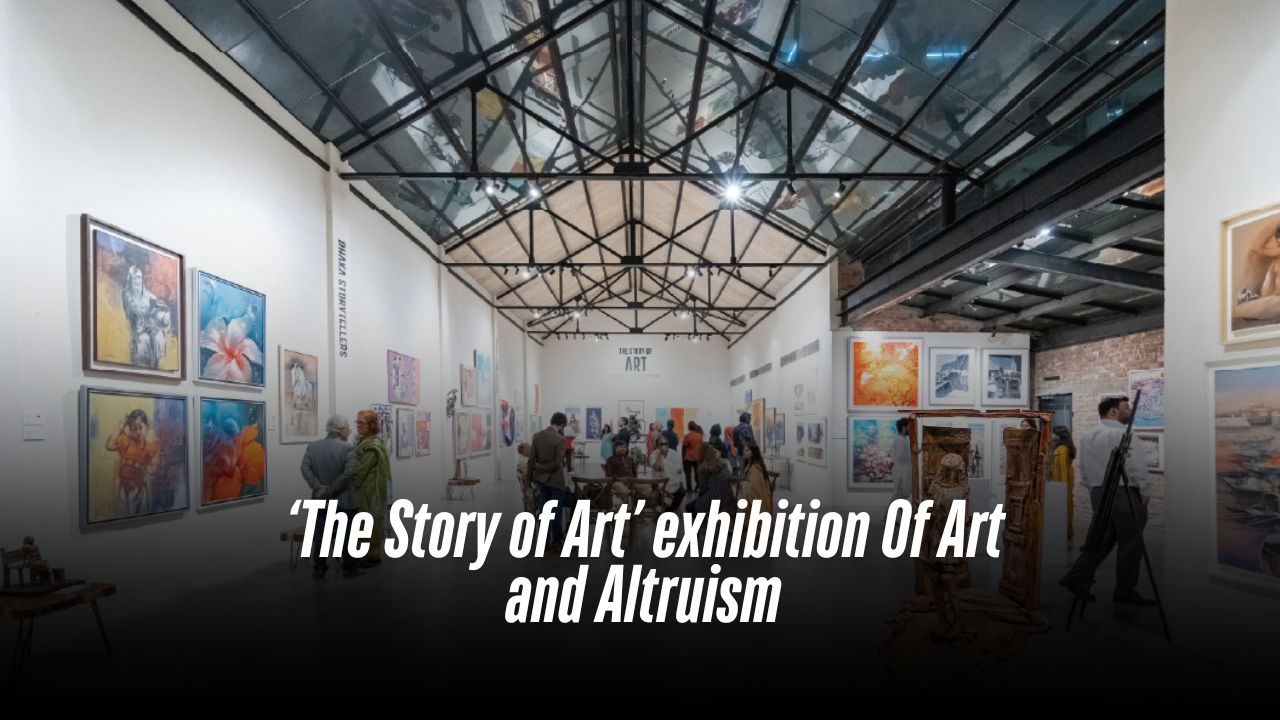
‘The Story of Art’ exhibition Of Art and Altruism
Organized by Dhaka Storytellers from February 8 to February 13, the lush gallery space Aloki Greenhouse in the capital’s Gulshan hosted an exhibition titled The Story of Art. The exhibition boasted a stunning collection of 80 to 90 artworks, captivating audiences for a week. Curated by Syeda Adiba Hussain, co-founder of Dhaka Storytellers, The Story of Art was more than just a display of artistic excellence. This was Dhaka Storytellers’ second art event, following the charity exhibition Art for Charity in August 2024. In the same vein, The Story of Art supported a larger cause, with a portion of the proceeds donated to five schools and one college in Sylhet, demonstrating the power of art to create tangible change beyond gallery walls. Beyond the beauty of its displays, the exhibition underscored the immense power of art to inspire and drive change. By merging artistic excellence with humanitarian efforts, it aimed to uplift communities, empower individuals, and support crucial social causes. Having been in the making for almost a year, the exhibition was carefully planned to bring together some of Bangladesh’s most celebrated artists. The lineup included some of the country’s most notable names, such as Rafiqun Nabi, Monirul Islam, Hamiduzzaman Khan, and Kanak Chanpa Chakma. Furthermore, the exhibition commendably featured artworks by several emerging artists, creating a dynamic collection that bridged generations of artistic expression. From simply beautiful paintings to thought-provoking sculptures, The Story of Art was also an opportunity for both seasoned and budding collectors to acquire unique pieces while contributing to a noble cause. The grand opening on Friday, February 7, set the tone for the week-long exhibition. The launch was attended by an invitation-only audience, including the participating artists, their families, media professionals, and notable guests. As the exhibition drew to a close, it left behind more than just a collection of breathtaking visuals; it also left an indelible impression on those who visited. The fusion of artistic expression with social commitment deeply moved attendees, inspiring them to consider the vast potential of art beyond aesthetics. The exhibition carried a narrative that extended far beyond the gallery walls, reinforcing the idea that art is not merely to be observed but to be experienced, felt, and acted upon. The event was about more than just admiring artworks—it was about creating a shared vision where artists, curators, and spectators all committed to a cause bigger than themselves. It demonstrated that art has the ability to transcend traditional boundaries, reaching into the hearts of individuals and communities, sparking conversations, and inspiring action. Ultimately, The Story of Art was a celebration of creativity’s ability to inspire, connect, and transform lives. The week-long show was a powerful testament to the transformative synergy between art and altruism. It showcased how art exhibitions, when intertwined with a greater purpose, can spark meaningful change. Written by Shahbaz Nahian

Body and the Map: Of wounds and Hope
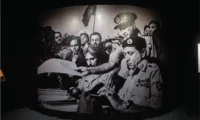
Beautifully curated by Sharmillie Rahman, the exhibition “Body and the Map” took place on Bengal Shilpalay between 15 and 28 December, 2024. By engaging viewers to contemplate the interaction of power, identity, and transition, “Body and the Map” was more than just another decent exhibition that had the July-August uprising as its subject matter; the exhibition not only acted as a stark reminder about what must not be forgotten but also intrigued the audiences to introspect. Consisting of the artworks of ten multidisciplinary artists, many of whom were active participants in the mass uprising that overthrew a long-standing regime, “Body and the Map” was a riveting look at societal upheaval in the aftermath of that student-led mass rebellion. The show, based on the collective memory of Bangladesh’s last July-August, is both a reflection and a debate about the force of resistance, the weight of trauma, and the possibility of change. Their work delves into the complicated reality of a country dealing with its old and fresh scars and the tiers of collective psychological state of the mass after the newfound independence. The participating artists were A. Asan, Afsana Sharmin, Ashang Mong, Farzana Ahmed, Mong Mong Shay, Niazuddin Ahmmed, Palash Bhattacharjee, Rasel Rana, Razib Datta, and Ripon Saha. The July-August uprising was characterised by an unprecedented feeling of urgency, as residents defied persecution to demand justice, equality, and dignity. However, the road to liberation came at a high cost, with bodies mutilated, lives lost, and a collective psyche permanently transformed. The show explores this dichotomy, emphasising the body as both a personal and societal vessel for history, pain, and resilience. The artworks that were adorned by the gallery space delve deeply into the concept of the body as a source of memory and resistance. Whether through physical depictions or abstract interpretations, the ten artists highlighted how the human body bears the weight of institutional injustice and governmental violence. The visual narratives starkly remind us about biopolitical disposability, demonstrating how individuals became victims of normalised violence during the authoritarian system. The relationship between body and land appears as a repeating pattern, emphasising identities defined by culture, religion, race, and gender, all of which intersect within a nation’s sovereign borders. However, these links are loaded with tension, since the scars of authoritarian authority and systematic impunity are etched on both the body and map. In the aftermath of this historic movement, “Body and the Map” illustrated the dialectics of trauma and renewal, hopelessness and optimism. The exhibition stressed the importance of open discourse and the reframing of identity and government as centralised power disintegrates and something new emerges. Despite recollections of terror, violence, and loss, the artworks elicit a cautious hope. The collective body politic, though scarred, remains resilient, signalling a determination to redefine itself and the map it inhabits. Written by Shahbaz Nahian