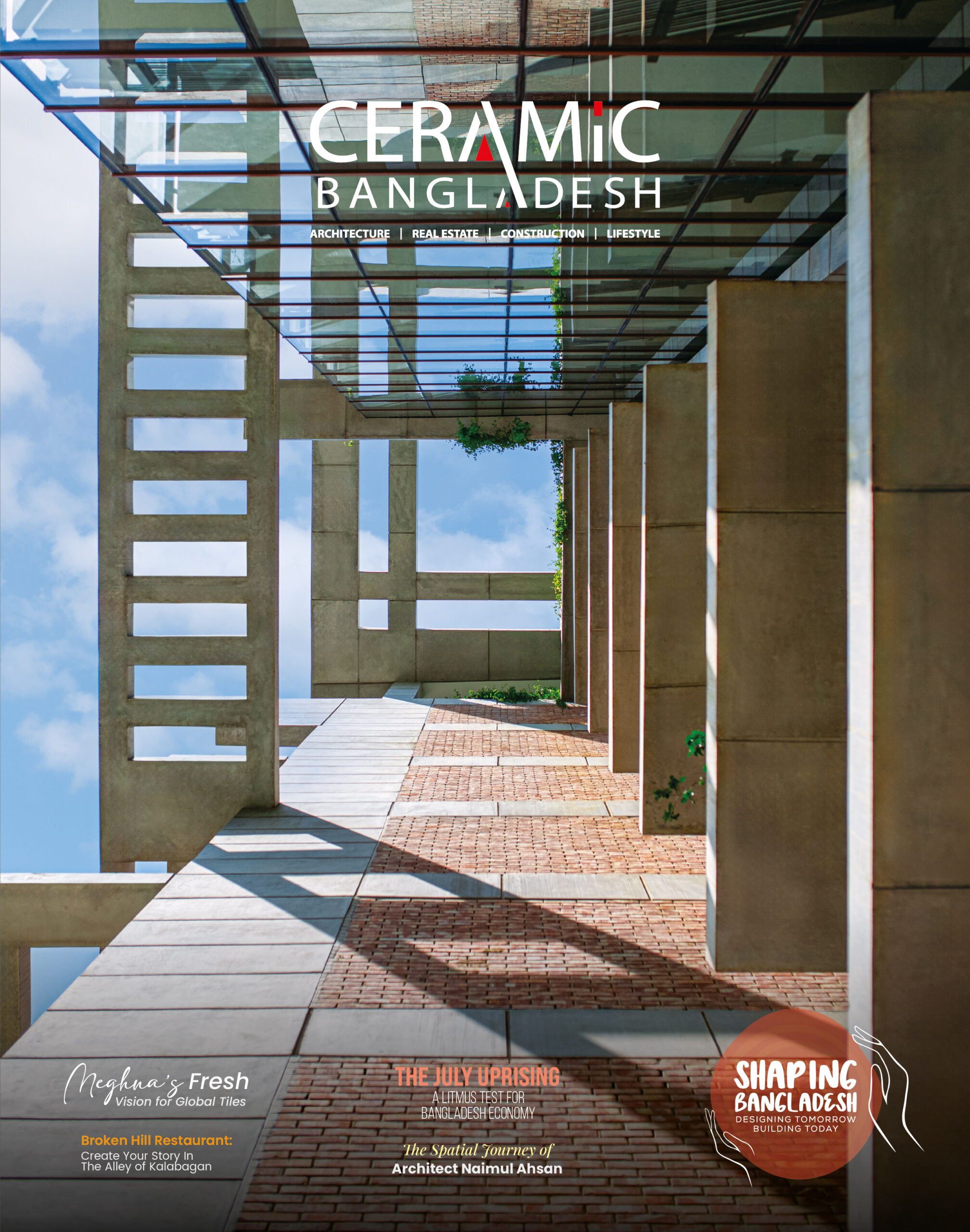
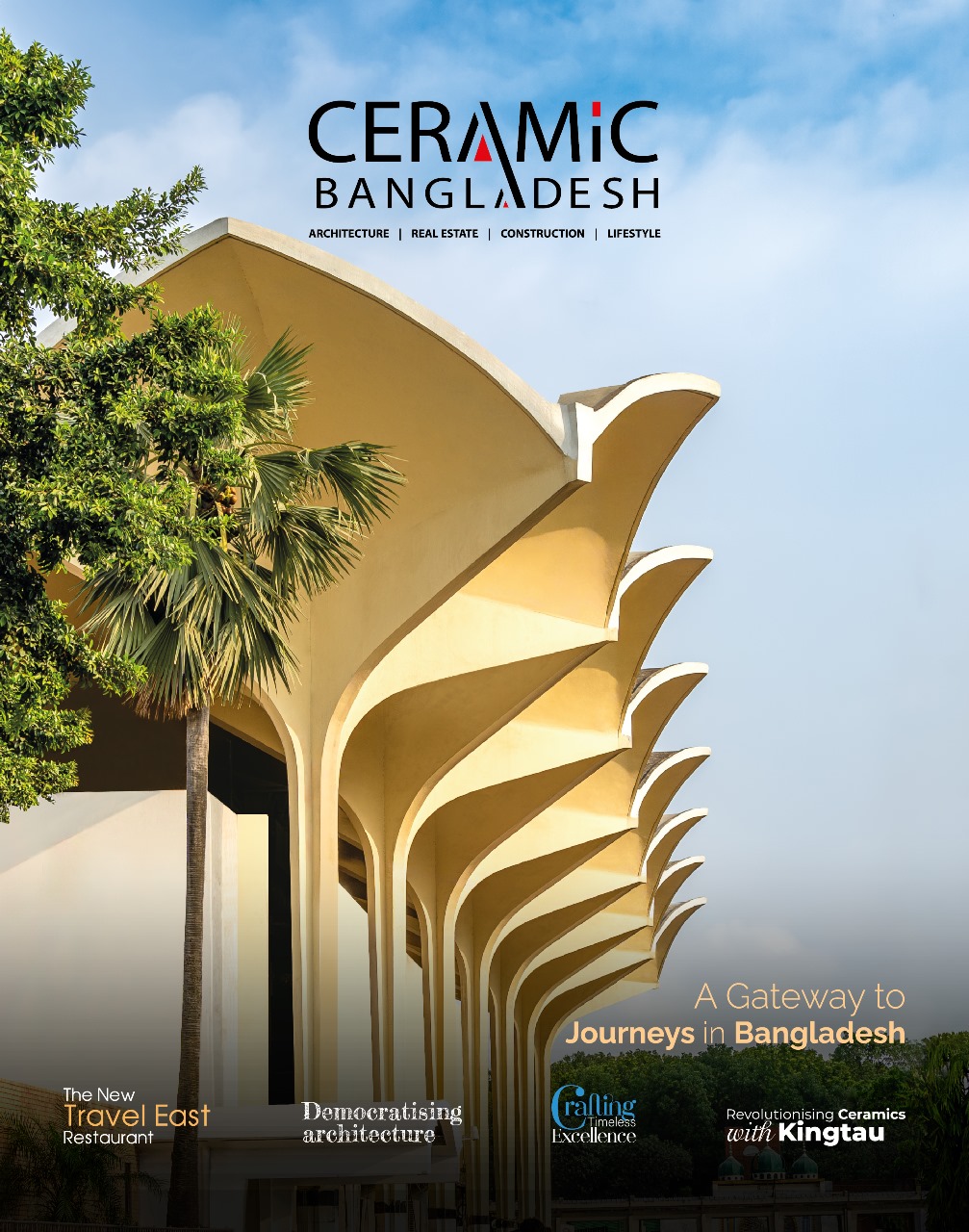
Ceramic Bangladesh Magazine

Welcome to the World of Ceramics

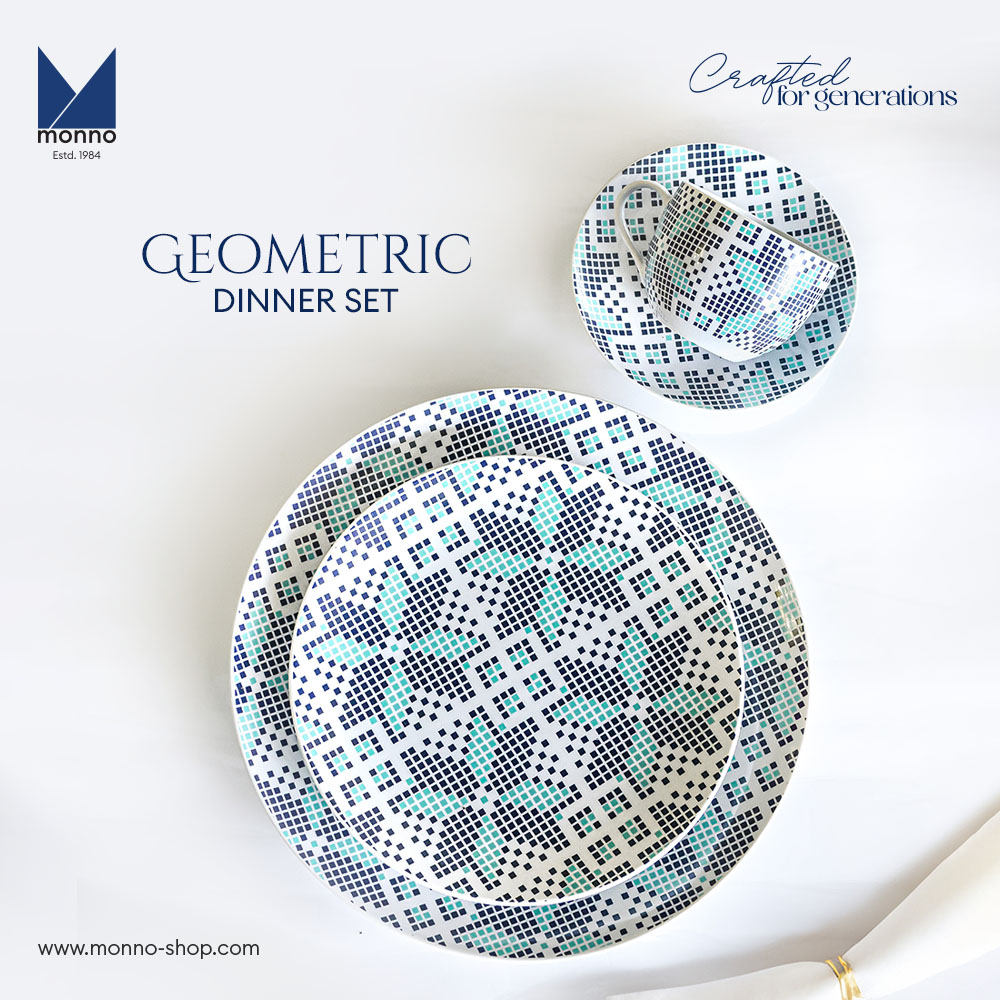
Once a quiet corner of the industrial map, Bangladesh’s ceramic sector has sculpted its way into the spotlight. Over the past decade, the industry has witnessed an extraordinary 150 percent surge in both production and investment, transforming it from a modest manufacturing niche into a vibrant engine of growth.     It’s a milestone that marks the rise of a sector now central to the country’s architectural identity. That journey now enters a new chapter with the return of Ceramic Expo Bangladesh 2025, the flagship event of the Bangladesh Ceramic Manufacturers and Exporters Association (BCMEA).   From November 27 to 30, the International Convention City Bashundhara (ICCB) in Dhaka will transform its Pushpanjali – Hall 5 into a showcase of ceramic excellence—bringing together over 136 exhibitors, 300 brands, and more than 25,000 visitors under one roof, with the support of the Export Promotion Bureau (EPB), Techna, ASEAN Ceramics, Keramika Indonesia, and Ceramic China.   Now in its fourth edition, the expo has grown into one of South Asia’s most influential B2B platforms, drawing over 500 foreign delegates and participants from 25 countries.   “This is Bangladesh’s only international exhibition dedicated to ceramics,” said Irfan Uddin, general secretary of BCMEA and chairman of Ceramic Expo Bangladesh. “With 31 local manufacturers and 105 global exhibitors, the expo creates unmatched opportunities for partnership, investment, and growth.”   From raw materials to robotics, from sustainable kilns to smart design, the expo promises a panoramic view of what’s next in ceramic innovation.   GLOBAL AND LOCAL EXHIBITORS     The 2025 edition of the ceramic expo has a long list of local and foreign exhibitors. Every local ceramic company will join the show, along with international participants—most of which are raw material, machinery, or tech suppliers. Every participant of the expo has high hopes for Bangladesh’s ceramic industry.   Kutubuddin Ahmed, chairman of Sheltech Ceramics Ltd, said the ceramic industry in Bangladesh is entering a new era driven by talent, quality, and a growing domestic market. “Ceramic Expo Bangladesh 2025 is the perfect platform to experience this progress.”   Leading Chinese company Foshan HLT & DLT Technology Co. Ltd also believes ceramics have every potential to be the next big export earner for Bangladesh, said Marco Guan, deputy managing director of HLT & DLT and chairman of DLT, a supplier of engineering design, machinery, and technical know-how.   Sacmi Imola S.C. (SALA), a global ceramic technology leader, sees Bangladesh’s strong entrepreneurial spirit and technical expertise as key to becoming a global hub.   Despite challenges like energy costs, infrastructure gaps, and banking inefficiencies, local ceramic companies show resilience, long-term vision, and a focus on quality over price wars, the company said.   SPONSORS   Leading local ceramic company Sheltech Ceramics Ltd is the principal sponsor of this year’s Ceramic Expo, while there are three platinum sponsors: DBL Ceramics Ltd, Akij Ceramics Ltd, and Meghna Ceramic Ind. Ltd.   The 2025 edition has four gold sponsors: Mir Ceramic Ind. Ltd and Abul Khair Ceramic Ind. Ltd from the local market, and Sacmi Imola S.C. (SALA) and Foshan HLT & DLT Technology Co., Ltd. from the foreign market.   FOUR DAYS OF CERAMIC ACTIVITY   “At Ceramic Expo Bangladesh 2025, local technicians will directly engage with global exhibitors to find real-time solutions,” said Moynul Islam, president of BCMEA. “It’s the world’s only trade fair uniting both Chinese and European ceramic giants under one roof.”   Dealers’ Night   One of the standout moments at Ceramic Expo Bangladesh 2025 will be the Dealers’ Night, a grand gathering designed to celebrate the people who carry the industry’s story to every corner of the country.   More than just a networking event, Dealers’ Night will serve as a recognition of the sales leaders, distributors, and retail partners who bridge the gap between manufacturers and consumers.   The evening will bring together over 200 dealers, sales professionals, and more than 20 industry leaders from across Bangladesh, creating a vibrant forum for exchange, collaboration, and celebration.   It is here that the industry’s “deal-breakers” will share experiences, discuss market trends, and explore strategies to expand the reach of Bangladeshi ceramics both locally and globally.   The BCMEA is organising the event with a clear vision: to honour the dealers and salespersons as the torchbearers of the ceramic industry. Their role is not limited to transactions; they are the storytellers who translate innovation into demand, and the ambassadors who ensure that Bangladesh-made ceramics find their way into homes, offices, and institutions.   Seminars Every day at Ceramic Expo Bangladesh 2025 won’t just be about booths and business cards—it’ll be buzzing with ideas. Alongside the packed exhibition halls, multiple seminars will dive into the real issues shaping the future of Bangladesh’s ceramic industry.   With over 70 manufacturers investing nearly $2 billion and more than 60,000 people directly involved, these conversations matter.   From energy costs to export hurdles, topics that often go unheard will finally take center stage—thanks to open discussions between industry leaders, policymakers, and professionals.   The seminars are:   Energy Efficiency Strategies for Industry in Bangladesh: Challenges and Opportunities This seminar will explore how Bangladesh’s ceramic industry can adopt renewable energy, improve efficiency, and reduce costs. Experts will highlight practical solutions, policy frameworks, and global best practices to ensure sustainable growth amid rising energy challenges.   Skills Development for Sustainable Growth in Industry   Focused on workforce transformation, this session will examine training, technical education, and innovation-driven skill sets. Industry leaders and policymakers will discuss how nurturing talent can strengthen competitiveness, empower youth, and secure long-term sustainability for Bangladesh’s ceramic sector.   Global Market Strategies: Challenges and Opportunities for Ceramic Products   This seminar will analyze export diversification, branding, and competitiveness in international markets. Discussions will address trade barriers, logistics, and evolving consumer preferences, while showcasing strategies to position Bangladeshi ceramics as a global leader in quality and innovation.   B2B / B2C Meetings The fair will offer ample space for B2B and B2C meetings, enabling local and global
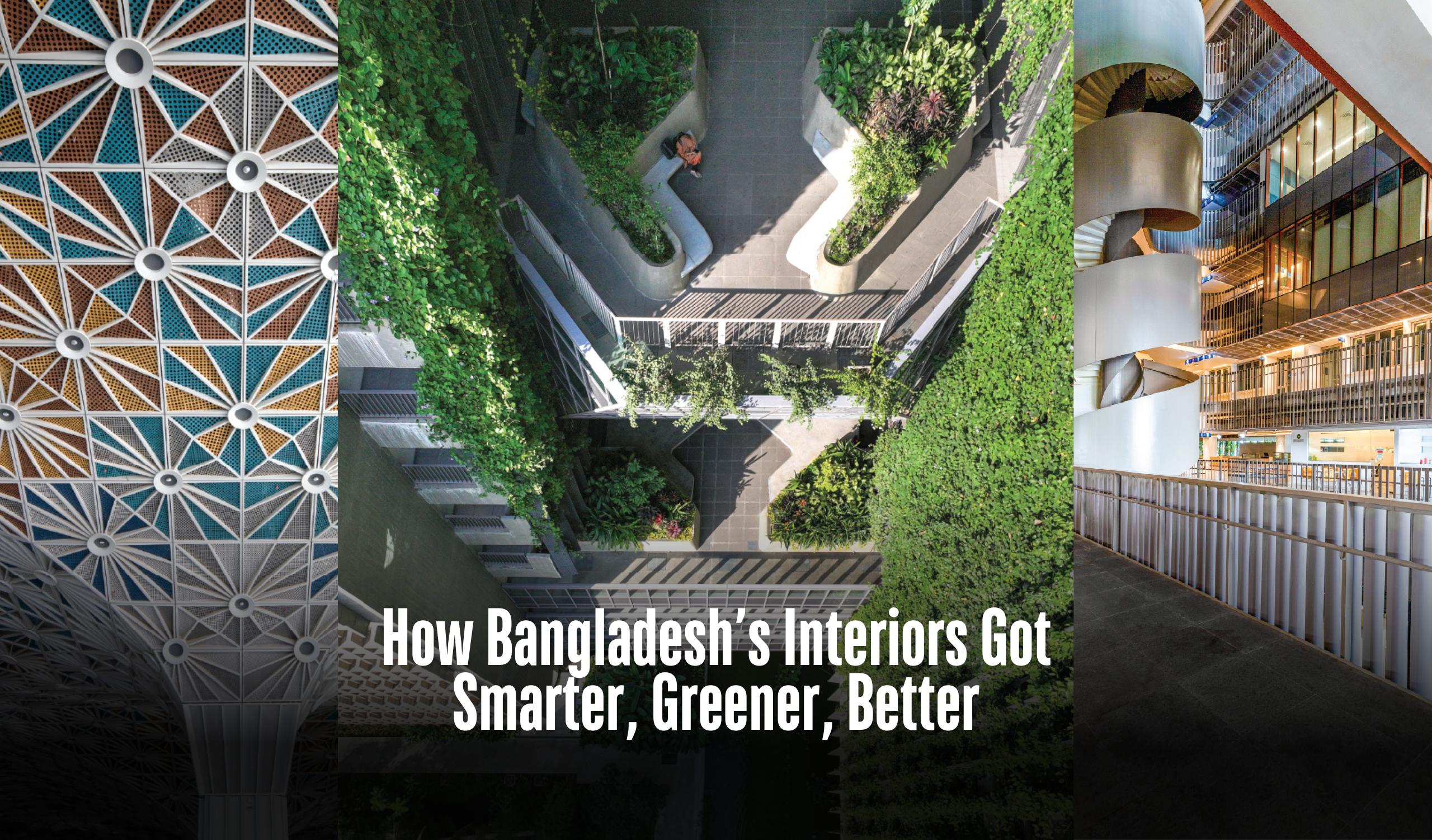

How Bangladesh’s Interiors Got Smarter, Greener, Better

Over the past decades, Bangladesh’s interior sector has undergone a steady evolution. This progressive transformation in design trends and practices is significant across all sectors, including residential, industrial, healthcare, hospitality, retail, and commercial spaces.   Rapid urbanisation, economic growth, globalisation, cultural exposure, and growing concern for sustainability are the major forces driving the interior design shift.   Changing Residential Interior     As urbanisation accelerates, a gradual shift in housing typology has emerged. Traditional single-storey houses and bungalows are being replaced by denser urban structures and micro-apartments, particularly in major cities such as Dhaka and Chittagong.   As a result, residential units are now designed with more compact and efficient layouts. To maximise functionality, designers incorporate space-saving solutions, including wall-mounted shelving, built-in storage, and modular furniture.   As plots shrink and outdoor gardens become scarce, balconies and terraces are being converted into green oases that help bring nature indoors.   In terms of design styles, interior spaces now reflect greater diversity, ranging from minimalist and modern to contemporary and fusion. Collectively, these factors are redefining residential interiors as more functional, sustainable, and visually harmonious.   Shift in Commercial Design     In the early to mid-20th century, commercial interiors were formal and compartmentalised, with enclosed rooms and long corridors. Materials such as wood and marble were used to convey permanence and formality.   By the late 20th century, the rise in corporate culture and global trends led to the emergence of open-plan layouts. Rigid walls began to be replaced by glass partitions that fostered communication and a transparent working environment.   From the 2010s onward, corporate interiors started to prioritise sustainability and employee wellbeing. Concepts such as biophilic design and eco-friendly materials, including reclaimed wood and recycled components, are now being incorporated to improve air quality.   The Decathlon’s Dhaka office designed by Studio One Zero, is a perfect example of a workspace that blends nature and smart design seamlessly.   “What truly distinguishes the office space is its deliberate, sensitive incorporation of natural elements into an urban setting. We wanted the overall design to be meaningful and experiential” ,says Jafor Hoq, chief architect of Studio One Zero.   Embracing Tech-led Designs     Bangladesh’s industrial interiors—especially in RMG, tanneries, food processing, and other sectors—have drastically changed over the past 50 years.   Early factories were built with tight production floors, poor lighting and ventilation, and minimal worker amenities. As industries began to rise, manufacturers moved towards vertical integration (cutting, dyeing/finishing, warehousing, R&D/sample rooms).   This initiative introduced a major shift in industrial interiors; however, worker facilities remained basic.   The Rana Plaza collapse in 2013 led to a surge of inspections and safety retrofits, resulting in changes to fire safety systems, marked aisles, medical rooms, and improved workstation ergonomics.   New industries now increasingly integrate life-safety upgrades (fire doors, fire escape signage), clear zoning, and worker-welfare blocks (cleaner toilets, canteens, and childcare rooms). Energy-efficient LED lighting, water-saving fixtures, and other green building strategies are being adopted.   According to the Bangladesh Garment Manufacturers and Exporters Association (BGMEA), the country boasts 258 LEED-certified factories, including 109 Platinum and 133 Gold-rated facilities.   Institutional interiors in Bangladesh have also undergone significant transformation, shaped by both local and global design trends in architecture, technology, and educational philosophy.   Earlier universities featured classic, colonial-style architecture, such as the University of Dhaka. Over time, university interiors shifted towards creating more flexible and student-centric spaces.   Classrooms today are equipped with modern technologies such as multimedia projectors and smartboards. Moreover, charging stations and internet access points are being integrated into common spaces—libraries, lounges, and cafeterias. Sustainable design practices have become one of the most significant considerations over the decades.   For example, BRAC University has incorporated biophilic design principles, eco-friendly materials, and energy-efficient systems. The university adopts modern colour schemes and diverse textures, along with more student-friendly amenities that promote collaboration and creativity.   Hospitality and Public Spaces Blending Global Aesthetics     Early hotels (during the 1960s–1980s) in Bangladesh prioritised functionality over aesthetics, often shaped by a colonial-modern architectural approach. Interior layouts were formal, with minimal ornamentation and durable finishes such as terrazzo floors and simple wooden or rattan furniture.   In the 1990s–2000s, with the arrival of international brands, interiors shifted towards a contemporary design approach. Spaces became more refined, introducing upgraded amenities, grand lobbies and ballrooms, and heavy use of imported finishes and materials.   A significant example of a luxury hotel is the new Sheraton Dhaka, designed by Volumezero Ltd. It features grand lobbies and banquets, lavish dining venues, and premium materials and finishes.   From 2010 onwards, hotel and resort design began to blend local cultural elements with global contemporary styles. This includes the use of local craftsmanship, textiles, motifs, and artwork. Sustainable materials such as bamboo and jute, along with natural textures like wood finishes and earthy plasters, are now extensively used. Public spaces such as airports in the early period focused primarily on practicality and functionality. For example, the old Tejgaon Airport and early Hazrat Shahjalal International Airport (HSIA) featured simple layouts with limited amenities.   With gradual modernisation, airport interiors began to prioritise passenger comfort. Duty-free shops, cafés, lounges, and digital flight displays have been incorporated.   From the 2010s to the present, design has integrated modern efficiency with local art and aesthetics. Elements include modern amenities (digital signage, self-scanners), imported materials, and sustainable finishes.     A prominent example is HSIA Terminal 3, designed by architect Rohani Baharin. The design incorporates modern minimalism and local cultural motifs, highlighting clean, light-toned finishes, large open spaces, and high vaulted ceilings with an eye-catching floral geometric motif. Natural lighting is emphasised, reducing dependence on harsh artificial lighting.   Another prominent example in the transformation of public transport infrastructure is the new Cox’s Bazar Railway Station, designed by Volumezero Ltd.   The transportation hub has evolved from a functional terminal into a high-end passenger experience. “We aimed to depart from the traditional notion of railway stations being merely standard

Bangladesh ArchSummit 2025 Begins Alongside the IAB Build Expo 2025

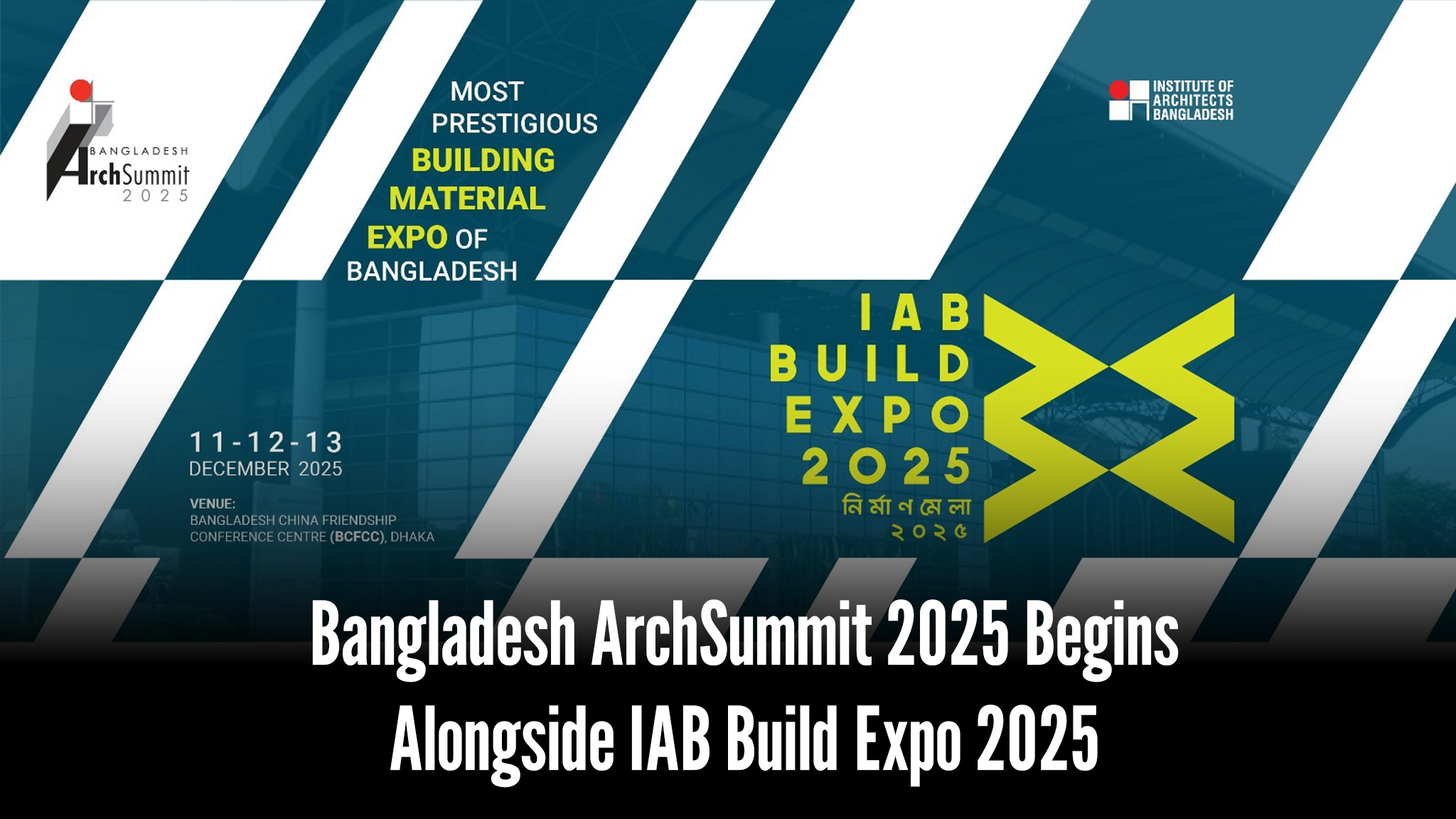
  The Institute of Architects Bangladesh (IAB) inaugurated the Bangladesh ArchSummit 2025 today, December 11. This year’s theme, “Crafting Space, Shaping Habitat,” sets the stage for a grand celebration of architecture, education, profession and practice, ideas, innovation, and excellence.   Running in parallel with the Summit, IAB also launched the IAB Build Expo 2025, the country’s largest exhibition of building materials and construction innovations.   Both events will continue until December 13 at the Bangladesh China Friendship Conference Centre (BCFCC). The Summit is open exclusively to registered participants, while the Expo is open to all visitors.     This year’s Summit has been carefully planned with a distinguished lineup of renowned international and national speakers, along with a range of enriching programmes, including an exhibition of award-winning architectural works, roundtable discussions, a young citizens’ painting competition, a photography competition, and exciting cultural events for registered participants.   Participants will also have the opportunity to attend the Student Forum, Youth Forum, and plenary sessions, where esteemed speakers will share their ideas, design philosophies, and professional insights throughout the three-day event.     Day One began with the Student Forum, featuring a quiz and debate competition, and included the Summit and Build Expo Inauguration Ceremony.   Other attractions include the Open Photography Competition, Young Citizens’ Painting Competition, and Public Exhibition on Architecture.     The Young Painting Exhibition features curated artworks submitted by students from Classes 6 to 10. The jury panel for the selection included Architect Rafiq Azam, artist Afzal Hossain, and Farida Zaman.   The theme of the architectural works exhibition, PEOPLE | PLACE | PRESENCE, celebrates architecture that shapes communities, responds to context, and defines presence through space.   The exhibition showcases curated works selected from project submissions in the following categories: Internationally Awarded Projects (2024–2025) from Bangladesh IAB & BERGER Award Projects (last cycle) Public Projects (nationwide) Projects Located in Old Dhaka   The project selection team comprised Dr. Abu Sayeed M Ahmed, Ar. Khan Md. Mahfuzul Hug Zaglul, Ar. Nowajish Mahbub, Dr. Khurshid Zabin Hossain Taufique, and Prof. Zainab Faruqui Ali.   The ArchSummit and Build Expo aim to provide a platform for architects, students, industry professionals, and the public to explore architecture, innovation, and the future of the built environment in Bangladesh.   Written By Tasmiah Chowdhury

Read More »

Spotlights

Gallery Plat-forms Hosts ‘Beyond the Veil’

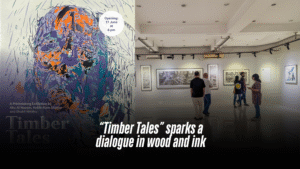
Gallery Plat-forms is hosting ‘Beyond the Veil’ – 3rd solo exhibition by M F I Mazumder Shakil. In this exhibition, the artist presents the ancient medium of woodcut in a fresh, contemporary artistic form. A total of 24 woodcut prints are on display which includes 8 large-scale works.     The exhibition began on November 9 and has now been extended until December 13, with visiting hours from 11 am to 8pm.   As noted by Gallery Plat-forms, in ‘Beyond the Veil’, Shakil revives the long-format woodcut to explore a world both intimate and exclusive. Through sweeping panels in amber, midnight blue, and stark monochrome, a woman emerges through fabric, fold and shadow.   The veil becomes a threshold rather than concealment, inviting us to see without seeing. Each cut and layer conjures the textures of cloth and memory, secrecy and freedom. Part portrait, part landscape of the unseen.   Beyond the veil transcends identity to question how we perceive, what lies hidden. Rooted in tradition yet distinctly contemporary. Shakil’s work reimagines the politics of visibility and expands the language of global printmaking.     “My work is primarily in printmaking – specifically woodcut. I begin by drawing on plywood or any other board, then carve the block using woodcut tools based on the distribution of light and shadow.   After that, I apply ink to the block with a roller through various processes, and finally transfer the print onto paper. Depending on the size, completing a single piece can take several months,” explains Shakil.   “I have participated in various exhibitions, art camps, and art fairs both in Bangladesh and abroad. In the future, I plan to organize solo exhibitions outside the country as well.   In recent times, young artists in Bangladesh have been tirelessly pursuing creative practice, and their works have already received significant recognition on the international stage.     However, the overall acceptance of fine arts within the country has yet to reach the desired level. I remain hopeful that with proper patronage and support, our artists will be able to present Bangladesh’s artistic heritage to the world with even greater distinction,” the artist further adds.   Mohammed Fakhrul Islam Mazumder, a Bangladeshi artist born in Comilla in 1989. He completed his M.F.A and B.F.A in Printmaking from the Faculty of Fine Arts at Dhaka University in 2016 and in 2014.   Mazumder has held two solo exhibitions— “Obscure Beauty” (GalleryChitrak, 2023) and “The Odyssey of the Soul” (Zainul Gallery, 2018). His art has been showcased widely across Asia,Europe, and Australia, including major exhibitions in Japan, China, Thailand, Korea, India, Nepal, and Bangladesh.   He has received numerous national and international awards such as the 26th Berger Young Painters’ Award (2022), Excellent Works Award, COP15 Global Art & Design Competition, China (2022), 2nd International Print Biennale Award, India (2021), and the Shilpacharya Zainul Abedin Award (2019).   Mazumder’s works are part of collections at the China Printmaking Museum, Ino-cho Paper Museum (Japan), Bengal Foundation, and Lalit Kala Academy (India). He has also participated in several artist residencies, including the Chitrashala International Artist Residency in India and Kali Artist Residency at Cosmos Atelier 71, Bangladesh.   Currently, Mazumder continues to experiment with layers of print, texture, and form to reflect the subtle interplay between the visible and the unseen. Through this exhibition, Shakil opens a new doorway not only to beauty but also to perception. His works, imprinted with the labor of hand-carved marks on solid wood surfaces, unfold into a poetry of light and shadow.   This exhibition is part of Gallery Plat-forms’ commitment to presenting Bangladeshi artists who bring together heritage and contemporaneity, offering them anew to the global stage.   Written by Tasmiah Chowdhury   Photo Credits Sarmin Akter lina Gallery plat-Forms
Read More »

Glimpses from 75-95

Titled “Phire Dekha/Re See,” the ongoing exhibition at the capital’s Kalakendra is comprised of the most heavyweight line-up of artists in a single group show in this gallery’s journey so far. Although a young gallery run by the veteran Wakilur Rahman, Kalakendra has already cemented its place as a hub for regular exhibition-goers of Dhaka, and its latest exhibition is another beautiful stroke in its canvas.   Kazi Rakib, Deepa Haq, Dhali Al Mamoon, Dilara Begum Jolly, Nisar Hossain, and Shishir Bhattacharjee, Saidul Haque Juise, Fareha Zeba, Ratan Mojumdar, Habibur Rahman, Ruhul Amin Kajol, Lala Rukh Selim, Towfiqur Rahman, and Wakilur Rahman—if you are an enthusiast of the Bangladeshi art scene, you are at least familiar with a few of these names from this stellar list of Bangladeshi artists. These names, whether as a promising back-in-the-day or established artist, as a respected teacher for generations of art students, or as a curator, are all notable in their own ways in a detailed history of the Bangladeshi art scene. Growing up in a country where there is a mass tendency of collective amnesia towards the importance of archives and still no organized/proper practice of museum and gallery culture, if you have ever wondered what the art of some notable names looked like when they were at your and your Charukola friends’ age, “Phire Dekha” provides you a glimpse.   The show gathers these fourteen artists, whose works once characterized the visual rhythm of postwar Bangladesh. The display, which runs from 1975 to 1995—an era marked by instability, transformation, and fragile hope—does not attempt to rebuild history but rather to reflect on it through the lens of art. Those two decades were more than just years on a timeline; they were a line of reckoning. Bangladesh, yet learning the lexicon of its freedom, was seeing seismic worldwide shifts—the demise of socialism, the growth of neoliberal dreams, and the gradual disintegration of collective idealism.   These factors undoubtedly influenced how artists thought, created, and responded to their surroundings. The show makes no conclusive statements about that age; rather, it creates a contemplative space between history and present, memory and method, inviting visitors to rediscover what art previously possessed and what it continues to disclose.   “Re See” is curated without the weight of theory or curatorial rigor, instead assembling pieces of real experience rather than a predefined theme. All of the participating artists were young art students in the years following the Liberation War. Some were members of collectives such as Dhaka Painters or the Somoy Group, while others forged their own paths of discovery. Their works together provide a mosaic of artistic and emotional progress, a portrait of a generation that used color, form, and gesture to express its times.   The exhibition features paintings, sculptures, prints, sketches, and mixed-media pieces, the majority of which are from the artists’ personal archives. The mix of mediums—etchings, acrylics, watercolor, and assemblage—reflects the restless search for words that marked Bangladeshi art throughout those decades. “We seldom get to see the works that shaped our contemporary practice,” he observed. “Between 1970 and 1990, the political and cultural landscapes of our country changed dramatically, and those changes inevitably entered art. The young artists of that period absorbed both global and local influences, reinterpreting them through their own materials, symbols, and languages. Many have since matured into leading figures, guiding the next generations of creators,” said art historian and critic Professor Abul Mansur.   These words capture the essence of “Re See”; it is not nostalgia but an act of rediscovery, an artistic archaeology of thought and feeling. The exhibition runs daily from 4 p.m. to 8 p.m. until November 15 at Kalakendra. Written by Shahbaz Nahian      


Read More »

Bangladesh’s Largest Travel Expo Begins Thursday

The 13th edition of the Biman Bangladesh Travel & Tourism Fair (BTTF) 2025 opened Thursday morning at the Bangladesh-China Friendship Conference Center (BCFCC) in Dhaka, marking the return of the country’s largest international tourism expo.     Organised by the Tour Operators Association of Bangladesh (TOAB), the three-day event runs from October 30 to November 1 and is expected to draw tens of thousands of visitors, including over 2,000 trade professionals.   The fair is open daily from 10:00 AM to 8:00 PM, with an entry fee of Tk 50 per person. Students, freedom fighters, and July war heroes are granted free entry, ensuring inclusive access to the event.   This year’s fair features participation from more than 120 local and international organisations, showcasing their products and services through around 220 stalls and 20 pavilions.   Among the international participants are national tourism boards, airlines, tour operators, hotels, resorts, travel agencies, financial institutions, and healthcare providers.     Twenty international hospitals are promoting medical and wellness tourism, reflecting the growing interest in cross-border healthcare travel. Biman Bangladesh Airlines is the title sponsor of BTTF 2025, joined by IHG Hotels & Resorts as the gold partner and bKash as the payment partner, with cashback offers available for visitors purchasing entry tickets via bKash.   Spanning 60,000 square feet, the exhibition is divided into four themed halls—Celebrity, Carnival, Harmony, and Milky Way—designed to facilitate targeted engagement between exhibitors and attendees.   The layout includes dedicated spaces for B2B sessions, seminars, country presentations, cultural performances, and documentary screenings on Bangladesh’s tourist attractions, offering a comprehensive platform for both commercial exchange and public interaction.   The opening ceremony on Thursday was presided over by Md. Rafeuzzaman, president of TOAB, and formally inaugurated by Lutfe Siddiqi, special envoy to the chief adviser on international affairs, who served as chief guest.   Md. Taslim Amin Shovon, director (trade & fair) at TOAB, delivered the welcome address, while Mohammad Yunus, director (media & publications), conducted the programme.   Friday’s programme includes a B2B networking session, multiple seminars, and a roundtable discussion, while Saturday will feature a grand raffle draw and the closing ceremony. Daily cultural shows and sideline events are expected to enhance visitor engagement.   TOAB, which has been organising BTTF annually since 2007, aims to position Bangladesh as a competitive player in the global tourism market.   With 751 active members, the association regularly participates in international fairs such as ITB Berlin, WTM London, and FITUR Madrid, and collaborates with the Ministry of Civil Aviation and Tourism, Bangladesh Tourism Board, and Bangladesh Parjatan Corporation.     According to organisers, BTTF 2025 is designed to promote both inbound and outbound tourism, with a special focus on niche segments including culinary, cultural, leisure, cruise, and adventure travel.   Business and corporate travel also feature prominently, alongside medical tourism, which has seen increased demand in recent years.   Distinguished guests at the inauguration included Saima Shahin Sultana, chairman of Bangladesh Parjatan Corporation; Naila Ahmed, joint secretary (tourism-1 branch) of the Ministry of Civil Aviation and Tourism; Dr. Md. Shafiqur Rahman, managing director and CEO of Biman Bangladesh Airlines; Md. Mainul Hasan, additional IGP of Bangladesh Tourist Police, and Nuzhat Yasmin, CEO of Bangladesh Tourism Board, alongside TOAB advisors, directors, and steering committee members.   Written by Nibir Ayaan

Read More »

International Affiliations

Business Insights

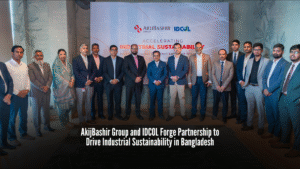
AkijBashir Group has entered into a strategic partnership with the Infrastructure Development Company Limited (IDCOL)

In a major step toward sustainable industrial growth, AkijBashir Group has entered into a strategic partnership with the Infrastructure Development Company Limited (IDCOL) to promote energy efficiency and renewable energy across its operations. The collaboration, formalized at an event held at Sheraton Dhaka, marks a significant milestone in advancing green industrial practices in Bangladesh.     AkijBashir Group has been funding several sustainability projects in the last couple of years through its Energy Efficiency and Rooftop Solar financing programs funded by IDCOL. These projects have enabled the deployment of industrial rooftop solar capacity of more than 90MWp, of which over 60MWp has been deployed and has become one of the largest solar portfolios in the private sector in Bangladesh.     One of the highlights of the joint venture is a pioneer project of Janata Jute Mills Ltd. in Boalmari, Faridpur, that will become the first in the world to be a fully operational jute mill using renewable energy by the first quarter of 2026. In the long-term sustainability, the Group targets to produce a renewable energy of 1,000 MWh every day by 2027.     During the event, AkijBashir Group Managing Director, Mr. Taslim Md. Khan, and IDCOL Executive Director and CEO, Mr. Alamgir Morshed, emphasized the role of collaboration in the development of the future of the low-carbon industry. AkijBashir Group is determined to be 100% renewable in all its manufacturing plants by the year 2030, which is in line with its vision Beyond Tomorrow- impetus on sustainability, innovation, and industrial perfection.

Read More »

World Investor Week rings the bell on financial fraud awareness

A global initiative to promote investor education and protection is underway as World Investor Week 2025 runs from October 6 to 12, led by the International Organization of Securities Commissions (IOSCO).     Now in its latest edition, the campaign aims to raise awareness about the importance of financial literacy, responsible investing, and the protection of investors in an increasingly digital and complex financial landscape. The global campaign features participation from securities regulators, exchanges, financial organisations, and educators across six continents, with events tailored to national and regional contexts. Activities include public awareness drives, webinars, training sessions, and outreach campaigns designed to help investors make informed decisions and guard against fraud. A flagship feature of the campaign is the “Ring the Bell for Financial Literacy” initiative, held in collaboration with the World Federation of Exchanges (WFE). Stock exchanges around the world symbolically “ring the bell” to demonstrate their commitment to investor education and market transparency.     Focus on Fraud, Digital Threats, and Investor Awareness This year’s programme includes a strong emphasis on the emerging threat of digital fraud, particularly those involving artificial intelligence and online scams. On October 7, U.S. regulators including the National Futures Association (NFA), FINRA, and the Commodity Futures Trading Commission (CFTC) hosted a webinar titled “Deconstructing to Disrupt Fraud”, which was a two-part event featuring Dr. Arda Akartuna. The session explored how AI technologies are being weaponised by fraudsters, and how regulators and investors can respond with vigilance and education. In Indonesia, the national financial regulator Otoritas Jasa Keuangan (OJK) is hosting a regional webinar on October 9 titled “Empowering Investors: Invest Wisely and Stay Safe from Fraud and Scams.” The event features speakers from IOSCO’s Committee on Retail Investors and will discuss practical strategies to improve retail investor protection. Investor education for older adults is also a priority in this year’s campaign. In the United States, the CFTC, FBI, and AARP have partnered on outreach aimed at Americans aged 50 and older, focusing on helping them identify and avoid scams. The organisers report that over 250 participants registered for this dedicated session. Global Backing and Institutional Support World Investor Week is supported by a wide range of international partners, including: The World Bank OECD G20 Sustainable Stock Exchanges (SSE) Initiative International Financial Reporting Standards (IFRS) Foundation European Fund and Asset Management Association (EFAMA) These partnerships reinforce IOSCO’s broader mission to promote not only awareness, but also long-term behavioural change among investors and institutions globally. As the global standard-setter for securities regulation, IOSCO collaborates closely with the Financial Stability Board (FSB) and the G20 to ensure that investor protection remains a key pillar of global financial integrity and stability. Building Resilience in a Complex Investment Landscape With financial markets rapidly evolving due to digitisation, AI technologies, and cross-border investment platforms, retail investors are exposed to new complexities and risks. World Investor Week serves as a timely reminder of the need for robust financial education, stronger regulatory safeguards, and proactive public engagement. As the campaign continues through October 12, organisers hope to empower individuals with the knowledge to navigate risks, detect fraud, and contribute to more resilient financial markets across all levels of society.   Written By Nibir Ayaan

Read More »

Bangladeshi Hotels, Resorts Win Big at South Asian Travel Awards 2025

Bangladesh’s hospitality sector received a resounding endorsement on the international stage as several leading local hotels, resorts, and tour operators were honoured at the South Asian Travel Awards (SATA) 2025, held at the Cinnamon Grand in Colombo.     The glittering ceremony, widely regarded as one of the region’s most prestigious events in the travel and tourism calendar, brought together top-tier organisations from Sri Lanka, India, the Maldives, Nepal, Bhutan, and Bangladesh. A total of 53 Gold Awards and 113 Silver Awards were presented across a range of categories, recognising excellence in service, innovation, and guest experience. Bangladeshi winners spanned multiple categories, reflecting the country’s growing reputation as a destination of choice for regional and international travellers. Award Winners from Bangladesh Baywatch: South Asia’s Best New Hotel and South Asia’s Leading Beach Resort HANSA – A Premium Residence: Leading Designer Hotel/Resort Holiday Inn Dhaka City Centre: Leading City Hotel Intercontinental Dhaka: Leading Luxury Hotel Momo Inn: Leading Family Hotel & Resort and Leading Convention Center Award Platinum Grand: Leading Boutique Hotel Platinum Residence: Leading City Hotel and Leading Budget Hotel Radisson Blu Chattogram Bay View: Best Eco-Friendly Hotel Radisson Blu Dhaka: Leading Airport Hotel and Leading Meeting & Events Sayeman Beach Resort: Leading Wedding Hotel/Resort Sayeman Heritage: Leading Heritage Hotel/Resort The Palace Luxury Resort: Leading Palace Hotel The Peninsula Chittagong: Best CSR Program, Leading F&B Hotel, and Leading Business Hotel The Westin Dhaka: Leading Wellness and Spa Hotel/Resort Bangladesh Tour Group (BTG): South Asia’s Leading Inbound Travel Agent and Best Promotion Campaign in South Asia Travel Classic (Pvt.) Limited: Leading Travel Agent – Outbound Winning awards in different categories was no easy feat. Each submission underwent a rigorous selection and evaluation process. The SATA 2025 Awards were presented to organisations that embody excellence in service delivery, innovation, sustainability, leadership, and overall industry impact. During the evaluation stage, 60 percent of the marks came from the professional judges’ report cards, with the remaining 40 percent from online public voting. Judges scored submissions based on multiple criteria: service excellence, innovation and improvement, customer satisfaction, sustainability and responsibility, operational excellence and safety, sales and revenue performance, leadership and team development, and industry contribution. This year, SATA placed particular emphasis on sustainability, cultural authenticity, and digital innovation. “SATA brings together over 300 delegates from across the South Asian region to celebrate the best of South Asian hospitality brands,” said SATA President Ismail Hameed at a press conference held during the event. He added that international establishments such as the Taj Mahal Palace, as well as brands from Nepal and Bhutan, which are unique in their own right, took part in this year’s show. “From travel agents’ associations to hotel associations to tourism boards — all are part of SATA,” Hameed said. He noted that South Asian destinations hold great tourism potential, offering everything from cool weather and beaches to mountains, heritage, history, culture, food, and delicacies. Md Mohsin Hoq Himel, Secretary of the Bangladesh International Hotel Association (BIHA), who attended the event, said: “BIHA has been working with the South Asian Travel Awards in Bangladesh.” Under the overall guidance of Hakim Ali, founder of BIHA, the association has participated in the prestigious event every year, he said. Through this platform, BIHA aims to highlight the service standards of Bangladesh’s local hotels and resorts, showcasing their uniqueness and distinctiveness alongside other regional hotels, Himel added. “This year, every Bangladeshi hotel and resort has achieved remarkable positions. We extend our heartfelt congratulations to all the award winners.” According to representatives of Bangladesh’s hospitality sector, this international recognition will further advance the country’s tourism and hotel industry in the global market and strengthen Bangladesh’s brand image worldwide, he said. The first edition of the South Asian Travel Awards began in 2016 and has been organised by Highrise every year since, with the support of multiple associations and tourism bodies from across the South Asian region, according to the SATA website. The annual search for South Asia’s most outstanding travel organisations spans a month each year from March to April, calling upon industry professionals to name their preferred travel suppliers in the region who have risen above the competition and surpassed expectations, it read. “The awards programme continues to serve as a platform for nations to come together, not in competition, but in celebration of shared triumphs and brilliance.”   Written by Nibir Ayaan

Read More »

Watch On

Testimonials

Associates

Our Partners